
Review · TOKYO GARDEN TOURS
Historic Temple・traditional Japanese garden& Eating around at a shopping strip
Tokyo is more than neon, crowds, and giant stations. This private tour takes you to Ikegami Honmonji Temple, a hillside complex dating from the late 13th century, then to a Japanese stroll garden and a local shopping street where daily life takes center stage. It is a good way to see a calmer, more ordinary side of the city.
I like the quiet change of pace and the useful mix of culture, gardens, train travel, and food stops. I also like that guide Miyuki can turn a simple walk into a conversation about Japanese customs and everyday life. The main drawback is the walking: four to six hours, including two hours in Togoshi Ginza, may feel long if you want a short sightseeing stop or dislike standing and strolling.
Key points to know
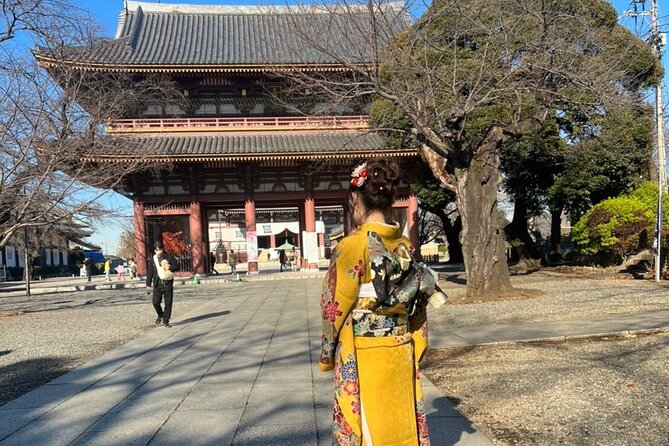
- A hilltop temple near Ikegami Station: Honmonji is about a 10-minute walk from the station, with free admission and a peaceful setting.
- An apricot garden with seasonal appeal: Ikegami Baien contains about 370 Japanese apricot trees and sits five minutes from the temple.
- A local shopping street, not a major tourist district: Togoshi Ginza gives you two hours to browse narrow streets, shops, and casual food spots.
- A private English tour: Your group travels with the guide rather than joining a large mixed tour.
- A short train ride connects the neighborhoods: Transportation from Ikegami to Togoshi is included, so you do not need to arrange that part yourself.
- Good value if you want context: At $52.02 per person, the price covers guiding, garden admission, and the train transfer, but not lunch or drinks.
Why this Tokyo half-day feels different
The appeal here is the contrast. You begin in Ikegami, an area with a long religious past and quiet temple grounds. Later, you ride a short distance and enter Togoshi Ginza, where the focus shifts to shopping, snacks, and ordinary neighborhood routines.
That change gives the outing a useful rhythm. You are not spending four hours looking at one type of sight. Instead, you get a temple, a garden, public transportation, and a shopping street. For a first visit to Tokyo, that variety helps you understand how old places and modern city life sit side by side.
The tour lasts about four to six hours, depending on the pace and the time spent at each stop. That is long enough to feel like a real half-day outing, but not so long that it takes over your entire day. I would leave the rest of the day open rather than scheduling a major museum or timed attraction immediately afterward.
Because this is a private activity, the pace can suit your group better than a large tour. You can ask questions as they come up, and the guide can focus on the subjects that interest you. The experience is especially suited to people who want explanation and conversation, not just a list of photo stops.
More Japanese Gardens in Tokyo:
- Tokyo Japanese Garden Lover’s Private Tour with Government-Licensed Guide
★ 5.0 · 27 reviews - Experience Crafting a Flower-Adorned Mini Japanese Garden
★ 4.7 · 15 reviews - Tokyo: Full-Day Japanese Garden Private Guided Tour
★ 4.6 · 13 reviews
Starting at Ikegami Honmonji Temple
The meeting point is Ikegami Station. From there, you walk about 10 minutes to Ikegami Honmonji Temple, which sits on a hill in central Ota City. The walk is short, but you should still wear comfortable shoes because the full experience includes several hours on foot.
Honmonji dates from the end of the 13th century. That age gives the first part of the tour a strong sense of place without requiring a long trip outside Tokyo. You are still in the city, but the temple grounds offer a quieter setting where the sound of rustling leaves can replace traffic for a while.
Admission to the temple is free. That matters when you compare the tour price with a self-guided visit. You are not paying a high entrance fee here. Much of the value comes from the guide’s interpretation, the route between the stops, and the chance to ask questions about Japanese religion, customs, and local life.
The temple complex is best approached at an unhurried pace. Give yourself time to notice the change from the station area to the hilltop grounds. The tour allows about one hour here, which is enough for a considered visit without making the temple feel rushed.
I like this opening because it avoids the usual Tokyo checklist. You are not being pushed from one famous landmark to another. Instead, you begin with a historic site that can help you see how religious spaces remain part of a modern residential district.
Keep in mind that this is a temple visit, not a full sightseeing tour of every major building in Tokyo. The supplied information does not promise special ceremonies, private access, or a specific religious event. You should book it for the calm setting and guided context, not for an elaborate staged performance.
Walking five minutes to Ikegami Baien
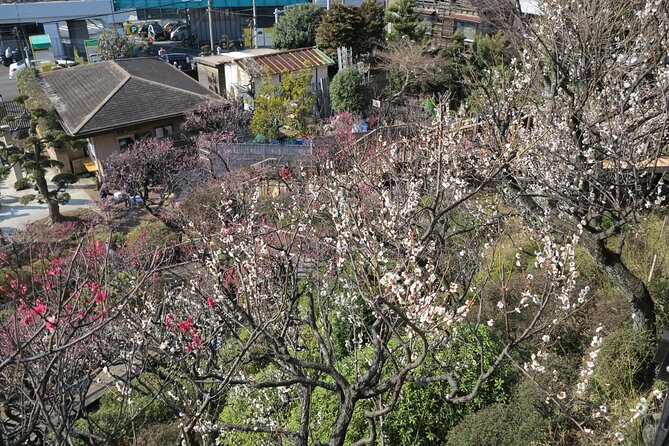
After Honmonji, you walk about five minutes to Ikegami Baien. In Japanese, baien means apricot garden, and this garden contains around 370 Japanese apricot trees.
The garden is designed for strolling. That means the pleasure comes from moving through the setting rather than standing at one viewpoint. Depending on the season, the trees may be the main attraction. If flowers are not at their best, the garden still offers a slower contrast to Tokyo’s dense streets, but you should keep seasonal timing in mind.
One hour is planned for Ikegami Baien. That gives you enough time to walk through the garden, listen to the guide, and take photographs without turning the stop into a quick photo break. The entrance fee is included, which makes the transition from temple to garden simple.
This stop also adds visual variety. Honmonji provides historic religious buildings and a hilltop setting. Baien gives you trees, paths, and a more relaxed garden experience. Together, they make the first half of the tour feel balanced.
The garden is not presented as a huge park. You should think of it as a focused one-hour stop. If you want enormous grounds, formal palace gardens, or a full-day botanical visit, this will feel modest. If you enjoy a compact garden with local character, it fits the tour well.
Taking the train to Togoshi Ginza

The tour then uses a short train ride to reach Togoshi Ginza. Transportation between Ikegami and Togoshi is included, which is a small but useful benefit. You do not have to work out the route, buy the right ticket, or decide how to connect the two areas during the tour.
This transfer also shows you how the different parts of Tokyo connect. The experience is not limited to isolated sights reached by private vehicle. You move through the city using public transportation, as residents do. That makes the tour feel grounded in everyday Tokyo rather than separated from it.
The details of the exact train route and fare are not provided, so you should follow the guide’s instructions at the station. The important point is that the transfer is part of the planned experience and its cost is included.
History tours around Tokyo:
- Aboriginal Heritage Walk – Royal Botanic Gardens Victoria, Melbourne Gardens
★ 5.0 · 314 reviews - Beijing Historical Tour II including Summer Palace, Lama Temple & Panda Garden
★ 4.0 · 187 reviews - Authentic Amalfi Lemon Tour & Tasting in the Historical Garden
★ 5.0 · 52 reviews - Amalfi Organic Lemon Tour & Tasting in the Historical Garden
★ 4.9 · 46 reviews
Spending two hours on Togoshi Ginza Shopping Street
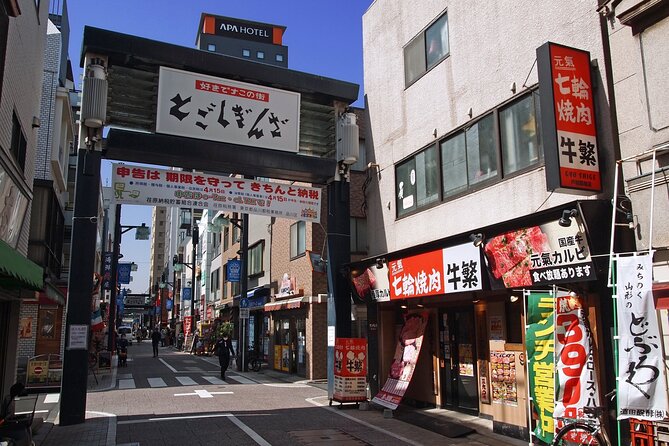
Togoshi Ginza is the most casual and local part of the outing. You spend about two hours walking through a shopping district with narrow streets and a working-class character. This is not a grand department store area or a famous monument. Its value lies in the ordinary details.
You might find yourself looking at small shops, food counters, and the daily rhythm of a neighborhood commercial street. The tour description specifically includes eating around the strip, but lunch and drinks are not included. Plan to pay separately for anything you choose to eat or drink.
One memorable possibility is a beer at a local butcher shop. That detail captures the tone of the stop: informal, social, and pleasantly unexpected. It is not an expensive restaurant experience. It is a chance to try something simple in a place that serves local life rather than a tourist program.
Give yourself room for small decisions here. You may want to browse before choosing food, or stop for a drink after walking. Ask Miyuki what she recommends and explain any food preferences before buying. The supplied details do not promise a set tasting menu, restaurant reservation, or included snack, so you should view this section as guided neighborhood exploration with optional purchases.
Two hours is a generous amount of time for a shopping street. That is good if you like to browse, ask questions, and stop for food. It may feel slow if shopping does not interest you. This is the part that most clearly determines whether the tour suits you.
I like the way Togoshi Ginza finishes the outing. After the quiet temple and garden, you return to the practical side of Tokyo. You see where people shop, eat, and spend time close to home. That everyday view can tell you more about the city than another observation deck.
What Miyuki adds to the day
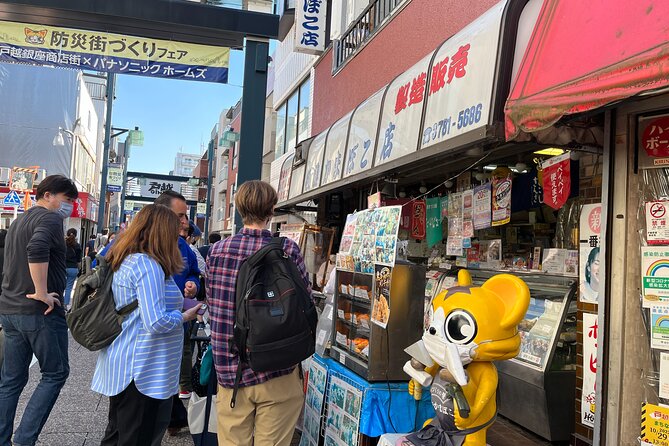
The guide named in the experience is Miyuki. The available feedback gives her a particularly important role in the tour. She is described as friendly, smart, fun, open, and professional, with the ability to answer questions about Tokyo, Japan, and Japanese everyday life.
Those qualities matter because the stops themselves are accessible without a guide. You could walk to a temple, visit a garden, and take a train to a shopping street on your own. The reason to pay for this experience is the human layer: explanations, local conversation, and help noticing what you might otherwise pass by.
A private format makes that benefit stronger. Only your group participates, so you do not have to compete with a large crowd for the guide’s attention. You can ask about temple customs, garden design, shopping streets, food, or daily routines as the questions occur.
The tour does not promise a specialist scholar or a formal lecture. That is not a weakness for everyone. If you prefer a relaxed guide who can discuss many aspects of Japan in plain language, Miyuki’s approach sounds well matched to the route.
Is $52.02 a fair price?
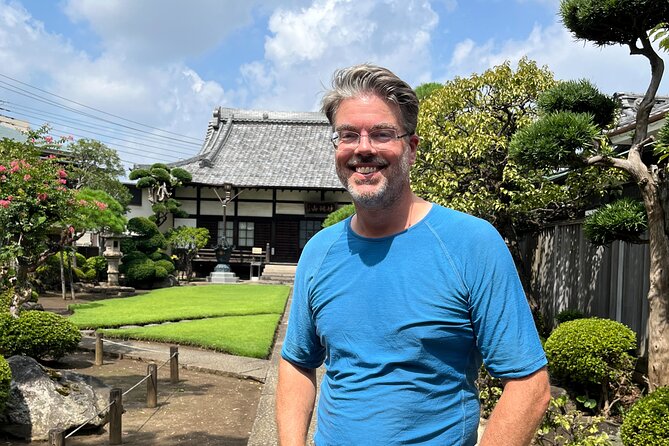
At $52.02 per person, the value depends on what you want from a Tokyo outing. The price includes an English guided tour, admission to Ikegami Baien, and transportation between Ikegami and Togoshi. Temple admission is free, but the route and guidance still provide structure.
You must pay for lunch, snacks, and drinks yourself. That gives you control over spending, especially in Togoshi Ginza, where you can choose a small purchase rather than commit to an expensive meal.
For a private half-day activity, the price is reasonable if your group values personal attention and local explanation. A solo visitor may compare it more carefully with the cost of using public transportation and visiting the sites independently. A couple or small group may find the private format more attractive because the guide’s time is dedicated to them.
I would not choose this tour purely to save money. Choose it because you want a ready-made route through three different parts of Tokyo, with someone helping you understand what you are seeing.
Walking, timing, and practical comfort
You need moderate physical fitness for this activity. The day includes walking from Ikegami Station to the temple, moving through the temple and garden, station transfers, and about two hours on the shopping street.
Comfortable shoes are essential. The experience is not described as strenuous, but the total duration can reach six hours. If your group includes anyone who tires easily, ask the guide about the pace at the beginning.
The tour starts and ends at the meeting point at Ikegami Station. That makes planning easier, but it also means the final return is not at Togoshi Ginza. Allow time to continue your plans after returning to Ikegami.
Mobile tickets are provided. Service animals are allowed, and the activity is near public transportation. The experience requires good weather, so poor conditions can lead to a different date or a full refund.
You can cancel for a full refund up to 24 hours before the start time. Changes or cancellations made within 24 hours are not accepted for a refund. Confirmation normally arrives at booking, though reservations made within two days of the date may take up to 48 hours and depend on availability.
Who should book this experience?
I would recommend it to you if you want to step away from Tokyo’s biggest attractions without giving up guidance. It suits first-time visitors who want cultural context, repeat visitors who have already seen the major districts, and anyone who enjoys local shopping streets more than large tourist centers.
It also suits people who like variety. In one half-day, you get a historic temple, an apricot garden, a train ride, and an everyday shopping district. That combination is more interesting than spending the whole time in one commercial area.
Families and small private groups may appreciate the personal format, though everyone should be ready for a moderate amount of walking. Food lovers may enjoy the Togoshi stop, but this is not a formal food tour with meals included.
I would hesitate if you want a short activity, dislike shopping streets, or need a guaranteed indoor plan. I would also think twice if your main goal is Tokyo’s most famous landmarks. This experience is about quieter neighborhoods and conversation, not iconic skyline views.
Should you book this Tokyo tour?
Book it if you want a relaxed half-day that shows how historic places, gardens, trains, and neighborhood shopping fit into one city. The strongest reasons are the private format, Miyuki’s conversational guiding style, and the chance to end with an informal food stop such as a beer at a local butcher shop.
Skip it if you want a major landmark tour or an all-inclusive meal experience. At $52.02, the value is best for people who want interpretation and a thoughtfully linked route, not simply admission tickets. For a calmer, more personal look at Tokyo, this is a sensible choice.
FAQ
Where does the tour begin?
It begins at Ikegami Station in Ota City, Tokyo. The meeting point is listed at Ikegami Station, 6-chome, Ikegami, Ota City.
Where does the tour end?
The activity ends back at the meeting point at Ikegami Station.
How long does the experience last?
The tour lasts approximately four to six hours.
Is transportation included?
Yes. Transportation between Ikegami and Togoshi is included. The tour uses a short train ride to reach Togoshi Ginza Shopping Street.
Are food and drinks included?
No. Lunch, food, and drinks are not included. You pay separately for anything you choose to eat or drink at Togoshi Ginza.
Can I cancel for a full refund?
Yes. You can cancel at least 24 hours before the experience start time for a full refund. Cancellations or changes made less than 24 hours before the start time are not refunded.
Just added around Tokyo
- Tsukiji Food Strolling and Hama Rikyu Garden Walking Tour★ 5.0 · 7 reviews
- Tokyo: Serene Sakura & Sake: An Exclusive Brewery Pairing Lunch★ 5.0 · 2 reviews
- TOKYO: Tailored Gardens tour with Pro Gardener by E-bike -BASIC★ 5.0 · 2 reviews
- Tokyo: Kimono Experience inside Shinjuku Gyoen National Garden★ 5.0 · 3 reviews
- Tokyo Cherry Blossom Half Day Walking Tour with a Local Guide★ 3.5 · 4 reviews
- Cherry Blossom Highlights, Asakusa, Ueno, Imperial Palace Garden★ 4.5 · 4 reviews
- Sumida Riverside Walk: Garden &Temple Ritual (4 Meeting Points)★ 5.0 · 5 reviews
- Full Guided Mt. Fuji & Shiba-Sakura Festival One Day Pvt.Tour★ 5.0 · 6 reviews
Tokyo Garden Tours, compared.


Edo Castle & East Garden of the Imperial Palace Tour
Read our review →
Tokyo Private Tour! Edo Castle & Imperial Palace East Gardens
Read our review →
Tsukiji Market and Hama-rikyu Gardens Guided Tour
Read our review →
Pvt. Tour – Edo Castle & Imperial Palace East Gardens
Read our review →
Kimono Rental inside Shinjuku Gyoen National Garden
Read our review →
Tokyo Japanese Garden Lover’s Private Tour with Government-Licensed Guide
Read our review →Browse the lists this tour appears in