
Review · TOKYO GARDEN TOURS
Mt. Fuji & Hakone Cherry Blossom private One Day Tour
The best thing about this day is the range. In roughly ten hours, you can go from Mt. Fuji’s high slopes to clear spring ponds, a volcanic valley, a lakeside shrine, and a large outlet mall. Private transport saves you from stitching together trains, buses, cable cars, and taxis across two very busy sightseeing areas.
I especially like the flexibility for a family or small group, and the fact that the vehicle, taxes, private transport, and onboard hotspot are included. The main caution is important: this may be a car-and-driver service rather than a full guiding experience. Some assigned drivers are helpful, but the level of history and cultural explanation can vary. Confirm that point before booking.
Key points at a glance
- Six major stops in one long day: You’ll cover the Subaru Line 5th Station, Oshino Hakkai, Lake Ashi, Moto Hakone Shrine, Owakudani, and Gotemba Premium Outlets.
- Private transport for up to five people: The $450 group price works out to $90 per person when five people share it.
- Best for convenience: Hotel pickup may be offered, though the stated meeting point is Tokyo Station, so confirm the exact arrangement.
- Weather controls the Fuji views: Clear skies can reveal Mt. Fuji from several stops, while clouds can change the day considerably.
- The schedule is ambitious: Traffic between Tokyo, Fuji, and Hakone can eat into sightseeing time, especially with a late departure.
- Ask about guiding: A guide named Rezi received praise for finding less crowded places, but not every booking should be assumed to include a dedicated cultural guide.
Why this private Fuji and Hakone day works
Mt. Fuji and Hakone are close enough to combine on a map, but not always easy to combine by public transport. The day involves mountain roads, lakeside stops, volcanic sights, and a shopping center spread across different parts of the region. A private vehicle takes away much of the route planning.
That convenience matters most if you are traveling with children, older family members, or a group carrying bags. You can stay together, avoid changing trains, and use the vehicle as a base during a long day.
The cost is $450 per group of up to five. For five people, that is $90 each. For two people, it becomes $225 each, so the value depends heavily on your group size. The air-conditioned vehicle, private transportation, all fees and taxes, and onboard hotspot are included.
Lunch, coffee, tea, and alcoholic drinks are not included. The Subaru Line 5th Station fee is listed separately at $15, and the Hakone Open Air Museum fee is also listed at $15. The museum is not one of the six main stops described for this day, but one group arranged a visit, so ask before departure if you want to include it.
More Cherry Blossom Tours in Japan
- Mt. Fuji, Cherry Blossom & Shiba Sakura Pvt. Day Tour
★ 5.0 · 326 reviews - Nagano: 1-Day Snow Monkey & Cherry Blossom Tour in Spring
★ 4.8 · 51 reviews - Nagano Spring: 1-Day Cherry Blossoms & Snow Monkeys Guided Tour
★ 5.0 · 31 reviews
Start early for Fuji and Hakone
Timing is the make-or-break issue. The drive from Tokyo to the Fuji area can take about two and a half hours, and traffic can be heavy. The provider has advised some customers to leave at 7:00 a.m. rather than 10:00 a.m. so they can fit in the planned stops before sites begin closing later in the day.
That advice is practical. A ten-hour tour sounds generous, but six stops plus long drives leave little spare time. If you start late, you may need to shorten stops or skip parts of the route. Confirm your pickup time clearly, especially if you are staying at a hotel.
The tour information gives Tokyo Station as the start and end point, at 1 Chome-9 Marunouchi. It also says pickup and drop-off from your hotel are offered. Those details do not perfectly match, so ask for written confirmation of the exact pickup location before the day begins.
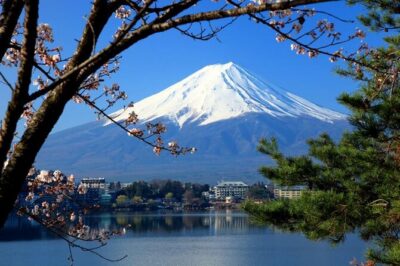
Mt. Fuji Subaru Line 5th Station at 2,300 meters
The Fuji Subaru Line 5th Station is the day’s highest stop, at about 2,300 meters. It sits on the lower northern slopes of Mt. Fuji and is the most developed and easiest-to-reach of the mountain’s four 5th stations.
You go there for the views, mountain air, and the feeling of being well above the surrounding towns. On a clear day, the station offers a commanding view of the Fuji Five Lakes area. It is also a popular sightseeing stop outside the climbing season, so you do not need to be planning a summit hike to enjoy it.
The road is open most of the year, but snow can cause temporary closures. During the main climbing season, private vehicles are restricted on much of the road. The supplied information gives July 14 to September 10, 2023, as the closure period for private vehicles, so check current conditions if your visit falls in summer.
The admission fee is not included and is listed as $15. Build in time for weather changes here. Mt. Fuji can be hidden by cloud even when the lower towns look clear, and cherry blossoms do not guarantee a view of the mountain.
Oshino Hakkai and Fuji-filtered spring water
Oshino Hakkai offers a quieter contrast to the 5th Station. The site has eight natural spring ponds fed by snowmelt from Mt. Fuji. The water filters through volcanic rock, producing remarkably clear pools.
This is one of the more atmospheric stops because it combines nature with a traditional Japanese setting. You’ll see thatched-roof houses, small shops, and places where fresh spring water can be sampled directly. On clear days, Mt. Fuji may reflect in the ponds.
The stop is scheduled for only 30 minutes. That is enough to see the main ponds and take photographs, but it is not much time for a slow walk, shopping, and a drink. Admission is free.
I would treat Oshino Hakkai as a short scenic pause rather than a full village visit. If the ponds and old-style buildings appeal to you more than outlet shopping, ask whether this stop can receive extra time.
More Cherry Blossom Tours in Tokyo
- Tokyo Cherry Blossoms blooming spots E-bike Tour, 3hrs
★ 5.0 · 27 reviews - Cherry Blossom Private Tour
★ 4.5 · 18 reviews
Lake Ashi and the Hakone caldera
Lake Ashi, also called Lake Ashinoko, is a crater lake formed after a volcanic eruption in the Hakone area nearly 3,000 years ago. The lake is one of Hakone’s signature sights, with walking paths, boat cruises, hot springs, and views toward Mt. Fuji when weather cooperates.
The tour gives this stop two hours, making it one of the day’s longer pauses. The listed location includes Togendai, a popular point near Lake Ashi. From there, you can take in the lake and surrounding mountain scenery.
Do not assume that a boat cruise is included. The tour includes private transport, but no cruise is listed among the inclusions. The same applies to other paid activities around the lake. Use the two hours for the views, or confirm in advance if you want to add a cruise.
The lake is especially valuable after the drive from Fuji because it changes the mood of the day. The 5th Station is high and exposed, while Lake Ashi gives you a broad, open view across water and wooded slopes.
Moto Hakone Shrine and the Torii of Peace
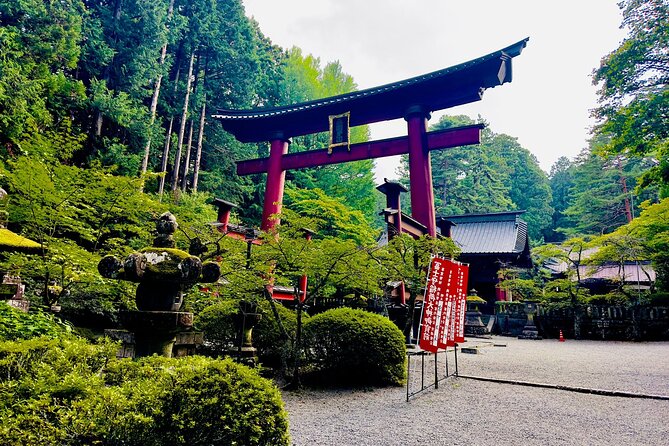
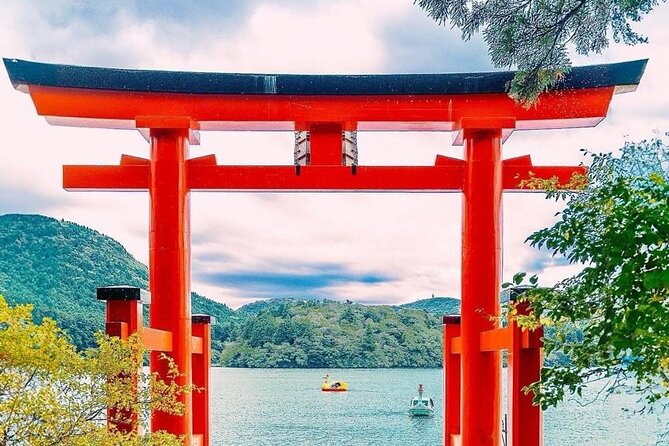
Moto Hakone Shrine sits beside Lake Ashi in a forested setting. Its most recognizable feature is the Torii of Peace, a red shrine gate standing in the water.
The shrine is associated with protection and good fortune, especially for travel and business. You can reach it by boat or by walking from Hakone-machi or Moto-Hakone, though this private tour handles the main transport between stops.
The scheduled visit is 30 minutes. That is enough for a look at the lakeside torii and a short visit to the shrine, but you should not expect a long forest walk or an unhurried religious visit. The area can be photogenic, so be ready to move efficiently if you want both the gate and the shrine grounds.
This stop also shows why the private vehicle is useful. Hakone’s attractions are scattered, and a driver can keep the day moving without requiring you to work out every local connection yourself.
Owakudani’s sulfur vents and black eggs
Owakudani is an active volcanic zone around a crater created during the last eruption of Mt. Hakone, about 3,000 years ago. You may see sulfurous fumes, hot springs, and hot rivers. On clear days, the area also offers another possible view of Mt. Fuji.
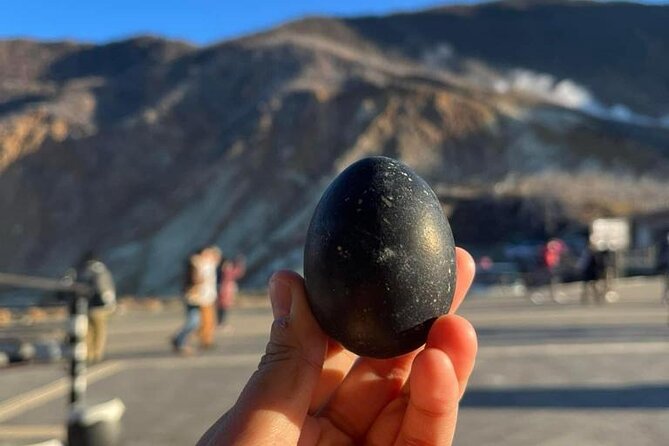
The famous local snack is the black egg. These eggs are cooked in hot spring pools, which darkens their shells through contact with sulfur. Local tradition says that eating one adds seven years to your life.
The stop lasts one hour and admission is free. The site is a good fit if you like unusual natural sights rather than polished gardens or shopping streets. The volcanic activity also means conditions can change, so follow local access rules during your visit.
Owakudani adds variety to the day. You are not simply collecting Fuji viewpoints. You are seeing the volcanic forces that shaped the Hakone region, then sampling one of its best-known foods.
Gotemba Premium Outlets for the final two hours
Gotemba Premium Outlets is Japan’s most popular outlet mall, with about 300 shops and restaurants. It sits near the base of Mt. Fuji and includes a food court, a 50-meter Ferris wheel, a hotel, and a public hot spring bath.
The stores cover fashion, sports, food, household goods, electronics, and luxury brands. Prices are generally lower than standard Japanese retail prices, but this is not a place where every item is a dramatic bargain. I would visit with a specific shopping goal rather than expect an inexpensive version of an entire department store.
Two hours gives you time to browse a portion of the mall, eat, or look for a particular brand. It may feel less appealing if you came mainly for temples, scenery, and Japanese culture. For families and mixed-interest groups, however, it gives everyone a different way to enjoy the last part of the day.
The setting near Mt. Fuji can also make the mall more memorable than a city shopping center, particularly if the mountain is visible. If you would rather spend more time at the shrine, lake, or museum, ask whether the outlet stop can be shortened.
What the driver and guide service may be like
This is the area where you should set expectations carefully. The booking is described as a private tour, but some customers received a driver who acted more as transportation than as a traditional guide. That means you may get help with timing and access without receiving detailed explanations of Japanese history, religion, or local culture.
One especially positive account names Rezi, who took a group to less crowded places and helped them fit in the Hakone Open Air Museum. That suggests some drivers offer useful local judgment and flexibility. It does not guarantee that Rezi will be assigned to your group.
There was also a serious complaint about unsafe driving and pressure to return quickly after stops. That is not a minor issue. If the driving feels unsafe, speak up immediately and contact the provider. The more favorable accounts praise kindness, smooth organization, and help with groups that included young children and older adults, so service can vary by assignment.
Before booking, ask three direct questions:
- Is the assigned person a licensed or dedicated guide, or a driver only?
- Can the driver explain the major sites in English or your preferred language?
- Can the route be adjusted if traffic or weather makes the full schedule unrealistic?
Those answers will tell you if this suits your expectations.
Who gets the best value from the $450 price
I think the price works best for four or five people sharing the vehicle. A family with children, a group of friends, or a mixed-age party can split the cost and gain a simpler day than managing several public transport connections.
The value is less convincing for one or two people who do not need private transport. In that case, the per-person cost is high, and the tour’s main benefit is convenience rather than a guaranteed expert guide.
The private format also helps if one person needs more frequent breaks or if your group wants to keep bags with you. The included hotspot may be useful for checking messages and maps during the day, though lunch and drinks remain your responsibility.
Cherry blossom timing deserves a practical warning. This is marketed as a cherry blossom day, but the supplied details do not give bloom dates or promise blossoms at every stop. Treat the flowers as a seasonal bonus, not the sole reason to pay for the tour.
Practical booking advice before you commit
Free cancellation is available if you cancel at least 24 hours before the start time. Changes made less than 24 hours before departure are not accepted, and late cancellations are not refunded.
The tour accepts service animals, is near public transportation, and is described as suitable for most participants. It is private, so only your own group takes part.
I would confirm the following before payment or at least before departure:
- Exact pickup point, since Tokyo Station is named while hotel pickup is also advertised
- Departure time, with an early start strongly favored for the full route
- Vehicle size for your group
- Whether the assigned person is a guide or driver
- Current access and fee conditions for the Subaru Line
- Whether you want the Hakone Open Air Museum added for its separate $15 fee
Should you book this Fuji and Hakone tour?
Book it if you have four or five people, want a private vehicle, and prefer seeing many major sights without planning the transport yourself. The range is excellent: mountain views, spring ponds, a volcanic valley, a shrine, a lake, and shopping all fit into one day.
Skip it if your main goal is a detailed cultural tour with expert commentary at every stop. In that case, confirm the guide arrangement or choose a service that clearly promises a dedicated guide.
My final advice is simple: start early, confirm the pickup location, and treat the schedule as ambitious. With the right expectations, this is a practical way to connect Tokyo with Mt. Fuji and Hakone in one long, scenic day. With a late start or an expectation of a full historical tour, the $450 price may disappoint.
FAQ
How long does the tour last?
The tour lasts approximately 10 hours.
How many people can join the private tour?
The advertised price covers up to five people per group. Only your group participates.
Where does the tour start and finish?
The stated meeting point is Tokyo Station at 1 Chome-9 Marunouchi, Chiyoda City, Tokyo. The activity ends back at the meeting point. Hotel pickup and drop-off are also advertised, so confirm the exact arrangement.
Is transportation included?
Yes. Private transportation and an air-conditioned vehicle are included. An onboard hotspot is also included.
Are admission fees included?
All listed fees and taxes are included except the Subaru Line 5th Station fee, shown as $15, and the Hakone Open Air Museum fee, also shown as $15. Admission to Oshino Hakkai, Lake Ashi, Moto Hakone Shrine, Owakudani, and Gotemba Premium Outlets is listed as free.
Is lunch included?
No. Lunch, coffee, tea, and alcoholic beverages are not included.
Can I cancel for a full refund?
Yes, if you cancel at least 24 hours before the experience start time. Cancellations and changes made less than 24 hours before the start time are not accepted for a refund.
Day trips around Japan
- Private Car Day Trip to the Kobe Mountains, Gardens and Hot Springs from Osaka
★ 4.5 · 16 reviews - 1-Day Tour from Okayama: Kurashiki, Gardens & Okayama Castle
★ 5.0 · 2 reviews - From Paris: Giverny, Monet’s Home & Gardens Half-Day Trip
★ 4.5 · 2,887 reviews - Victoria and Butchart Gardens Day Trip from Vancouver
★ 4.5 · 2,242 reviews
Just added around Japan
- Himeji: Himeji Castle & Kokoen Garden 3.5-Hour Guided Tour★ 4.9 · 30 reviews
- Tokyo: Ashikaga Flower Park with Entry Ticket★ 5.0 · 3 reviews
- 1-Day Tour from Okayama: Kurashiki, Gardens & Okayama Castle★ 5.0 · 2 reviews
- Osaka: Daytime Hanami (Cherry Blossom) and Food Tour★ 4.7 · 7 reviews
- Private Car Day Trip to the Kobe Mountains, Gardens and Hot Springs from Osaka★ 4.5 · 16 reviews
- Private Car Full Day Tour of Osaka Temples, Gardens and Kofun Tombs★ 5.0 · 24 reviews
- Full-Day Tour from Kanazawa: Samurai, Matcha, Gardens and Geisha★ 5.0 · 68 reviews
- Kyoto Kiyomizu Tea Ceremony with Scenic Garden Views★ 5.0 · 101 reviews
Tokyo Garden Tours, compared.
Tokyo Japanese Garden Lover’s Private Tour with Government-Licensed Guide
Read our review →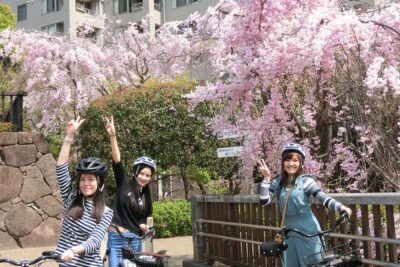
Tokyo Cherry Blossoms blooming spots E-bike Tour, 3hrs
Read our review →

Experience Crafting a Flower-Adorned Mini Japanese Garden
Read our review →Browse the lists this tour appears in