
Review · TOKYO GARDEN TOURS
Experience Crafting a Flower-Adorned Mini Japanese Garden
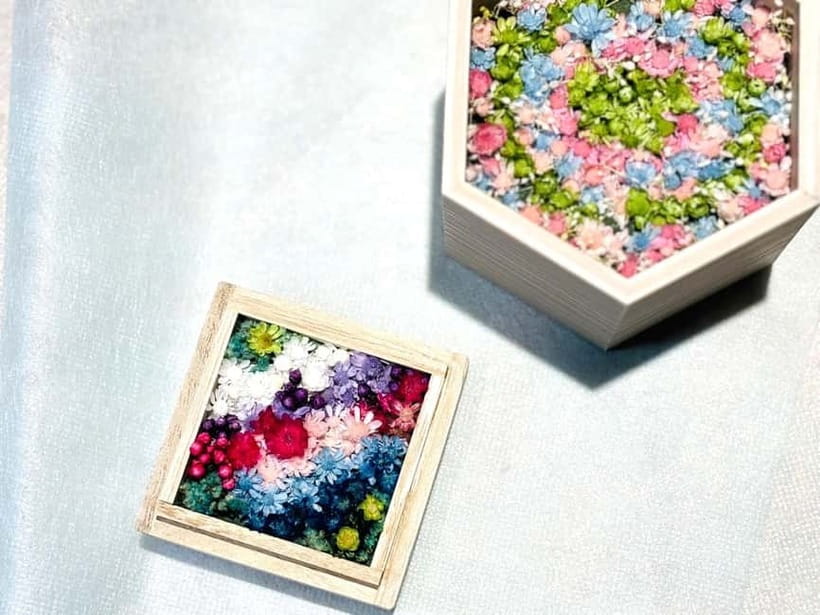
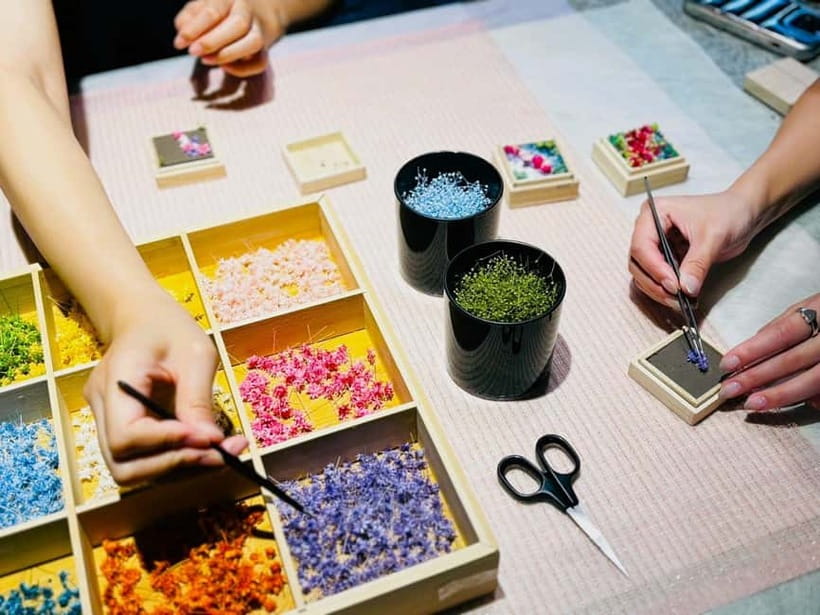
The best part of this Shinjuku activity is that you make something rather than simply buy it. In a spacious cafe, you arrange preserved and dried flowers inside a small box, creating a tiny Japanese-style garden that looks like a diorama. Your design is entirely your own, so the souvenir carries a personal touch that a shop-bought trinket cannot.
I like the relaxed 90-minute pace and the friendly English-speaking instruction. I also like that beginners can take part without special skills, and that one soft drink is included. The main consideration is size: this is a small decorative garden, not a large craft project, and the $45 price makes the most sense if you value the making time as much as the finished keepsake.
Key points to know before booking
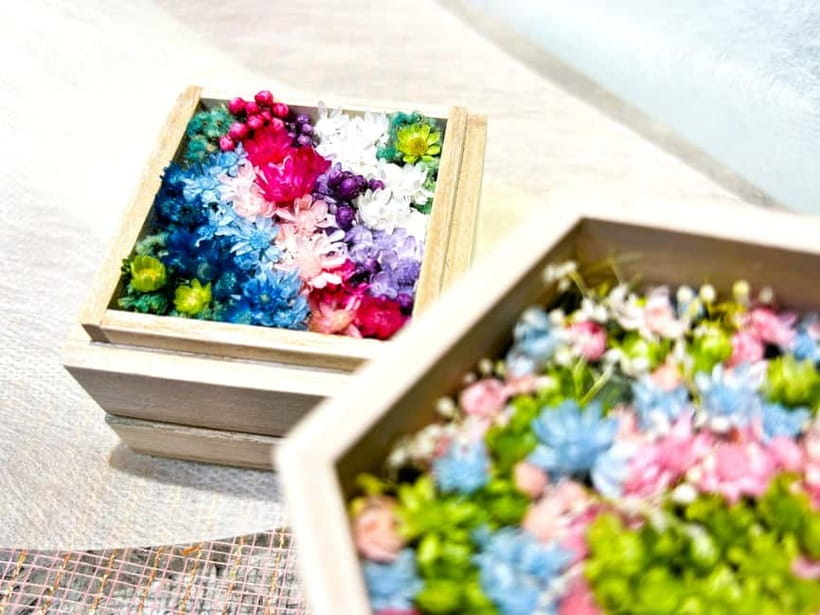
- Create a miniature Japanese garden: Arrange preserved and dried flowers in a small container for a diorama-style decoration.
- Work at an easy pace: The 90-minute session gives you time to try different arrangements without rushing.
- English instruction is provided: The instructor explains the materials and how to assemble your garden.
- A convenient Shinjuku location: Sumika is one minute from Tokyo Metro Shinjuku Sanchome Station, Exit E3.
- Small groups keep it personal: The class is limited to 10 participants.
- A drink is included: One soft drink comes with the activity, while meals and other drinks cost extra.
Making a tiny garden in central Shinjuku
Shinjuku is known for bright signs, department stores, restaurants, and a constant flow of people. This experience gives you a quieter way to spend part of your time here. You step into a cafe, sit down with flowers and a small box, and spend the next hour and a half making a pocket-sized piece of Japan.
The finished work is designed to look like a Japanese flower garden in miniature. Think of it as a small diorama rather than a conventional bouquet. The preserved and dried flowers keep their shape, allowing you to create an arrangement that can sit indoors after your trip.
I find this kind of activity especially useful in a city break. You get a break from walking and shopping, but you still make something connected to Japan. It also gives you a souvenir with a story: you remember where you made it, who you made it with, and the choices behind its final shape.
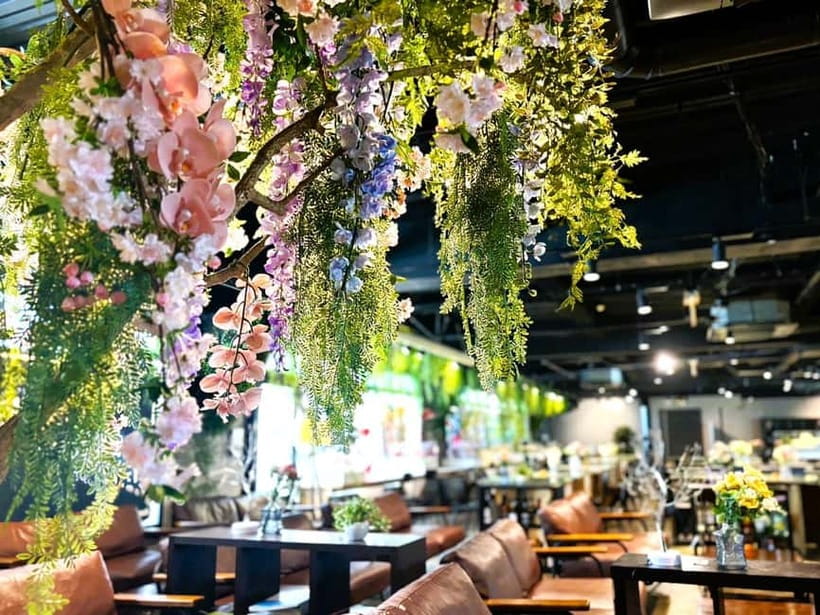
The setting is a spacious cafe, so this is not a cramped table squeezed into the corner of a busy shop. You can enjoy the work at leisure and take a soft drink during the session. That combination makes the experience feel more like a gentle creative break than a formal lesson.
More Japanese Gardens in Japan:
- Tokyo Japanese Garden Lover’s Private Tour with Government-Licensed Guide
★ 5.0 · 27 reviews - Kyoto: Japanese Gardens Private Customizable Tour
★ 4.1 · 18 reviews - Lafcadio Hearn Japanese Gardens Admission Adult Ticket
★ 4.5 · 64 reviews
What happens during the 90-minute session
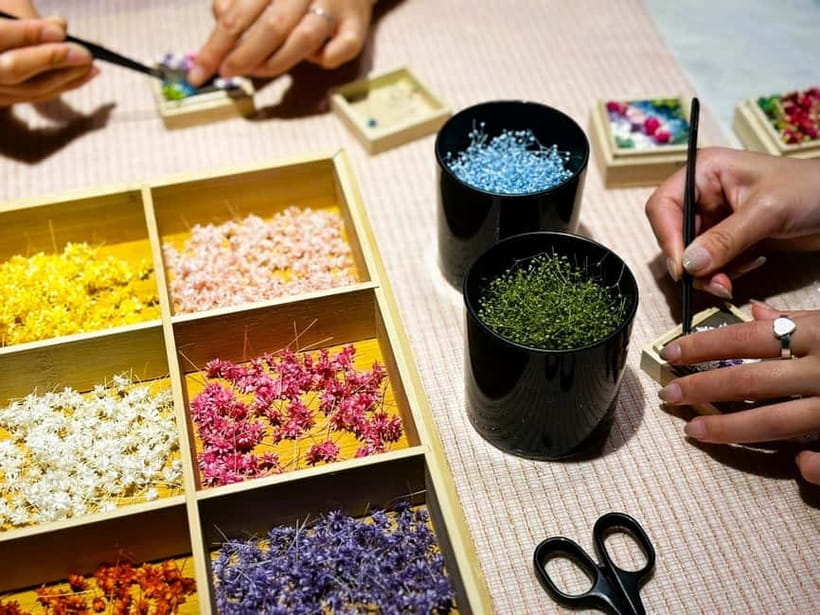
At the start, the instructor explains how to make the flower garden and introduces the available materials. You receive the small container and the preserved and dried flowers, then begin planning how to place them.
The important point is that you do not need prior craft experience. The activity is designed for first-time participants, and the instructor can offer ideas if you are unsure where to begin. You can follow a suggested approach or make your arrangement more personal.
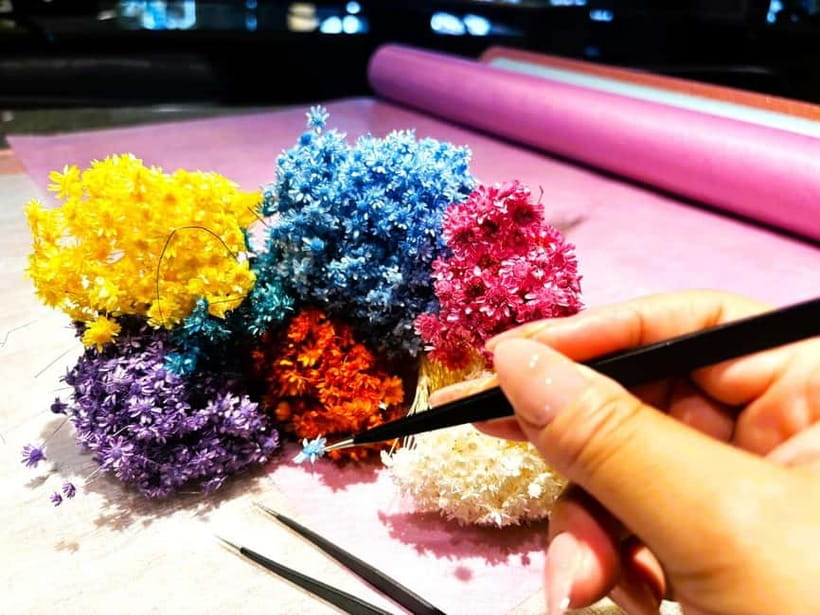
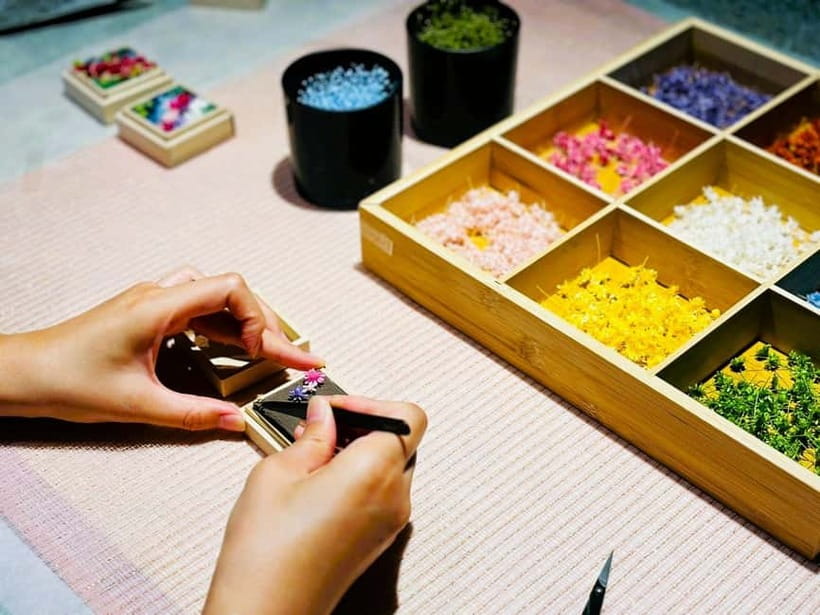
You might first sort through the small colorful flowers and consider height, color, and placement. Then you place them into the container to build the garden scene. Since the flowers are preserved or dried, you are working with materials made for decoration rather than fresh stems that need water and careful handling.
The process has no sightseeing stops or complicated schedule. The focus stays on the table in front of you. That is good news if you want a calm activity, though it may feel too quiet if you are looking for a fast-moving tour or a long list of attractions.
The instructor speaks English, which removes one concern for international visitors. The teaching is practical: an explanation of the materials, guidance on how to make the garden, and suggestions as you work. The class size is capped at 10, so the session has a more personal feel than a large workshop.
The activity also works well for friends and family. Each person can create a different garden, even when everyone uses similar flowers. That makes the finished pieces fun to compare without turning the session into a competition.
Choosing flowers for a one-of-a-kind souvenir
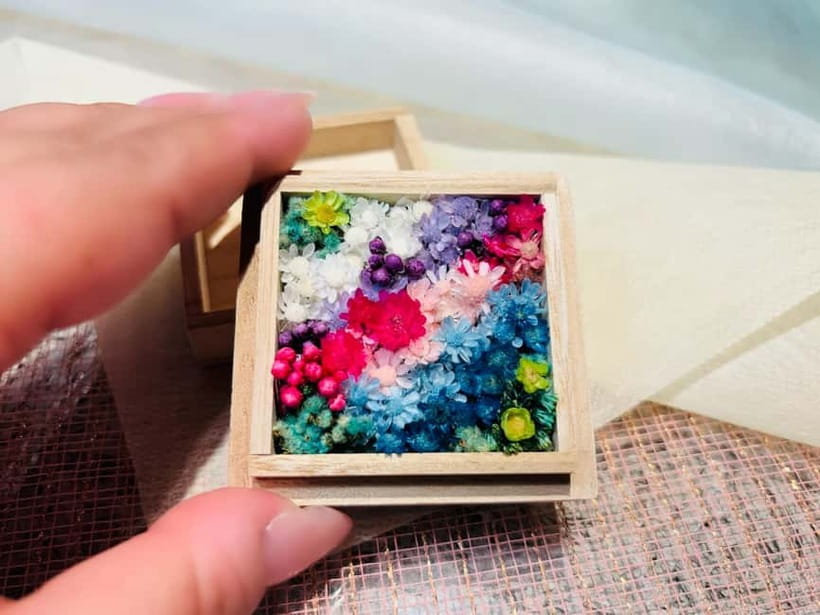
The appeal here is not simply that you take something home. It is that you make the decisions yourself. A small shift in color or placement changes the mood of the whole garden.
You may prefer a neat, balanced arrangement, or you may like a looser design with flowers placed at different heights. The supplied information does not specify a set pattern, so you should expect room for personal choices rather than a craft where every finished item looks identical.
That freedom is helpful for beginners. You do not need to arrive with an artistic plan. Start with a few flowers, see how they look in the container, and adjust them. The instructor can suggest ideas if your first arrangement feels flat or crowded.
The preserved and dried flowers also make the result practical as interior decoration. Once home, you can place the small garden on a shelf, desk, or another indoor spot. It is not a fresh floral arrangement, so you avoid the short life and daily care that come with cut flowers.
The finished item is still small, and that affects the value. If you want a substantial souvenir or a piece of traditional Japanese pottery, this will not fill that role. If you want something light, personal, and easy to display, it fits well.
Why the cafe setting matters
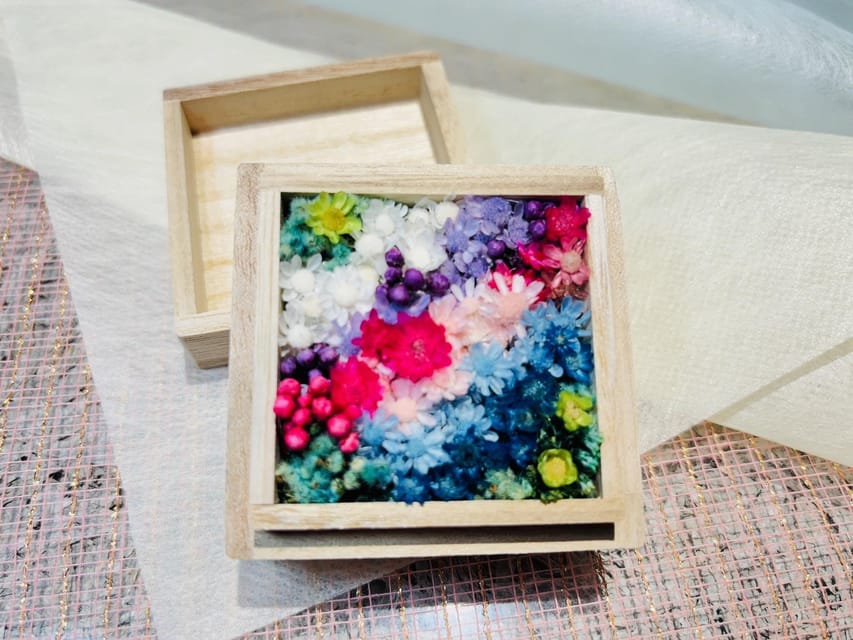
A cafe is a smart setting for a hands-on activity. You have a place to sit, a drink included, and a little breathing room around the creative work. One soft drink is part of the $45 price, but lunch, dinner, bottled drinks, and additional food or drink are not included.
A useful tip is to ask about the parfait option. One participant specifically found the parfait a special treat and recommended upgrading for it, while another praised its taste. The available information does not state the upgrade price or guarantee that it is part of every booking, so treat it as an optional extra to confirm rather than part of the standard package.
The cafe atmosphere also makes this a good choice for people who prefer an indoor plan. You do not need favorable weather to enjoy it, and the activity offers a break from the noise and crowds of central Tokyo. Still, the attraction is the craft itself. The cafe should not be treated as a major sightseeing stop.
More Garden Tours in Japan:
- Osaka: teamLab Botanical Garden Entry Ticket
★ 4.5 · 1,710 reviews - Imperial Palace East Garden and Edo Castle Walking Tour in Tokyo
★ 5.0 · 510 reviews - Kyoto Zen Meditation & Garden Tour at a Zen Temple with Lunch
★ 5.0 · 441 reviews - Kyoto Arashiyama Bamboo forest & Garden Half-Day Walking Tour
★ 5.0 · 413 reviews
Is $45 a fair price?

At $45 per person, this is not the cheapest way to spend 90 minutes in Tokyo. You are paying for instruction, materials, a small group setting, one soft drink, and a handmade souvenir. All fees and taxes are included, which keeps the advertised cost clear.
I would judge the value by asking one question: do you want the finished item alone, or do you also want the time spent making it? If you only want a small flower decoration, you may find cheaper souvenirs in Tokyo. If you want an easy creative activity with guidance and a personal result, the price is easier to justify.
The small group limit of 10 matters here. A large class could make the activity feel like a production line, while a group this size gives the instructor more room to help. The English instruction is another part of the value for international visitors who want clear guidance.
The included drink is welcome, but it should not drive your booking decision. The craft, the calm setting, and the custom-made souvenir are the real reasons to choose this experience. Remember to budget separately if you want a parfait, other drinks, lunch, or dinner.
Finding Sumika near Shinjuku Sanchome
The meeting point is easy to reach by Tokyo Metro. Sumika is a one-minute walk from Shinjuku Sanchome Station, Exit E3. The first floor of the building is a pachinko parlor, so do not expect the entrance to look like a quiet craft studio from the street.
An outside elevator near the pachinko parlor entrance takes you to the fourth floor. The shop is called Sumika. The Google Plus Code is MPR4+J9 Shinjuku City, Tokyo.
This is the kind of address where a little attention saves time. Look for the pachinko parlor building, find the outside elevator, and go to the fourth floor. The station access is a major advantage, especially if you are fitting the workshop between other Shinjuku plans.
Transportation to the meeting point is not included. You pay your own fare to the station and make your own way to the building. The activity itself is not a sightseeing transfer, so plan your route before the start time.
Who will enjoy this flower workshop most
I would recommend this experience to you if you want a quiet, creative pause in Tokyo. It suits first-time crafters because the process is explained and the instructor can offer ideas. You do not need to arrive with a design or special ability.
It also works well for friends, couples, and families who want to make separate souvenirs together. The finished gardens can be compared afterward, and each person leaves with a different result.
The activity may suit you if you collect small interior decorations or prefer souvenirs that are easy to pack. A flower garden in a small box takes less room than many larger purchases, though the exact container size is not stated.
You may want to skip it if your priority is a major cultural performance, a long walking tour, or a large traditional craft. The experience is focused and gentle. Its strength is the act of making a small object, not the number of sights covered.
The workshop has an English-speaking instructor, but no individual instructor names are provided. You can expect English guidance rather than a named specialist-led tour. The class is limited to 10 participants, which helps keep the instruction manageable.
Booking details that affect your plans
The session lasts 90 minutes, with start times depending on availability. Check the calendar carefully so the workshop fits your Shinjuku schedule.
You can cancel up to 24 hours in advance for a full refund. The reserve-now, pay-later option lets you hold a place without paying at the time of booking, which is useful when your Tokyo plans are still changing.
The standard package includes one soft drink and all fees and taxes. It does not include lunch, dinner, bottled drinks, additional meals, additional drinks, or transportation to the meeting point.
With a maximum of 10 participants, booking ahead is sensible if you have a fixed day in Tokyo. The activity has a clear time limit, so arriving at the wrong building or floor could cut into the making time.
Should you book this Shinjuku activity?
Book it if you want a hands-on souvenir, a calm indoor break, and clear English instruction close to a major Tokyo station. The flowers are easy for beginners to arrange, the group is small, and the 90-minute session gives you enough time to work without a frantic finish.
I would especially choose it for a family group, a pair of friends, or anyone who prefers making a personal keepsake to buying a standard souvenir. Ask about the optional parfait if that extra treat appeals to you, but remember that it is not part of the stated basic inclusions.
Skip it if you want a large craft, a deep cultural lecture, or a sightseeing tour with several stops. At $45, the value depends on enjoying the creative process. For the right visitor, this is a pleasant way to turn a short break in Shinjuku into something you can display at home.
FAQ
Where does the flower garden activity take place?
It takes place at Sumika in Shinjuku, Tokyo, on the fourth floor of a building whose first floor is a pachinko parlor.
How close is Sumika to Shinjuku Sanchome Station?
Sumika is a one-minute walk from Tokyo Metro Shinjuku Sanchome Station, Exit E3.
How do I reach the fourth floor?
An outside elevator is located near the entrance of the pachinko parlor. Use it to go to the fourth floor.
How long does the activity last?
The flower garden workshop lasts 90 minutes.
What do I make during the session?
You create a Japanese-style miniature flower garden by arranging preserved and dried flowers inside a small box or container.
Is the activity suitable for beginners?
Yes. The activity is described as easy for first-time participants, and the instructor explains the materials and how to make the garden.
Is instruction available in English?
Yes. The instructor language is English.
How many people can join the group?
The group is limited to 10 participants.
What is included in the price?
The $45 price includes one soft drink, all fees, and taxes.
Can I cancel for a full refund?
Yes. You can cancel up to 24 hours in advance for a full refund.
Just added around Japan
- Himeji: Himeji Castle & Kokoen Garden 3.5-Hour Guided Tour★ 4.9 · 30 reviews
- Tokyo: Ashikaga Flower Park with Entry Ticket★ 5.0 · 3 reviews
- 1-Day Tour from Okayama: Kurashiki, Gardens & Okayama Castle★ 5.0 · 2 reviews
- Osaka: Daytime Hanami (Cherry Blossom) and Food Tour★ 4.7 · 7 reviews
- Private Car Day Trip to the Kobe Mountains, Gardens and Hot Springs from Osaka★ 4.5 · 16 reviews
- Private Car Full Day Tour of Osaka Temples, Gardens and Kofun Tombs★ 5.0 · 24 reviews
- Kanazawa: Half-Day Private Tour – Garden, Castle, Geisha★ 5.0 · 10 reviews
- Full-Day Tour from Kanazawa: Samurai, Matcha, Gardens and Geisha★ 5.0 · 68 reviews
Tokyo Garden Tours, compared.


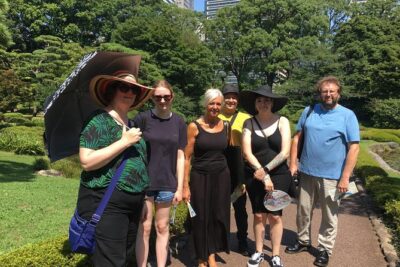
Tokyo Japanese Garden Lover’s Private Tour with Government-Licensed Guide
Read our review →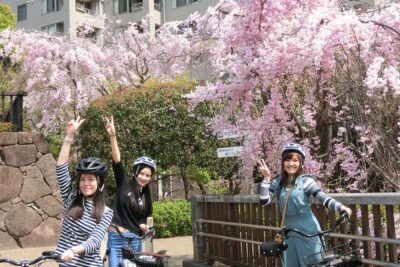
Tokyo Cherry Blossoms blooming spots E-bike Tour, 3hrs
Read our review →
Browse the lists this tour appears in