
Review · TOKYO GARDEN TOURS
Tokyo: Pvt. Tour – Edo Castle & Imperial Palace East Gardens
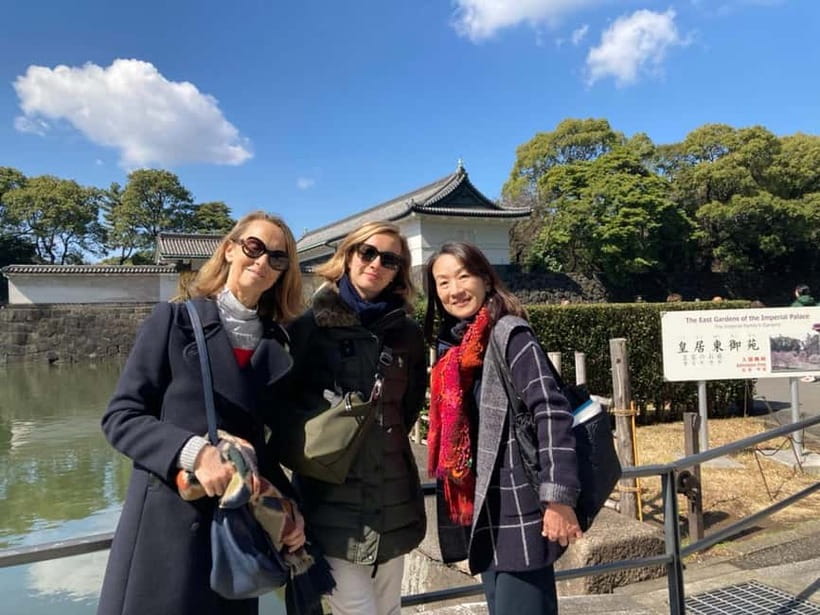
Tokyo’s Imperial Palace East Gardens give you a rare look at old Tokyo without leaving the city center. Within a short walk of Tokyo Station, you’ll pass through the former grounds of Edo Castle, where massive stone walls, moats, guardhouses, and the ruins of the main keep recall the power of Japan’s shoguns.
I like the private format, which lets your guide adjust the pace for your family or group. I also like the way the tour links the garden’s flowers, ponds, architecture, and castle remains to Japan’s political past. The main limitation is clear: you do not enter the palace where the Emperor resides, and seasonal flowers may not be at their best on your chosen date.
Key points to know before you book
- Edo Castle remains: Walk beside huge stone walls, moats, and the ruins of the castle keep.
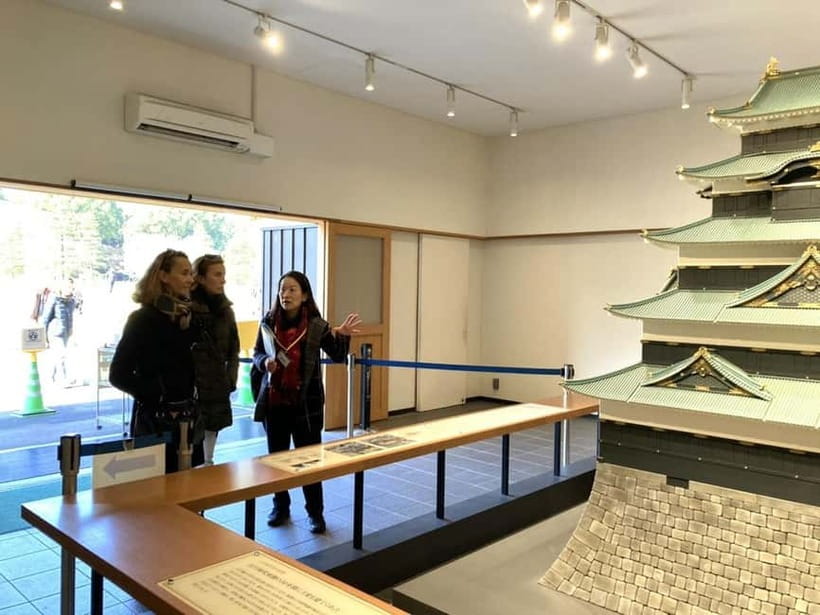
- Private English guide: Your group receives direct attention, with guides such as Yoshi, Yuji, Mari, and Masahito praised for clear explanations and easy pacing.
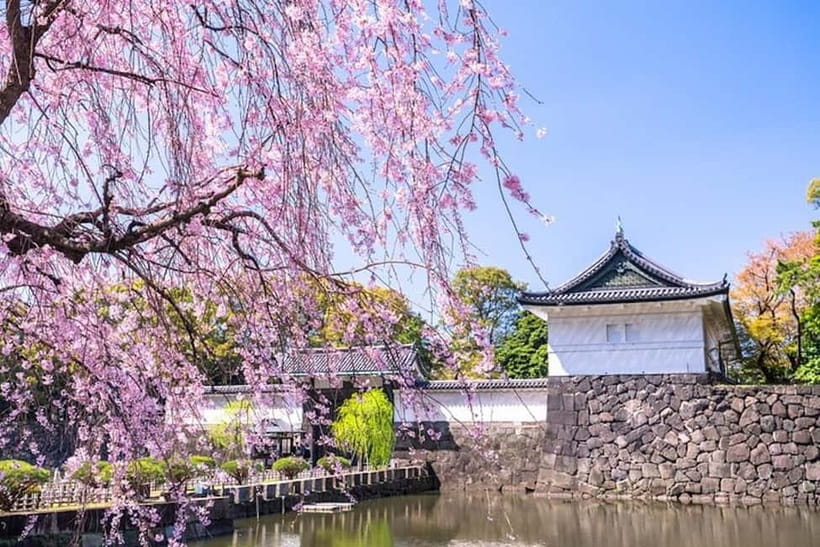
- Ninomaru Garden: See a traditional Japanese garden with flowers that change through the year, including cherry blossoms, irises, and autumn leaves.
- Central Tokyo setting: Meet near Tokyo Station and Otemachi, then trade city traffic for a quiet garden.
- Two-hour visit: The tour gives you a focused introduction rather than an all-day palace excursion.
- Important limit: The Imperial Palace interior and Inner Palace are not part of this experience.
Why Edo Castle matters in modern Tokyo
The East Gardens occupy part of the old Edo Castle grounds, making this more than a pleasant city park walk. Edo Castle was the political center of shogun-era Japan, and its scale still comes through in the heavy masonry, broad moats, and carefully placed entrances.
You will not see a complete castle rising above the trees. The main keep is gone, but the remaining stonework helps you picture the size and defensive strength of the site. A guide adds the missing context, explaining how the castle functioned and how the area connects to Japan’s imperial past.
I think this setting works especially well for first-time visitors. Tokyo can feel like a wall of glass towers, train stations, signs, and traffic. Here, the city’s modern center remains close, but the visual pace changes. The broad grounds and old walls give you room to think about the layers of Japanese history beneath present-day Tokyo.
The tour also avoids the common mistake of treating the palace grounds as a single attraction. Edo Castle and the Imperial Palace are connected, but they are not the same thing. Your walk focuses on the East Gardens and the former castle grounds, not on the Emperor’s private residence.
More Garden Tours in Tokyo:
- Imperial Palace East Garden and Edo Castle Walking Tour in Tokyo
★ 5.0 · 510 reviews - Tokyo: Imperial Palace East Gardens Walking Tour
★ 4.8 · 353 reviews - Mt. Fuji, Cherry Blossom & Shiba Sakura Pvt. Day Tour
★ 5.0 · 326 reviews
Meeting at Wadakura Fountain Park
Your guide meets you in front of Starbucks in Wadakura Fountain Park. Look for a signboard marked gotcha. The location is practical: it is about a three-minute walk from Otemachi Station exit D2 and roughly ten minutes from Tokyo Station’s Marunouchi central exit.
That makes the tour easy to fit into a day based around Tokyo Station, Marunouchi, Ginza, or Otemachi. I would allow a little extra time to find the meeting point, especially if you are arriving through Tokyo Station. The station is large, and a ten-minute walk can take longer if you are checking signs, crossing busy streets, or stopping to get oriented.
The meeting point also gives you a useful transition. You begin in a polished business district, then move into a place shaped by feudal power, imperial ceremony, gardens, and old defensive design. That change is part of the appeal.
The tour is private, so you are not tied to the rhythm of a large group. Families can walk at a comfortable speed, and couples or small groups can ask questions without waiting for a dozen other people to catch up. Several guides have been praised for being punctual, flexible, and attentive to the group’s pace.
Entering through the Main Gate
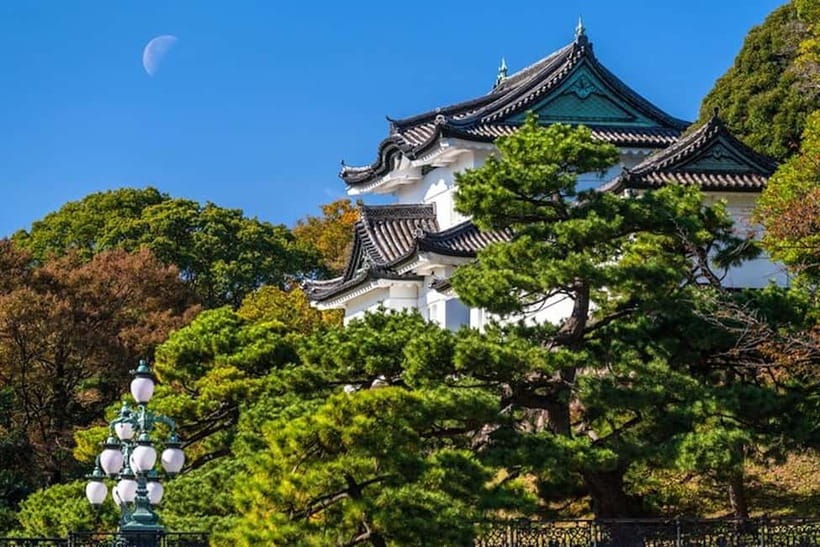
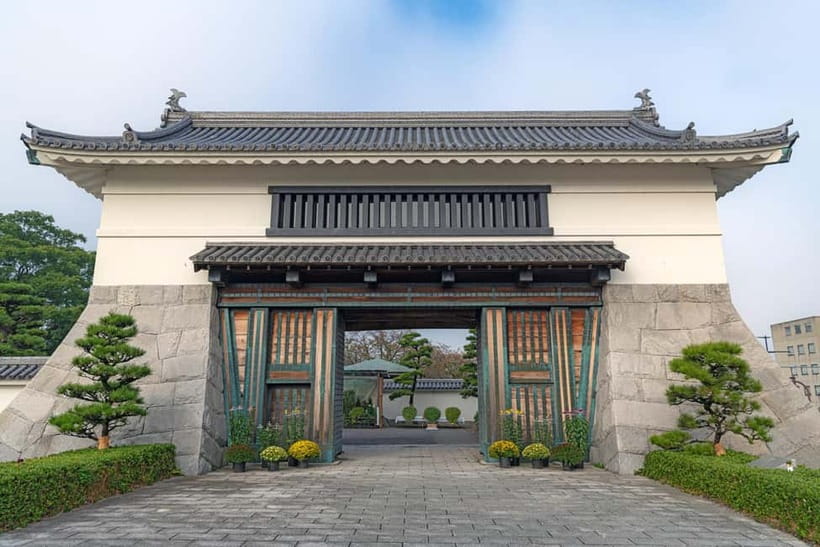
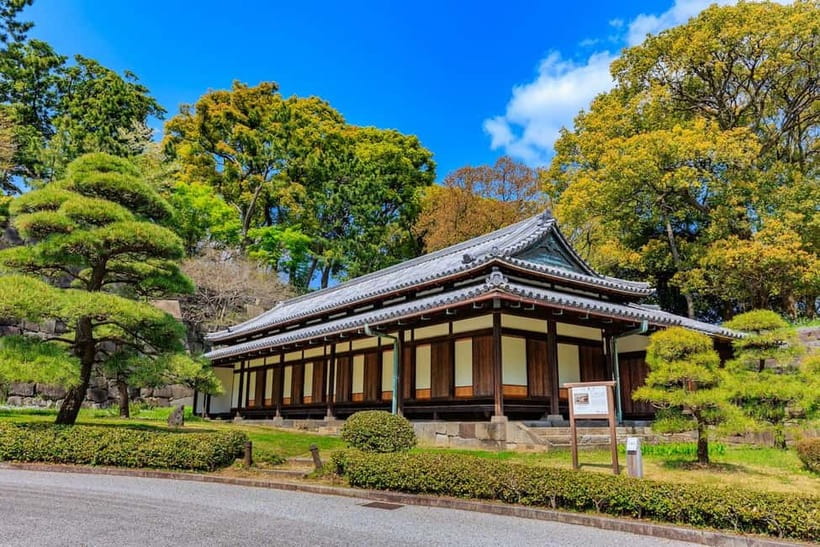
One of the first points of interest is the historic Main Gate, with its traditional guardhouse and a mix of old architecture and modern security arrangements. This is a useful introduction to the site because it shows how a historic monument still functions as a controlled public space.
Expect a baggage inspection when entering the Imperial Palace grounds. This is not a minor detail if you have been shopping earlier in the day. If you buy Japanese knives or other objects that could be treated as weapons in Tsukiji, Asakusa, or elsewhere, place them in a coin locker or similar storage before meeting the guide.
Pack lightly if you can. A small bag makes the inspection easier and keeps the walk more comfortable. The supplied information does not give a detailed list of prohibited items, so do not assume a purchased knife or similar object will be allowed simply because it is wrapped.
Your guide can explain how the gate and guardhouse fit into the larger castle complex. That kind of explanation is where a private tour earns its keep. On your own, you can see the structure. With a guide, you have a better chance of understanding why the entrance was arranged that way and what it tells you about the site.
Edo Castle walls, moats, and the lost keep
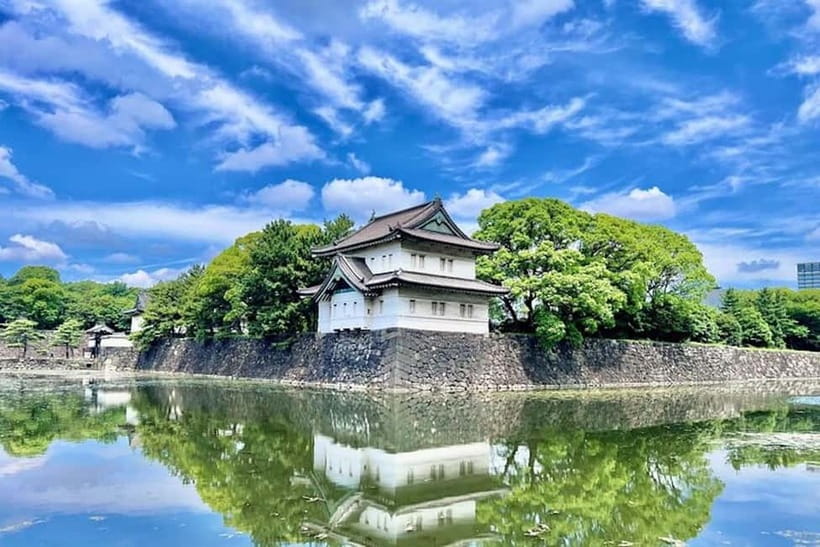
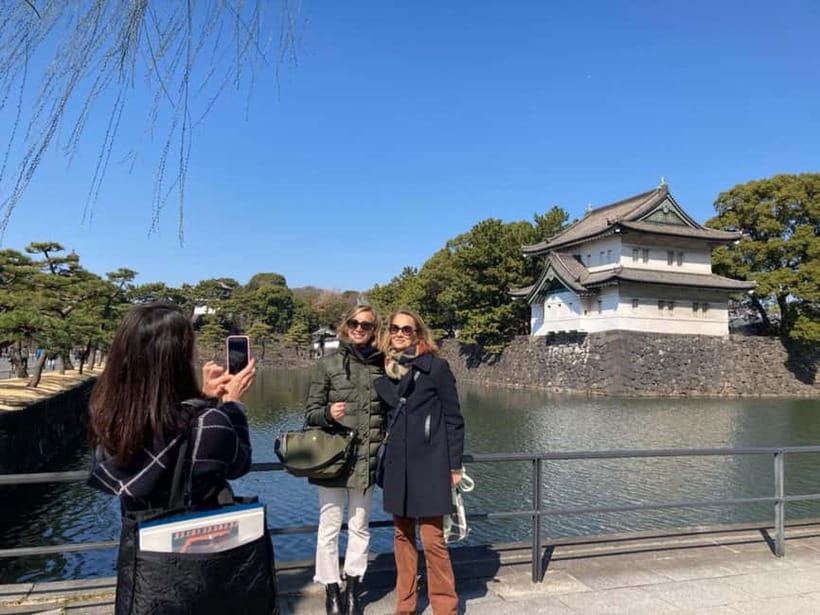
The castle ruins are the tour’s strongest historical stop. Massive stone walls and moats remain, while the former keep survives as a ruin rather than a complete building. The scale is easy to underestimate in photographs, so seeing the masonry in person matters.
This is not a reconstructed castle visit with furnished rooms and dramatic interiors. You are looking at foundations, walls, open ground, and traces of a much larger complex. That may disappoint you if you want a full castle building or indoor displays. It will please you if you enjoy reading a site through its layout and surviving structures.
A guide can turn what might seem like a pile of stones into a readable place. The tour’s historical focus includes the shoguns, the Edo period, the palace buildings, and the people connected with the grounds. One guide, Naoko, was especially noted for explaining buildings, past and present inhabitants, the garden, and even the koi.
The private setting is useful here because your questions can shape the discussion. You might want more about castle defenses, imperial connections, architecture, or daily life. The tour is designed as a guided walk, not a scripted audio route, so the quality of the visit depends in part on the guide you receive. The feedback points to strong English and careful explanations across several guides, including Yoshi, Ishida, Yuji, Mari, and Masahito.
Same corner of the map, a different planting:
- Tokyo: Edo Castle & East Garden of the Imperial Palace Tour
★ 4.7 · 112 reviews - Tokyo Private Tour! Edo Castle & Imperial Palace East Gardens
★ 5.0 · 105 reviews - Tokyo: Tsukiji Market and Hama-rikyu Gardens Guided Tour
★ 4.8 · 73 reviews - Tokyo: Kimono Rental inside Shinjuku Gyoen National Garden
★ 4.9 · 39 reviews
Ninomaru Garden and the changing seasons
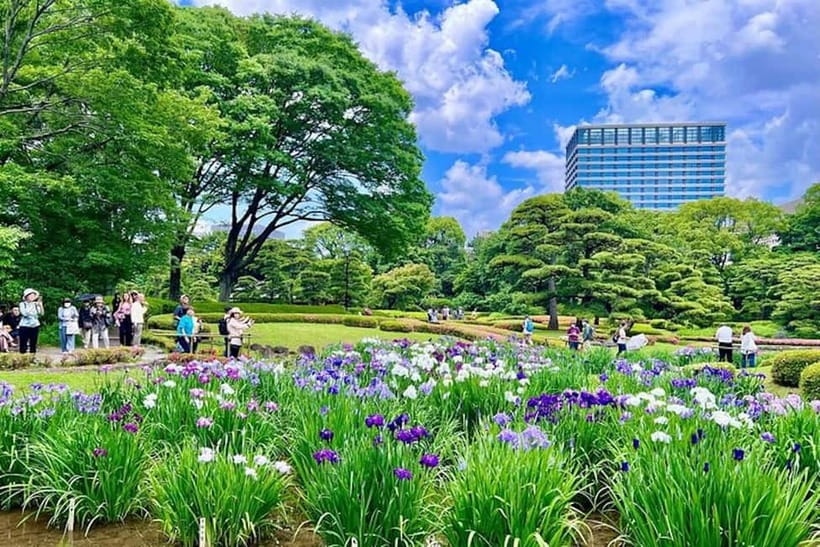
Ninomaru Garden brings a different mood. Instead of focusing on walls and military power, the route moves through a traditional Japanese garden with seasonal flowers, water, trees, and carefully arranged views.
The flowers change through the year. Cherry blossoms appear in spring, irises in summer, and autumn leaves later in the year. This makes the timing of your visit important, but it also means the garden does not have one fixed best season.
Spring can be lovely, but blossoms are not guaranteed on every April date. One April visit fell before the cherry blossoms and flowers had properly opened, which was a disappointment despite the garden itself being worthwhile. If blossoms are your main reason for booking, keep your expectations flexible. Nature does not follow a tour calendar.
The garden is also worth visiting outside peak flower periods. Its value comes from the arrangement of paths, ponds, trees, stonework, and open views, not only from a single bloom. A guide can point out details you might pass without noticing, including the koi and the way the garden reflects Japanese ideas about nature and design.
I like this balance between castle remains and garden space. The ruins provide scale and political history. Ninomaru offers a slower look at Japanese aesthetics and the careful use of space. In two hours, you get both without turning the visit into a marathon.
What the guide adds to the experience
The strongest reason to book this tour is the guide. You can enter the East Gardens without a paid tour, so the real question is what you want from the visit. If you only need a quiet walk and a few photographs, going alone may be enough. If you want the site explained in English, the extra cost makes more sense.
The guide names attached to particularly strong experiences include Hiroshito, Yoshi, Masahito, Mari, Yuji, Naoko, Ishida, and Chichiro. Their reported strengths vary slightly, but the pattern is consistent: clear English, friendly conduct, punctual meeting, useful historical detail, and an ability to adjust the pace.
Masahito was noted for letting the group set the speed and for finding answers to questions he did not immediately know. Yuji was praised for walking comfortably with a family and adding details that would have been easy to miss alone. Naoko covered an unusually wide range of subjects, from buildings and former residents to koi and garden design.
You should not expect every guide to give exactly the same talk. That is normal for a private walking tour, and it can be an advantage. Your experience can become more conversational and personal. It also means you should arrive ready with questions if a particular subject matters to you.
The feedback includes families, couples, and first-time visitors to Tokyo. One family described the experience as a highlight of the trip, while other participants appreciated help with onward station directions after the walk. Those practical touches matter when you are still learning how Tokyo’s large transit system fits together.
Is two hours enough?
Two hours is a sensible length for this route. It gives you time to see the Main Gate, castle remains, moats, stone walls, and Ninomaru Garden without committing half a day to one site.
You should think of it as an introduction, not an exhaustive study of the Imperial Palace grounds. The tour does not enter the Inner Palace, and it does not include palace interiors. If you want a long architectural survey or a deep look at every corner of the gardens, you will need more time on your own.
The short duration is helpful in a Tokyo itinerary. You can schedule the walk in the morning, then continue toward Tokyo Station, Marunouchi, Ginza, or another neighborhood. It also suits families and people who want historical context without spending hours in a museum.
The pace appears to be leisurely rather than rushed. Still, this is a walking tour on outdoor grounds, so wear shoes you can use comfortably for two hours. The supplied details do not specify a distance or accessibility arrangements, so contact the provider if you have mobility concerns or need a particular route.
Is $63 a fair price?
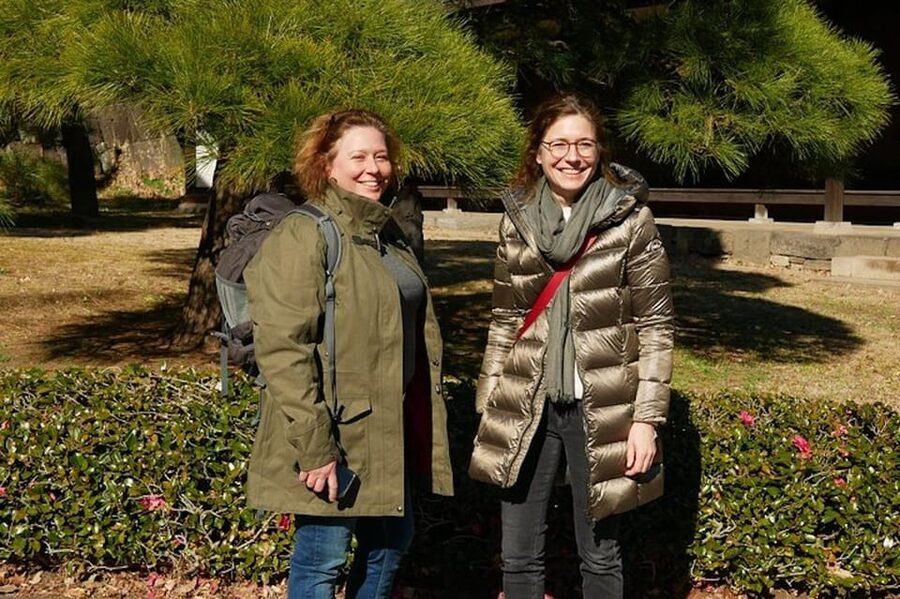
At $63 per person, this is not the cheapest way to enter a public garden. The East Gardens can be visited without joining this private experience, so you are paying mainly for the guide, the English explanations, the private format, and the convenience of a planned route.
For a solo visitor, the price may feel high compared with walking in independently. For a couple, family, or small group, the value improves because the cost buys a private conversation rather than a place in a large shared group.
I would book it if you care about the Edo period, want help interpreting the ruins, or prefer having a local English-speaking guide explain the garden as you walk. I would skip it if you are satisfied with taking photographs and reading signs at your own speed.
The high rating reflects the parts that matter most for this kind of experience: punctual guides, strong English, flexible pacing, and explanations that make the grounds easier to understand. Still, the flowers are seasonal, and no guide can guarantee cherry blossoms on a particular date.
The reservation terms also reduce some risk. You can cancel up to 24 hours in advance for a full refund, and you can reserve now while paying later. Check available start times before committing, since the duration is fixed at two hours but the schedule can vary.
Who should book this private garden walk?
I would recommend it to first-time Tokyo visitors who want a historical anchor in the middle of the city. It is also a good choice for families, since the private format allows a guide to slow down, answer questions, and keep the walk comfortable.
History fans will appreciate the connection to the shoguns and Edo Castle. Garden lovers will enjoy Ninomaru’s seasonal planting and traditional design. The experience also suits anyone who wants a quieter break from Tokyo’s dense streets without spending a full day outside the center.
You may not need it if you already have strong knowledge of Japanese history or prefer independent sightseeing. You may also want a different activity if your main goal is to enter the palace itself. This tour does not provide that access.
Should you book the Edo Castle and East Gardens tour?
Book this tour if you want the former Edo Castle grounds explained rather than simply seen. The combination of stone walls, moats, castle ruins, gate architecture, and Ninomaru Garden gives you a compact introduction to Japan’s shogun-era capital and imperial center.
The best reason to choose it is the private guide. The gardens are pleasant on their own, but the stories, questions, and historical links give the two-hour walk more purpose. At $63, the price is fair for a small private group, especially if you are traveling with family or friends.
Skip it if you expect to walk inside the Imperial Palace, see a complete castle, or guarantee cherry blossoms. For everyone else, this is a well-paced way to put Tokyo’s modern streets in historical context.
FAQ
Where does the tour meet?
Meet in front of Starbucks in Wadakura Fountain Park. Look for a guide holding a signboard that says gotcha.
How far is the meeting point from public transportation?
The meeting point is about a three-minute walk from Tokyo Metro Otemachi Station exit D2. It is about a ten-minute walk from Tokyo Station’s Marunouchi central exit.
How long does the tour last?
The guided walking tour lasts two hours.
Is the tour private?
Yes. It is offered as a private group experience with a live English-speaking guide.
Does the tour enter the Imperial Palace?
No. The tour visits the Imperial Palace East Gardens and former Edo Castle grounds, but it does not enter the palace where the Emperor resides or the Inner Palace.
What can I see in the East Gardens?
You can see the historic Main Gate and guardhouse, Edo Castle ruins, large stone walls, moats, the former keep area, and Ninomaru Garden. Seasonal flowers may include cherry blossoms, irises, and autumn leaves.
Is there a security check?
Yes. Visitors are subject to a baggage inspection when entering the Imperial Palace grounds. If you purchase Japanese knives or other items that could be used as weapons before the tour, store them in a coin locker or similar place before meeting the guide.
Just added around Tokyo
- TOKYO: Tailored Gardens tour with Pro Gardener by E-bike -BASIC★ 5.0 · 2 reviews
- Tsukiji Food Strolling and Hama Rikyu Garden Walking Tour★ 5.0 · 7 reviews
- Tokyo: Serene Sakura & Sake: An Exclusive Brewery Pairing Lunch★ 5.0 · 2 reviews
- Tokyo: Kimono Experience inside Shinjuku Gyoen National Garden★ 5.0 · 3 reviews
- Tokyo Cherry Blossom Half Day Walking Tour with a Local Guide★ 3.5 · 4 reviews
- Cherry Blossom Highlights, Asakusa, Ueno, Imperial Palace Garden★ 4.5 · 4 reviews
- Sumida Riverside Walk: Garden &Temple Ritual (4 Meeting Points)★ 5.0 · 5 reviews
- Full Guided Mt. Fuji & Shiba-Sakura Festival One Day Pvt.Tour★ 5.0 · 6 reviews
Tokyo Garden Tours, compared.
Edo Castle & East Garden of the Imperial Palace Tour
Read our review →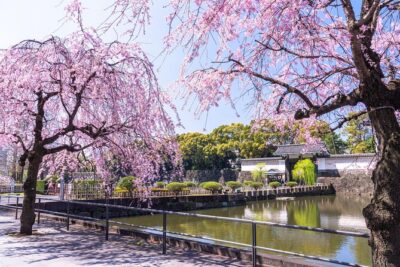
Tokyo Private Tour! Edo Castle & Imperial Palace East Gardens
Read our review →
Tsukiji Market and Hama-rikyu Gardens Guided Tour
Read our review →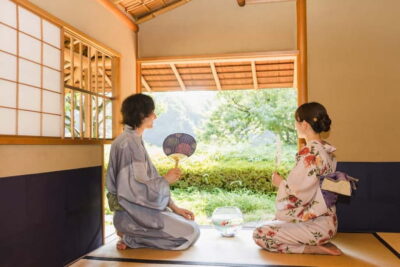
Kimono Rental inside Shinjuku Gyoen National Garden
Read our review →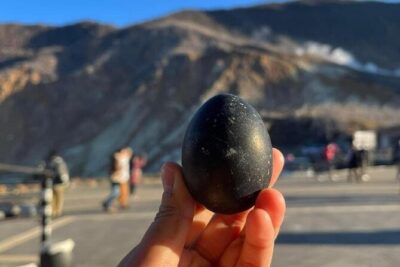
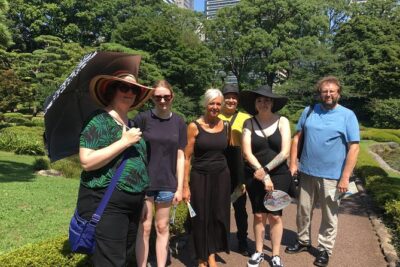
Tokyo Japanese Garden Lover’s Private Tour with Government-Licensed Guide
Read our review →
Tokyo Cherry Blossoms blooming spots E-bike Tour, 3hrs
Read our review →Browse the lists this tour appears in