
Review · TOKYO GARDEN TOURS
Sumida Riverside Walk: Garden &Temple Ritual (4 Meeting Points)
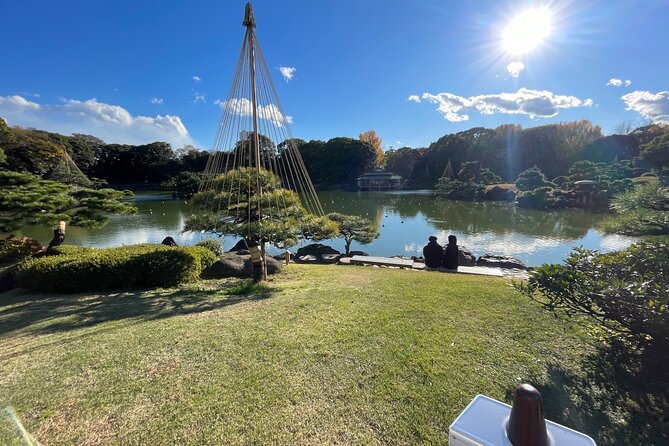
At 8:30 am, this small-group walk takes you from the Sumida River to a carefully shaped Japanese garden and one of Tokyo’s more active Buddhist temples. The best part is the contrast: water and old ironwork outside, quiet stones and ponds in Kiyosumi Garden, then the sound and ritual of Fukagawa Fudōson.
I like the maximum group of six, which leaves room for questions and a more personal pace. I also like the focus on ordinary religious customs, including omikuji and temple rituals, rather than only famous sights. The main consideration is that this is a walking experience, and the garden visit and temple stop are cultural rather than attraction-packed.
Key points
- Three Tokyo experiences in one morning: river walking, garden design, and Buddhist practice.
- Small group size: No more than six people, with guide Hiroyuki leading the route.
- A striking garden detail: Kiyosumi Teien includes a miniature Mount Fuji.
- A memorable temple ritual: The fire ritual at Fukagawa Fudōson may be the tour’s most powerful moment.
- Convenient finish: The tour ends where it starts, about four minutes from Monzen-Nakachō Station.
- Good value for a short outing: The $48.86 price includes admission to Kiyosumi Garden and roughly three hours with a guide.
A Calm Start Along the Sumida River
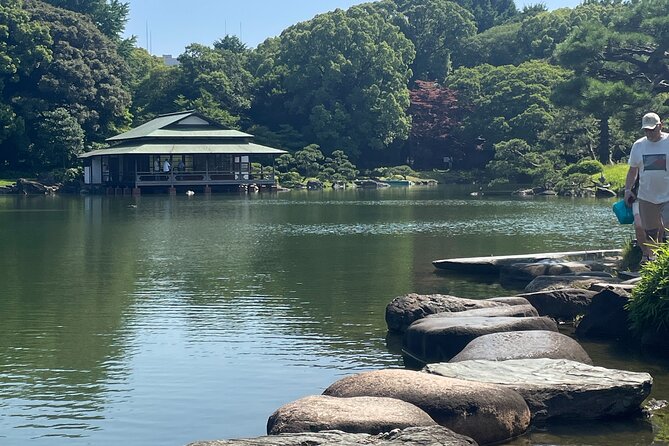
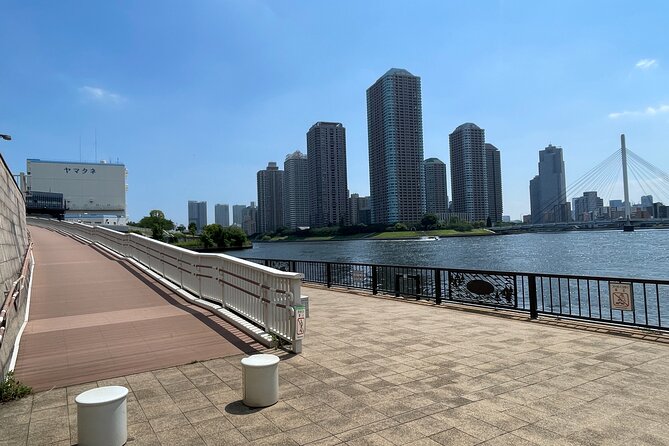
Tokyo is easy to remember as neon, train stations, department stores, and packed sidewalks. This experience gives you a different first impression. You begin near Fukagawa Fudōson and walk beside the Sumida River, using the water and older local streets to get your bearings.
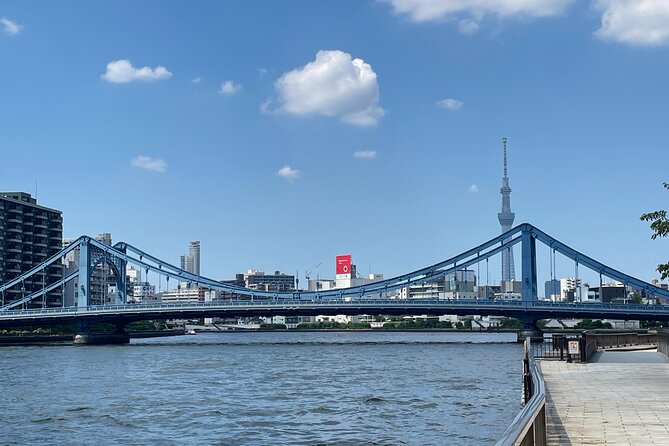
The opening section takes about 35 minutes. Admission is free, so this part is less about entering a paid attraction and more about seeing how the river fits into daily city life. You pass a historic iron bridge and make your way toward Kiyosumi Garden and the temple.
I like this order. The walk gives you space to settle into the morning before the more concentrated stops begin. You are not rushed straight into a lecture or a shrine courtyard. Instead, the route connects three nearby parts of eastern Tokyo in a way that helps them make sense together.
The river walk is also a useful choice for anyone who has already seen central Tokyo. It offers a quieter setting without taking you far from the city. You still have the convenience of public transportation, but the mood is slower and more local.
Do not expect a long riverside hike or a major sightseeing route. The walk lasts about 35 minutes, and the experience is designed as a gentle introduction. If you want a fast list of famous Tokyo landmarks, this is not the right morning. If you want to notice the city at human speed, it works much better.
More Garden Tours in Tokyo:
- Imperial Palace East Garden and Edo Castle Walking Tour in Tokyo
★ 5.0 · 510 reviews - Tokyo: Imperial Palace East Gardens Walking Tour
★ 4.8 · 353 reviews - Mt. Fuji, Cherry Blossom & Shiba Sakura Pvt. Day Tour
★ 5.0 · 326 reviews
Kiyosumi Teien and the Art of a Quiet Garden
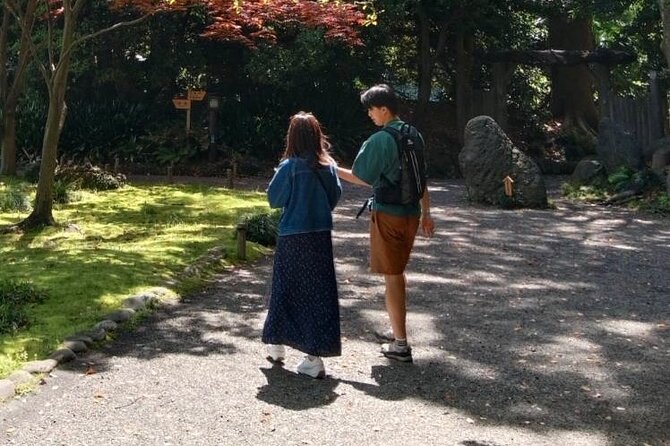
Kiyosumi Garden is more than a green space between city streets. Its design centers on stones, water, balance, and silence. The visit lasts about 40 minutes, with admission included in the tour price.
The garden gives you a chance to see Japanese aesthetics in a physical form. Carefully placed stones draw the eye. Water creates pauses between views. The setting is made for slow observation, not for racing from one sign to the next.
One especially memorable feature is the miniature Mount Fuji. It gives the garden a playful but carefully planned focal point, and it helps explain how Japanese gardens can suggest a larger world within a small space.
I would pay attention here to composition rather than trying to identify every plant. Ask Hiroyuki why particular views or stones matter, and use the time to notice how the garden changes as you move. The value of a guide is strongest at a place like this, where the meaning often comes from arrangement rather than written explanation.
The garden stop also provides a welcome break from Tokyo’s hard edges. You are still close to major roads and rail connections, but the sound and pace feel different inside the garden. That contrast is one of the strongest reasons to book the experience.
There is a limit to the visit. Forty minutes is enough for a focused look, but not enough for a long, unhurried garden session. If Kiyosumi Teien is a top priority for you, you may want to return on your own after the tour. The guided visit works well as an introduction, not as an exhaustive garden study.
Fukagawa Fudōson: Everyday Faith in Practice
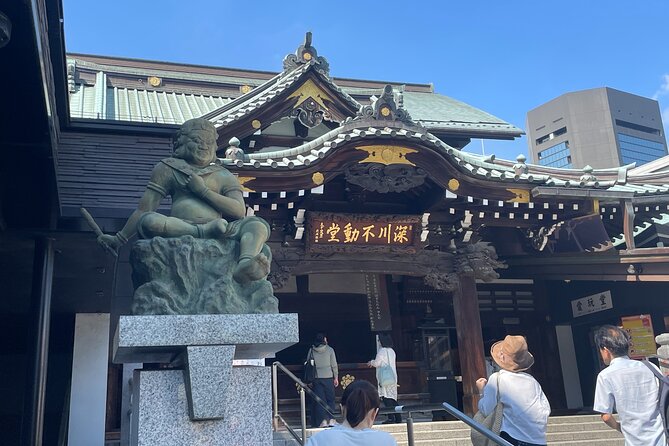
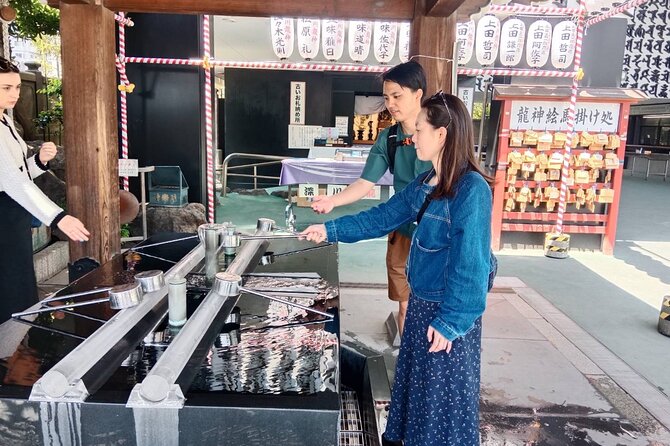
Fukagawa Fudōson is the spiritual center of the experience. The temple has more than 300 years of history, and the visit lasts about an hour. Unlike a quick photo stop, this part is meant to show how religion appears in ordinary actions and spaces.
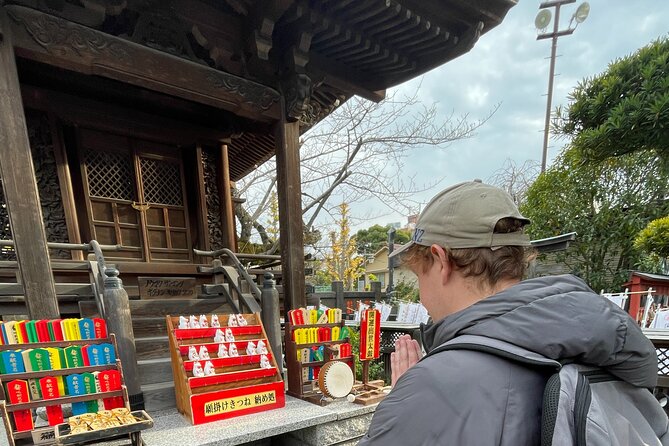
You will learn about omikuji, the fortune slips commonly found at Japanese temples and shrines. The focus is not just on what the slips say. It is on how people approach them, read them, and incorporate small acts of belief into a normal day.
That approach makes the temple visit especially useful if you are curious about Japanese culture but do not want a formal religious tour. You can ask questions about what you see and learn why certain gestures, spaces, and objects matter. Hiroyuki’s role is to explain the details without making the visit feel like a classroom.
The architecture adds another layer. Fukagawa Fudōson is not presented simply as an old building to admire from outside. You spend time looking at the place as an active temple, where ritual is still part of the setting.
The fire ritual is likely to be the most striking part of the morning when it is available. One account of the experience highlights the ritual as a favorite moment, and it is easy to see why. Fire, chanting, movement, and ceremony can make the temple feel much more immediate than a quiet architectural visit.
You should keep your expectations sensible. The exact temple activity you see may depend on timing and what is taking place that morning. The experience description specifically emphasizes the fire ritual, but it should not be treated as a guaranteed performance at a fixed time. The cultural explanation and temple visit remain the core of the stop.
This is also where the small group matters most. With no more than six people, you have a better chance to hear the guide and ask about unfamiliar customs. At a larger temple, a private explanation can be more useful than simply following a crowd.
How Hiroyuki Shapes the Experience
Hiroyuki is identified as the guide for the experience, and the route is built around explanation rather than simple transportation between sights. He covers both old and new aspects of local life, helping you connect the river, garden, temple, and neighborhood.
The strongest reports of the experience point to the guide’s personal attention and detailed explanations. That fits the group limit of six. A compact group makes it easier to stop when someone has a question, adjust the pace, or spend a little more time on a feature that catches your interest.
One account also describes Hiro taking a participant to an additional museum. That appears to be an extra possibility rather than a listed part of the standard route, so you should not book this expecting a museum visit. Still, it suggests that the morning can have some flexibility when time and circumstances allow.
I would use the guide actively. Ask about omikuji, the garden’s miniature Mount Fuji, the iron bridge, or the meaning of the fire ritual. This is not a tour where the main value comes from collecting entrance tickets. The explanations are what make the stops more connected and useful.
The tour also seems suited to visitors who want reassurance in an unfamiliar setting. The direct feedback about Hiroyuki describes a friendly guide who makes participants feel well cared for. That matters when you are learning customs that may not be obvious from the outside.
Same corner of the map, a different planting:
- Tokyo: Edo Castle & East Garden of the Imperial Palace Tour
★ 4.7 · 112 reviews - Tokyo Private Tour! Edo Castle & Imperial Palace East Gardens
★ 5.0 · 105 reviews - Tokyo: Tsukiji Market and Hama-rikyu Gardens Guided Tour
★ 4.8 · 73 reviews - Tokyo: Pvt. Tour – Edo Castle & Imperial Palace East Gardens
★ 4.8 · 63 reviews
What the $48.86 Price Really Covers
At $48.86 per person, the tour sits in the affordable range for a three-hour guided experience in Tokyo. The price includes admission to Kiyosumi Garden, while the river walk and Fukagawa Fudōson entry are listed without separate admission charges.
The value comes from the combination. You are not paying only to enter a garden. You are paying for a planned route, a small group, cultural interpretation, and a temple visit that can be hard to understand fully on your own.
I would consider the price fair for a first visit to this part of Tokyo. A self-guided outing would cost less, especially since much of the route is free. The tradeoff is that you would need to research the garden, find the temple, understand the customs, and decide what deserves your attention.
The price makes less sense if you prefer to wander alone or spend a full morning in one garden. Kiyosumi Teien receives only about 40 minutes, and the whole experience is structured around several connected stops. You are buying context and convenience, not a long private visit at each location.
The mobile ticket is practical, and confirmation is provided at booking. The tour starts and ends at the same temple, which removes the need to find a second meeting point later in the morning.
Timing, Meeting Point, and Getting Around
The meeting point is Fukagawa Fudōson, also known as the Naritasan Tokyo branch temple, at 1-chōme-17-13 Tomioka, Koto City, Tokyo 135-0047. The start time is 8:30 am.
The tour ends at the same address. Fukagawa Fudōson is about a four-minute walk from Monzen-Nakachō Station, so the finish is convenient for continuing your day in Tokyo.
An early start suits the character of the experience. The morning schedule gives you a calmer beginning before the city becomes busier, and it leaves most of the day open afterward. You could continue exploring the surrounding area, return toward central Tokyo, or use the afternoon for a very different kind of activity.
You should arrive ready to walk for about three hours. The route includes outdoor time beside the river, movement through the garden, and time on your feet at the temple. Most people can participate, and the tour is near public transportation.
Because the group is small, arriving at the exact meeting point matters. Fukagawa Fudōson is both the starting and ending location, but the address may be easier to identify if you have the temple name and mobile ticket ready.
Who Will Get the Most From This Morning
I would recommend this experience to you if you want a quieter introduction to Tokyo and enjoy asking questions about local customs. It suits first-time visitors who want something beyond major shopping streets and large headline attractions.
It is also a good choice for repeat visitors. The route focuses on a side of the city that can be easy to miss if you spend all your time around Tokyo Station, Shibuya, or Asakusa.
The tour should work well for solo visitors, couples, and small groups who prefer a personal guide. The limit of six gives the experience a more direct feel than a large coach or walking group.
It is less suitable if you have limited mobility or dislike walking, since the activity is built around moving between the river, garden, and temple. The supplied information says most people can participate, but it does not provide detailed accessibility information, so you should ask before booking if you have specific needs.
Families may appreciate the variety, especially the bridge, garden scenery, temple architecture, and fire ritual. Younger children may find the quiet garden portion less exciting, particularly because the experience relies on observation and explanation rather than games or hands-on activities.
Photography should appeal to you at Kiyosumi Teien, especially around the water, stones, and miniature Mount Fuji. At the temple, remember that you are entering an active sacred place. Follow Hiroyuki’s guidance and treat rituals as religious practices, not staged entertainment.
Final Call: Book It for Context, Not Speed
Book this tour if you want to see a calmer side of Tokyo and understand how nature, neighborhood life, and Buddhist practice fit together. The strongest reasons are the small group, Hiroyuki’s personal explanations, the miniature Mount Fuji in Kiyosumi Garden, and the chance to witness a temple fire ritual when timing allows.
Skip it if you want a major landmark checklist, a long garden visit, or a completely independent morning. At $48.86, the tour is a good buy for cultural context and convenience, especially on a first visit. It is less compelling for someone who prefers to pay only for admission and explore without a guide.
FAQ
How long does the Sumida Riverside Walk tour last?
The experience lasts approximately three hours.
What time does the tour start?
The tour starts at 8:30 am.
Where does the tour begin?
It begins at Fukagawa Fudōson, the Naritasan Tokyo branch temple, at 1-chōme-17-13 Tomioka, Koto City, Tokyo 135-0047, Japan.
Where does the tour end?
The tour ends at Fukagawa Fudōson, the same place where it begins.
How far is the meeting point from public transportation?
Fukagawa Fudōson is about a four-minute walk from Monzen-Nakachō Station.
How many people can join the tour?
The group has a maximum of six participants.
Is admission to Kiyosumi Garden included?
Yes. Admission to Kiyosumi Garden is included in the tour price.
Can I cancel for a full refund?
Yes. You can cancel at least 24 hours before the experience start time for a full refund. Cancellations or changes made less than 24 hours before the start time are not accepted for a refund.
Just added around Tokyo
- TOKYO: Tailored Gardens tour with Pro Gardener by E-bike -BASIC★ 5.0 · 2 reviews
- Tsukiji Food Strolling and Hama Rikyu Garden Walking Tour★ 5.0 · 7 reviews
- Tokyo: Serene Sakura & Sake: An Exclusive Brewery Pairing Lunch★ 5.0 · 2 reviews
- Cherry Blossom Highlights, Asakusa, Ueno, Imperial Palace Garden★ 4.5 · 4 reviews
- Tokyo: Kimono Experience inside Shinjuku Gyoen National Garden★ 5.0 · 3 reviews
- Tokyo Cherry Blossom Half Day Walking Tour with a Local Guide★ 3.5 · 4 reviews
- Full Guided Mt. Fuji & Shiba-Sakura Festival One Day Pvt.Tour★ 5.0 · 6 reviews
- Japanese Garden & Western Architecture: Akasaka exploration tour★ 5.0 · 9 reviews
Tokyo Garden Tours, compared.
Edo Castle & East Garden of the Imperial Palace Tour
Read our review →
Tokyo Private Tour! Edo Castle & Imperial Palace East Gardens
Read our review →
Tsukiji Market and Hama-rikyu Gardens Guided Tour
Read our review →
Pvt. Tour – Edo Castle & Imperial Palace East Gardens
Read our review →
Kimono Rental inside Shinjuku Gyoen National Garden
Read our review →
Tokyo Japanese Garden Lover’s Private Tour with Government-Licensed Guide
Read our review →Browse the lists this tour appears in