
Review · TOKYO GARDEN TOURS
Tokyo Japanese Garden Lover’s Private Tour with Government-Licensed Guide
Tokyo’s best gardens are not all in one park. They are scattered between palace grounds, shrine forests, museum districts, and quiet residential corners. This private tour lets you choose three or four places from a long menu, then have a licensed guide explain why a rock, pond, bridge, or carefully placed plant matters. I like the personal format and the chance to connect garden design with Japanese beliefs. I also like that guides such as Yukino, Keiko, Koji, and Nobuko bring cultural context rather than simply pointing out pretty scenery.
The main catch is time. Six hours is enough for a thoughtful selection, not all ten or more gardens named in the program. You pay your own train fares, entrance fees, lunch, and other personal costs, and pickup is on foot rather than by private car.
Key points to know before you book
- Choose three or four sites: The long list is a menu of options, not a promise that you will visit every garden.
- Expect a walking and public-transit day: No private vehicle is provided, and transportation costs are separate.
- Ask for garden depth, not just garden count: A shorter route with two or three substantial visits may be more rewarding than racing through four.
- Use the guide for symbolism: Japanese spirits and values are represented through rocks, plants, water, paths, and borrowed views.
- Private means your group only: The pace and garden choices can be shaped around your interests.
- Allow for seasonal limits: The Tokyo National Museum Garden opens only for a few weeks during spring blossoms and November autumn color.
A private way to understand Tokyo’s gardens
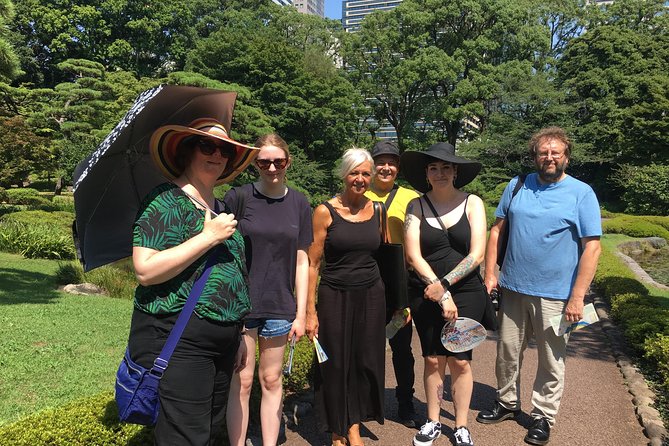
This is less a standard sightseeing circuit than a custom garden day. You meet your licensed English-speaking guide on foot within the designated Tokyo pickup area, explain what interests you, and settle on three or four stops from the available choices.
The guide may be Yukino, Minoru, Steve, Koji, Shuji, Keiko, Nobuko, or another member of the Japan Guide Agency team. The guides have multilingual and interpreter certification, and the strongest part of the experience is the explanation of meaning: why an arrangement feels calm, how a pond controls the view, or how rocks and plants can suggest traditional Japanese spirits.
You should think of the listed 15-minute and 30-minute stops as planning markers rather than a promise of equal time at every place. A 15-minute visit suits a quick look at the Imperial Palace or a shrine entrance. A 30-minute visit gives you time to walk a garden path, pause by water, and ask questions. With transport between districts, you cannot treat the full list as a one-day checklist.
The private format matters here. Garden appreciation depends on pace. You may want to stop for photos, linger beside a stone arrangement, or ask how Japanese gardens differ from Western parks. A private guide can adapt more easily than a large group.
More Japanese Gardens in Japan:
- Kyoto: Japanese Gardens Private Customizable Tour
★ 4.1 · 18 reviews - Experience Crafting a Flower-Adorned Mini Japanese Garden
★ 4.7 · 15 reviews - Lafcadio Hearn Japanese Gardens Admission Adult Ticket
★ 4.5 · 64 reviews
What makes Japanese garden design worth your time
Tokyo’s gardens reward a slower eye. They do not rely only on flowers. A pond, a small hill, a clipped shrub, a weathered stone, and a distant building may work together as one composition.
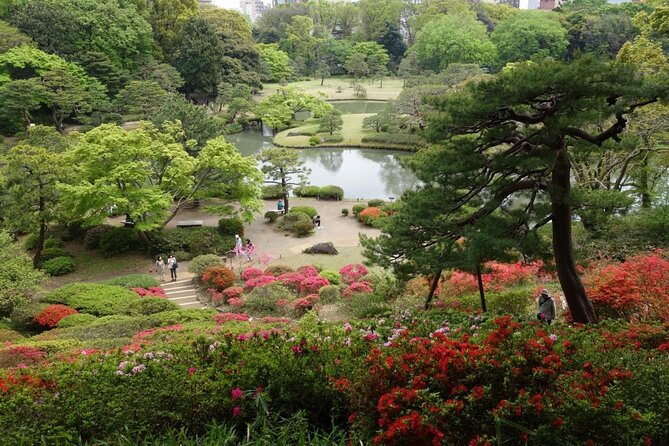
The program focuses on dry and artistic garden styles, along with larger strolling gardens. In a dry garden, stones and gravel can suggest mountains and water without using much actual water. In a pond garden, your route changes the view at every turn. A bridge may frame a scene, while a group of rocks hints at an island or sacred place.
The experience also gives you a way to connect gardens with belief. The tour specifically addresses traditional Japanese spirits represented through rocks and plants. That can make an apparently simple patch of moss or a stone grouping feel less decorative and more meaningful.
I would ask your guide early what kind of garden experience you want. Say if you care most about formal design, old feudal residences, shrine culture, seasonal plants, photography, or peaceful walking. The better the conversation at the start, the better your final route will be.
Imperial Palace and the former Edo Castle setting
The Imperial Palace area is a useful opening because it connects modern Tokyo with the former Edo Castle site. You can expect broad grounds, moats, and massive stone walls around the palace precincts.
This tour does not include access inside the Imperial Palace. The visit is about the surrounding grounds and the historical setting, not an interior palace tour. The stated stop is brief, so it works best as an introduction or as part of a route that continues to another garden.
If you want a major garden visit here, confirm exactly which area your guide plans to enter. The Imperial Palace East Gardens are a natural subject for discussion, but entrance arrangements and the selected route should be clarified before the day begins.
Shinjuku Gyoen and Meiji Jingu near Harajuku
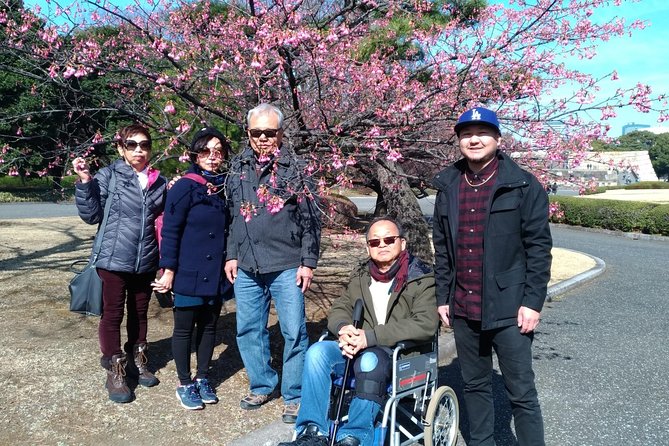
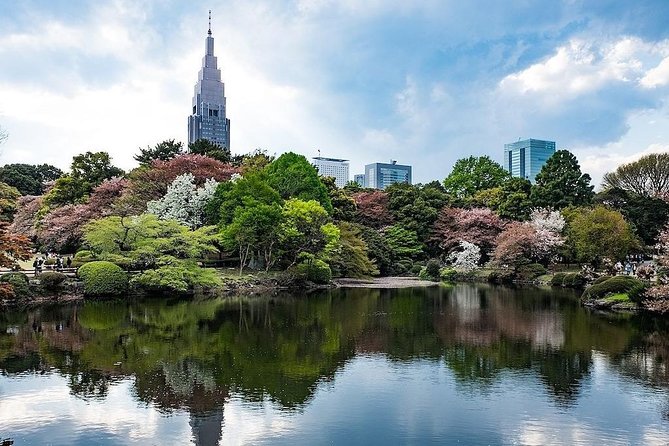
Shinjuku Gyoen National Garden offers a useful contrast to compact Japanese gardens. It is a large public garden where formal plantings and broad open areas give you a break from Tokyo’s dense streets.
The short time listed for this stop suggests that you should not assume a full circuit. If Shinjuku Gyoen is your priority, ask to give it a larger share of the six-hour day and reduce the number of other stops.
Meiji Jingu Shrine provides a different kind of green setting. Dedicated to the deified spirits of Emperor Meiji and Empress Shoken, it sits beside busy Harajuku Station yet offers a forested approach and a strong sense of ceremony.
I like pairing Meiji Jingu with a garden because the two places show different ideas of nature. A shrine approach can feel solemn and processional, while a strolling garden directs your eye through designed scenes. The shrine has no admission fee, but the visit is still best treated as a cultural site rather than a quick photo stop.
Yoyogi Park is nearby and free to enter. It is a broad city park with lawns, ponds, and wooded areas, used for jogging, picnics, and outdoor activities. Its open Western-style layout makes it a clear contrast with compact pond gardens such as Rikugien or Kiyosumi Teien.
More Garden Tours in Japan:
- Osaka: teamLab Botanical Garden Entry Ticket
★ 4.5 · 1,710 reviews - Imperial Palace East Garden and Edo Castle Walking Tour in Tokyo
★ 5.0 · 510 reviews - Kyoto Zen Meditation & Garden Tour at a Zen Temple with Lunch
★ 5.0 · 441 reviews - Kyoto Arashiyama Bamboo forest & Garden Half-Day Walking Tour
★ 5.0 · 413 reviews
Koishikawa Korakuen and Rikugien
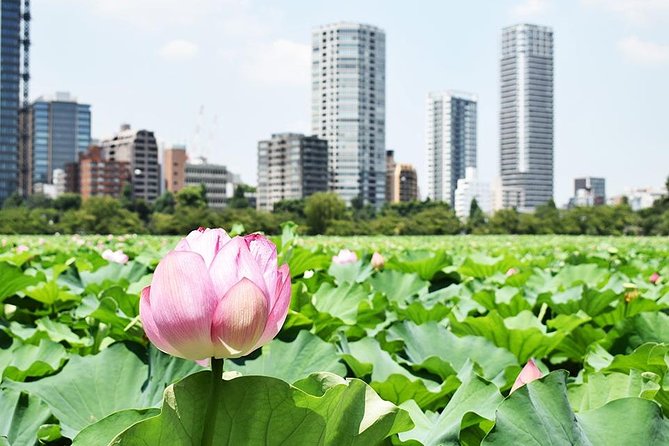
Koishikawa Korakuen is one of Tokyo’s oldest and finest traditional gardens. Built in the early Edo period for the Mito branch of the ruling Tokugawa family, it uses miniature versions of famous Japanese and Chinese scenery.
This is a place where a guide can add real value. A path, bridge, pond, or hill may refer to a distant ideal rather than serve only a practical purpose. The garden is enjoyable in all seasons, and its design gives you plenty to discuss even when flowers are not at their peak.
Rikugien is another major choice. Built around 1700 for the fifth Tokugawa shogun, it takes its name from the six forms of poetry. It is often paired with Koishikawa Korakuen as one of Tokyo’s finest Japanese gardens.
I would not try to see both quickly just to collect names. If these are your main interests, select one or both and let the guide explain the structure. One thoughtful garden visit can teach you more than four rushed entries.
Entrance fees are not included at either site. That is a small extra cost compared with the tour price, but you should budget for it along with train fares.
Hama Rikyu and Former Shiba Rikyu
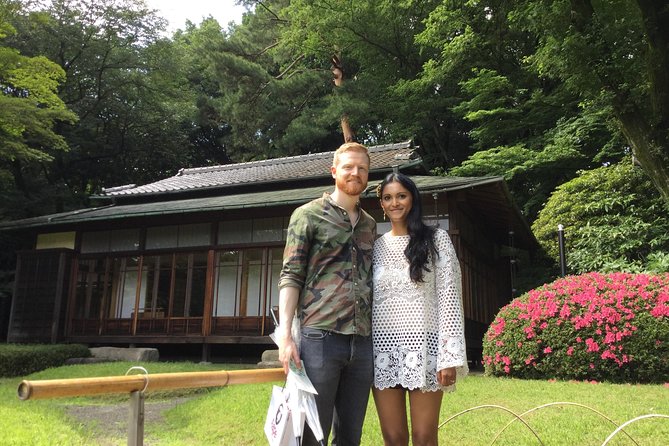
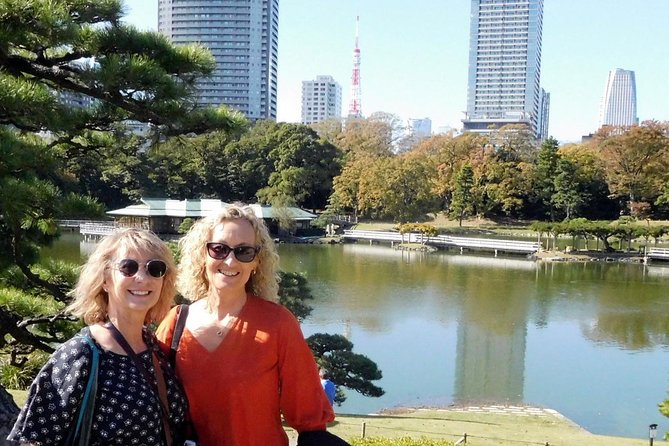
Hama Rikyu is a large garden beside Tokyo Bay, with seawater ponds that change level with the tides. That connection to the bay gives the garden a character unlike the inland gardens, where ponds are usually enclosed within a more controlled setting.
A teahouse adds another traditional element. You may find Hama Rikyu especially useful if you want to see how an old garden survives among central Tokyo’s modern buildings. Its scale also makes it more suitable for a proper walk than a 10-minute photo stop.
Former Shiba Rikyu, also called Kyu Shiba Rikyu Garden, is a smaller green refuge surrounded by tall buildings. It has a pond and man-made hills and once formed part of a feudal lord’s residence before becoming an imperial villa.
The contrast between the garden and the towers around it is part of the appeal. I would choose Hama Rikyu for bay views and a larger setting, or Former Shiba Rikyu for a compact historic garden that fits neatly into a central Tokyo route.
Kiyosumi Teien and the art of the stepping stones
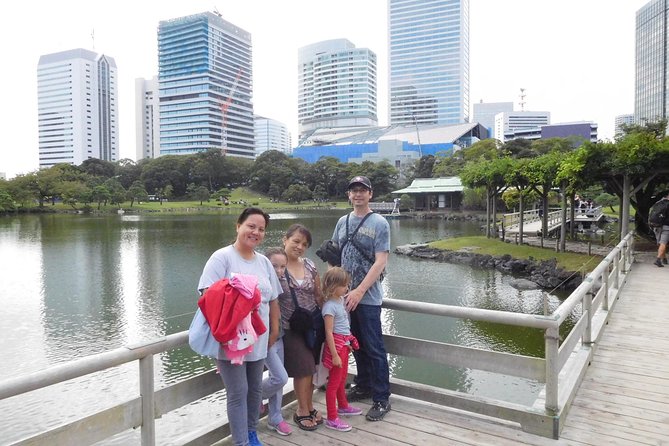
Kiyosumi Teien is built around a central pond, with walking paths that sometimes lead across stones set into the water. This is one of the clearest places to notice how a garden controls your movement.
The stepping stones are not simply a way to cross. They alter your pace and force you to look down, then out across the pond. On a rainy day, wet stones can show different colors and textures, making the garden feel especially atmospheric.
One guide, Keiko, has used this setting to point out the changing colors of wet stones, koi moving through the pond, and the sound of splashing water. Those details show why a guide can be useful here. You are not just walking around a pond. You are being prompted to notice the small changes that make the scene work.
Kiyosumi Teien is a strong pick for anyone who wants a focused garden visit without the scale of Hama Rikyu or Koishikawa Botanical Garden.
Ueno Park, the Botanical Garden, and museum gardens
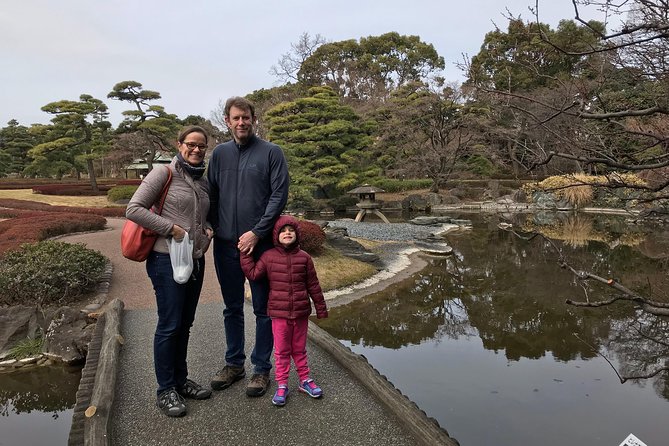
Ueno Park gives you a broader cultural setting. It includes several museums, a zoo, Toshogu Shrine, and Shinobazu Pond, as well as a famous cherry blossom gathering place.
The park is free to enter, but individual museums and attractions may have their own charges. Because there is so much here, you should tell your guide whether you want garden design, shrine architecture, museums, or seasonal flowers. A brief stop can orient you, but it cannot cover the entire park.
Koishikawa Botanical Garden is maintained by the University of Tokyo. It has many types of trees and plants, along with a small Japanese garden. It is particularly attractive during cherry blossom season.
This is a good choice if you want plants and botanical variety alongside formal garden design. It may be less satisfying if your only goal is a classic strolling garden with dramatic ponds and bridges.
The Tokyo National Museum Garden has a special limitation. It opens to the public for only a few weeks during spring blossom season and again during the autumn leaves in November. Check availability before selecting it, since it cannot be treated as an ordinary year-round stop.
Smaller gardens with a quieter feel
The Nezu Museum Garden is an urban oasis in the Omotesando area. The garden was once connected to the private residence of Nezu Kaichiro, and the museum now holds his collection.
This pairing suits you if you want art, design, and a garden in one stop. Entrance is not included, so budget for the museum if you want to see the full site.
Happo-en means Garden of Eight Views, named for the way it appeals in all seasons and from many angles. Its grounds provide a scenic setting for photographs and formal events.
Mejiro Garden is smaller and free. Located near Ikebukuro Station, it offers a quiet traditional garden close to the city’s active streets. It is a sensible choice when you want a calm pause without paying another admission fee.
These smaller places can make a good custom route. They are less demanding than the largest gardens and may fit well with a neighborhood walk, but the exact time you spend there should be agreed upon with your guide.
How the six-hour day works in practice
The tour lasts about six hours, but that does not mean six hours inside gardens. Walking between stations, using public transportation, finding entrances, and moving between districts all take time.
The guide does not provide a private vehicle. Transportation fees, entrance fees, lunch, and personal expenses are separate. Pickup is on foot, not by car, and the meeting must take place within the designated Tokyo area.
That arrangement keeps the tour flexible, but it means you should wear comfortable shoes and avoid planning an overly ambitious route. You may want to combine nearby places, such as Meiji Jingu and Yoyogi Park, rather than crossing Tokyo repeatedly.
A private tour also means your group cannot be combined with another tour group. If you are traveling with friends or family, group discounts may help the per-person price, though you should confirm the exact rate when booking.
Is the 154.84 dollar price good value?
At $154.84 per person, this is not a cheap sightseeing walk. The value depends on how much you want interpretation and custom planning.
You are paying for a private, licensed guide for roughly six hours, not for a vehicle, meals, or admissions. If you are comfortable building your own train route and reading garden information on site, the price may feel high.
I think the cost makes more sense for first-time visitors who want to understand what they are seeing, families who need a flexible pace, and garden lovers who have specific places in mind. A guide can also help you use Tokyo’s complicated rail system, an advantage Keiko provided for one garden-focused day.
The best value comes when you choose a focused route. Ask for two or three substantial garden visits if you want explanations and time to look around. Four sites can work if some are short cultural stops, but trying to fit every named garden into six hours would undermine the point.
The tour is booked an average of 66 days ahead, so advance planning may be wise during blossom season or autumn color. Free cancellation is available up to 24 hours before the start time. Changes or cancellations inside that window are not accepted for a refund.
Who should book this garden tour?
I would recommend it to you if gardens are a main reason for visiting Tokyo, or if you want a cultural day built around something calmer than shopping districts and major towers. It also suits anyone who wants a local guide to explain symbolism, shrine customs, garden structure, and the differences between formal and open park settings.
It is a good fit for private groups that want to choose their own pace. The experience can be shaped around photography, seasonal plants, history, or public gardens, and guides such as Steve have tailored routes closely to personal requests.
I would hesitate if you want a fully included package. You will need to pay for trains, garden entries, lunch, and other expenses, and you will walk between meeting points and sites.
I would also hesitate if your plan is to see ten gardens in one day. Choose your favorites before booking, then confirm which three or four can realistically fit the six-hour window. That is the difference between a rewarding garden lesson and a hurried list of entrances.
Final recommendation
Book this tour if you want Tokyo’s gardens explained, not just photographed. The private format, licensed guides, and wide choice of sites let you build a day around places such as Rikugien, Kiyosumi Teien, Meiji Jingu, or Hama Rikyu.
For the best experience, tell the agency your top two priorities, your walking comfort, and the season of your visit. Keep the route compact, leave room for questions, and treat the $154.84 price as payment for personal guidance rather than an all-inclusive sightseeing ticket.
FAQ
How long does the Tokyo garden tour last?
The experience lasts approximately six hours.
How many gardens or sites will I visit?
The tour includes a customizable visit to three or four sites chosen from the available options. The full list contains many more places, but you should not expect to visit them all in one day.
Is the Imperial Palace interior included?
No. The tour does not include access inside the Imperial Palace. The Imperial Palace area visit focuses on the former Edo Castle setting, park grounds, moats, and stone walls.
Is transportation included?
No. Transportation fees are separate, and the tour does not provide a private vehicle. Pickup is on foot within the designated Tokyo area.
Are garden entrance fees included?
No. Entrance fees are separate. Guide entry fees are covered only for sights listed under the tour’s included expectations.
Is this a private tour?
Yes. Only your group participates, and groups are not combined with other tour groups.
Can I cancel for a full refund?
Yes, if you cancel at least 24 hours before the experience start time. Cancellations or changes made less than 24 hours beforehand are not accepted for a refund.
Just added around Japan
- Himeji: Himeji Castle & Kokoen Garden 3.5-Hour Guided Tour★ 4.9 · 30 reviews
- Tokyo: Ashikaga Flower Park with Entry Ticket★ 5.0 · 3 reviews
- 1-Day Tour from Okayama: Kurashiki, Gardens & Okayama Castle★ 5.0 · 2 reviews
- Osaka: Daytime Hanami (Cherry Blossom) and Food Tour★ 4.7 · 7 reviews
- Private Car Day Trip to the Kobe Mountains, Gardens and Hot Springs from Osaka★ 4.5 · 16 reviews
- Private Car Full Day Tour of Osaka Temples, Gardens and Kofun Tombs★ 5.0 · 24 reviews
- Full-Day Tour from Kanazawa: Samurai, Matcha, Gardens and Geisha★ 5.0 · 68 reviews
- Kyoto Kiyomizu Tea Ceremony with Scenic Garden Views★ 5.0 · 101 reviews
Tokyo Garden Tours, compared.
Tokyo Cherry Blossoms blooming spots E-bike Tour, 3hrs
Read our review →

Experience Crafting a Flower-Adorned Mini Japanese Garden
Read our review →Browse the lists this tour appears in