
Review · TOKYO GARDEN TOURS
Japanese Garden & Western Architecture: Akasaka exploration tour
Akasaka gives you a welcome change from Tokyo’s towers: a 400-year-old garden, a palace built for state visits, a Meiji-era picture gallery, and one of the city’s best-known tree-lined avenues. This private walking tour connects those places with the history of the Tokugawa shogunate and modern Japan.
I like the mix of quiet scenery and grand Western-style buildings. I also like having a local guide to explain details you would likely miss, from garden design to the role of Akasaka Palace. The main catch is the extra ¥2,000 admission fee, plus plenty of walking and no meal stop.
Key points to know before booking
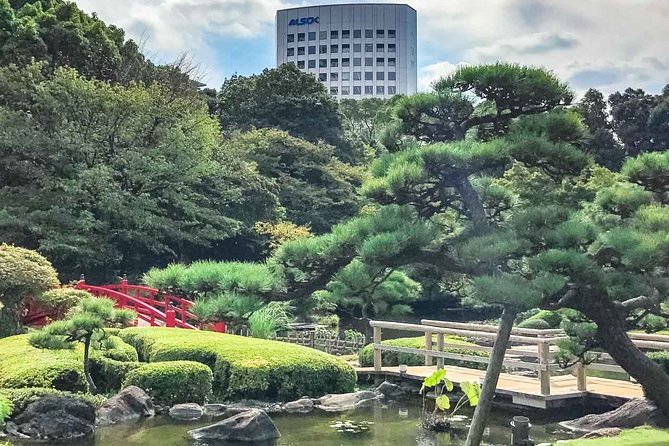
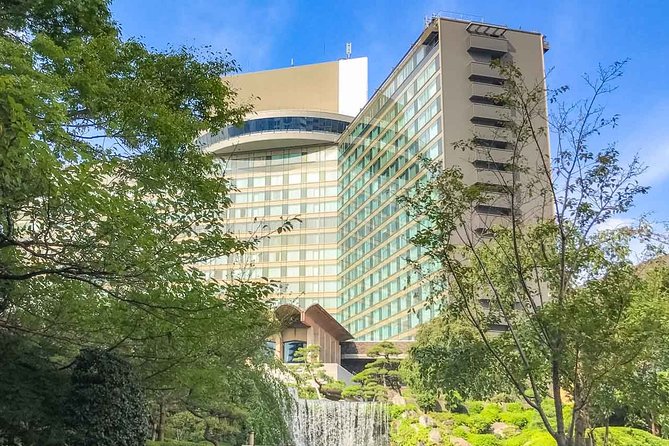
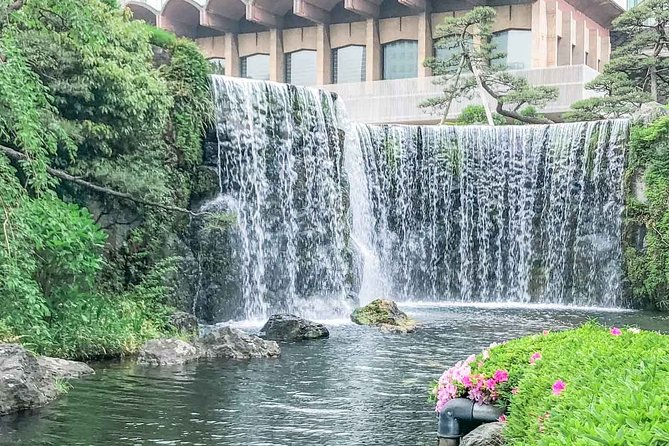
- A 400-year-old garden begins the day: Hotel New Otani’s Japanese Garden offers waterfalls, ponds, and seasonal plants before the city fully takes over.
- Akasaka Palace is the centerpiece: The former palace, now a state guesthouse, has an imposing European-style exterior and requires separate admission.
- The route crosses Japan’s Edo and Meiji eras: Your guide links Tokugawa history with the Meiji Memorial Picture Gallery and its murals.
- This is a private tour: Only your party participates, so the pace and end point can be discussed with your guide.
- The walk finishes near Gaiemmae Station: You start at Akasaka-Mitsuke Station and finish at a different station, which is useful for continuing around Aoyama.
- Bring cash and comfortable shoes: Some places may not accept cards, and the route involves substantial walking.
Why Akasaka makes a fine half-day outing
Akasaka is one of Tokyo’s better areas for seeing different chapters of Japanese history in a small radius. You begin near Akasaka-Mitsuke Station, in a district better known today for offices, hotels, restaurants, and government-related buildings. Soon, the city noise gives way to gardens and formal architecture.
The tour is designed around contrast. The Japanese Garden at Hotel New Otani is shaped by older ideas of water, stone, and seasonal beauty. Akasaka Palace then shifts the mood to ceremonial Western architecture. The Meiji Memorial Picture Gallery brings you into the late nineteenth and early twentieth centuries, while the ginkgo avenue offers an open-air finish.
I find this combination more useful than a tour focused on only one period. You are not simply looking at attractive places. You are seeing how Japan moved from the Tokugawa shogunate into the Meiji era, and how Tokyo later became a center for international diplomacy.
The tour takes about three to four hours. Since it is private, your guide can respond to your interests and questions. That matters here because the sites are not all self-explanatory. A garden pond may look peaceful, but its design has a purpose. A palace may look European, but its role is tied closely to Japan’s modern government and foreign relations.
More Japanese Gardens in Tokyo:
- Tokyo Japanese Garden Lover’s Private Tour with Government-Licensed Guide
★ 5.0 · 27 reviews - Experience Crafting a Flower-Adorned Mini Japanese Garden
★ 4.7 · 15 reviews - Tokyo: Full-Day Japanese Garden Private Guided Tour
★ 4.6 · 13 reviews
Starting with waterfalls at Hotel New Otani Japanese Garden
The first stop is the Hotel New Otani Japanese Garden, a large garden with about 400 years of history. You have roughly 40 minutes here, and admission is included.
This is a good opening because it lets you settle into the pace of the tour. Expect waterfalls, ponds, planted areas, and seasonal scenery. Spring brings cherry blossoms, summer brings dense green foliage, and autumn brings colorful illumination. The exact appearance depends strongly on the season, but the garden gives you something to see at any time of year.
The setting also makes a useful point about Tokyo. You are in one of the world’s biggest cities, yet a carefully planned garden can create a sense of quiet within minutes. I like that this stop is not treated as a quick photo break. With a guide, you can ask about the garden’s age, layout, and the cultural meaning of its features.
A guide may also help you notice details you would otherwise pass without a second look. The tour information mentions seasonal nature, waterfalls, and the garden’s long history, but the private format lets you decide how much time to spend on photography, design, or historical explanation.
The main limitation is time. Forty minutes is enough for an introduction and a walk through selected areas, but not for a slow exploration of every corner. If gardens are your chief reason for booking, tell your guide early. The tour also refers to Inari Shrine and Shimizudani Park as part of the wider Akasaka experience, but the listed four-stop route centers on the garden, palace, gallery, and ginkgo avenue. Confirm the precise plan with your guide if those additional sites matter to you.
Akasaka Palace and Japan’s formal face
Akasaka Palace receives about 50 minutes, and admission is not included in the tour price. The listed entrance fee is ¥2,000 per person.
This is likely the most memorable stop for anyone interested in architecture or modern Japanese government. The palace welcomes kings, presidents, and other official visitors. Its castle-like exterior gives it a very different character from the garden you have just seen.
You can think of this as the point where the tour’s title, Japanese Garden and Western Architecture, becomes especially clear. Japan did not simply replace its own traditions with European forms. During the modernization of the Meiji period and after, Western architectural ideas became part of a new public image. Akasaka Palace reflects that international role.
The visit can also make you feel briefly connected to the formal world of state ceremonies. The grounds and building are not just decorative. They are used for receiving foreign dignitaries, so the setting carries a sense of official purpose.
Allow extra time for the admission process and remember that this cost is yours to pay. The palace may also be temporarily closed, in which case the route can change to an alternative site. Your guide can explain the practical arrangements on the day, but you should not assume the entrance charge is included in the advertised price.
Some people will find 50 minutes just right. Others may want longer, especially if the palace interior and grounds are open for the full visit. This is one place where a private tour helps, since you can ask questions instead of simply following a fixed group from room to room.
Meiji Memorial Picture Gallery and the move into modern Japan
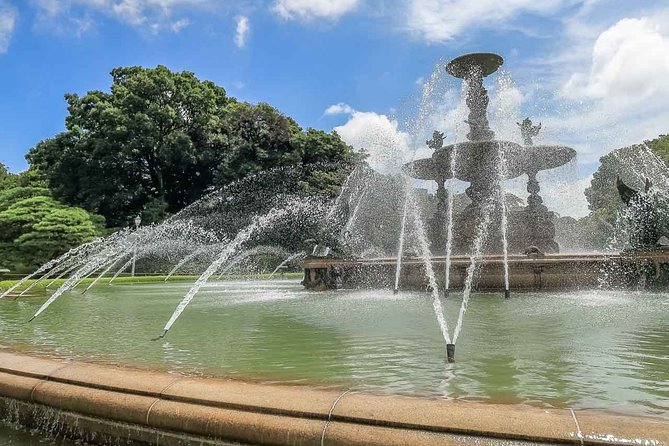
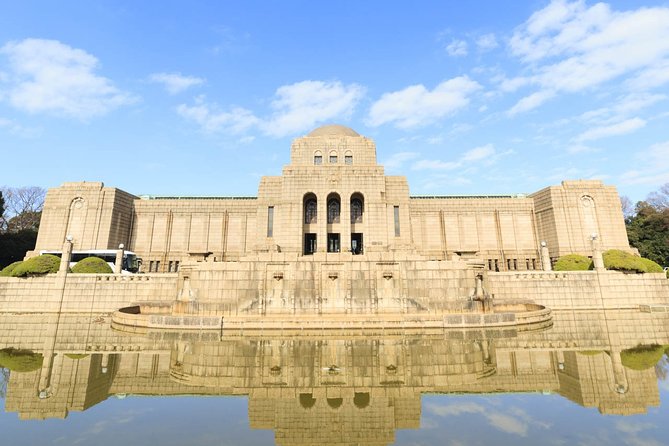
The Meiji Memorial Picture Gallery is scheduled for about 40 minutes. Its dome-shaped building contains paintings and murals focused on the Meiji era.
This stop adds historical depth after the palace. The Meiji period was a time of major political and social change, and the gallery offers a visual way to understand how that era was remembered and presented. The building itself is part of the experience, especially when viewed from the entrance and the outer garden along Aoyama Street.
I like the way this stop broadens the tour beyond gardens and government buildings. You are given a chance to look at art and public memory, not just architecture. A guide can explain what the murals show and why the Meiji period remains so important to Japan’s national story.
The gallery is not included in the admission cost listed for the palace, so ask your guide what entry arrangements apply on the day. The supplied details specifically identify the ¥2,000 charge for Akasaka Palace, but they do not provide a separate gallery fee. Do not assume every interior visit is covered by the tour price.
Forty minutes should give you a useful introduction, though art enthusiasts may want a longer visit than the schedule allows. If you prefer history and visual culture to shopping or food stops, this is a strong part of the route.
More Garden Tours in Tokyo:
- Imperial Palace East Garden and Edo Castle Walking Tour in Tokyo
★ 5.0 · 510 reviews - Tokyo: Imperial Palace East Gardens Walking Tour
★ 4.8 · 353 reviews - Mt. Fuji, Cherry Blossom & Shiba Sakura Pvt. Day Tour
★ 5.0 · 326 reviews - Tokyo: Edo Castle & East Garden of the Imperial Palace Tour
★ 4.7 · 112 reviews
Finishing beneath the Jingu Gaien ginkgo trees
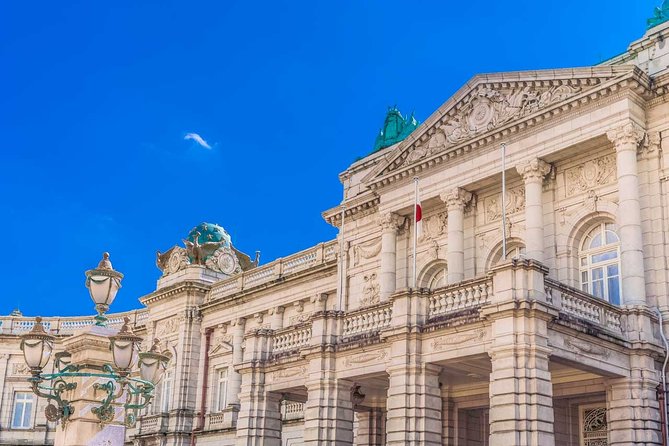
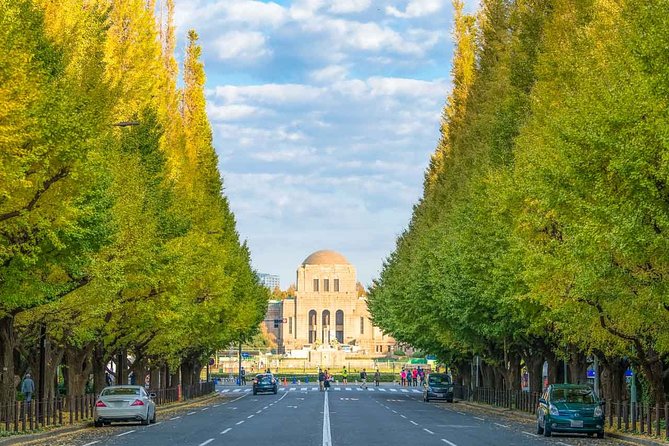
The final listed stop is the Jingu Gaien Ginkgo Tree-lined Street, with about 20 minutes set aside. Admission is free.
This avenue is one of Tokyo’s classic seasonal views. The ginkgo trees form an arch over the street, creating a memorable setting in autumn when the leaves turn yellow. Spring and summer offer a different look, but the formal row of trees still gives the route a clear visual finish.
Twenty minutes is enough for a short walk and photographs. It is not enough for an unhurried park visit, so keep your expectations realistic. The avenue is a closing scene rather than a long final attraction.
The end point is near Gaiemmae Station, at 2-chōme-7-16 Kitaaoyama. That is different from the Akasaka-Mitsuke meeting point, and it can be convenient if you plan to continue around Aoyama afterward. If you would rather finish elsewhere, tell your guide. The tour information says the finishing place can be changed by arrangement.
What the private guide adds
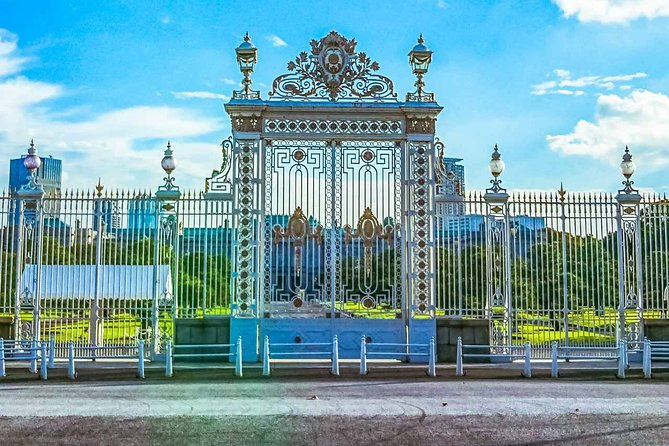
The guide is the main reason to choose this tour instead of visiting the sites independently. The route itself is easy to understand, but the historical connection between the stops is less obvious.
Several guides have been praised by name, including Ayako, Sayaka, Mutsuko Takano, and Ume. Guide assignments can change, so you should not book expecting one particular person unless the operator confirms it. The important point is the type of help provided: explanation of culture and history, answers to questions, and flexibility during the walk.
One guide helped arrange a reservation at a traditional tea shop. That is useful if you want to add a tea experience after the tour, though the tour itself does not include a dining stop or tea. Another guide was described as calm and flexible while new to the work. That detail suggests the operator may use guides with different levels of experience, so your experience can depend partly on the person assigned.
The tour is conducted in English according to the supplied guide descriptions, but the information does not state a fixed language policy for every booking. Confirm your preferred language before paying if that matters to you.
Because only your group participates, you can ask for more explanation at the garden, move faster through the gallery, or spend longer at the palace if the schedule permits. You should still expect a planned route rather than a completely open-ended day.
Price, extra costs, and overall value
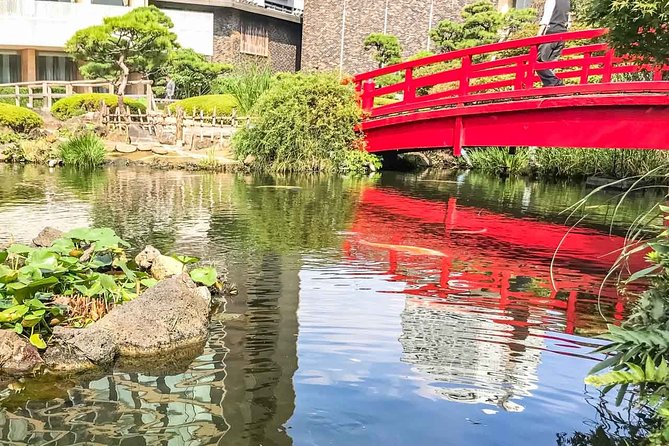
The listed price is $82.42 per person. The tour includes a guide, private participation, and the guide’s necessary expenses. It does not include all entrance fees, food, drinks, or other costs at the sites.
The clearest additional expense is the ¥2,000 Akasaka Palace admission fee per person. The estimated tour costs also list ¥2,000 per person, with transportation shown as ¥0 and meal costs as ¥0. In practical terms, plan on the advertised price plus the palace entry, and carry some Japanese cash because some places may not accept credit cards.
I think the price makes the most sense for couples, families, or small groups who value a private guide. A larger group can also benefit from the group discount noted in the booking information. If you are comfortable reading signs and researching the sites yourself, the cost may feel high for a three to four-hour walk.
The value improves if you want historical context and an adjustable pace. You are paying less for transportation and more for the guide’s time, explanations, and local assistance. Since the route uses public areas and walking rather than private vehicles, this is not a luxury sightseeing transfer.
The tour is booked, on average, 164 days in advance. That suggests you should reserve early if your Tokyo dates are fixed, especially if you need a particular morning or afternoon. Free cancellation is available up to 24 hours before the start time. Changes or cancellations inside that window are not accepted for a refund.
Walking, weather, and practical planning
Wear comfortable shoes. The tour covers several separate sites and involves a lot of walking, even though no long-distance transportation cost is listed.
The starting point is Akasaka-Mitsuke Station, at 3-chōme-1-6 Akasaka, Minato City. The finish is near Gaiemmae Station in Kita-Aoyama. Check the station names carefully before leaving your hotel, since the tour does not return you to the starting point.
Bad weather can change the transportation, destinations, or route. Temporary closures can also lead to substitute sites. This is especially important for a route that includes a palace and museum, where access can depend on official schedules.
Bring cash for admissions and small purchases. There is no meal stop, so eat before the tour or plan food afterward. You can ask about a tea shop, as one guide has helped with a reservation, but that is an extra arrangement rather than a promised part of the outing.
Most people can take part, according to the provided information, but the tour description does not give detailed accessibility specifications. If you need step-free access or have walking limitations, ask the operator about the current route before booking.
Who should book this Akasaka walk?
I would choose this tour if you want a quieter side of central Tokyo and prefer learning through conversation. It suits first-time visitors who want an introduction to the Edo and Meiji periods without spending a full day in museums.
It is also a good fit for private groups with different interests. One person can ask about Japanese gardens, another about diplomacy, and another about art. The guide can adjust the explanation better than a large group tour can.
I would be more cautious if you want a food-focused experience, a shrine-heavy itinerary, or a ride between attractions. No meal is included, transportation costs are listed as zero, and the listed schedule gives only a short time to each stop.
Should you book it?
Book this Akasaka tour if you value a personal guide, enjoy walking, and want four contrasting sights in a compact half-day. The Japanese Garden and Akasaka Palace are the strongest reasons to go, while the Meiji Memorial Picture Gallery supplies useful historical context and the ginkgo avenue ends the route on a scenic note.
Skip it if you prefer exploring independently or want every admission fee included in one price. Before booking, confirm the exact stops, the guide’s language, the palace opening arrangements, and the final meeting point. For the right visitor, this is a thoughtful way to see Tokyo beyond the usual towers and shopping streets.
FAQ
How long does the Akasaka exploration tour last?
The tour lasts approximately three to four hours.
Where does the tour start?
It starts at Akasaka-Mitsuke Station, at 3-chōme-1-6 Akasaka, Minato City, Tokyo 107-0052, Japan.
Where does the tour finish?
The listed finishing point is Gaiemmae Station, at 2-chōme-7-16 Kitaaoyama, Minato City, Tokyo 107-0061, Japan.
Is Akasaka Palace admission included?
No. Akasaka Palace admission is listed separately at ¥2,000 per person.
Is this a private tour?
Yes. Only your group participates in the private tour.
Are meals included?
No. The tour does not include a dining stop, and food and drinks at visited places are paid for by the customer.
Can I cancel for a full refund?
Yes, if you cancel at least 24 hours before the experience start time. Cancellations or changes made less than 24 hours before the start time are not accepted for a refund.
Just added around Tokyo
- Tsukiji Food Strolling and Hama Rikyu Garden Walking Tour★ 5.0 · 7 reviews
- Tokyo: Serene Sakura & Sake: An Exclusive Brewery Pairing Lunch★ 5.0 · 2 reviews
- TOKYO: Tailored Gardens tour with Pro Gardener by E-bike -BASIC★ 5.0 · 2 reviews
- Tokyo: Kimono Experience inside Shinjuku Gyoen National Garden★ 5.0 · 3 reviews
- Tokyo Cherry Blossom Half Day Walking Tour with a Local Guide★ 3.5 · 4 reviews
- Cherry Blossom Highlights, Asakusa, Ueno, Imperial Palace Garden★ 4.5 · 4 reviews
- Sumida Riverside Walk: Garden &Temple Ritual (4 Meeting Points)★ 5.0 · 5 reviews
- Full Guided Mt. Fuji & Shiba-Sakura Festival One Day Pvt.Tour★ 5.0 · 6 reviews
Tokyo Garden Tours, compared.
Edo Castle & East Garden of the Imperial Palace Tour
Read our review →
Tokyo Private Tour! Edo Castle & Imperial Palace East Gardens
Read our review →
Tsukiji Market and Hama-rikyu Gardens Guided Tour
Read our review →
Pvt. Tour – Edo Castle & Imperial Palace East Gardens
Read our review →
Kimono Rental inside Shinjuku Gyoen National Garden
Read our review →
Tokyo Japanese Garden Lover’s Private Tour with Government-Licensed Guide
Read our review →Browse the lists this tour appears in