
Review · TOKYO GARDEN TOURS
Calligraphy and Tokyo Great Buddha, Botanical garden, art museum
The most appealing part of this experience is the change of pace. You begin by learning Japanese calligraphy and making something for your room, then leave central Tokyo behind for Oyama’s local shopping street and the quieter Akatsuka area. It is a useful way to see everyday Tokyo rather than spending five hours only at famous city sights.
I like the practical souvenir: your calligraphy work goes home with you, and you receive 10 to 20 sheets of Japanese paper for practice or display. I also like the unusual mix of stops, from the Tokyo Great Buddha and a tiny sacred waterfall to a botanical garden, art museum, castle ruins, and local museum. The main consideration is walking and sitting. You need to manage 2 to 3 kilometers on foot and be comfortable sitting in a chair during the lesson.
Key points at a glance
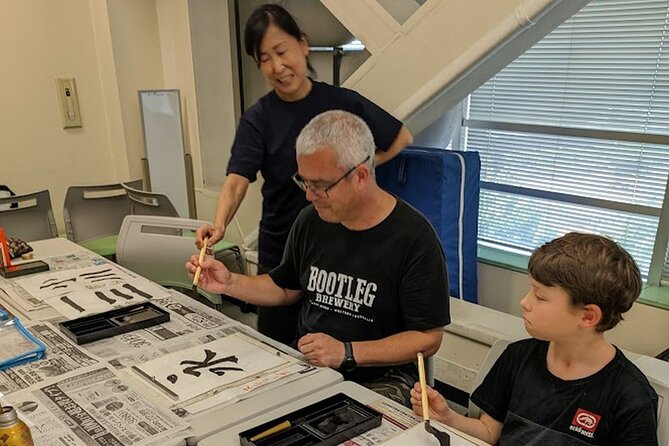
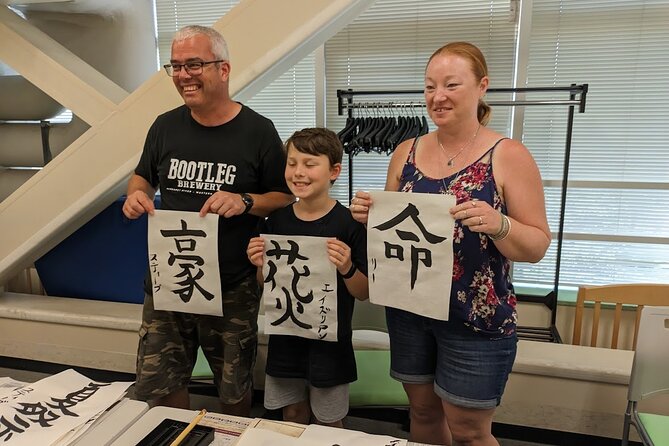
- Make your own calligraphy display: Learn basic Japanese calligraphy and create paper works for your room.
- Eat on Happy Road Oyama: Walk a 1.2-kilometer local shopping street with more than 100 shops and restaurants, with fuller details listing over 200 shops and 50 restaurants.
- Visit Tokyo’s Great Buddha: See a large Buddhist statue in the calm Akatsuka area, away from the city’s best-known tourist routes.
- Touch sacred water: Visit a spring and a very small holy waterfall.
- Cover several Akatsuka sights: The route includes Akatsuka Botanical Garden, Itabashi Art Museum, Akatsuka castle ruins, and Itabashi Kyodo Shiryo-kan.
- Private five-hour outing: Only your group takes part, with a 10:00 am start and return to Oyama Station.
Calligraphy first, with a souvenir you actually made
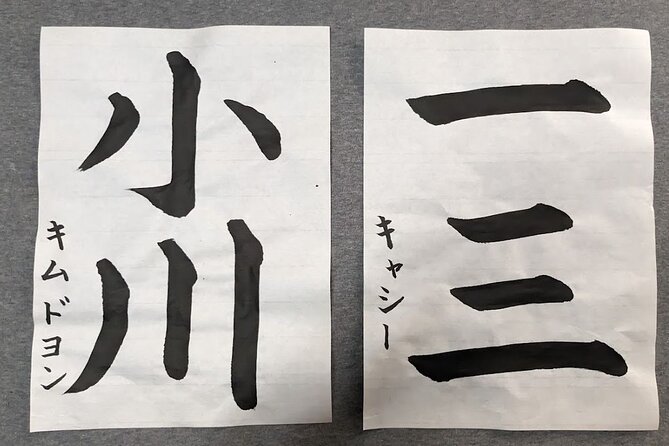
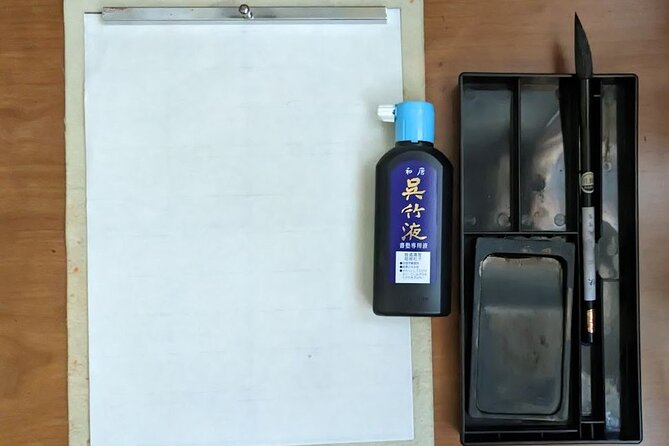
The morning begins near Oyama Station with a basic Japanese calligraphy lesson. The point is not simply to watch someone write beautiful characters. You practice the basic skill and produce your own work on Japanese paper.
That makes this a better choice for you if you want a hands-on cultural activity rather than another photo stop. The work is intended for display at home, so it has more use than a standard purchased souvenir. You also receive 10 to 20 sheets of Japanese paper per person, giving you room to make several attempts.
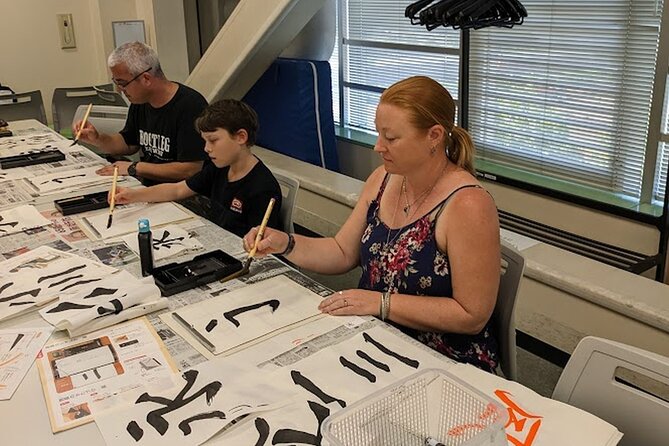
Calligraphy requires a certain kind of patience. You sit in a chair, follow technical guidance, and work with borrowed tools. The tools are provided on a lending basis, not as a take-home set, so the paper artwork is the lasting item from this portion.
I would not choose this outing if sitting is difficult. The activity specifically advises against it for anyone who cannot sit comfortably in a chair. The same applies if you prefer a fast-moving morning with little instruction. This opening section asks you to slow down and pay attention to the brushwork.
The guide provides the basic technical instruction and the calligraphy equipment. Since the experience is private, your group can take part without sharing the activity with a large class. The available information does not give the lesson’s exact length or the guide’s name, so you should not expect a fixed lesson schedule beyond the overall five-hour tour.
More Botanical Gardens in Tokyo:
- Walking tour, Tokyo Great Buddha, Botanical Garden, etc.
★ 5.0 · 2 reviews - Osaka: teamLab Botanical Garden Entry Ticket
★ 4.5 · 1,710 reviews - Blanes: Marimurtra Botanical Garden Entry Ticket
★ 4.7 · 998 reviews
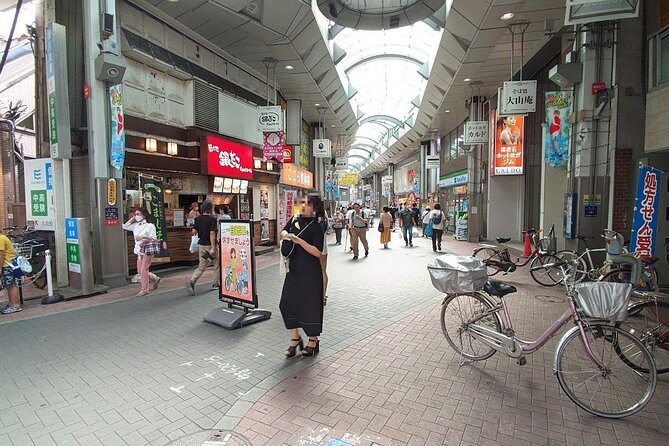
Oyama’s 1.2-kilometer food and shopping walk
After calligraphy, you explore Happy Road Oyama and Yuza Oyama, a long local shopping street near the meeting point. The route is described as about 1.2 kilometers and includes more than 100 shops and restaurants. A fuller description gives a count of over 200 shops and 50 restaurants, so the exact number may vary, but the point is clear: this is a substantial neighborhood commercial street, not a small row of souvenir stalls.
I like this stop because it gives lunch a local setting. You are not being sent to a restaurant chosen only for international visitors. You walk through a working shopping district and then choose a local restaurant for your meal.
Lunch is not included in the $99.76 price, and neither are alcoholic drinks. That is worth planning for. The guide leads you through the area, but you pay for your own meal. The tour information does not name a specific restaurant or set a menu, so you should expect some choice rather than a fixed dining experience.
The street also helps break up the day. Calligraphy is quiet and focused. Oyama adds movement, food, and ordinary city life before the second transport leg. If you enjoy browsing local shops, this may be one of the strongest parts of the outing. If shopping streets do not interest you, the walk may feel like a long transition before the Akatsuka sights.
Because the street is 1.2 kilometers long, wear shoes you can use comfortably for walking. The full tour also advises that you should be able to walk 2 to 3 kilometers, so treat the shopping walk as part of the physical activity, not as a short stop beside the station.
The train and bus ride to quiet Akatsuka
After lunch, you take a train and bus to Akatsuka. This is not a private vehicle transfer, so the change of setting is part of the experience. You move from Oyama’s shopping district into an area described as quiet and calm, with several cultural and outdoor sights close to one another.
The public transport connection may appeal to you if you want to see how the city works beyond the central tourist zones. It also means you should be ready for a little more movement and waiting than you would have with a dedicated car. The supplied details do not state the exact train or bus lines, travel time, or whether fares are included, so confirm those points if they affect your budget.
The Akatsuka portion is the reason this outing feels different from a standard Tokyo day tour. Instead of concentrating on famous central districts, it links several smaller sights in one area. You get a Great Buddha, religious water site, botanical garden, art museum, castle ruins, and local museum in the same afternoon program.
That range is useful, but it also means no single stop receives a long, detailed visit. If you want an in-depth museum tour or a quiet hour in a garden, the five-hour schedule may feel brisk. If you like sampling several places, the variety works in your favor.
Tokyo Great Buddha and the sacred spring
The Tokyo Great Buddha is the headline sight in Akatsuka. The route takes you to see the statue, then to a sacred spring where you can touch very small holy waterfall water.
This pairing gives the afternoon a clear spiritual focus. The Great Buddha offers a major visual stop, while the spring is smaller and more tactile. I like that the itinerary includes both a well-known religious object and a modest local sacred place. The smaller stop may be especially meaningful if you prefer quiet details over a long line of major attractions.
You should keep your expectations measured. The description does not provide the Buddha’s size, the spring’s setting, or the amount of time spent at either place. It also does not promise a formal religious ceremony. You are visiting the sites with a guide, seeing the statue, and touching the very small holy waterfall.
The word small matters. This is not presented as a grand cascade or a major natural attraction. It is a brief, unusual stop that adds character to the route. Think of it as a local detail within a wider neighborhood tour, not the main reason to book the experience by itself.
Museum visits around Tokyo:
- Vienna: Skip-the-Line Sisi Museum, Hofburg and Gardens Tour
★ 4.8 · 5,918 reviews - Marrakech: Majorelle Garden, YSL, and Berber Museum Entry
★ 4.6 · 5,168 reviews - Rome: Borghese Gallery and Gardens Guided Small-Group Tour
★ 4.6 · 2,783 reviews - Rome: Borghese Gallery & Gardens Small Group Guided Tour
★ 4.5 · 2,190 reviews
Akatsuka Botanical Garden and Itabashi Art Museum
The Akatsuka Botanical Garden adds an outdoor pause to the afternoon. You visit the garden after the religious sights, with the quiet character of Akatsuka carrying through the route.
The details do not specify the garden’s plants, size, seasonal highlights, or walking surface. I would therefore treat it as a pleasant local garden visit rather than book this tour for a particular flower display. Its value is in the contrast it provides after the shopping street and public transport ride.
The Itabashi Art Museum brings a different kind of interest. Unique works are on display, and the art museum is one of the places where your admission fee is not included. Entry is about 650 Japanese yen, or roughly $5, which is a modest extra cost but should be kept in mind when comparing the total price.
The museum may be the best stop for you if you like unusual art presented outside the main museum circuit. The information does not identify the current exhibition or guarantee a particular artist, so the appeal is the chance to see distinctive works rather than a promised collection.
The museum fee is also the only specific admission charge given. It is not clear from the supplied details if any other site has a separate entrance fee. Plan for the stated art museum charge, and keep a little extra money available for the meal and transport expenses that are not listed as included.
Castle ruins and the local museum
Akatsuka castle ruins are described as a small hill where a castle once stood. Do not picture a reconstructed fortress with towers and grand walls. This is a modest historical site, useful for understanding the area but likely to be much simpler than Tokyo’s major castle-related attractions.
The small hill adds another change of scene. You have moved from calligraphy to shopping, then from religious sights to plants and art, and now to a place tied to local history. For me, that variety is the tour’s main strength.
The final listed stop is Itabashi Kyodo Shiryo-kan, a local museum. The name can be translated broadly as a place for community historical materials, but the supplied information does not describe its exact displays. You should expect a neighborhood museum visit, not a large national institution.
These last two stops are best understood as local context. They show that Tokyo’s history is not limited to the famous center. At the same time, the limited detail means you may want to ask the guide what is currently open and what the museum focuses on when the tour begins.
What the $99.76 price covers
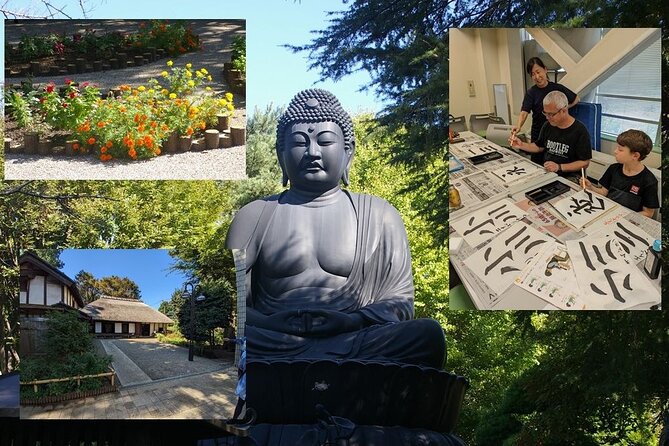
At $99.76 per person, this is not a bargain basement walking tour, but the price can make sense if you use most of what it offers. The fee covers a private guide for Oyama’s shopping street, the Tokyo Great Buddha, the art museum, and the local museum. It also includes the calligraphy lesson, basic technical guidance, lending of calligraphy tools, and 10 to 20 sheets of Japanese paper.
The private format matters. Only your group participates, so the pace and conversation are not shaped by a large mixed party. That is helpful during calligraphy, where a smaller group can make the hands-on part less awkward.
You need to add lunch, alcoholic drinks, and about 650 yen for the art museum. Travel insurance is not included. The details do not state that train or bus fares are covered, so check that point before booking if you are keeping a close budget.
The value is strongest for someone who wants several kinds of experiences in one half-day: a craft lesson, local food district, religious sight, garden, art, and neighborhood history. It is weaker for you if your main goal is a long calligraphy workshop, a major museum, or a relaxed garden visit. Five hours is enough for variety, but not for deep time at every stop.
Timing, walking, and practical planning
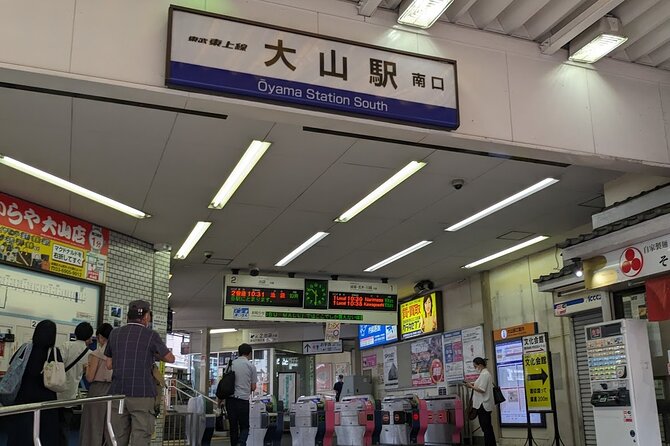
The meeting point is Oyama Station at 4 Oyamacho, Itabashi City, Tokyo 173-0023. The start time is 10:00 am, and the activity ends back at the same meeting point. A mobile ticket is provided, and booking confirmation is received at the time of booking.
The tour is near public transportation, which suits an independent visit to Tokyo. Since the route uses a train and bus after lunch, you should arrive ready to follow the guide between different stops rather than remain in one building.
The walking requirement is clear: you should be comfortable walking 2 to 3 kilometers. Sitting is also part of the calligraphy class, and the activity is not recommended for someone who has difficulty sitting in a chair.
Free cancellation is available up to 24 hours before the start time for a full refund. Changes or cancellations inside that period are not accepted for a refund. The experience requires good weather, and if poor weather causes cancellation, you are offered another date or a full refund.
The activity is usually booked about 16 days ahead. That is useful planning information if your Tokyo schedule is tight, especially since this is a private activity with a set start time.
Who should book this Tokyo half-day?
I would recommend it to you if you want a quieter, more local-feeling side of Tokyo and enjoy switching between activities. It suits a couple, family, or small private group that wants a handmade souvenir, an unhurried look at a shopping street, and a collection of lesser-known sights.
It is also a good choice if you have already seen Tokyo’s major central districts and want something outside the usual route. The Akatsuka stops are varied enough to keep the afternoon interesting, even though none is described in great depth.
I would skip it if you dislike public transport, cannot walk 2 to 3 kilometers, or find seated craft lessons uncomfortable. I would also look elsewhere if you want a food tour with included tastings, since lunch is your own expense and no fixed menu is provided.
Book it if the combination is what you want: calligraphy you can display at home, a local lunch stop, and a calm Akatsuka circuit that includes the Tokyo Great Buddha, botanical garden, art museum, castle ruins, and local museum. The tour’s greatest strength is not one blockbuster attraction. It is the unusual day it builds from many smaller pieces.
FAQ
Where does the tour start and end?
It starts and ends at Oyama Station, 4 Oyamacho, Itabashi City, Tokyo 173-0023. The scheduled start time is 10:00 am.
How long does the experience last?
The activity lasts approximately five hours.
Is the tour private?
Yes. Only your group participates in the activity.
Is lunch included?
No. Lunch is not included, and you pay for your meal at a local restaurant on or near the Oyama shopping street.
Is admission to the art museum included?
No. The art museum entrance fee is about 650 Japanese yen, or approximately $5.
What does the calligraphy portion include?
You receive basic technical guidance, use borrowed calligraphy tools, and receive 10 to 20 sheets of Japanese paper per person. You make works intended for display at home.
Is the tour suitable for people with limited mobility?
The activity is not recommended for anyone who has difficulty sitting in a chair or cannot walk 2 to 3 kilometers.
Just added around Tokyo
- TOKYO: Tailored Gardens tour with Pro Gardener by E-bike -BASIC★ 5.0 · 2 reviews
- Tsukiji Food Strolling and Hama Rikyu Garden Walking Tour★ 5.0 · 7 reviews
- Tokyo: Serene Sakura & Sake: An Exclusive Brewery Pairing Lunch★ 5.0 · 2 reviews
- Tokyo Cherry Blossom Half Day Walking Tour with a Local Guide★ 3.5 · 4 reviews
- Cherry Blossom Highlights, Asakusa, Ueno, Imperial Palace Garden★ 4.5 · 4 reviews
- Tokyo: Kimono Experience inside Shinjuku Gyoen National Garden★ 5.0 · 3 reviews
- Sumida Riverside Walk: Garden &Temple Ritual (4 Meeting Points)★ 5.0 · 5 reviews
- Full Guided Mt. Fuji & Shiba-Sakura Festival One Day Pvt.Tour★ 5.0 · 6 reviews
Tokyo Garden Tours, compared.
Edo Castle & East Garden of the Imperial Palace Tour
Read our review →
Tokyo Private Tour! Edo Castle & Imperial Palace East Gardens
Read our review →
Tsukiji Market and Hama-rikyu Gardens Guided Tour
Read our review →
Pvt. Tour – Edo Castle & Imperial Palace East Gardens
Read our review →
Kimono Rental inside Shinjuku Gyoen National Garden
Read our review →
Tokyo Japanese Garden Lover’s Private Tour with Government-Licensed Guide
Read our review →Browse the lists this tour appears in