
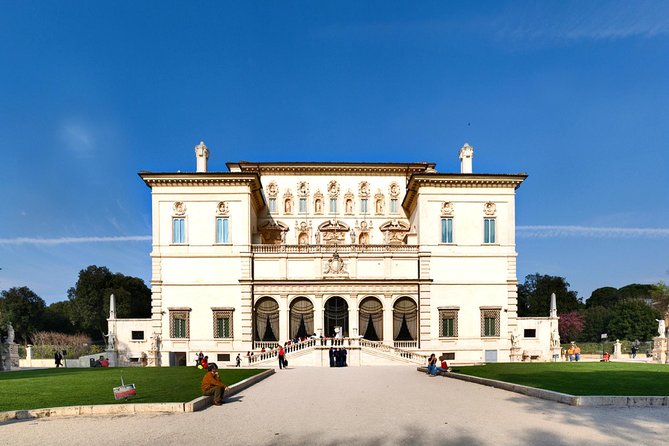
Review · ITALY GARDEN TOURS
Rome: Borghese Gallery & Gardens Small Group Guided Tour
The great trick of the Borghese Gallery is its size. This is not an all-day museum where your feet give up before the art does. In about 90 minutes, you can see Bernini’s Apollo and Daphne, Canova’s Pauline Bonaparte, Caravaggio, Raphael, and the rooms built to display them. I especially like the prebooked entry and the small group, capped at 15 people.
I also like the headsets, which matter when the rooms fill up and your guide is speaking softly about a marble curl of hair or a painting’s hidden drama. The main caution is the garden walk. It can feel short or rushed if the tour runs late, daylight fades, or the guide spends extra time inside the gallery.
Key points to know before booking
- Bernini gets the attention he deserves: Expect close discussion of Apollo and Daphne and other major sculptures, including how the marble creates movement and emotion.
- The group stays small: A maximum of 15 people makes it easier to hear, ask questions, and keep pace with the guide.
- Entry is arranged in advance: The Borghese Gallery controls admission tightly, so having a reserved ticket removes one of Rome’s more awkward museum hurdles.
- Headsets help in crowded rooms: You can follow the English commentary without standing shoulder to shoulder with the guide.
- The tour connects art with power: Cardinal Scipione Borghese’s collecting habits and political world give the paintings and sculptures a useful frame.
- The finish is scenic: The route ends at the Pincio Terrace, with Piazza del Popolo below and a Metro stop about five minutes away after descending the steps.
Why the Borghese Gallery deserves a place in your Rome plans
Rome has so many grand sights that it is easy to treat the Borghese Gallery as an optional extra. I would not. This collection gives you a concentrated look at some of Italy’s strongest Baroque sculpture and painting, all displayed inside the former Villa Borghese.
The building and the collection belong together. Cardinal Scipione Borghese commissioned the villa and gathered many of the works now on display. Bernini, Caravaggio, and Titian are not random names placed in a modern museum lineup. Their work remains in the setting chosen by a powerful collector who wanted visitors to be impressed at every turn.
That setting makes the visit feel different from walking through a huge public museum. You move from decorated room to decorated room, with marble figures, painted ceilings, polished floors, and works designed to catch your eye from across the room. The effect can be a little overwhelming, but the limited visit time helps. You are not trying to see everything.
The strongest reason to take this tour is the guide’s interpretation. The gallery is beautiful even without help, but the best details are easy to miss. A guide can point out how Bernini makes stone look soft, explain why a subject mattered to a seventeenth-century patron, or place a religious painting inside the political world that shaped it.
Museum visits around Italy:
- Rome: Borghese Gallery and Gardens Guided Small-Group Tour
★ 4.6 · 2,783 reviews - Florence: Pitti Palace, Boboli Garden, Palatine Gallery Tour
★ 4.9 · 558 reviews - Tremezzina: Villa Carlotta Museum and Garden Entry Ticket
★ 4.7 · 556 reviews
Getting inside the gallery
You meet the guide and group at Piazzale del Museo Borghese, outside the gallery. From there, the group enters with prebooked admission. The arrangement matters because entry to the Borghese Gallery is strictly controlled, and independent booking can be difficult around popular dates.
Do not arrive with a backpack-style bag, even a small one. All personal belongings must be left at the gallery reception, and a purse that resembles a small backpack may need to be checked. Build in enough time to sort this out before the tour begins. A delay at the entrance can leave you playing catch-up inside.
The group size is limited to 15. That is not private touring, but it is small enough for the guide to check that everyone has entered a room before moving on. A few people have particularly praised guides such as Frederika, Lorenzo, Francesco, Sal, Eric, Eddy, and Barbara for combining clear explanations with a friendly pace. The exact guide depends on the departure, so do not book on the assumption that one named person will lead your tour.
Headsets are provided. In a museum where several groups may be gathered around the same sculpture, this is a practical benefit, not a fancy extra. You can step to the side for a better look while still following the explanation. One caution: audio quality can vary, and an unclear earpiece or a difficult-to-follow accent may reduce the benefit. If the sound is muffled, say so early and ask for help.
The gallery’s main works in about 90 minutes
The indoor portion lasts about an hour and a half. That is enough time for a strong introduction to the collection, not a complete survey of every painting and sculpture. You will see the most important rooms, but your guide will need to make choices.
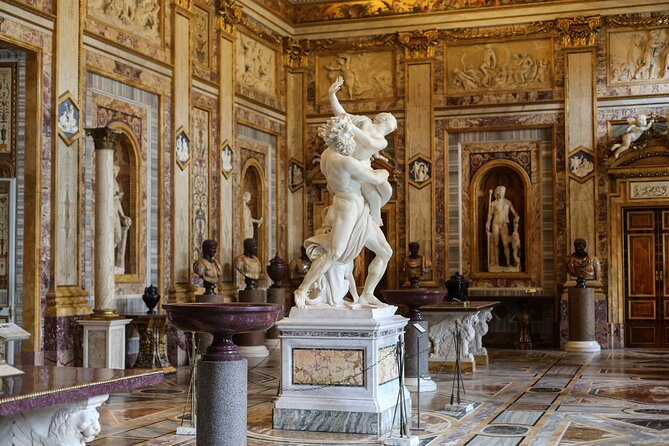
Bernini’s Apollo and Daphne
This is often the emotional center of the visit. Bernini shows the moment when Daphne escapes Apollo by changing into a laurel tree. Look closely at the fingers becoming leaves, the hair flying behind Apollo, and the bark beginning to climb Daphne’s body.
The point is not only technical skill. The sculpture tells a story from several angles, and the figures seem to keep moving even though they are carved in stone. A good guide slows down here and explains how the work was meant to be seen, what the story meant, and why Bernini’s handling of marble changed sculpture.
The guide may focus heavily on Bernini, and that is a sensible choice. The collection contains many paintings, but the Bernini sculptures are the works that benefit most from spoken guidance. You may see fewer paintings than you would on an independent visit, but you will likely understand the major sculptures far better.
More Garden Tours in Italy:
- Florence: Reserved Entry Ticket to the Boboli Gardens
★ 4.4 · 5,275 reviews - Florence: Pitti Palace and Boboli Gardens Ticket & eBook
★ 4.5 · 835 reviews - Caserta Royal Palace & Gardens Small Group Tour with Shuttle
★ 4.9 · 632 reviews - Sorrento: Lemon Garden Tour with Marmalade Tasting
★ 4.6 · 405 reviews
Canova’s Pauline Bonaparte
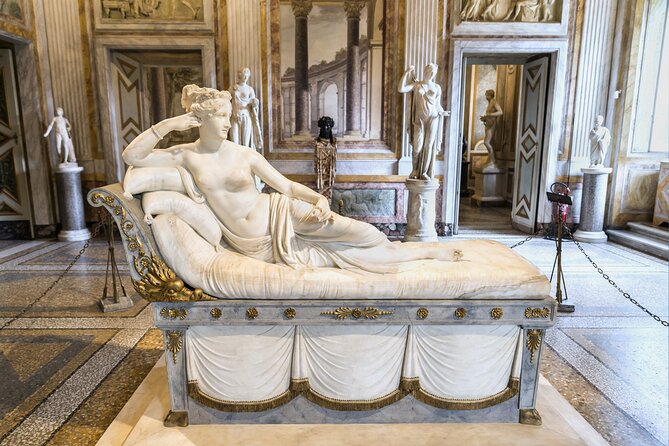
Canova’s Pauline Bonaparte as Venus Victrix offers a very different kind of spectacle. Pauline reclines as the Roman goddess Venus, holding the apple associated with her victory. The pose is relaxed, but the commission carried plenty of family pride and public theater.
This is a good place to hear about the people behind the art. Pauline was Napoleon’s sister, and the sculpture was not simply a private portrait. The idealized body, the classical disguise, and the choice of subject all say something about status and ambition.
The polished marble can look almost unreal from a distance. Your guide can direct you to the details that make the figure feel alive, from the treatment of skin to the way fabric supports the body. Without that prompt, it is easy to glance at the sculpture and move on.
Caravaggio and Raphael
The paintings provide a useful counterweight to the sculpture. Caravaggio’s St. Jerome is a lesson in concentrated drama. The figure is old, tired, and absorbed in his work, with the dark background forcing your attention onto his face and body.
Raphael’s The Deposition brings another mood and another period into the route. The contrast between Raphael’s balanced composition and Caravaggio’s forceful light helps you see that this is not just a gallery of attractive objects. It is a story about changing artistic ideas.
Your guide may also discuss Titian and other major painters. The exact balance depends on the group and the guide. Some guides spend more time on Bernini, while others give more room to painting, political context, or the Borghese family. That flexibility can be a strength, but it also means no two tours will feel exactly alike.
Why the guided format is worth the price
At $47.16 per person, this is not the cheapest way to spend a morning in Rome. It is a reasonable price if you value three things: a reserved gallery ticket, an English-speaking guide, and help deciding what deserves your attention.
The ticket solves a real problem. The Borghese Gallery does not operate like a church that you can enter whenever you pass by. Admission is controlled, and the booking process can be awkward. You are paying partly for the art and partly for a smoother route into a tightly managed museum.
The guide adds the most value if you do not already have a strong background in Baroque art. Several guides have been praised for explaining not only what you are seeing, but also the social and political setting around it. Lorenzo, for example, has been noted for bringing context to pieces that returning visitors thought they already knew. Frederika has been singled out for making small details and disputed subjects easier to understand.
If you have visited the gallery several times, you can still gain something from a guided visit, especially if you want fresh context. The tradeoff is freedom. You cannot linger as long as you wish at one favorite painting or skip a room because the group is moving with the guide.
Walking through Villa Borghese Gardens
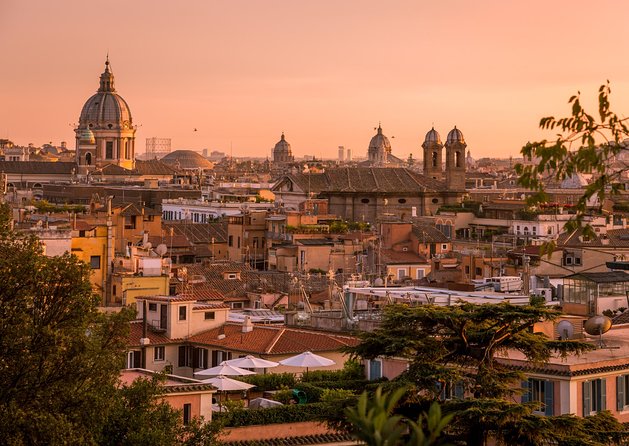
After the gallery, the tour moves outdoors into Villa Borghese Gardens. The park was once part of Cardinal Borghese’s private estate. Today, it is a public place where people come for greenery, sculptures, fountains, and a break from Rome’s traffic and stone streets.
The garden stop is meant to complete the story. You have just seen the cardinal’s collection inside his villa, and now you walk through the wider grounds that once belonged to the same estate. The guide can point out features connected with the property and explain how a private retreat became a public park.
This part lasts about an hour in the planned schedule, but timing can vary. If the gallery discussion runs long, the outdoor section may be shortened. One recorded experience had only about 15 minutes in the gardens because of fading light, which made the walk feel rushed. Winter and late departures can create the same issue.
For the best garden experience, choose a departure with plenty of daylight if your schedule allows. Treat the garden walk as a pleasant extension of the museum, not as a separate major attraction with a long list of sights. The gallery is the main event.
Finishing at the Pincio Terrace
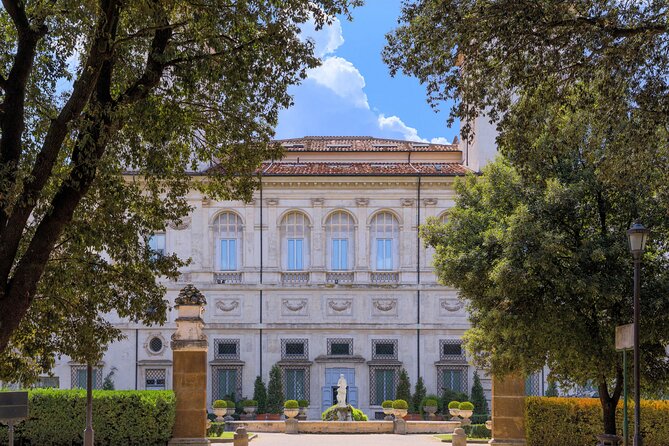
The tour ends at the Pincio Terrace above Piazza del Popolo. This is a smart finish because it gives you a clear sense of where you are and a good view across Rome. From the terrace, you can reach Piazza del Popolo and the adjacent Metro stop in about five minutes.
There is one practical catch: you must descend a long flight of steps. Anyone with knee, balance, or mobility concerns should plan for this. The tour requires a moderate level of physical fitness, and strollers are not accommodated on the group tour.
The end point also gives you useful flexibility. You can continue into Piazza del Popolo, use the Metro, or simply pause at the terrace before moving on. Since there is no hotel pickup or drop-off, plan your route to and from the meeting point yourself.
Who will enjoy this tour most
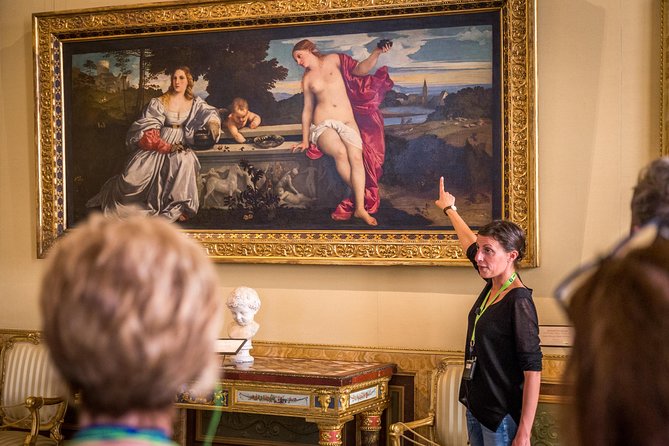
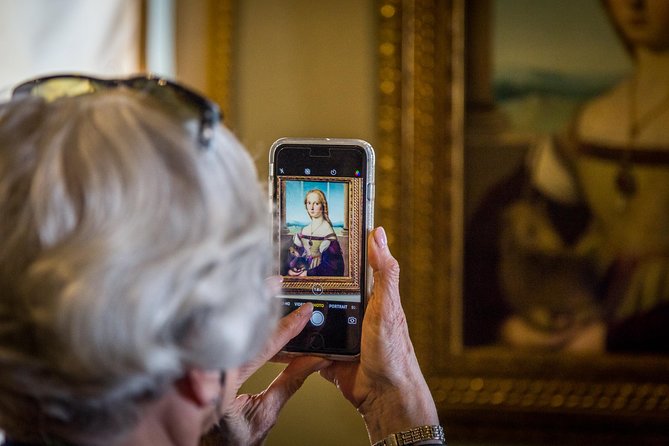
I would choose this tour if you want the Borghese Gallery to make sense, not merely appear on your phone camera. It suits first-time visitors who want a clear path through the collection and families or couples who prefer a guide to explain the art without turning the visit into a university lecture.
It is also a good fit for repeat visitors. The museum changes less than your understanding does, and a strong guide can make familiar works feel new. The most praised guides combine art knowledge with stories, humor, and political background, so the experience is not limited to dates and names.
You should think twice if you prefer complete independence. The 90-minute indoor schedule means you will not see every work at leisure. You also need to be comfortable keeping up with a group, using a headset, checking personal belongings, and walking through the gardens to the Pincio Terrace.
Book early if your Rome dates are fixed. The experience is often reserved well ahead of time, with an average booking lead of about 50 days. Free cancellation is available until 24 hours before the start time, which gives you some protection if plans change.
Should you book it?
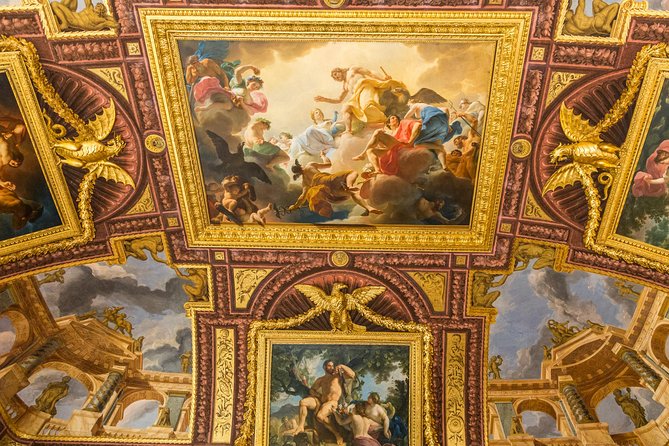
Yes, if Bernini, Caravaggio, Canova, and Raphael are high on your Rome list and you want a guide to connect the art with its setting. The prebooked ticket removes a tricky part of the visit, and the small group gives you a much better chance of hearing and asking questions than a large walking tour.
Just keep your expectations in the right place. This is primarily a guided Borghese Gallery visit with a garden walk afterward. If you want long, unhurried time outdoors, visit the gardens separately. If you want to understand why Apollo and Daphne, Pauline Bonaparte, and the gallery’s paintings matter, the $47.16 cost is fair.
FAQ
How long does the Borghese Gallery and Gardens tour last?
The tour lasts about 2 hours and 30 minutes. The planned schedule includes about 1 hour and 30 minutes inside the gallery and about 1 hour in Villa Borghese Gardens.
What is included in the price?
The price includes entry to the Borghese Gallery, a guided gallery visit, an English-speaking guide, headsets, a small group of no more than 15 people, and a visit to Villa Borghese Gardens.
Is the tour offered in English?
Yes. The tour is offered in English and includes an English-speaking guide.
Where does the tour begin?
The meeting point is Piazzale del Museo Borghese, 00197 Rome. You meet the guide and group outside the Borghese Gallery.
Where does the tour end?
The tour ends at the Pincio Terrace overlooking Piazza del Popolo. Piazza del Popolo and the adjacent Metro stop are about a five-minute walk away, though you must descend a long flight of steps.
Are admission tickets included?
Yes. Entry to the Borghese Gallery is included, with prebooked admission arranged for the tour.
Can I bring a stroller or backpack?
Strollers are not accommodated on the group tour. All personal belongings must be left at the gallery reception on arrival, and backpack-style bags may need to be checked, including some small purse backpacks.
What is the cancellation policy?
You can cancel for a full refund up to 24 hours before the experience begins. Cancellations or changes made less than 24 hours before the start time are not refunded or accepted. If the required minimum number of participants is not reached, you will be offered another date or experience, or a full refund.
Just added around Italy
- Guided visit to the Medieval Gardens of Ostuni★ 4.4 · 9 reviews
- Guided Tour to the Royal Palace of Caserta: discover the Royal Palace and gardens★ 4.5 · 113 reviews
- From the garden to the table: Sicilian cooking class★ 5.0 · 4 reviews
- From Rome: Castel Gandolfo and Gardens Day Trip★ 3.2 · 5 reviews
- Day trip from Rome: Garden of Ninfa and village of Sermoneta★ 5.0 · 5 reviews
- Florence: Culinary Experience in a Lemon House with Sunset and Enchanted Garden★ 5.0 · 3 reviews
- Florence: Museum Pass–David, Uffizi, Pitti Palace & Gardens★ 4.2 · 134 reviews
- Florence: David, Pitti Palace, & Gardens Combination Tickets★ 4.5 · 59 reviews
Italy Garden Tours, compared.
Caserta Royal Palace & Gardens Small Group Tour with Shuttle
Read our review →
Pitti Palace, Boboli Garden, Palatine Gallery Tour
Read our review →
Tremezzina: Villa Carlotta Museum and Garden Entry Ticket
Read our review →
Sorrento: Lemon Garden Tour with Marmalade Tasting
Read our review →
Vatican: Vatican Gardens with Bus Tour & Vatican Museums
Read our review →Caserta Royal Palace & Gardens Small Group Tour with Shuttle
Read our review →
Castel Gandolfo: Papal Apartments and Secret Garden Ticket
Read our review →Browse the lists this tour appears in