
Review · TOKYO GARDEN TOURS
Tokyo: Hama-rikyu Gardens tour with Japanese Tea & Sweets
Hama-rikyu Gardens gives you a quiet view of old Tokyo, with ponds, trees, and carefully arranged garden spaces set against the modern city. The most appealing part is the combination of a small group capped at four and a traditional tea stop, so you get more than a quick walk and a few photographs.
I like the chance to understand the Karesansui dry garden and Kaiyushiki circular garden instead of simply passing them by. I also like that matcha and Japanese sweets are included, with guide Nori specifically praised for making the outing relaxed and helpful. The main consideration is the price: at $85.84, this is costly for a garden visit, so its value depends on how much you want interpretation and the tea experience.
Key points to know before booking
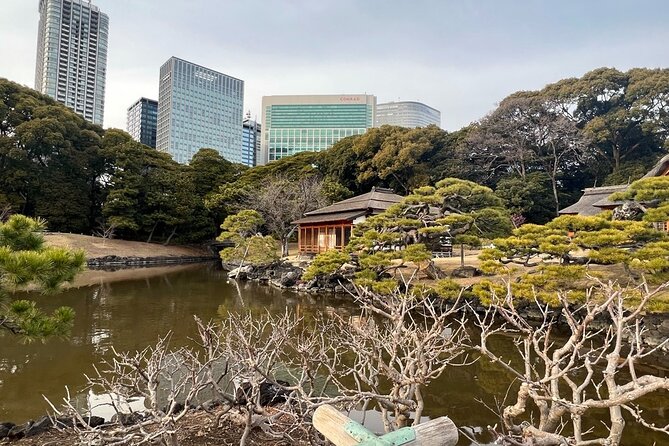
- Edo-period setting: Hama-rikyu was created as a daimyo garden during Japan’s samurai era.
- Two distinct garden styles: You’ll see the Karesansui dry garden and the Kaiyushiki circular garden.
- Tea and sweets included: Matcha green tea and Japanese sweets are served in a tea ceremony room inside the garden.
- Very small group: The maximum group size is four people, a useful advantage for questions and a calmer pace.
- Optional nearby stops: The Advertising Museum Tokyo, Hayao Miyazaki’s giant clock, and Hibiya Shrine may be added.
- Practical ending point: The tour finishes at Shiodome Station, served by the Yurikamome and Toei Oedo lines.
Why Hama-rikyu is a good place to learn Tokyo’s past
Tokyo can feel like a city built for speed. Hama-rikyu gives you a different rhythm. The garden began in the Edo period, from 1603 to 1868, when daimyo, or powerful samurai lords, maintained large estates with formal gardens.
That background matters because this is not simply a public park with attractive planting. Its paths, ponds, open spaces, and viewing points reflect the way elite Japanese gardens were planned and enjoyed. A guide can point out the design choices that are easy to miss when you walk alone.
I would choose this tour if you want a gentle introduction to Japanese garden culture without committing half a day to a museum or a long excursion outside central Tokyo. The garden is large enough to feel like a proper outing, yet the core walk is scheduled for about 1 hour and 30 minutes.
The scenery changes with the seasons. The exact plants and trees you see will depend on when you visit, but the garden’s appeal does not rest on a single flower display. You are there for the changing vegetation, water, paths, and the way the garden frames the city around it.
Dessert tours around Tokyo:
- Tokyo: Hama-rikyu Gardens tour with Japanese Tea & Sweets
★ 4.7 · 14 reviews - Princeville Botanical Gardens Tour and Chocolate Tasting Ticket
★ 5.0 · 774 reviews - Grenada Spice Gardens, Rum & Chocolate Tour (Full/Half Day)
★ 4.5 · 94 reviews
Reading the Karesansui and Kaiyushiki gardens
The first major appeal is the contrast between the two named garden styles. Karesansui means a dry garden, a style that uses arranged materials to suggest natural forms without relying on a pond or stream. At Hama-rikyu, the guide explains the garden rather than leaving you to guess what you are seeing.
The Kaiyushiki garden follows a circular walking design. In this kind of garden, your view changes as you move, so the scene is not meant to be understood from just one fixed point. A path can reveal a pond, a tree grouping, or a different city view a few steps later.
This is where the small group helps. With no more than four people, you have a better chance to stop without holding up a large crowd. You can ask why a particular space was arranged in a certain way, or pause for photographs without turning the visit into a rushed procession.
The guide’s role is central. The garden itself is pleasant, but the tour is selling explanation as much as entrance. If you already know Japanese garden design well, you may find the walk fairly basic. If you are new to the subject, the commentary should give the garden a clearer shape and purpose.
Wear comfortable walking shoes. The visit is not an athletic challenge, but it is a walking tour, and the garden is large enough that flimsy footwear could make the experience less enjoyable.
The tea room and the value of matcha
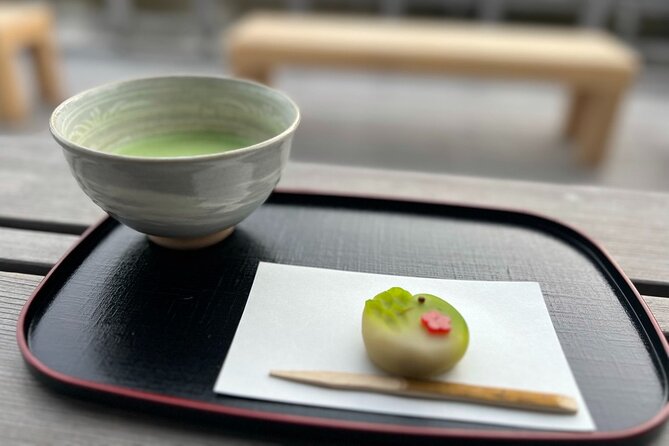
After seeing the garden, you have a traditional tea experience in a tea ceremony room within Hama-rikyu. Matcha green tea and Japanese sweets are included in the tour price, which gives the outing a clear finishing point rather than ending with the last garden explanation.
The tea service also adds cultural context. Matcha is not just another drink to sample between sightseeing stops. Served with a Japanese sweet, it gives you a small look at how tea, hospitality, and seasonal presentation fit into Japanese culture.
Keep your expectations sensible. The information provided describes an experience of matcha and sweets, not a full formal tea ceremony lasting several hours. You should book it as a guided garden walk with a tea-room visit, not as an intensive lesson in tea procedure.
I like this format because it balances learning and pleasure. You get an explanation of the garden, time to look around, and then a quiet pause with something to taste. For many people, that will feel more complete than paying separately for garden admission and a café stop.
The tea is also one reason the tour can suit first-time visitors to Japan. You do not need prior knowledge of tea customs to take part. The activity is presented as an accessible introduction, and the small group should make it easier to follow along.
Optional stops beyond the garden
The core experience is Hama-rikyu Gardens. Three nearby additions are listed as optional, so confirm how they fit into your tour when booking or meeting your guide.
More Garden Tours in Tokyo:
- Imperial Palace East Garden and Edo Castle Walking Tour in Tokyo
★ 5.0 · 510 reviews - Tokyo: Imperial Palace East Gardens Walking Tour
★ 4.8 · 353 reviews - Mt. Fuji, Cherry Blossom & Shiba Sakura Pvt. Day Tour
★ 5.0 · 326 reviews - Tokyo: Edo Castle & East Garden of the Imperial Palace Tour
★ 4.7 · 112 reviews
Advertising Museum Tokyo
The Advertising Museum Tokyo focuses on Japanese advertising and how it has changed over time. It also compares Japanese and foreign advertising, giving you a look at design, media, and popular culture from a different angle.
The museum visit is listed at about 35 minutes and has no admission charge. That makes it a useful add-on if you enjoy design or want a short indoor stop after the garden. It may be less appealing if your priority is traditional culture and you would rather spend your limited time outside.
Because the museum is optional, do not assume it will form the main part of the tour. Hama-rikyu remains the main attraction, while this stop offers a change of subject.
Hayao Miyazaki’s Nippon Television Giant Clock
The giant clock is a copper, steampunk-style karakuri clock designed by Hayao Miyazaki, the Studio Ghibli animation director. When its scheduled time arrives, lights come on and the clock’s moving parts operate with music.
The stop is listed at about 10 minutes. That makes it easy to fit into a walking route, especially if you enjoy animation or unusual city sights. It is not a substitute for a full Studio Ghibli visit, but it is a distinctive detail near the end of the tour.
The clock’s performance depends on timing. Since the information provided does not specify the exact schedule, ask your guide whether the tour will reach it when it is operating.
Hibiya Shrine
Hibiya Shrine is a small historic shrine in an office district. It has about 400 years of history and enshrines the god of agriculture and the god said to drive away impurity.
The listed visit takes about 15 minutes and is free. Its appeal comes from the contrast between a place of worship with a long past and the surrounding business area. If you like seeing how older religious sites fit into present-day Tokyo, this is a worthwhile short stop.
Again, treat it as an optional extra. The garden and tea experience are the parts to weigh when deciding if the $85.84 price suits you.
A small group changes the feel of the walk
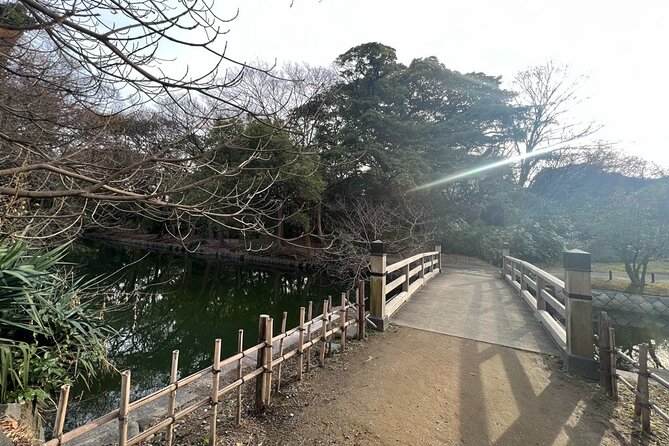
The maximum group size is four. That is a strong point for anyone who dislikes large guided groups, especially in a garden where stopping to look at a detail is part of the pleasure.
A tiny group also makes the guide’s explanation more adaptable. You can ask about the dry garden, the circular design, the tea service, or the garden’s samurai-era background without waiting for a long queue of questions.
The only caution is that the small group size may be tied to a minimum number of bookings. If the minimum is not met, the activity can be canceled, with a different date or experience, or a full refund offered. That is not a problem unique to this tour, but it is worth remembering if your Tokyo schedule is tight.
One guide named in the available feedback is Nori. She was praised for being helpful and for leading a relaxed day, which matches the kind of atmosphere this format is designed to provide. Guide assignments can vary, so do not book on the assumption that Nori will lead your particular departure.
Timing, meeting point, and transport
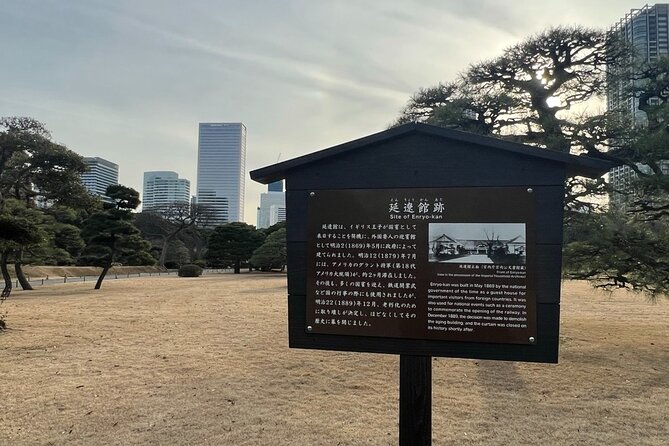
The experience lasts approximately 1 hour and 30 minutes to 2 hours and 30 minutes. The core Hama-rikyu portion is listed at about 1 hour and 30 minutes, while the optional stops can extend the outing.
You meet at Otemon Bridge, at the address given as MQ77+9G, 8 Chome-21 Ginza, Chuo City. Check the precise meeting instructions before setting out, since Tokyo addresses can be confusing and a small location error can cost you valuable time.
The tour ends at Shiodome Station, at 1 Chome-7 Higashishimbashi. Shiodome is served by the Yurikamome and Toei Oedo lines, making the finish useful for continuing around Tokyo.
That start-to-finish route is practical. You do not need to return to the meeting point after the garden and tea. Still, keep your day flexible if you want the optional stops, since the total length can vary by an hour.
A mobile ticket is provided, and confirmation arrives when you book. The activity is near public transportation, and most people can participate. No special accessibility details are supplied, so contact the provider if you need specific information about surfaces, steps, or seating.
Is $85.84 a fair price?
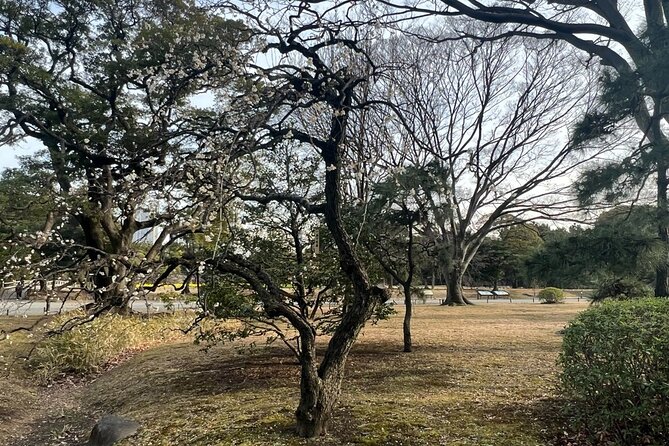
At $85.84 per person, this is not a bargain garden admission with a cup of tea. You are paying for a guide, a very small group, garden access, the tea and sweets, and the chance to add several nearby sights without paying admission for those optional stops.
The price makes more sense if you want context. Hama-rikyu is easy to walk through on your own, but you would need to research the Edo-period background and the two garden styles before arriving. You would also arrange your own matcha stop, and the result might not feel connected to what you just saw.
The value is weaker if you only want photographs or a quick look at the grounds. In that case, a self-guided visit may suit you better, especially if you prefer to set your own pace.
I would also compare the cost with your interest in the tea experience. If matcha and Japanese sweets are an important part of your Tokyo plans, their inclusion adds real value. If you do not care for tea or want a longer formal ceremony, the price may feel high.
The free cancellation policy gives you some breathing room. You can cancel for a full refund up to 24 hours before the start time. Changes or cancellations inside that 24-hour window are not accepted and are not refunded.
Who should book this experience?
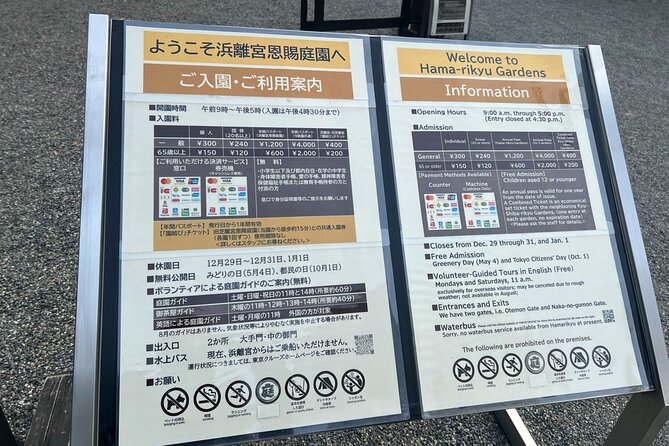
I would recommend it to you if you want:
- A calm break from Tokyo’s busy streets
- A short, guided introduction to Japanese garden design
- A small group where you can ask questions
- Matcha and Japanese sweets in a garden setting
- A central activity that ends near useful train lines
- Optional cultural and design stops nearby
Families and first-time visitors may find the format approachable because it combines walking, explanation, scenery, and food without requiring a full-day commitment. The walking shoes advice applies to everyone, though, and the garden visit may be less comfortable for anyone who struggles with walking.
You may want to skip it if you prefer independent sightseeing, dislike fixed meeting times, or are mainly looking for a formal tea ceremony. The garden is the main event, and the optional museums and clock stop are extras rather than major attractions.
Should you book the Hama-rikyu tea tour?
Book it if you want Tokyo’s history explained through a garden, not just viewed from a train window. The combination of Hama-rikyu’s Edo-period design, a maximum group of four, matcha, and Japanese sweets gives the visit a clear purpose.
I would be especially interested in this tour early in a Tokyo stay. It can help you understand garden design and tea customs before you encounter them elsewhere. The main reason to hesitate is the price, which asks you to value guidance and a small group rather than simple admission.
If that sounds like your kind of morning or afternoon, this is a well-focused choice. If you only need a scenic walk, save the money and explore independently.
FAQ
How long does the Hama-rikyu Gardens experience last?
The experience lasts approximately 1 hour and 30 minutes to 2 hours and 30 minutes. The main garden portion is listed at about 1 hour and 30 minutes, with optional stops adding time.
What is included in the tour price?
The tour price includes admission to Hama-rikyu Gardens, matcha green tea, and Japanese sweets in the garden’s tea ceremony room.
Is the tea ceremony a full formal ceremony?
The available information confirms an experience with matcha green tea and Japanese sweets in a tea ceremony room. It does not describe a longer formal tea ceremony or a detailed tea lesson.
How many people can join the tour?
The activity has a maximum of four travelers.
Where does the tour begin?
The meeting point is Otemon Bridge, at MQ77+9G, 8 Chome-21 Ginza, Chuo City, Tokyo 104-0045, Japan.
Where does the tour end?
The tour ends at Shiodome Station, at 1 Chome-7 Higashishimbashi, Minato City, Tokyo 105-0021. The station is served by the Yurikamome and Toei Oedo lines.
Are the nearby museums and sights included?
The Advertising Museum Tokyo, Hayao Miyazaki’s Nippon Television Giant Clock, and Hibiya Shrine are listed as optional stops. The information provided does not specify that each stop is included in every tour.
What happens if I need to cancel?
You can cancel for a full refund up to 24 hours before the experience start time. Cancellations or changes made less than 24 hours before the start time are not accepted and are not refunded.
Just added around Tokyo
- TOKYO: Tailored Gardens tour with Pro Gardener by E-bike -BASIC★ 5.0 · 2 reviews
- Tsukiji Food Strolling and Hama Rikyu Garden Walking Tour★ 5.0 · 7 reviews
- Tokyo: Serene Sakura & Sake: An Exclusive Brewery Pairing Lunch★ 5.0 · 2 reviews
- Tokyo: Kimono Experience inside Shinjuku Gyoen National Garden★ 5.0 · 3 reviews
- Tokyo Cherry Blossom Half Day Walking Tour with a Local Guide★ 3.5 · 4 reviews
- Cherry Blossom Highlights, Asakusa, Ueno, Imperial Palace Garden★ 4.5 · 4 reviews
- Sumida Riverside Walk: Garden &Temple Ritual (4 Meeting Points)★ 5.0 · 5 reviews
- Full Guided Mt. Fuji & Shiba-Sakura Festival One Day Pvt.Tour★ 5.0 · 6 reviews
Tokyo Garden Tours, compared.

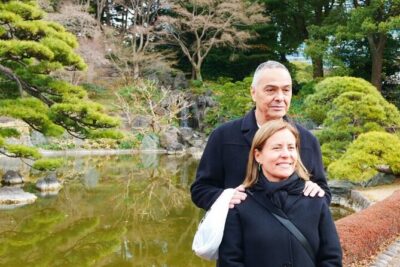
Edo Castle & East Garden of the Imperial Palace Tour
Read our review →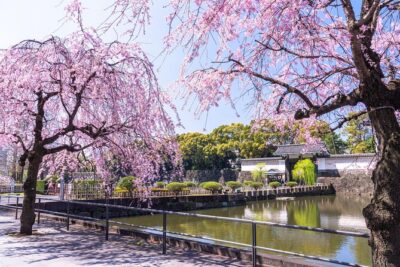
Tokyo Private Tour! Edo Castle & Imperial Palace East Gardens
Read our review →
Tsukiji Market and Hama-rikyu Gardens Guided Tour
Read our review →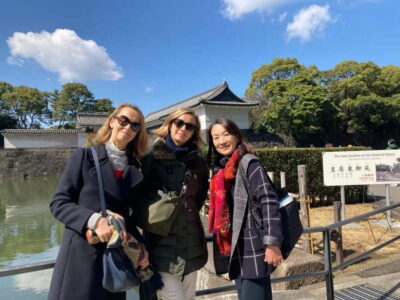
Pvt. Tour – Edo Castle & Imperial Palace East Gardens
Read our review →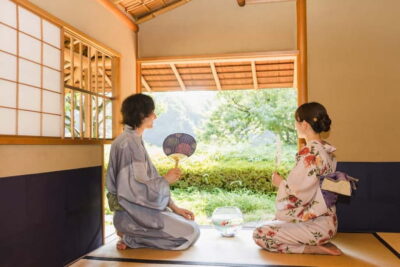
Kimono Rental inside Shinjuku Gyoen National Garden
Read our review →
Tokyo Japanese Garden Lover’s Private Tour with Government-Licensed Guide
Read our review →Browse the lists this tour appears in