
Review · TOKYO GARDEN TOURS
Tokyo Summer: Mt Fuji 5th Station& Kawaguchiko Lavender Trip
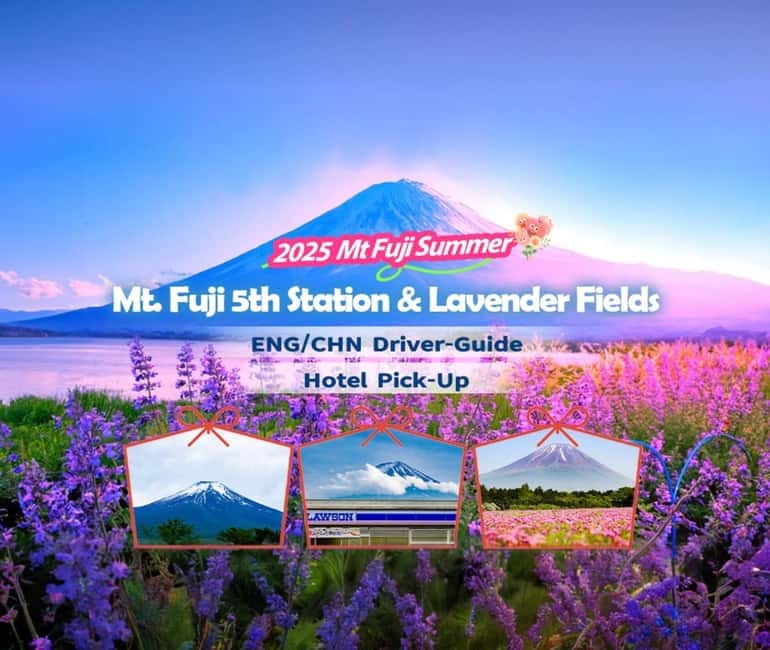
Mt Fuji’s summer show is the main event here: lavender at Oishi Park, volcanic slopes at the 5th Station, and Fuji framed behind a Lawson convenience store. You also get the classic Oshino Hakkai ponds and Hikawa Clock Shop street, all in one long day from Tokyo.
I like the small-group format and the useful hotel pickup option in Shinjuku, Chiyoda, Chuo, and Taito. I also like the 50 minutes set aside at Oishi Park and the 70 minutes at Oshino Hakkai, since this is not just a hop-on, snap-a-photo, and hurry-back outing. The main caution is communication: the driver provides basic English at most, and the advertised group size varies between nine and twelve people.
Key points to know
- Lavender season runs from June through August, with July presented as the main bloom period at Oishi Park.
- Mt Fuji’s 5th Station reaches about 2,300 meters, but it may be replaced by Lake Yamanaka if the road or station is closed.
- Oshino Hakkai gets the longest stop, with eight spring-fed ponds and time for local food.
- Pickup is available in four central Tokyo districts for bookings of two or more people.
- The itinerary is built around photographs, including Lawson, Hikawa Clock Shop, and Fuji with flowers.
- English commentary is limited, so this works best if you are comfortable with a lightly guided day.
A summer Fuji day built around famous views
This outing is designed for people who want the recognizable Mt Fuji photographs without piecing together several trains, buses, and local connections. From Tokyo, you ride by road to the mountain area, stopping at the 5th Station, Oshino Hakkai, Lake Kawaguchi, Oishi Park, and Hikawa Clock Shop.
That convenience is the strongest reason to consider it. A Fuji day by public transport can involve careful timing and several transfers. Here, tolls, fuel, and the admission fee for the 5th Station are handled for you. The tradeoff is a long road day, with traffic able to change both the arrival time and the order of stops.
The price is $61 per person. That is a reasonable package price for transport between Tokyo and the Fuji Five Lakes area, particularly when the 5th Station admission and road costs are included. It is less attractive if you want a full English-speaking guide, a proper included lunch, or plenty of time at each location.
The schedule leaves Tokyo between 7:30 and 8:30 in the morning and aims to return around 6:00 in the evening. You may arrive back 1.5 to 2 hours earlier if traffic is kind, but you should not book an important evening reservation too tightly after the tour.
More Lavender Field Tours in Tokyo:
- Nice: Gorges of Verdon and Fields of Lavender Tour
★ 4.5 · 2,707 reviews - Aix-en-Provence: Lavender Fields Visit
★ 4.1 · 421 reviews - Nice: Gorges of Verdon and Fields of Lavender Tour
★ 4.0 · 342 reviews
Leaving Tokyo with pickup or a central meeting point
The easiest option is hotel pickup in Shinjuku, Chiyoda, Chuo, or Taito, provided at least two people are booking and the hotel is approved. If you are staying elsewhere, ask in advance rather than assuming pickup will be available.
Solo visitors need to meet the group at Tokyo Station’s Marunouchi North Exit. The exact gathering point is communicated by WhatsApp or LINE, with a photo sent the night before. Install the app before the trip, keep your phone charged, and check your messages carefully.
The vehicle leaves on time. A late arrival, even after contacting the operator, may mean no refund. This is one of those outings where arriving early is not fussiness, it is practical insurance. Tokyo Station can be confusing, and the meeting point is not the same as simply arriving somewhere near the station.
You can bring a small backpack or a compact bag, but vehicle space is tight. Bags up to about 24 inches are the stated limit. Large suitcases do not fit the spirit of this trip, and food or drinks are not allowed inside the vehicle. Grab a convenience-store coffee before boarding if you need one, but finish it before getting in.
Mt Fuji 5th Station at 2,300 meters
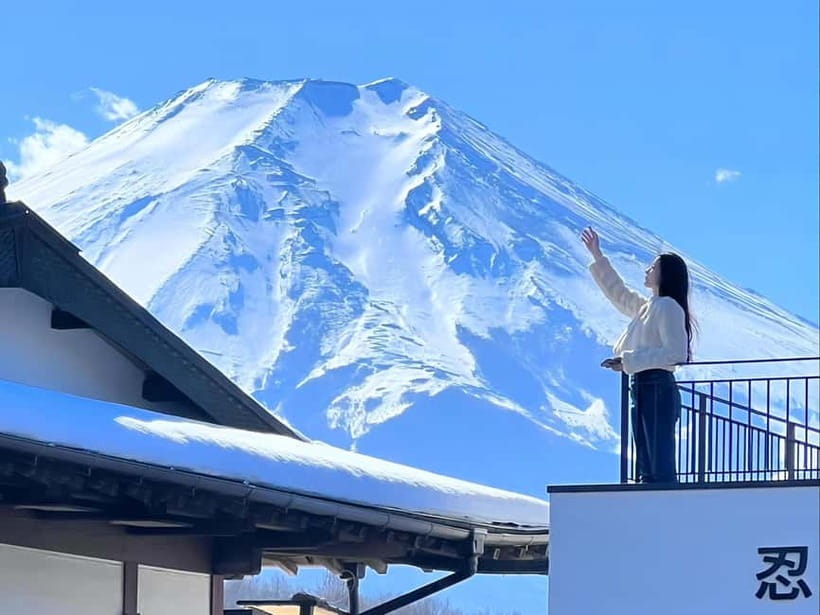
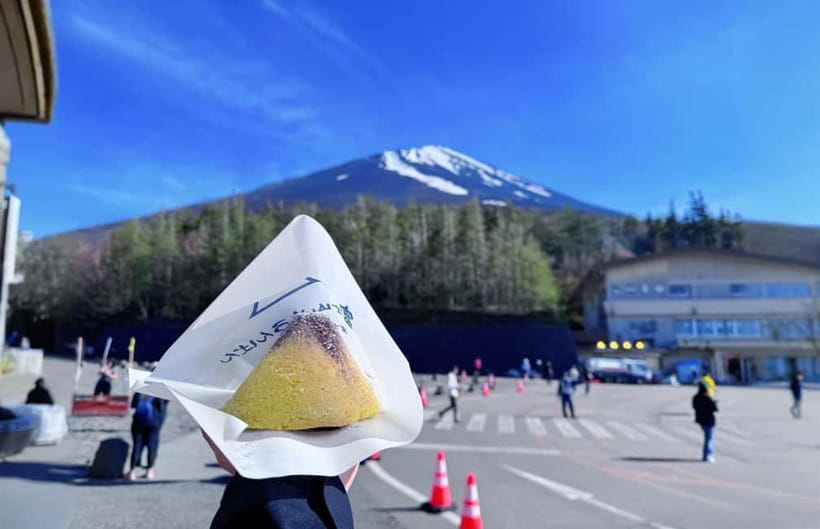
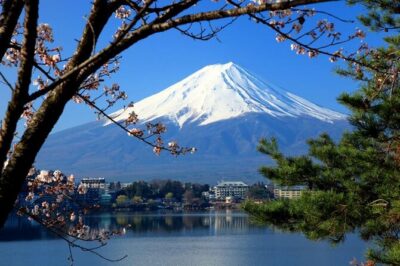
The first major stop is Mt Fuji’s 5th Station, about 2,300 meters above sea level. This is the highest point on the planned route and gives you a direct look at Fuji’s volcanic upper slopes rather than the more distant postcard view from the lakes.
You get about 50 minutes here. That is enough for photographs, a short walk, and a look at the surrounding scenery, but not enough for a serious mountain outing. The stop is about seeing Fuji’s upper world, not hiking toward the summit.
June and July can bring clearer views, though no mountain view is guaranteed. Clouds can cover Fuji even on an otherwise pleasant day. The tour runs in rain or poor visibility, with no weather refund, so book this for the full collection of stops rather than for one guaranteed photograph.
If the 5th Station is closed, the route changes to Lake Yamanaka. That gives you a useful backup, but it is not an equivalent experience. Lake Yamanaka offers a lakeside Fuji view, while the 5th Station gives you the altitude and volcanic setting. If reaching the station is your main goal, check the conditions close to departure.
At this height, bring a light layer even in summer. The information supplied does not promise cold-weather equipment or special mountain preparation, so simple personal comfort is your responsibility.
Oshino Hakkai and the 70-minute stop
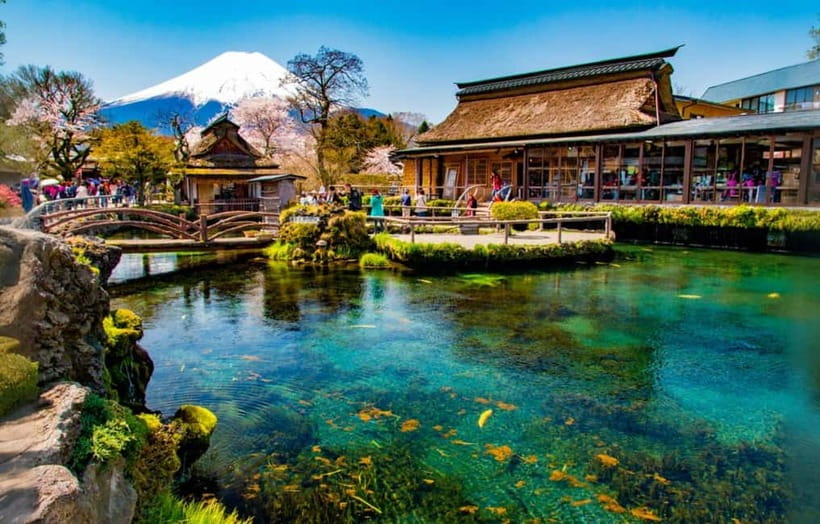
Oshino Hakkai is the longest stop, at about 70 minutes, and that extra time matters. The site is known for eight spring-fed ponds formed by water filtering through Mt Fuji’s lava fields. The clear pools, old trees, and reflections provide a different kind of Fuji experience from the broad mountain viewpoints.
You can look into the water, walk among the ponds, and explore the Edo-period-style setting around them. The description also points to local street food, including mochi grilled over lava rock. This is a good place to try something small rather than expect a formal restaurant meal.
There is an important detail to clarify before you pay. The stop description says lunch is included, but the frequently asked information says meals and drinks are not included. Those statements do not match. Plan to pay for your own food unless the operator confirms in writing that lunch is covered.
The no-food rule in the vehicle makes timing even more important. You will have food options at Oshino Hakkai, but if you have dietary needs or prefer a full meal, bring only what is allowed outside the vehicle and ask the operator how to handle it. The supplied information does not specify a restaurant, menu, or meal voucher.
More Garden Tours in Tokyo:
- Imperial Palace East Garden and Edo Castle Walking Tour in Tokyo
★ 5.0 · 510 reviews - Tokyo: Imperial Palace East Gardens Walking Tour
★ 4.8 · 353 reviews - Mt. Fuji, Cherry Blossom & Shiba Sakura Pvt. Day Tour
★ 5.0 · 326 reviews - Tokyo: Edo Castle & East Garden of the Imperial Palace Tour
★ 4.7 · 112 reviews
Lawson at Lake Kawaguchi, the modern Fuji postcard
The Lake Kawaguchi Lawson stop lasts about 20 minutes. This is a short, very specific photo stop, aimed at the familiar image of Mt Fuji rising behind a blue-and-white convenience-store facade.
The appeal is not historic or quiet. It is the odd visual contrast between everyday Japanese convenience-store life and one of Japan’s most famous natural sights. The guide can point out angles that include the power lines and signage, details that help create the recognizable composition.
Twenty minutes is enough for photographs, but not for a leisurely shop visit. You may need to choose between taking pictures and buying a snack. Since food and drinks are not allowed in the vehicle, do not assume you can stock up and carry refreshments back onto the bus.
This stop also depends heavily on visibility. If clouds cover Fuji, you will still see the Lawson, but the reason for coming is reduced. Keep your expectations sensible: this is a quick image-making stop, not a broad tour of Lake Kawaguchi.
Oishi Park and the June to August color show
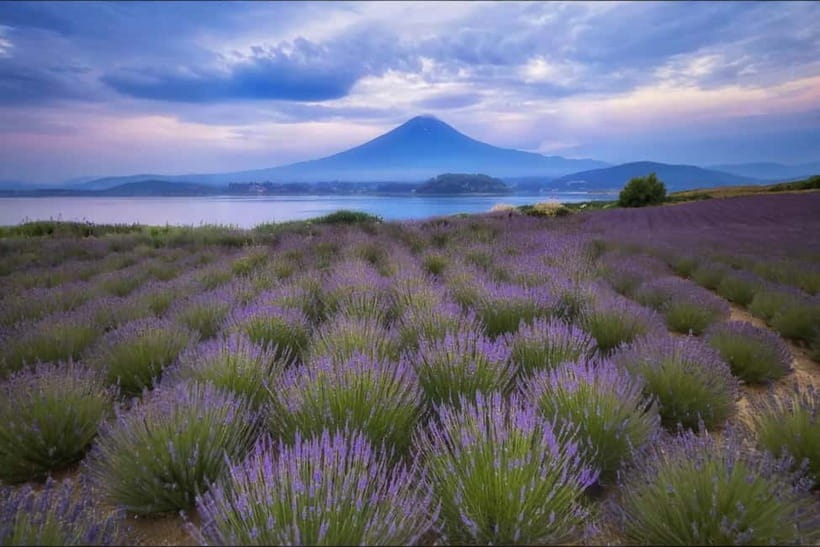
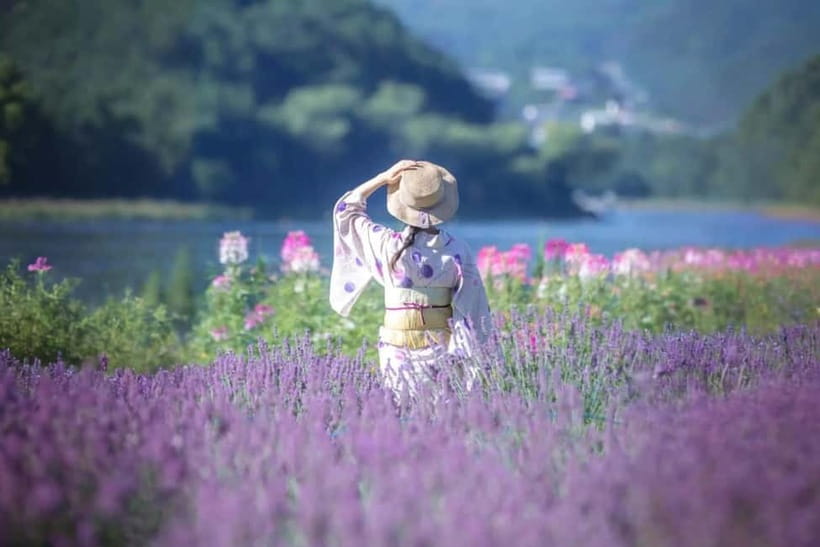
Oishi Park is the heart of the summer itinerary. The park is known here for rows of lavender with Mt Fuji behind them, and the schedule allows about 50 minutes to walk and take photographs.
The timing is seasonal. June through August is the stated window, with July described as the main lavender period. If you book outside the strongest bloom period, you may see less color. The tour also notes that autumn brings red kochia instead, but this is not a summer lavender guarantee.
I like the amount of time allotted here. Fifty minutes gives you room to walk, look for a clear sight line, and take several photographs without being forced straight back to the vehicle. A low camera angle can make the flowers appear to lead toward or cradle Fuji, though the final result depends on the weather and crowd conditions.
This is also the place where the tour’s focus becomes clear. You are not just visiting scenic sites; you are being taken to specific compositions that appear often in Japan travel photographs. That is useful if you want the classic images, but less important if you prefer quiet walks or unplanned discoveries.
The park is also the best reason to choose this trip in summer rather than another season. The mountain, lake area, and ponds remain worthwhile year-round, but the lavender gives the day a clear seasonal identity.
Hikawa Clock Shop and the old-style street view
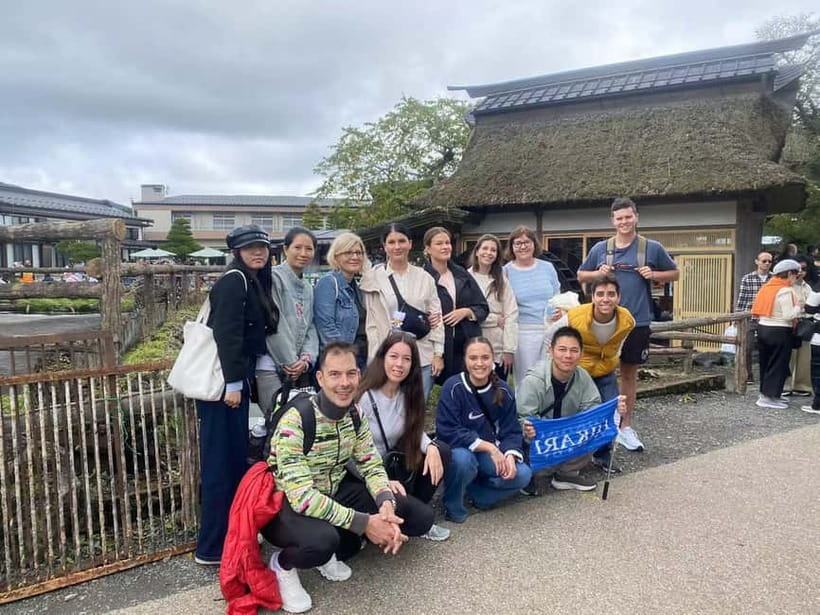
The final sightseeing stop is Hikawa Clock Shop, with about 20 minutes to walk the street and photograph Mt Fuji at the end of the road. The setting is described as an Edo-style lane, with wooden shop fronts and a straight view toward the mountain.
This is another carefully framed photo location, but it feels different from Oishi Park. Instead of flowers in the foreground, you get buildings, street lines, and the mountain beyond. Morning mist and late-day light can change the mood, though the schedule does not promise a sunset visit.
Twenty minutes is enough for a stroll and a few photographs, not a long shopping visit. The stop is best treated as a final visual punctuation mark before the drive back to Tokyo.
Because the route is traffic-sensitive, do not expect the timing to produce a particular light condition. The description suggests sunset hues as a photography tip, but the actual time at Hikawa depends on the day’s road conditions and the order of the stops.
What the guide can and cannot provide
The included staff member is described as a bilingual Chinese and Japanese driver, with languages also listed as Traditional Chinese, English, and Japanese. In practical terms, English support is limited to basic conversation, meeting times, and directions. You should not expect detailed English commentary at every stop.
That point is supported by the available experience: the driver followed the itinerary correctly and made himself understood, but spoke little English. For many people, that is enough. The route is straightforward, and most stops are self-guided once you get out of the vehicle.
If you want detailed explanations of Fuji’s geology, Japanese history, or the meaning of each site, this is not the right format. You are paying mainly for transportation, route planning, access to the 5th Station, and a small-group structure.
The group-size information needs a little caution. One part describes a maximum of 12 people, while another says a maximum of nine. Confirm the actual vehicle and group limit if personal space matters to you. Either number is smaller than a large coach, but nine and twelve feel different in a compact vehicle.
Who gets the best value from the $61 price
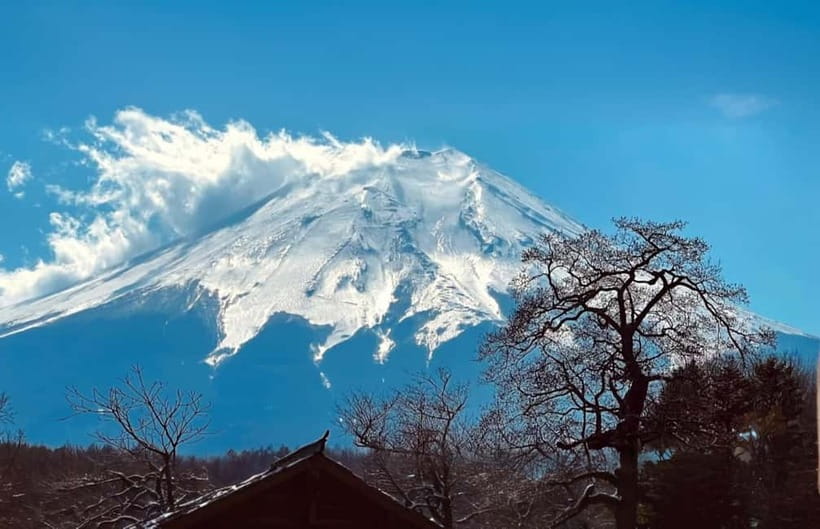
I see the best value for solo visitors who do not want to manage Fuji-area transfers, couples who want the main photograph locations, and small groups staying in the central pickup districts. The ability to travel directly from Tokyo and return the same day saves planning time.
The price also works well if you would otherwise pay separately for transport, tolls, fuel, and the 5th Station admission. Those costs are covered, and the route combines several locations that are spread around the Fuji area.
The value drops if you need a full meal, extensive English interpretation, or a flexible schedule. You may also prefer a train and local-bus plan if you want to stay longer at one site and skip the photo stops that do not interest you.
The rating information available is mixed rather than glowing, at 3.5 from four reviews. I would read that as a sign to book for convenience and coverage, not for luxury service or polished guiding. The positive practical point is clear: the driver kept to the planned route, making this a valid alternative to managing several transfers yourself.
Practical details before you reserve
The tour is not suitable for people over 75, according to the supplied conditions. Children under three can join free without occupying a seat.
You can cancel up to 24 hours before departure for a full refund. The reservation system also allows you to reserve and pay later, which helps if your Tokyo plans are still shifting.
Traffic can alter the departure timing, stop order, and return time during busy periods. I would avoid pairing this with a fixed evening performance or a flight. A flexible dinner plan near Tokyo Station is safer.
Remember four simple points:
- Bring comfortable walking shoes and a light layer for the 5th Station.
- Install WhatsApp or LINE and check your phone the night before.
- Keep luggage small.
- Treat the meal as your own expense unless the operator resolves the conflicting information.
Should you book this Fuji day trip?
Book it if you want many famous Fuji views in one road-based day, especially the July lavender at Oishi Park, the Lawson photograph, and the Hikawa Clock Shop street. The central pickup option and $61 price make it a practical choice for visitors who value ease over a fully guided experience.
Skip it if your priority is detailed English commentary, a guaranteed clear view of Mt Fuji, a confirmed included lunch, or long quiet periods at one location. The day runs in all weather, traffic can change the schedule, and the small vehicle has limited luggage space.
My advice is simple: confirm the real group limit, ask specifically about lunch, and accept that the driver is mainly there to transport you efficiently. With those expectations, this is a useful summer photo circuit that covers a lot of ground without making you solve the Fuji transport puzzle yourself.
FAQ
Where does the tour start?
You meet at Tokyo Station’s Marunouchi North Exit at 1-chome-9-1 Marunouchi, Chiyoda City, Tokyo. The guide sends a gathering-point photo through WhatsApp or LINE the night before.
Is hotel pickup available?
Pickup is offered in Shinjuku, Chiyoda, Chuo, and Taito for bookings of at least two people. Hotels in other districts require approval, so ask before booking.
What happens if Mt Fuji’s 5th Station is closed?
The itinerary changes to Lake Yamanaka if the 5th Station is closed.
Are meals included?
The information is inconsistent. The Oshino Hakkai description refers to lunch, but the FAQ says meals and drinks are not included. Confirm this with the operator and plan to pay for food yourself.
Is English guiding provided?
The driver can handle basic English conversations about meeting times and directions, but complete English commentary is not provided.
Can I bring large luggage?
Space is limited. Bring a backpack or small bag, with luggage up to about 24 inches stated as the maximum per person.
Just added around Tokyo
- TOKYO: Tailored Gardens tour with Pro Gardener by E-bike -BASIC★ 5.0 · 2 reviews
- Tsukiji Food Strolling and Hama Rikyu Garden Walking Tour★ 5.0 · 7 reviews
- Tokyo: Serene Sakura & Sake: An Exclusive Brewery Pairing Lunch★ 5.0 · 2 reviews
- Tokyo Cherry Blossom Half Day Walking Tour with a Local Guide★ 3.5 · 4 reviews
- Cherry Blossom Highlights, Asakusa, Ueno, Imperial Palace Garden★ 4.5 · 4 reviews
- Tokyo: Kimono Experience inside Shinjuku Gyoen National Garden★ 5.0 · 3 reviews
- Sumida Riverside Walk: Garden &Temple Ritual (4 Meeting Points)★ 5.0 · 5 reviews
- Full Guided Mt. Fuji & Shiba-Sakura Festival One Day Pvt.Tour★ 5.0 · 6 reviews
Tokyo Garden Tours, compared.
Edo Castle & East Garden of the Imperial Palace Tour
Read our review →
Tokyo Private Tour! Edo Castle & Imperial Palace East Gardens
Read our review →
Tsukiji Market and Hama-rikyu Gardens Guided Tour
Read our review →
Pvt. Tour – Edo Castle & Imperial Palace East Gardens
Read our review →
Kimono Rental inside Shinjuku Gyoen National Garden
Read our review →
Tokyo Japanese Garden Lover’s Private Tour with Government-Licensed Guide
Read our review →Browse the lists this tour appears in