
Review · JAPAN GARDEN TOURS
Tokyo: Ashikaga Flower Park with Entry Ticket
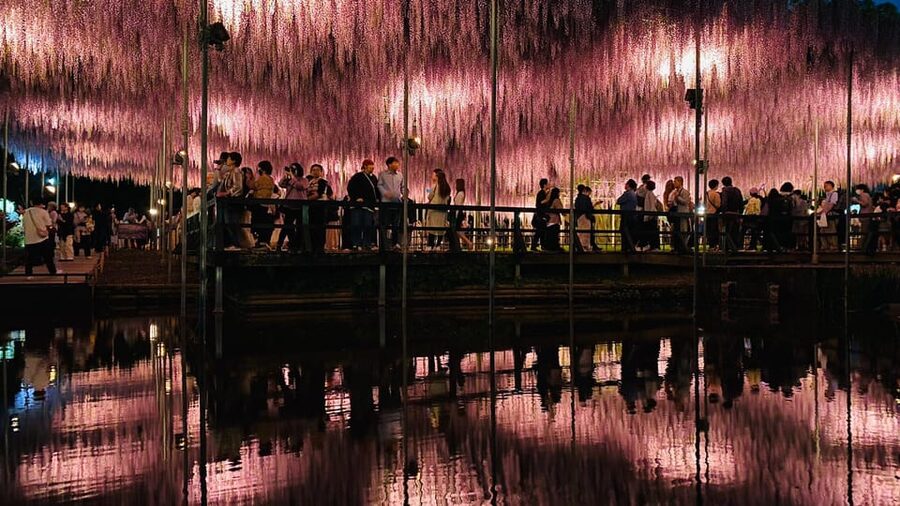
Ashikaga Flower Park is the sort of place that rewards a slower pace. Its winding paths lead through carefully tended gardens, with the show changing by season: wisteria in spring, roses in summer, and bright winter illumination after dark. The Great Wisteria, a huge flowering vine trained over a trellis, is the main event when it is in bloom.
I like two things here. First, your admission, parking, express tolls, and return train from Oyama Station are covered, which removes several small costs and decisions. Second, the guide can add real value if you are paired with Ali, who is known for taking photos and videos as well as explaining the route. The main caution is the price: $206 per person is a serious outlay for roughly three hours inside the park, especially if your date falls outside the best flower or illumination period.
Key points before you book
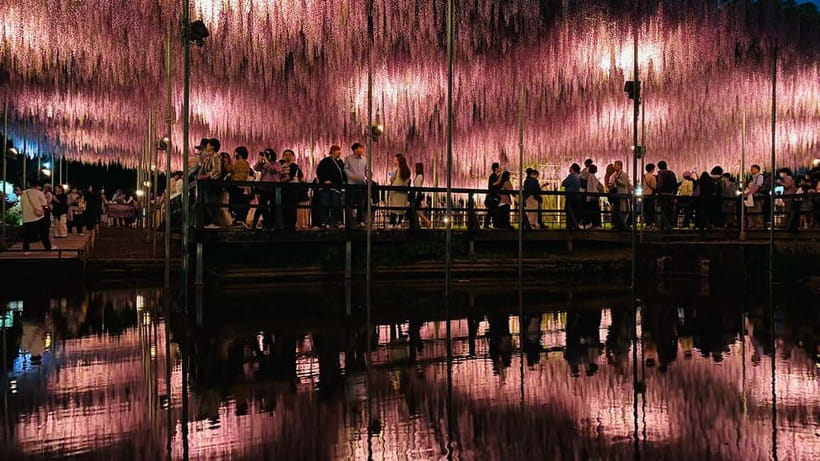
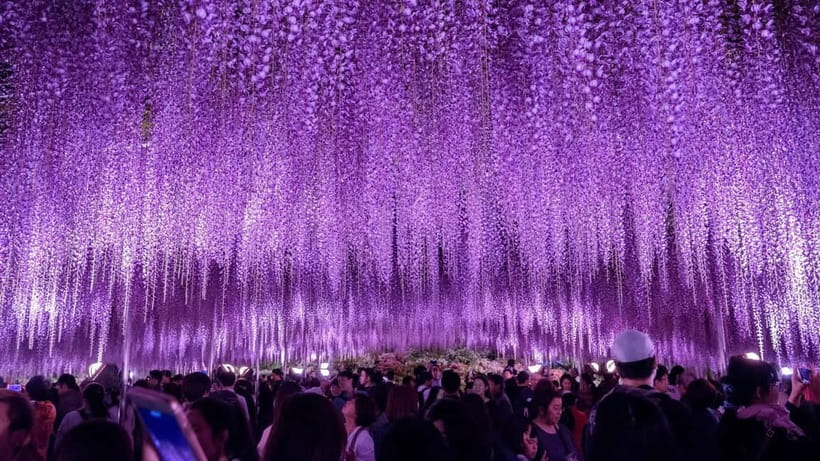
- The Great Wisteria is the spring centerpiece: Its broad trellis creates a flower canopy when the wisteria is in season.
- The park changes by season: Expect wisteria in spring, roses in summer, or winter lights rather than all displays at once.
- Your park visit lasts about three hours: That gives you time for a relaxed walk and photographs without turning the day into a rushed sprint.
- The return train leaves from Oyama Station: A return ticket to Shinjuku is included, while the outward transport is arranged around one of three pickup areas.
- Ali brings photography skills: He is specifically associated with taking photos and videos, useful if you want more than quick phone snapshots.
- Food and drinks are not included: Plan for your own refreshments during the day.
Why Ashikaga Flower Park makes a strong day trip
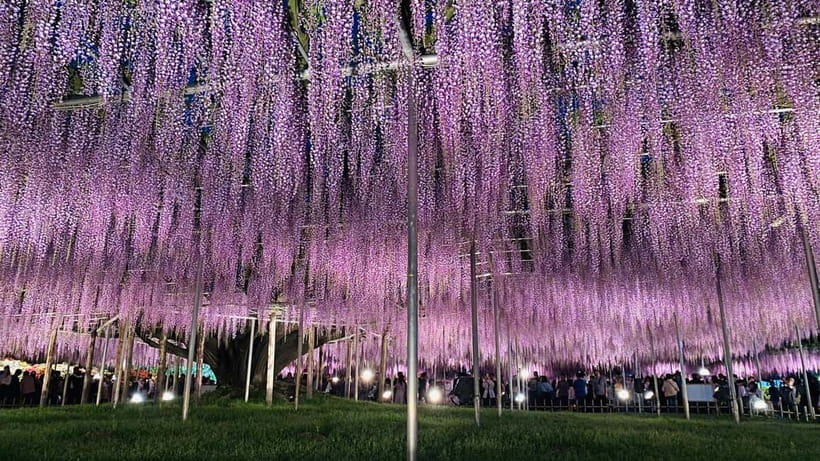
Ashikaga Flower Park is in Tochigi Prefecture, north of Tokyo on Honshu. The attraction is built around seasonal displays rather than a single permanent exhibit. That matters because the same park can feel entirely different in May, summer, or winter.
The setting is made for an easy walk. You follow peaceful paths through planted beds and trellises, stopping whenever a flower or view catches your eye. I like this format for a day away from Tokyo because the activity is simple: walk, look, photograph, and take your time.
You should set your expectations carefully. This is not a packed sightseeing day with several landmarks. The central experience is the park itself, and the visit inside lasts about three hours. That can feel just right if you want fresh air and pretty surroundings. It may feel short if you expect a full day of attractions.
More Flower Parks and Theme Gardens in Japan:
- Mt. Seorak+Nami Island+Garden of Morning Calm Day Trip from Seoul
★ 5.0 · 959 reviews - Seoul: Nami Island and Garden of Morning Calm opt Railbike
★ 4.6 · 907 reviews - Dubai: Miracle Garden Entry Ticket with Hotel Transfer
★ 4.7 · 833 reviews
Spring and the Great Wisteria
The Great Wisteria is the park’s signature feature. It is a massive vine trellis that forms a canopy of blossoms during the wisteria season. The appeal is not only the flowers themselves, but the way the structure changes your walk. Instead of viewing a bed from the side, you pass beneath a flowering roof.
Wisteria season is also the period when timing matters most. The park is known for seasonal flower displays, but the exact condition of the blooms is not guaranteed by the general tour description. If the Great Wisteria is your main reason for booking, check the flowering period carefully before paying.
I would also bring a phone or camera with enough storage. The park is designed for photographs, and the trellises create natural backdrops. If Ali is your guide, you can ask him to help with photos and videos. His role appears to go beyond simply leading you from one point to another, and that can be particularly useful for solo visitors or anyone who wants a proper picture of the day.
Summer roses and changing garden color
In summer, roses take a larger role in the park’s flower program. The experience becomes less about one enormous canopy and more about moving through different planted areas with flowers arranged around the paths.
That variety is useful if you enjoy taking several kinds of photos. You can use the garden beds as a background, then keep walking rather than waiting in one place for a single landmark. The park’s careful planting also gives the route a tidy, designed feel.
Still, do not book this outing expecting spring wisteria if you are visiting in summer. The park’s appeal is seasonal, and the flowers named for one period may not be present at another. The best choice depends on what you most want to see: wisteria, roses, or lights.
Winter illumination after dark
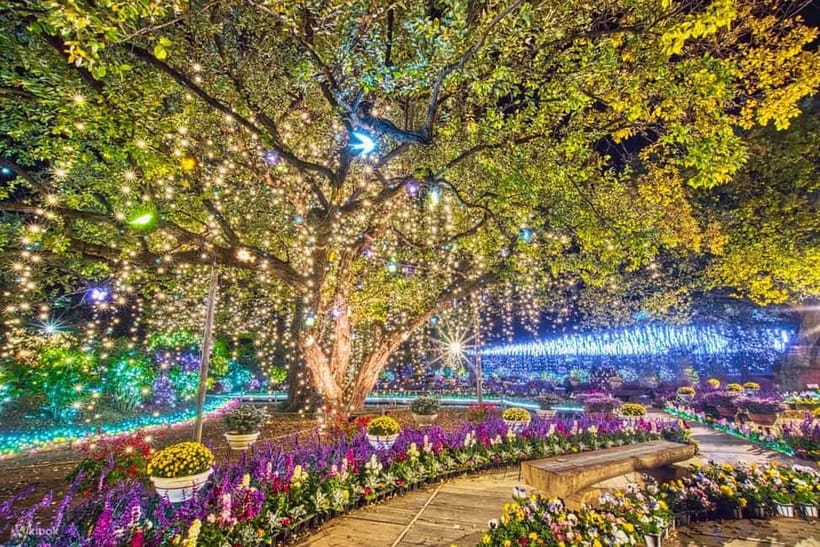
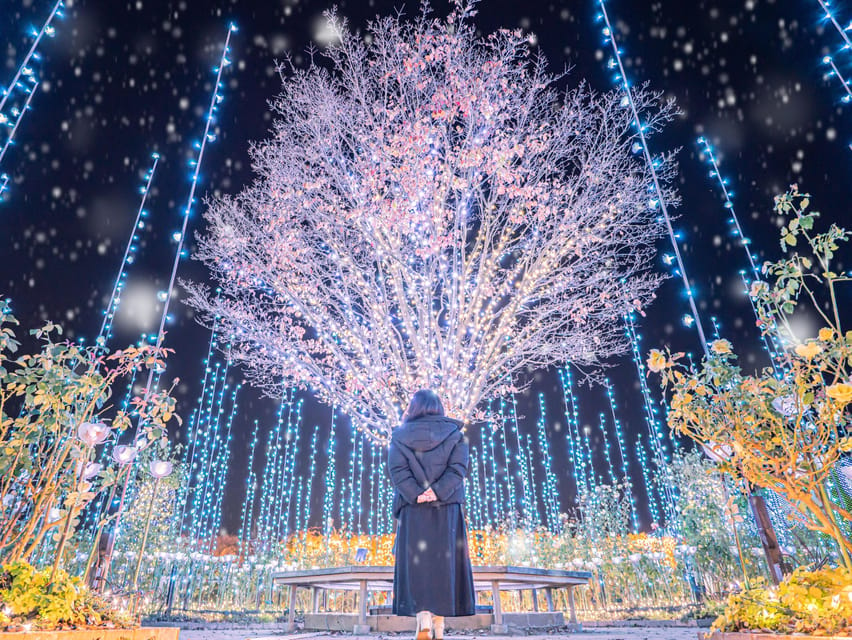
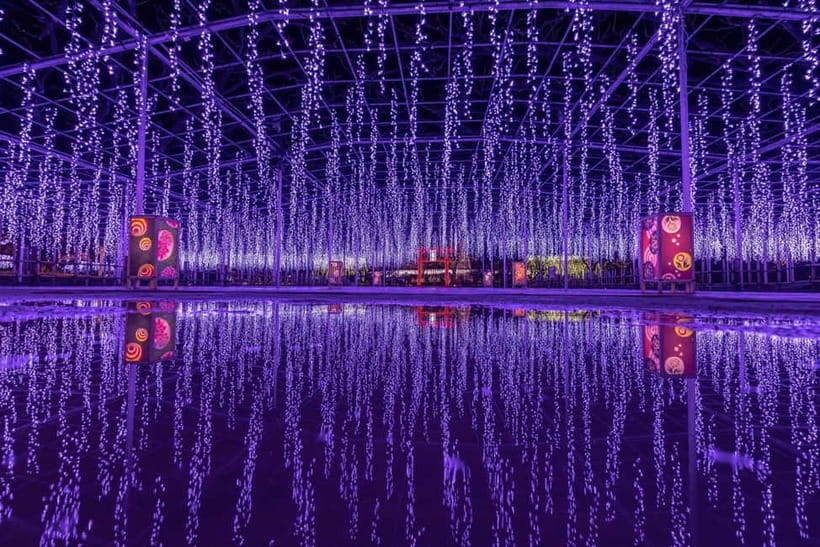
Winter brings a different reason to visit. Hundreds of lights brighten the park, turning the paths and planted areas into an evening display. The experience shifts from inspecting flowers to following illuminated installations through the gardens.
This is a good match for you if you prefer evening photography, glowing decorations, and a gentler visual experience. The lights also give the park a different mood from its daylight flower seasons. You may still find flowers in the setting, but the illumination becomes the main attraction.
The practical question is the start time. The activity is described as a one-day experience, but exact starting times depend on availability. Check the date and schedule carefully, since winter illumination is most meaningful after it gets dark. The three-hour park visit gives you room to walk and take pictures, but it does not mean you will spend all day under the lights.
Entry tickets around Japan:
- Osaka: teamLab Botanical Garden Entry Ticket
★ 4.5 · 1,710 reviews - Paris: Versailles Palace and Gardens Full Access Ticket
★ 4.6 · 41,579 reviews - Marrakesh: Majorelle Garden Entry Tickets
★ 4.5 · 9,651 reviews - Florence: Reserved Entry Ticket to the Boboli Gardens
★ 4.4 · 5,275 reviews
What the three-hour park visit feels like
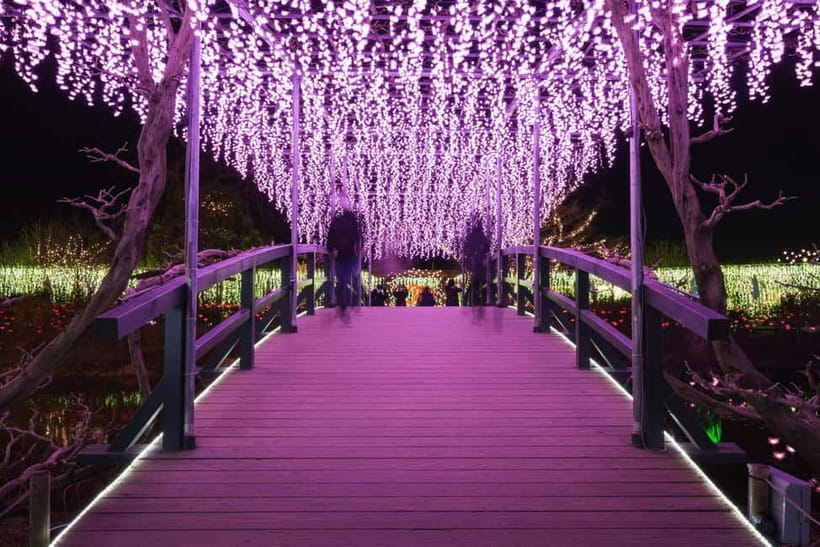
Once you reach Ashikaga Flower Park, the plan is straightforward: sightseeing and walking for about three hours. There is no complicated series of scheduled activities to manage. You can move along the winding paths, stop for pictures, and enjoy the gardens at a comfortable speed.
I like that the visit is long enough to feel worthwhile without demanding an entire day on your feet. The park has several seasonal features, so you can give more time to the area that interests you most. In spring, that may be the Great Wisteria. In summer, it may be the rose displays. In winter, you will likely spend more time photographing the light installations.
The lack of included food and drinks is worth noting. You need to budget for your own refreshments, but the supplied details do not specify restaurant arrangements, meal stops, or what you can buy inside. Do not assume lunch is part of the program. If food matters to your day, ask the host for practical guidance before departure.
Transport, pickup areas, and the Oyama return
The experience offers pickup options in Tochigi, Ibaraki, and Tokyo. That gives you some flexibility, but the description does not provide exact pickup addresses or times. Check the selected pickup point closely before booking, especially if you are staying in central Tokyo and need to reach a meeting place.
Parking fees and express tolls are included. That is a useful benefit if the outward journey uses a vehicle, since tolls can otherwise become an annoying extra cost. It also means you are not expected to sort out the driving arrangements yourself.
The day finishes at Oyama Station, not necessarily at your accommodation. From there, a return train ticket to Shinjuku Station is included. This is a clear strength for anyone staying in Tokyo, since it gives you a defined route back after the park visit.
You should, however, plan the final leg from Shinjuku to your hotel on your own. The included ticket covers Oyama to Shinjuku, not every train or transfer after that. If you are staying elsewhere, the Shinjuku return may be less convenient than it is for someone based near central Tokyo.
The guide can make the price easier to justify
At $206 per person, this is not a budget park admission with casual transport. You are paying for a managed day trip, entry, parking, express tolls, and the return train. The value depends heavily on how much you want help with the journey and how well your date matches the season.
Ali is the guide name connected with this experience. He is described as a photographer and videographer as well as a guide, and he has also been associated with careful attention to participant safety and clear explanations. That combination matters if you are traveling alone, do not want to manage the route, or care about coming home with polished photos.
The price is harder to defend if you only want to enter the park and can arrange transport cheaply yourself. It becomes more reasonable when you value convenience, a guide, included driving costs, and a return train already arranged. I would compare the price with your own transport options, but I would also count the time saved from planning.
The host speaks English and Japanese. That makes the experience accessible to English-speaking visitors, though the exact amount of commentary may depend on the host assigned and the day’s arrangements.
Who will enjoy this experience most
I would recommend this outing to you if you want a calm day built around flowers and photography. It suits couples, solo visitors, families who prefer an easy garden walk, and anyone who wants a break from Tokyo’s dense city streets.
It is especially appealing for photographers. The Great Wisteria, roses, and winter lights offer very different subjects, while the paths provide plenty of places to frame a portrait. If you do not have anyone to take your picture, Ali’s photography skills could be a major advantage.
This may not suit you if you want a packed sightseeing schedule, a long guided lecture, or a meal included in the price. It also may disappoint if you book without checking the seasonal focus. Ashikaga Flower Park is not one fixed show. Its best feature depends on when you go.
Booking details that affect your decision
You can cancel up to 24 hours before the activity for a full refund. That is helpful when weather, flower timing, or your Tokyo plans are uncertain. You can also reserve now and pay later, which keeps money in your pocket until your plans firm up.
Exact starting times depend on availability. Since the experience may use different pickup areas and seasonal lighting schedules, read the available departure information carefully rather than assuming a standard Tokyo start.
The activity is described as lasting one day, with about three hours of sightseeing and walking at the park. Entry to Ashikaga Flower Park is included, as are parking fees, express tolls, and the return train from Oyama Station to Shinjuku. Food and drinks are separate.
Should you book Ashikaga Flower Park?
Book it if your trip lines up with the flowers or winter illumination you most want to see, and if you value having transport and the return journey handled for you. The guide’s photography help, particularly if Ali is assigned, adds something you cannot get from a simple admission ticket.
Think twice if $206 feels high for a three-hour garden visit or if your schedule does not match the strongest seasonal display. My practical advice is to choose your date first, confirm the pickup point and starting time, then decide if the included transport and personal guidance justify the cost. For the right season, this can be a peaceful and picture-friendly escape from Tokyo. For the wrong one, it is still a pleasant park walk, but not the spectacular flower day you had in mind.
FAQ
Where is Ashikaga Flower Park?
Ashikaga Flower Park is in Tochigi Prefecture on Honshu, Japan.
How long do I spend at the park?
The sightseeing and walking portion at Ashikaga Flower Park lasts about three hours.
What flowers can I see?
The park features wisteria in spring and roses in summer. The exact flowers in bloom depend on your travel season.
What is the Great Wisteria?
The Great Wisteria is a large vine trellis that creates a canopy of blossoms during the wisteria season.
Does the park have a winter event?
Yes. The park presents a winter illumination with hundreds of lights.
Where can I be picked up?
The available pickup areas are Tochigi, Ibaraki, and Tokyo. Check the exact pickup information when selecting your date.
Where does the experience finish?
The experience finishes at Oyama Station.
Is the return train to Tokyo included?
Yes. A return train ticket from Oyama Station to Shinjuku Station is included.
Are food and drinks included?
No. Food and drinks are not included in the experience.
Can I cancel for a refund?
Yes. You can cancel up to 24 hours in advance for a full refund.
Just added around Japan
- Himeji: Himeji Castle & Kokoen Garden 3.5-Hour Guided Tour★ 4.9 · 30 reviews
- 1-Day Tour from Okayama: Kurashiki, Gardens & Okayama Castle★ 5.0 · 2 reviews
- Private Car Day Trip to the Kobe Mountains, Gardens and Hot Springs from Osaka★ 4.5 · 16 reviews
- Private Car Full Day Tour of Osaka Temples, Gardens and Kofun Tombs★ 5.0 · 24 reviews
- Osaka: Daytime Hanami (Cherry Blossom) and Food Tour★ 4.7 · 7 reviews
- Kanazawa: Samurai, Matcha, Gardens and Geisha Full-Day Tour★ 4.9 · 75 reviews
- Experience Crafting a Flower-Adorned Mini Japanese Garden★ 4.7 · 15 reviews
- Kanazawa: Half-Day Private Tour – Garden, Castle, Geisha★ 5.0 · 10 reviews
Japan Garden Tours, compared.


Kyoto Zen Meditation & Garden Tour at a Zen Temple with Lunch
Read our review →
Kyoto Kiyomizu Tea Ceremony with Scenic Garden Views
Read our review →
Kanazawa: Samurai, Matcha, Gardens and Geisha Full-Day Tour
Read our review →
Full-Day Tour from Kanazawa: Samurai, Matcha, Gardens and Geisha
Read our review →
Nagano Spring: 1-Day Cherry Blossoms & Snow Monkeys Guided Tour
Read our review →Browse the lists this tour appears in