
Review · KYOTO GARDEN TOURS
Kyoto: Kinkaku-ji Temple & Serene Garden Guided Tour with Tickets
Kyoto’s Golden Pavilion is the flashy opening act, but Ninna-ji’s private Buddhist moments give this three-hour tour its real character. You see Kinkaku-ji’s gold leaf, pond, gates, and garden, then enter parts of Ninna-ji that are not usually open to the public for chanting, questions with a monk, and a look at the rotating sutra shelf.
I like the contrast between samurai power at Kinkaku-ji and imperial devotion at Ninna-ji. I also like the small group, capped at seven, and the guides who have included Ellie, Eriko, and Eri. The main consideration is timing: three hours is efficient, but the tour moves at a brisk pace and Ninna-ji’s special access can change with temple conditions.
Key points to know before booking
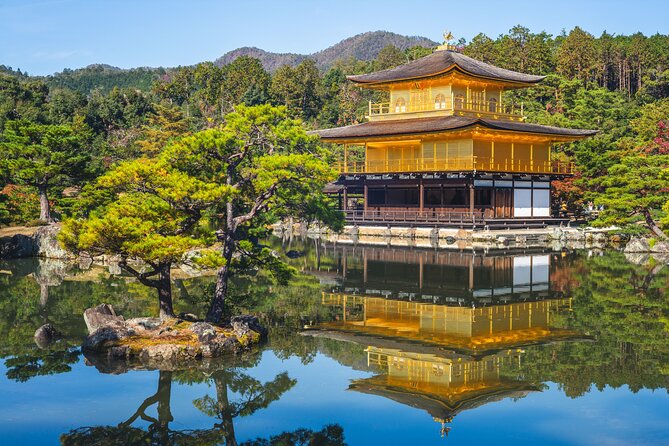
- Two UNESCO World Heritage temples: Compare the glittering Golden Pavilion with the quieter imperial setting of Ninna-ji.
- Special access at Ninna-ji: Enter the Main Hall for Buddhist chanting, a monk-led talk, and questions.
- Small group size: The tour is limited to seven people, allowing more room for conversation.
- A guide adds useful context: Names associated with the experience include Ellie, Eriko, and Eri, all praised for clear English and engaging explanations.
- A practical three-hour route: Spend about one hour at Kinkaku-ji and one hour 45 minutes at Ninna-ji, ending at Ninna-ji.
- Good value for culture-focused visitors: The $48.86 price includes admission to both temples and access to experiences you would not easily arrange alone.
Why the Golden Pavilion is only the beginning
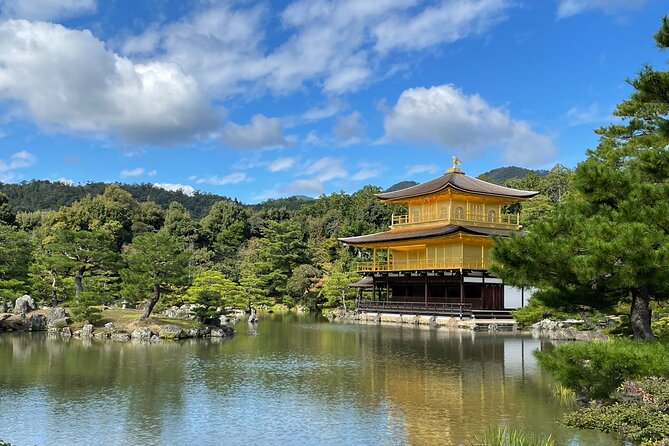
Kinkaku-ji, officially Rokuon-ji, began as a retirement villa for shogun Ashikaga Yoshimitsu. After his death, it became a Zen Buddhist temple. Its top floors are covered in gold leaf, and the pavilion reflects across the pond in a view that has become one of Kyoto’s familiar images.
That fame brings crowds, so the visit works best when you treat the pavilion as part of a larger temple complex rather than a single photo stop. Your guide can explain why the building was created, how its design linked military power with refined taste, and how the garden frames the pavilion from different angles.
The one-hour visit includes Shariden, the pavilion’s golden hall, along with the Karamon Gate, Rikushu-no-taki waterfall, Anmintaku Pond, Hakujanotsuka, Yukatei Teahouse, and Fudo Hall. You are not simply walking up to the pond, taking a picture, and leaving. The route gives you a chance to notice the smaller features that make the site more than a famous façade.
I especially like the garden’s use of a borrowed view. The pavilion, pond, islands, trees, and surrounding scenery work together rather than competing for attention. Your guide can point out how the arrangement creates a sense of depth and balance, details that are easy to miss when you are focused only on the gold building.
The drawback is unavoidable: Kinkaku-ji is one of Kyoto’s most popular sights. The tour does not turn it into a quiet retreat. It does, however, help you understand what you are seeing and keeps the visit focused during the allotted hour.
Entry tickets around Kyoto:
- Kyoto: Kinkaku-ji Temple & Serene Garden Tour with Tickets
★ 5.0 · 2 reviews - Paris: Versailles Palace and Gardens Full Access Ticket
★ 4.6 · 41,579 reviews - Marrakesh: Majorelle Garden Entry Tickets
★ 4.5 · 9,651 reviews
From samurai villa to Zen temple
The Golden Pavilion is often treated as a symbol of beauty, but its story is also about status. Yoshimitsu was not a monk. He was a powerful shogun who built a lavish residence, and the site later took on a religious role.
That tension is useful to discuss while you walk. The building’s decoration reflects wealth and prestige, while its temple setting points toward Zen practice and religious life. A good guide helps connect those ideas without turning the visit into a string of dates and names.
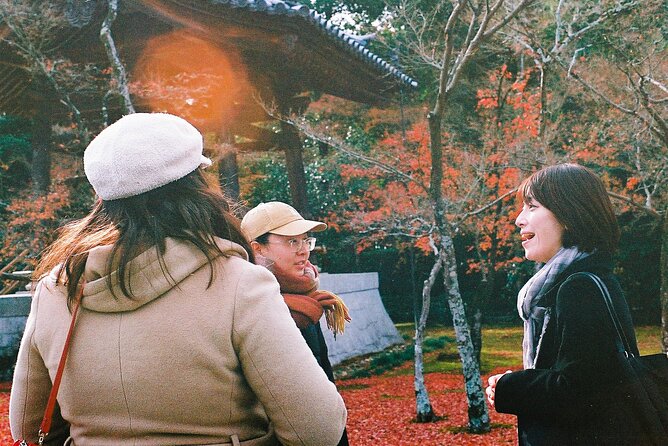
Guides Ellie, Eriko, and Eri have been singled out for friendly manner, strong English, and lively explanations. The names may vary by departure, so you should not book expecting one particular guide unless the operator confirms it. What matters is the format: a small group and a guide who can respond to questions rather than deliver only a fixed speech.
The quieter world of Ninna-ji
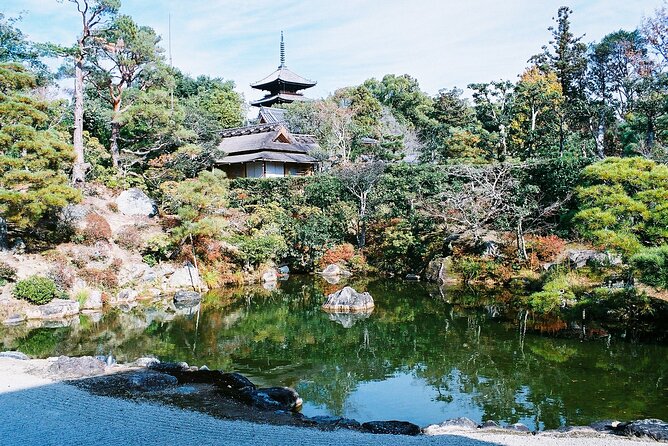
After Kinkaku-ji, Ninna-ji feels like a change of volume. Emperor Uda founded the temple in 888, and it became the head temple of the Omuro school of Shingon Buddhism. Its five-story pagoda, gardens, palace-style buildings, and famous Omuro cherry trees give it a different mood from Kinkaku-ji.
Ninna-ji is also less straightforward to reach from the main sightseeing core. That makes the guided transfer useful. A taxi has been used to bring the group from Kinkaku-ji to Ninna-ji, a practical choice that avoids losing time while figuring out the route yourself. Confirm the exact transfer arrangement on the day, since the listed start and end points are different.
The temple visit lasts about one hour 45 minutes. That extra time matters. You are not rushing through a gate, taking a photograph of the pagoda, and moving on. The focus is on the temple’s religious life and on access to areas that can be difficult to experience during an ordinary visit.
Inside the Main Hall for chanting and questions
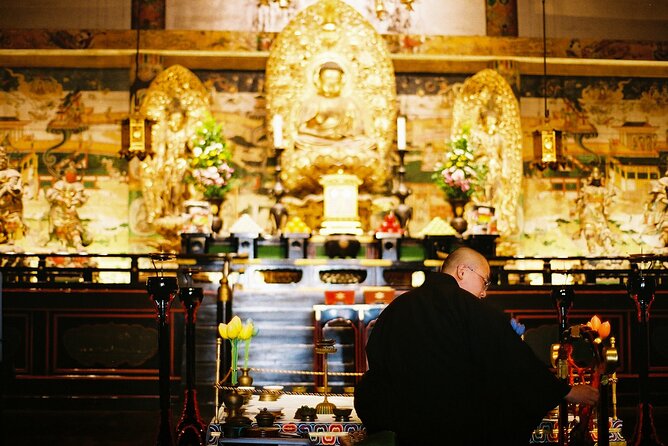
The most unusual part of the experience is entry into Ninna-ji’s Main Hall, also called Kondo Hall in the tour description. This space is not always open to the public, so access is subject to the temple’s schedule and circumstances.
A monk leads a sacred chanting session, then answers questions. This gives you a direct way to connect the building with Buddhist practice. Instead of seeing a temple only as architecture or an old cultural site, you hear how ritual functions within it.
You should approach this part with respect. It is not a performance arranged only for entertainment. The chanting is a religious act, and the question period is valuable because it allows you to ask about Buddhist traditions in a suitable setting.
The format also works well for visitors who are curious but unsure how to begin. You can ask about the meaning of the ritual, the role of the Main Hall, or the practices associated with the Omuro school of Shingon Buddhism. The available information does not promise a fixed list of questions or a guaranteed length for the discussion, so expect the content to vary.
A photograph with the monk may be included after the session. Treat that moment as a courtesy, not as the central reason to book. The real value is the contact with a living religious tradition.
More Garden Tours in Kyoto:
- Kyoto Zen Meditation & Garden Tour at a Zen Temple with Lunch
★ 5.0 · 441 reviews - Kyoto Arashiyama Bamboo forest & Garden Half-Day Walking Tour
★ 5.0 · 413 reviews - Kyoto Kiyomizu Tea Ceremony with Scenic Garden Views
★ 5.0 · 101 reviews - Kyoto: Private Tea Ceremony with a Garden View
★ 4.9 · 61 reviews
The rotating sutra shelf and temple ritual
The Sutra Hall adds another hands-on element. You can see and interact with a rotating sutra shelf, a ritual object connected with Buddhist teachings and practice.
This is the sort of detail that can make a temple visit more memorable. At Kinkaku-ji, your attention naturally goes to the gold pavilion. At Ninna-ji, the focus shifts toward objects, rituals, and the way worship takes place.
Your guide can explain the shelf’s meaning and the proper way to interact with it. Listen carefully before touching anything. The activity is not a novelty display, and a short explanation can make the action more thoughtful.
This is also where the two temples feel most different. Kinkaku-ji presents a highly polished image of religious and political authority. Ninna-ji gives you a closer look at devotional practice, with a monk, chanting, and a ritual object included in the visit.
Imperial rooms and a graceful finish
The final portion takes you through the elegant Imperial Residence. Ninna-ji’s connection to the imperial family is central to its identity, and these rooms help explain why the temple feels different from a standard Zen sightseeing stop.
The imperial connection also adds a second layer to the tour’s theme. Kinkaku-ji shows how a shogun used architecture and setting to express prestige. Ninna-ji shows the link between the imperial household and Buddhist institutions.
The tour ends at Ninna-ji, not back at the Kinkaku-ji meeting point. That is helpful if you plan to continue exploring western Kyoto, but it matters for your day’s planning. Do not assume you will be returned to your hotel or to the original meeting place.
What the $48.86 price covers
At $48.86 per person, this is not the cheapest way to see Kinkaku-ji. You can visit the Golden Pavilion independently, and Ninna-ji is also accessible without joining a tour.
The value comes from what is added around the admission tickets:
- A guide who connects the temples to Japanese history and Buddhism
- Admission to both UNESCO World Heritage sites
- A small group limited to seven people
- Help moving between Kinkaku-ji and Ninna-ji
- Monk-led chanting and a question period at Ninna-ji
- Access to the Sutra Hall and rotating sutra shelf
- Explanations of details that are easy to miss on your own
If you only want a quick photograph of Kinkaku-ji, the price is hard to justify. If you want context and special access at Ninna-ji, it becomes a sensible use of three hours.
The strongest value is for first-time visitors who would otherwise spend a morning trying to understand two very different temples without much background. You pay for interpretation, organization, and access, not just transportation and entry.
The small-group format makes a difference
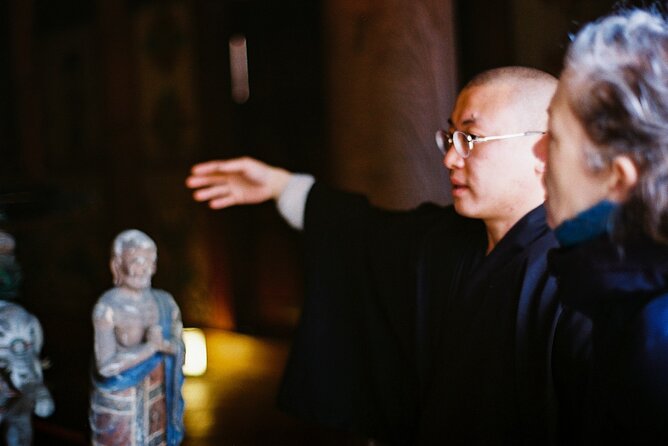
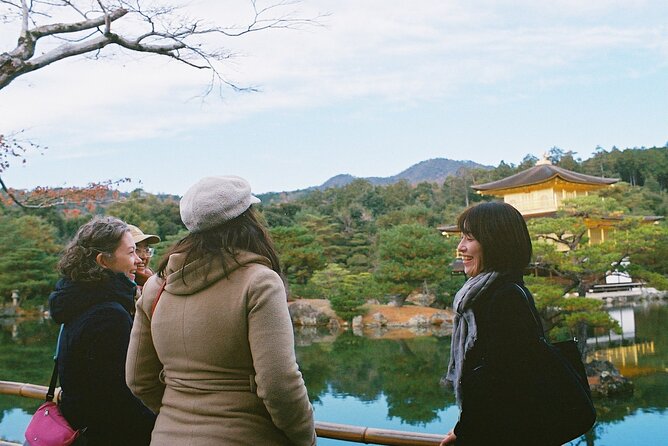
With a maximum of seven people, this is much more personal than a large coach excursion. You can hear the guide more easily, ask questions, and stay close during the temple walks.
Small groups also matter during the monk interaction. A large crowd would make the Q&A less natural. Here, the format gives you a better chance to listen and ask something specific.
There is one practical limit. A small group does not mean you control the schedule. The tour still has a fixed duration, and the guide must keep the group moving from one stop to the next. If you want long periods for photography, quiet reflection, or detailed garden study, an independent visit may suit you better.
Meeting point, timing, and practical planning
The tour starts at Yamazaki-an, 25 Kinugasa Babachō, in Kyoto’s Kita Ward. It ends at Ninna-ji Temple, 33 Omuroōuchi, in Ukyo Ward.
The stated duration is about three hours. The temple schedule breaks down to roughly one hour at Kinkaku-ji and one hour 45 minutes at Ninna-ji, with the transfer between them fitting into the overall plan.
The tour is near public transportation, and most people can participate. Wear shoes and clothing suited to walking and temple grounds. The supplied information does not state a dress code, luggage policy, or exact walking distance, so contact the operator if those details affect your plans.
The itinerary at Ninna-ji can change because of temple conditions. That is especially important here because the Main Hall access, chanting session, monk Q&A, and Sutra Hall visit depend on circumstances at the temple. The experience is strongest when you see the special access as a possibility within a carefully arranged visit, not as an unchangeable timetable.
You receive a mobile ticket, and confirmation is provided at booking. Free cancellation is available until 24 hours before the start time. Cancellations or changes made inside that 24-hour window are not refunded or accepted.
Who will enjoy this Kyoto temple tour most
I would recommend this experience to you if you want more than photographs. It suits visitors who are interested in Japanese religion, imperial history, Buddhist ritual, or the link between political power and architecture.
It is also a good choice if you prefer a guide who can explain what you are looking at in clear English. The guides associated with the experience, including Ellie, Eriko, and Eri, have been praised for friendly, passionate, well-prepared presentations.
Families and first-time Kyoto visitors may find the structure helpful because the route is compact and the two temples offer clear contrast. The small group can also make questions easier.
You may want to skip it if you have already spent several days with temple guides and prefer to set your own pace. It may also disappoint you if your main goal is an empty view of Kinkaku-ji. No guided visit can remove the popularity of that site.
Should you book it?
Book this tour if you want Kinkaku-ji explained rather than simply photographed, and if the Ninna-ji access appeals to you. The monk-led chanting, Q&A, Sutra Hall, and Imperial Residence give the second half real substance.
The best reason to choose it is the contrast. One temple presents gold, power, and polished beauty. The other offers imperial ties, Buddhist ritual, and a quieter setting. For $48.86, that combination is fair value, especially with admission and a group of no more than seven included.
Skip it if you need a slow, private temple morning or if you require a guaranteed Ninna-ji schedule. The temple may alter the visit. For everyone else, this is a focused way to see two important Kyoto sites and understand why they feel so different.
FAQ
How long does the tour last?
The experience lasts approximately three hours. About one hour is scheduled at Kinkaku-ji and one hour 45 minutes at Ninna-ji.
What is the price?
The listed price is $48.86 per person.
Are admission tickets included?
Yes. Admission to Kinkaku-ji and Ninna-ji is included.
How large is the group?
The tour has a maximum of seven people.
Where does the tour start?
The meeting point is Yamazaki-an, 25 Kinugasa Babachō, Kita Ward, Kyoto, 603-8362, Japan.
Where does the tour end?
The tour ends at Ninna-ji Temple, 33 Omuroōuchi, Ukyo Ward, Kyoto, 616-8092, Japan.
Is the monk-led session guaranteed?
The Ninna-ji schedule may change because of the temple’s circumstances. The planned experience includes entry to the Main Hall, chanting led by a monk, and a question period, but details may be adjusted.
Is the tour close to public transportation?
Yes. The experience is described as being near public transportation.
What is the cancellation policy?
You can cancel at least 24 hours before the start time for a full refund. Cancellations or changes made less than 24 hours before the start time are not accepted or refunded.
Just added around Kyoto
- Kyoto Hidden Treasures: Special Temple & Garden Access Tour★ 4.5 · 25 reviews
- Stunning Private Tea Ceremony: Camellia Garden Teahouse★ 5.0 · 28 reviews
- Kyoto ITALIAN GUIDE Golden Pagoda Bamboo Forest Dry Garden★ 4.0 · 2 reviews
- Guided Kyoto City Cherry Blossom One Day Private Tour★ 5.0 · 16 reviews
- Bamboo Grove Temple and Garden Views Tour★ 5.0 · 41 reviews
- Private & Unique Kyoto Cherry Blossom “Sakura” Experience★ 5.0 · 5 reviews
- Kyoto Japanese Garden Lover’s Private Tour with Government-Licensed Guide★ 4.5 · 10 reviews
- Kyoto Spring Evening (Cherry Blossom) Food Tour★ 3.0 · 4 reviews
Kyoto Garden Tours, compared.
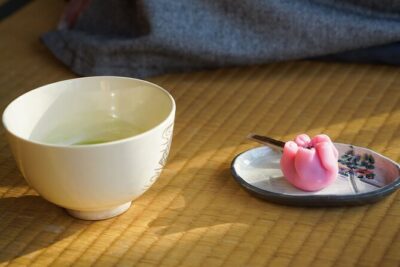
Kyoto Zen Meditation & Garden Tour at a Zen Temple with Lunch
Read our review →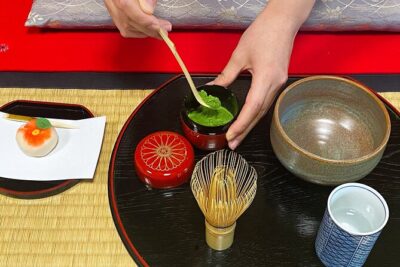
Kyoto Kiyomizu Tea Ceremony with Scenic Garden Views
Read our review →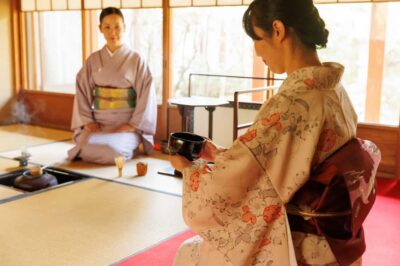
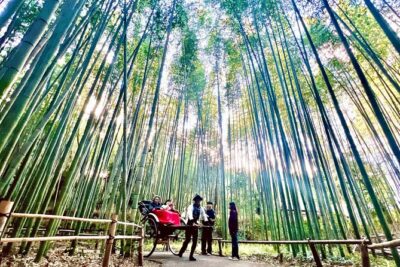
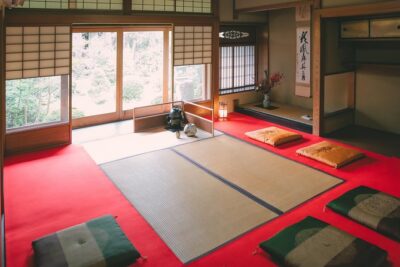
Stunning Private Tea Ceremony: Camellia Garden Teahouse
Read our review →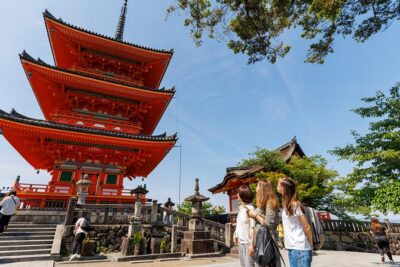
Kyoto Hidden Treasures: Special Temple & Garden Access Tour
Read our review →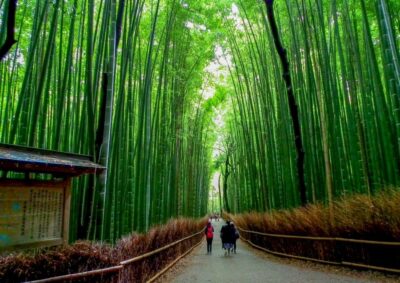
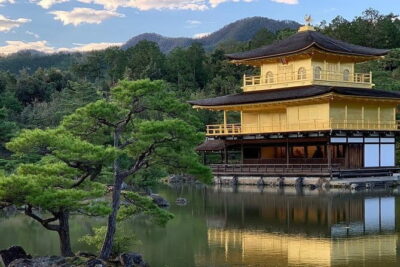
Guided Kyoto City Cherry Blossom One Day Private Tour
Read our review →Browse the lists this tour appears in