
Review · TOKYO GARDEN TOURS
From Asakusa: Old Tokyo, Temples, Gardens and Pop Culture
Tokyo changes fast, but this four-hour walk shows you the layers instead of rushing past them. You move from Senso-ji’s incense and temple gates to Ueno’s street commerce, then into Akihabara’s anime and electronics scene before reaching a quiet Edo-period garden. It is a useful way to see how old Tokyo still shapes the city today.
I like the small group, capped at eight, and the fact that standard local train rides and admissions are included. I also like the human touch reported by past guests: guide Taka was praised for keeping children engaged, while Toru was described as especially kind and helpful. The main drawback is the pace. Four hours covers a lot of ground, and you will not have time to explore every museum, shop, or arcade.
Key points to know before booking
- Senso-ji gives you Tokyo’s oldest-feeling starting point, with temple grounds and Nakamise-dori shopping street.
- Ueno and Okachimachi show everyday commerce, not just polished department-store Tokyo.
- Akihabara adds pop culture and electronics, with anime, manga, gaming, and cosplayers.
- Koishikawa Korakuen changes the mood completely, offering an Edo-era garden within the city.
- The group is limited to eight, which makes questions and conversation easier.
- The $68 price includes guide costs, local train rides, and standard admissions, but not food, drinks, or Tokyo National Museum entry.
Why this East Tokyo route is worth your time
Many Tokyo tours give you one theme: temples, food, shopping, or pop culture. This one works differently. It links several districts that can feel unrelated until someone explains the thread between them.
You begin in Asakusa, one of the clearest places to see traditional Tokyo. From there, the route shifts toward Ueno and Okachimachi, where markets and street stalls give the city a rougher, more practical feel. Akihabara brings a very different kind of public culture, built around electronics, anime, manga, games, and fantasy. The garden stop then slows everything down.
That contrast is the point. You are not simply checking off famous places. You are watching Tokyo change from religious center to market district to pop-culture capital, with a garden preserving an older idea of beauty along the way.
The tour is led in English and lasts four hours. With only eight people, you should have a better chance to hear explanations and ask questions than on a large coach outing. The price is $68 per person, which is fair if you value context and navigation. You are paying for a guide who connects the districts, not just for entry to one headline attraction.
More Garden Tours in Tokyo:
- Imperial Palace East Garden and Edo Castle Walking Tour in Tokyo
★ 5.0 · 510 reviews - Tokyo: Imperial Palace East Gardens Walking Tour
★ 4.8 · 353 reviews - Mt. Fuji, Cherry Blossom & Shiba Sakura Pvt. Day Tour
★ 5.0 · 326 reviews
Meeting at Kamiya Bar in Asakusa
The tour begins at Kamiya Bar, at 1-chōme-1-1 Asakusa. This puts you right in the district that supplies the tour’s strongest opening.
Wear comfortable shoes. The route includes several walking sections, time on your feet, and local train travel. A four-hour city walk can feel longer than the clock suggests, especially if you want to stop for photos or browse shops.
The small-group setup matters here. Asakusa can be crowded, and a guide handling eight people can keep the group together more easily than someone managing a full busload. You should still expect a public city environment rather than a quiet private visit.
Asakusa and Senso-ji, Tokyo’s traditional opening scene
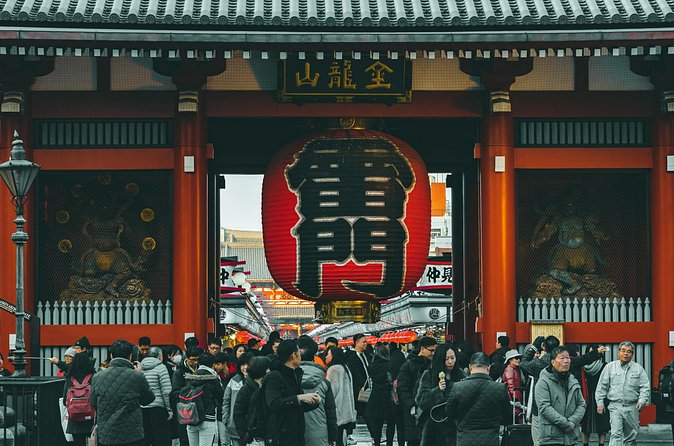
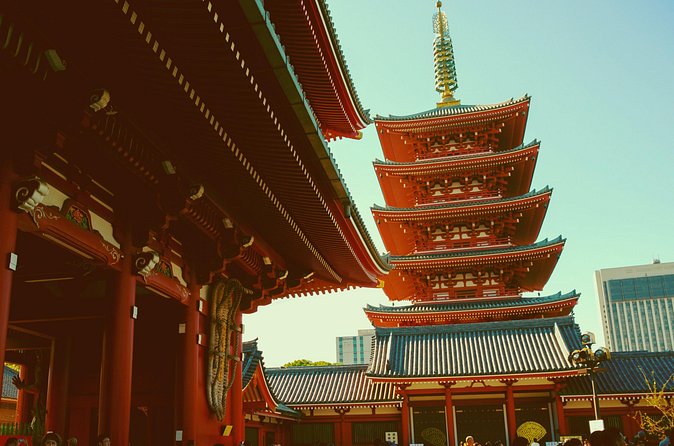
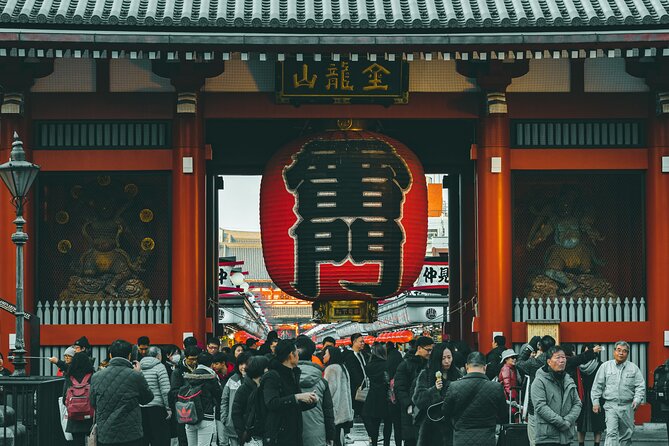
Asakusa provides the clearest look at old Tokyo on this route. Its centerpiece is Senso-ji, an early Buddhist temple in Japan and one of the city’s best-known religious sites.
You first spend about 45 minutes around Asakusa, then about 15 minutes on guided sightseeing at Senso-ji. That gives the guide time to explain both the temple and the wider neighborhood. This is useful because Asakusa is more than a single shrine-like photo stop. The surrounding streets, shops, and public life help explain why the district has remained important.
Nakamise-dori leads toward Senso-ji with shops selling souvenirs, snacks, and traditional goods. It is an easy place to browse, but the street can be crowded and commercial. Do not expect a quiet spiritual retreat. The value is in seeing a historic religious center operating within a busy modern district.
A good guide can make the temple visit more meaningful by explaining what you are looking at and how the site fits into Japanese culture. Taka was praised for giving extensive information around Asakusa, and Michelle was described as professional, friendly, and fluent in Italian as well as English. Guide assignments can change, so you should not book on the assumption that one particular guide will lead your group.
The Asakusa section also introduces the area’s connection with transport and urban growth. The first subway line in Asia operated between Asakusa and Ueno, linking the opening and the next major part of the route. That detail helps you see Asakusa not as a frozen historic district, but as part of Tokyo’s early modern expansion.
Ueno and Okachimachi, where Tokyo feels more practical
The move to Ueno takes you away from temple gates and toward a district shaped by museums, public gardens, cherry blossoms, markets, and transport links. The guided sightseeing time is about 25 minutes in Ueno, followed by another 25 minutes in Okachimachi.
Ueno is often known for cultural institutions and seasonal flowers, but this tour also points you toward the surrounding streets. The area can feel less polished than Tokyo’s major shopping avenues, which is part of its appeal. You get a sense of the city as a place where people work, sell, eat, and pass through, not just a backdrop for major sights.
Okachimachi adds marketplace grit. Ameya-Yokocho is the key name to know. Its shops and street vendors sell food and goods in a lively, closely packed setting. This is not the place for a calm, carefully arranged shopping experience. It is direct, noisy, practical, and full of visual detail.
I like this part because it gives the tour balance. Senso-ji shows ceremonial Tokyo. Okachimachi shows commercial Tokyo. You can compare the two without needing a separate day.
The time is limited, so you will likely get an introduction rather than a full market crawl. If you want to sample food or shop at length, plan to return later. Food and drinks are not included, and the schedule is too tight to treat every stop as a meal break.
Same corner of the map, a different planting:
- Tokyo: Edo Castle & East Garden of the Imperial Palace Tour
★ 4.7 · 112 reviews - Tokyo Private Tour! Edo Castle & Imperial Palace East Gardens
★ 5.0 · 105 reviews - Tokyo: Tsukiji Market and Hama-rikyu Gardens Guided Tour
★ 4.8 · 73 reviews - Tokyo: Pvt. Tour – Edo Castle & Imperial Palace East Gardens
★ 4.8 · 63 reviews
Akihabara and the city’s pop-culture engine
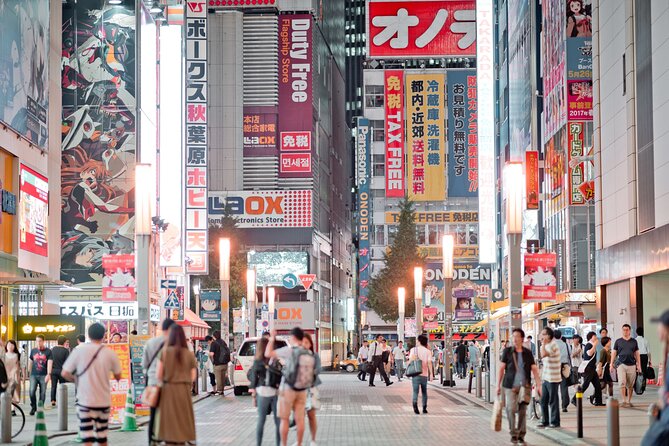
Akihabara, often called Electric Town, brings the biggest change in tone. The district has been associated with electronics since before the war, but its identity now also centers on anime, manga, games, and related pop culture.
The planned sightseeing time is about 45 minutes. That is enough to understand the character of the area and see its bright streets, but not enough for a serious shopping expedition. Akihabara rewards people who want to browse slowly. You can find large stores, small specialty shops, game-related attractions, and signs aimed at fans who already know exactly what they want.
The guide’s role is especially useful here because the district can seem like a wall of signs and storefronts. A good explanation helps you understand how a place devoted to electronics developed into a center for otaku culture. The tour presents Akihabara as part of Tokyo’s history, not as a strange side trip detached from the rest of the city.
You may also see cosplayers and performers in the streets. The important thing is to keep expectations reasonable. The tour promises an introduction to the atmosphere, not a private meeting with characters, a gaming session, or a specialist shopping service.
Families may enjoy this stop, especially if children like games or animation. One past guide, Takee, was praised for engaging children and even adding origami and a pub visit to the experience. Those extra touches were personal additions, not guaranteed parts of the route, but they suggest that the guide may adapt the conversation to the group.
Koishikawa Korakuen, a quiet turn toward the Edo period
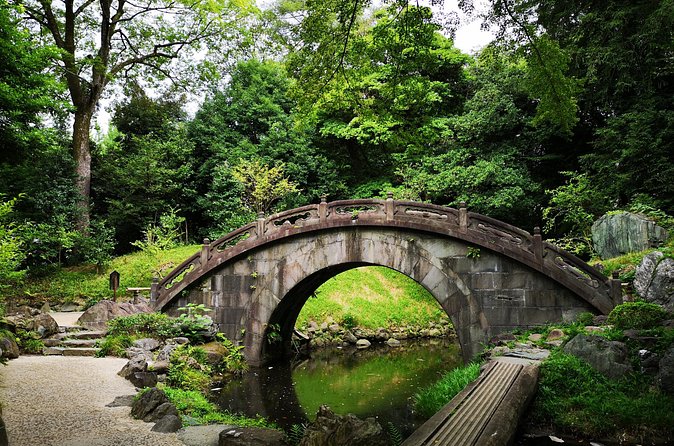
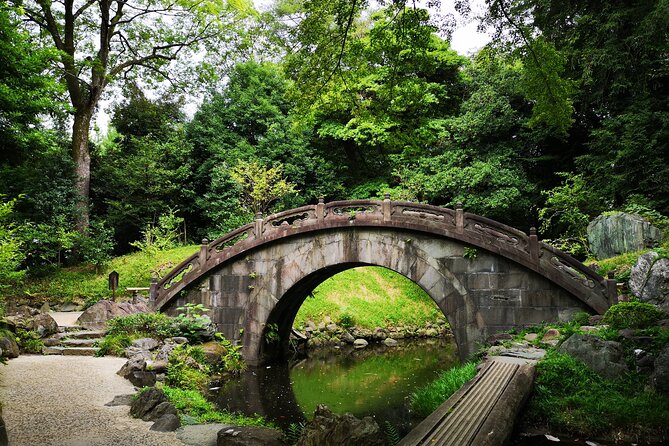
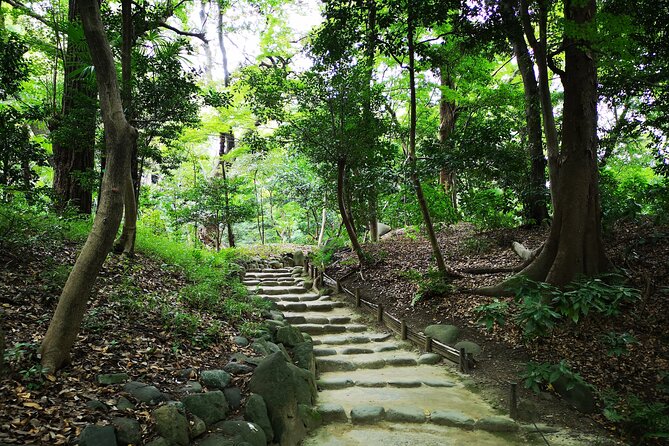
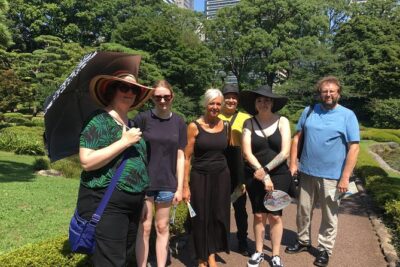
Koishikawa Korakuen supplies the route’s most dramatic change in mood. After the crowded streets of Asakusa, Ueno, Okachimachi, and Akihabara, you enter a traditional Japanese garden with paths, water, seasonal plantings, and views designed for calm observation.
The scheduled time here is about 45 minutes, including guided sightseeing and scenic views along the way. The garden is associated with the Edo period, and its design gives you a chance to see how beauty and leisure were shaped in an earlier era.
Season matters. Spring brings cherry blossoms, while autumn offers red and gold foliage. The experience can feel very different depending on the month, so consider the garden an especially strong reason to choose this tour during a season when you enjoy outdoor scenery.
The tour information presents Koishikawa Korakuen as the final mood of the day, although the listed stop order places it before Akihabara. The exact sequence may depend on the day’s arrangements. Either way, the garden and Akihabara provide a useful contrast: one asks you to slow down and look carefully, while the other surrounds you with signs, sound, and popular culture.
Do not expect a long garden visit. Forty-five minutes gives you an introduction and a walk through selected areas, not every path at a leisurely pace. If traditional gardens are your main interest, you may want to return separately.
What the four-hour schedule really feels like
The schedule is full. Asakusa receives about an hour in total, Ueno and Okachimachi about 50 minutes combined, Akihabara about 45 minutes, and Koishikawa Korakuen about 45 minutes. The remaining time allows for moving between districts and local train rides.
That structure is good for a first look at East Tokyo. You get a wide sample without spending a full day on one neighborhood. The tradeoff is that you will not have much unscheduled time.
I would choose this tour early in a Tokyo visit if I wanted orientation. Afterward, you could decide which district deserves a return visit. Asakusa might call for more temple time, Okachimachi for food and market browsing, Akihabara for shopping, or Koishikawa Korakuen for a slower garden walk.
The route is also useful if you want help understanding geography. Tokyo can feel fragmented, with one district blending into another on a map. The guide and train rides give the day a practical structure, while the commentary explains why the neighborhoods differ.
What is included, and where the $68 goes
At $68 per person, the tour is not the cheapest way to see these districts. You could walk through several of them on your own. The value comes from the guide, the planned connections, the included local train rides, and standard admissions while on the tour.
That value is strongest if you want historical and cultural context. It is weaker if you prefer to wander independently, spend long stretches shopping, or stop often for food.
Tokyo National Museum admission is not included if you choose to visit. Food and drinks are also extra, as are costs caused by customizing the tour. Those exclusions are reasonable, but they matter because Ueno can easily tempt you into adding a museum visit or market snacks.
The tour is wheelchair accessible, according to the activity details. Still, the route includes city walking and public transport, so you should confirm any specific mobility needs when booking. Comfortable shoes remain the best practical choice for everyone.
The guides and the human side of the tour
The strongest praise centers on the guides rather than on a single attraction. Taka was described as informative and engaging, especially with children. Michelle was praised for her professionalism, warmth, and Italian fluency. Toru was remembered as exceptionally kind and willing to help.
These details matter because this route depends on explanation. Senso-ji is easy to photograph without a guide. So is an Akihabara sign. The added value comes from knowing why the places matter and how they connect.
The experience is offered in English. If you need another language, do not assume it will be available simply because one guide has spoken Italian. The listed tour language is English, and the guide names and language abilities can vary by date.
Who should book this East Tokyo tour
I would recommend it to first-time Tokyo visitors who want a broad introduction without committing a full day. It also suits families, especially if children are interested in anime, games, temples, or unusual city scenes.
It is a good fit for you if you like contrasts: sacred buildings beside shopping streets, old market traditions beside pop culture, and a quiet garden after crowded neighborhoods. The small group makes it more personal than a large sightseeing excursion.
You may want something else if your priority is a long visit inside Tokyo National Museum, detailed temple study, serious Akihabara shopping, or a relaxed garden afternoon. The tour gives you a guided sample of each, not an expert-level visit to one.
The free cancellation policy allows cancellation up to 24 hours in advance for a full refund, and you can reserve now and pay later. Those terms are useful when your Tokyo plans are still shifting.
Should you book it?
Book this tour if you want to understand how East Tokyo fits together and prefer a guide to independent route planning. The best parts are the sharp changes in mood, the market streets of Ueno and Okachimachi, and the chance to connect old Tokyo with present-day pop culture.
Skip it if you would rather set your own pace or spend most of the day inside one museum, market, or shopping district. At $68, it makes the most sense for people who value interpretation, a small group, and included transport over free-form wandering.
FAQ
How long does the tour last?
The tour lasts four hours.
Where does the tour begin?
It begins at Kamiya Bar in Asakusa, at 1-chōme-1-1 Asakusa.
Which places are included?
The tour includes Asakusa, Senso-ji Temple, Ueno, Okachimachi, Akihabara, and Koishikawa Korakuen.
Is the tour conducted in English?
Yes. The listed tour language is English.
How large is the group?
It is a small-group tour limited to eight participants.
Are train rides and admissions included?
All standard costs during the tour are included, including local train rides and standard admissions. Tokyo National Museum admission is not included if you choose to visit.
Are food and drinks included?
No. Food and drinks are not included.
What should I bring?
Bring comfortable shoes, since the experience includes walking through several Tokyo districts.
Just added around Tokyo
- TOKYO: Tailored Gardens tour with Pro Gardener by E-bike -BASIC★ 5.0 · 2 reviews
- Tsukiji Food Strolling and Hama Rikyu Garden Walking Tour★ 5.0 · 7 reviews
- Tokyo: Serene Sakura & Sake: An Exclusive Brewery Pairing Lunch★ 5.0 · 2 reviews
- Tokyo Cherry Blossom Half Day Walking Tour with a Local Guide★ 3.5 · 4 reviews
- Cherry Blossom Highlights, Asakusa, Ueno, Imperial Palace Garden★ 4.5 · 4 reviews
- Tokyo: Kimono Experience inside Shinjuku Gyoen National Garden★ 5.0 · 3 reviews
- Sumida Riverside Walk: Garden &Temple Ritual (4 Meeting Points)★ 5.0 · 5 reviews
- Full Guided Mt. Fuji & Shiba-Sakura Festival One Day Pvt.Tour★ 5.0 · 6 reviews
Tokyo Garden Tours, compared.
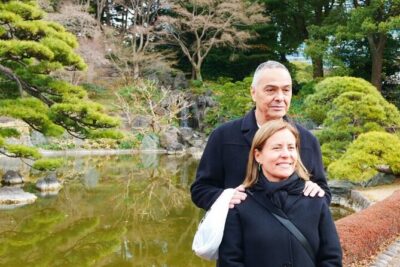
Edo Castle & East Garden of the Imperial Palace Tour
Read our review →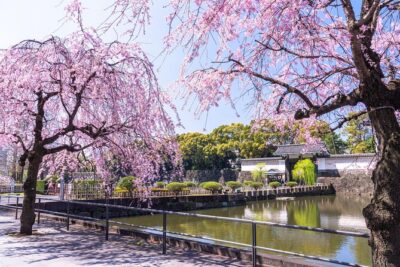
Tokyo Private Tour! Edo Castle & Imperial Palace East Gardens
Read our review →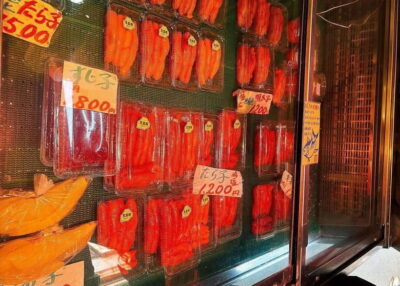
Tsukiji Market and Hama-rikyu Gardens Guided Tour
Read our review →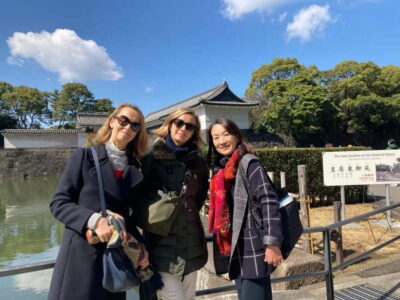
Pvt. Tour – Edo Castle & Imperial Palace East Gardens
Read our review →
Kimono Rental inside Shinjuku Gyoen National Garden
Read our review →
Tokyo Japanese Garden Lover’s Private Tour with Government-Licensed Guide
Read our review →Browse the lists this tour appears in