
Review · JAPAN GARDEN TOURS
Private Car Full Day Tour of Osaka Temples, Gardens and Kofun Tombs
Osaka’s best surprise may be south of the usual shopping streets. This private car tour links the city’s famous castle with quiet temple grounds, an old entertainment district, one of Japan’s most important shrines, and the giant burial mounds of Sakai. You see a much broader Osaka than you could manage on foot in one day.
I like the private vehicle and flexible route, especially for families, older people, or anyone who would rather not decode several train changes. I also like the contrast between Shitennoji’s Buddhist setting and Sumiyoshi Taisha’s Shinto traditions. The main drawback is cost: at $708.78 for up to six people, it makes the most sense with a full group. The Osaka Castle building itself is not included, and several admission fees are extra.
Key points at a glance
- Osaka Castle from the outside: Spend about 90 minutes on the grounds and focus on the impressive exterior rather than entering the museum-like interior.
- Two very different sacred sites: Compare Shitennoji, one of Japan’s oldest Buddhist temples, with Sumiyoshi Taisha, a major Shinto shrine with an elegant arched bridge.
- Sakai’s giant kofun tombs: Head south to Sakai City Hall for wide views, then see the ancient burial mounds from ground level.
- A quieter garden stop: Daisen Park offers a pond and landscaped stream away from Osaka’s busiest sights, but its Japanese garden is closed on Mondays, or Tuesdays when Monday is a holiday.
- A guide-led day, not a fixed script: Guides including Kevin, Jamie, Hugo, and Levy have adjusted routes for special interests, slower walking speeds, bonsai, tea ceremonies, knife shops, and other requests.
- Simple private transport: Central Osaka hotel pickup and drop-off are included, with added charges for Osaka port and Shin-Osaka pickups.
Why this private tour covers more ground
This is not a standard Osaka highlights walk. It is an eight-hour private outing built around a car, a guide, and a loose plan that can change as your interests become clear. That matters in Osaka, where the city’s major sights are spread out and the southern suburbs are easy to overlook.
You begin at 8:30 a.m. with pickup at your Osaka hotel. From there, your guide handles the driving while you focus on the city outside the window. The vehicle is particularly useful for a group of up to six. You avoid hauling luggage or day bags through stations, and your guide can adjust the pace if someone in your party walks slowly.
The route has a clear theme: temples, gardens, sacred sites, and kofun tombs. It also includes Shinsekai and a kaiten-sushi lunch, so the day does not feel like a string of formal monuments. Guides such as Kevin, Jamie, Hugo, and Levy have been praised for clear explanations, local insight, patience, and willingness to alter the plan.
That flexibility is the heart of the experience. One group used the day for a bonsai school, another added a Sakai knife shop, and another included a tea ceremony and fish market. Those stops are not guaranteed, but they show what a private itinerary can do. You should discuss special requests before the tour rather than assume they can be added on the spot.
Private cars with a driver around Japan:
Osaka Castle: grand walls, open grounds, no interior visit
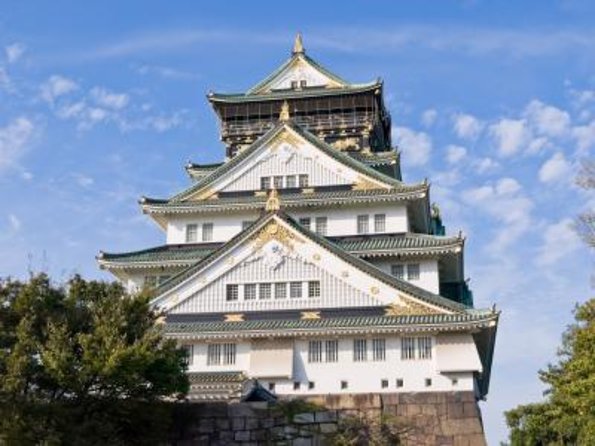
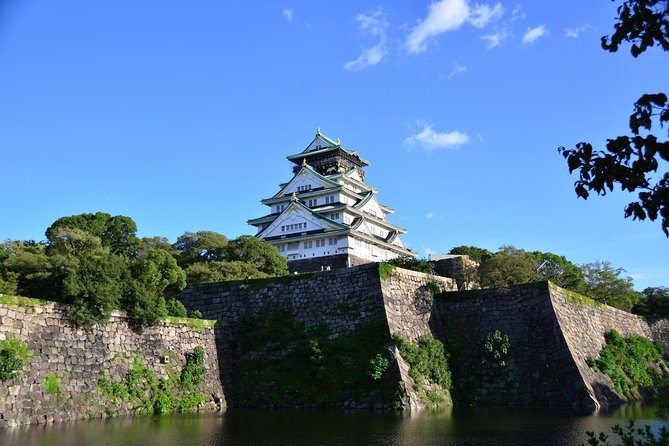
Your first stop is Osaka Castle, where you walk the grounds for about 90 minutes. The setting gives you a strong introduction to Osaka’s power and ambition, with broad stone walls, open spaces, and the famous castle tower rising above them.
This tour deliberately does not enter the castle building. That is worth knowing before you book. The focus is the exterior, the grounds, and your guide’s explanation of the site rather than the interior exhibits.
I think this is a sensible choice for a day already packed with stops. The outside offers the better visual experience, and skipping the interior leaves time for places that are harder to fit into a first visit. Still, if entering Osaka Castle is high on your list, you will need to ask about adding it or visit separately.
The grounds can also be easier to enjoy with a guide who knows how to avoid the most crowded paths. One family with seniors and children specifically valued being guided along less congested routes and having the pace slowed when needed.
Shitennoji: Buddhist calm and a garden option
Next comes Shitennoji, a Buddhist temple traditionally dated to the sixth century and often described as Japan’s oldest Buddhist temple. You spend about an hour among its buildings, gates, and pagoda, with your guide explaining the difference between the temple’s Buddhist function and the Shinto shrine you visit later.
The Japanese garden is an optional extra, priced at 300 yen per adult. If it is open, I would add it. A garden visit gives you a quieter pause after the large scale of Osaka Castle, and it adds a more reflective side to the stop.
There is one scheduling catch. The Shitennoji gardens are closed on the 21st of each month. The temple grounds remain part of the visit, but the garden portion will not be available on that date. Check the calendar before booking if the garden matters to you.
Shitennoji is also one of the places where a guide adds real value. Without context, you see a pagoda, gates, and ritual spaces. With an explanation, you begin to understand how Buddhist temples work and how their design differs from a Shinto shrine.
Shinsekai: a quick look at old Osaka
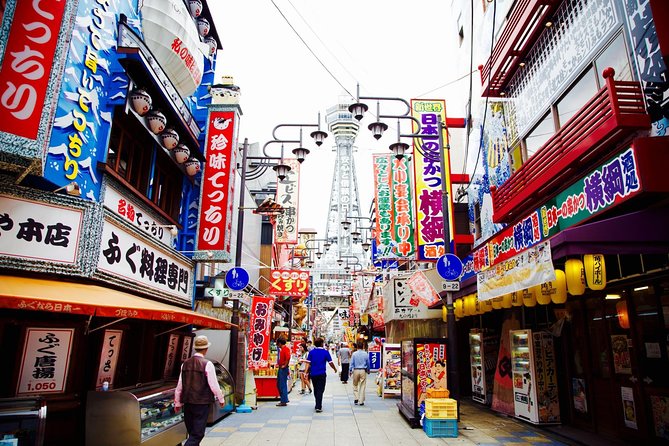
The stop at Shinsekai lasts about 30 minutes and is more of a walking tour than a full sightseeing session. This old entertainment quarter supplies a change of mood after the temple grounds, with emblematic Osaka sights and a less polished, more local-feeling character.
Do not expect a long food crawl or several hours of free time here. The visit is brief. Its purpose is to give you a taste of one of Osaka’s older entertainment districts before the tour moves on.
That short pause is useful because the day could otherwise become too solemn. Shinsekai adds street life, local color, and a glimpse of the Osaka many visitors miss when they stay around the castle and major shopping areas.
Full-day trips around Japan:
- Kanazawa: Samurai, Matcha, Gardens and Geisha Full-Day Tour
★ 4.9 · 75 reviews - Full-Day Tour from Kanazawa: Samurai, Matcha, Gardens and Geisha
★ 5.0 · 68 reviews - Versailles Full Day Bike Tour with Palace, Gardens, & Picnic
★ 5.0 · 2,217 reviews - Giverny Monet’s Garden & Auvers-sur-Oise with Van Gogh House Full Day From Paris
★ 5.0 · 369 reviews
Sumiyoshi Taisha: see the Shinto difference
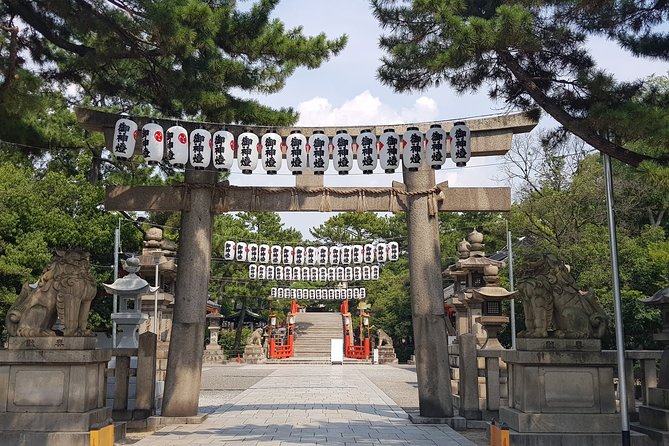
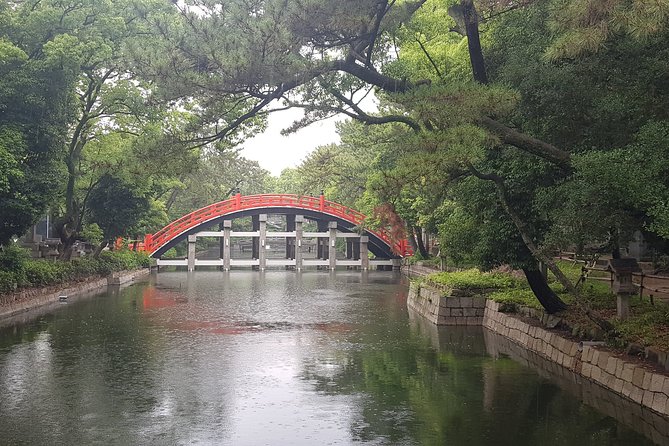
At Sumiyoshi Taisha, you spend about an hour in one of Osaka’s major Shinto complexes. The shrine is linked to roughly 1,500 years of tradition, and its famous arched bridge makes an immediate visual impression.
This is the day’s most useful comparison. Shitennoji represents Buddhist worship, while Sumiyoshi Taisha shows a different religious tradition, different architectural style, and different approach to sacred space. A guide can point out those contrasts as you move through the grounds.
I like the order of these stops. You first see a Buddhist temple, then a Shinto shrine, and the distinction becomes easier to grasp because both are still fresh in your mind. You are not just collecting photographs. You are learning how two important parts of Japanese culture appear in physical form.
The grounds also provide a calmer experience than Osaka’s central shopping zones. Allow time to cross the bridge, pause at the shrine approaches, and listen to the guide before rushing back to the vehicle.
Kaiten sushi: a practical Osaka lunch break
Lunch is at a kaiten-sushi restaurant, also called revolving sushi. Food and drinks are not included, so you pay for your own meal.
The format is a good fit for a private tour because it is casual and offers choice. You can select what appeals to you rather than commit to a set menu. One family also noted that the restaurant offered a range of Japanese food, which can help when a group has mixed tastes.
The exact restaurant and lunch timing can depend on traffic and the day’s pace. If you have allergies or dietary needs, tell your guide early. The supplied details do not promise a particular menu or special dietary arrangements.
Sakai City Hall: the kofun story from above
After lunch, the tour heads south to Sakai, a city bordering Osaka. At Sakai City Hall, you go to the observation floor for about 30 minutes and look across the area in several directions.
The view reaches north toward Osaka, east toward the mountains marking the direction of Nara, and west and south toward the coast. This is more than a photo stop. It helps you understand the size and position of Sakai, and it makes the giant kofun tombs easier to picture.
Kofun are large ancient burial mounds, many shaped like keyholes when seen from above. Sakai is known for an impressive group of them, including the enormous Daisen Kofun. From the city hall, the scale of these earthworks becomes clearer than it does from ground level.
This is one of the most unusual parts of the tour. Osaka Castle and Shitennoji are familiar names. Sakai’s tombs offer a less expected look at Japan’s early past, and the elevated view gives the stop proper context.
Daisen Park: a garden beside ancient tombs
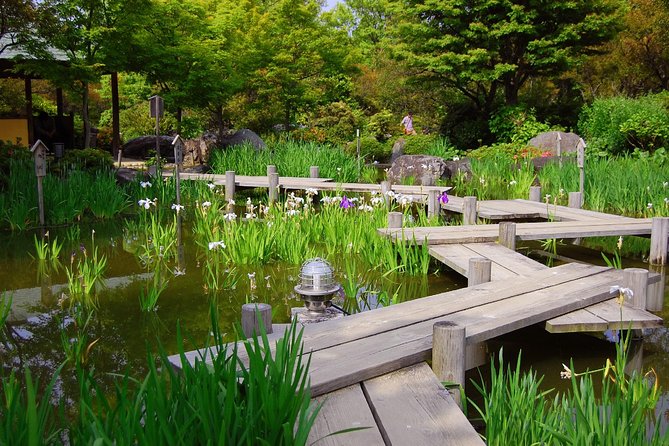
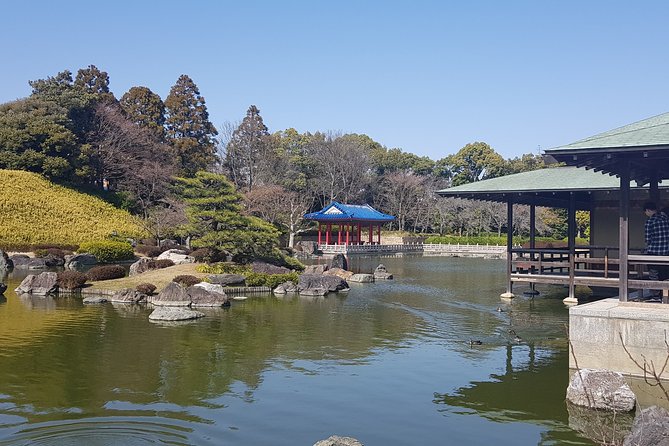
The final scheduled stop is Daisen Park, where you spend about an hour. The park is home to a modern Japanese garden arranged around a pond and a landscaped stream. It offers a gentle finish after a full day of city sightseeing and sacred sites.
Admission is not included. The stated entrance fee is 200 yen per person. The park’s Japanese garden is closed on Mondays, except when Monday is a holiday, in which case it closes on Tuesday.
If the garden is closed, the plan can change. You may spend time shopping, visit another location by car, or choose another activity with your guide. That flexibility is useful, but you should not book the tour assuming Daisen Park’s garden will always be available.
The park is also a good reason to choose this experience over a standard central Osaka tour. You get a quieter garden setting and a look at Sakai that feels separate from the usual city checklist. The garden itself is not huge, so the stop is best viewed as a peaceful final chapter, not an all-day park visit.
Price, group size, and what you actually receive
The price is $708.78 per group of up to six people. Divided among six, that is about $118 per person before additional admissions, meals, and any special pickup charges. For two people, the per-person cost is much higher, so the value improves sharply with a family or group of friends.
Included are a local guide, private vehicle transport, and central Osaka hotel pickup. The tour is private, so only your party participates. That gives you control over photo stops, walking speed, conversation, and small route changes.
Extra costs include food and drinks, the 300-yen Shitennoji garden fee when open, and the 200-yen Daisen Park admission. The tour information also lists an Osaka temples, gardens, and kofun entrance fee of 500 yen per person, so confirm how that charge applies when booking. Osaka port pickup and drop-off add 2,500 yen each way, while Shin-Osaka adds 1,000 yen each way.
A child seat costs 1,000 yen and must be requested in advance when needed. Japanese law requires children under six years old or under 140 centimeters to use car seats.
Who will get the most from this day
I would choose this tour if you want to see more than central Osaka and prefer explanation over self-guided browsing. It is especially well suited to:
- Families with children or older relatives who need a slower pace
- First-time visitors who want a broad introduction in one day
- Small groups that can share the private-car cost
- People interested in Japanese religious traditions and ancient burial sites
- Visitors staying in Osaka who want to reach Sakai without arranging transport
- Anyone with a special interest that may fit a custom route
You should think twice if you want a long interior visit at Osaka Castle, extensive time in Shinsekai, or a low-cost public transport day. The tour covers a lot, but each stop has a set window. Traffic or a special request may force changes, and the day includes a moderate amount of walking.
Gratuities are not customary in Japan. If your guide goes out of the way to help, a tip is appreciated but not expected.
Booking advice and final verdict
This is a strong choice for a group that values comfort, local explanation, and an unusual route. Guides such as Kevin, Jamie, Hugo, and Levy have handled history, cultural comparisons, birthday touches, slower walking speeds, and custom detours with care. The best part is not simply the car. It is having someone who can connect Osaka’s major sights with quieter places in Sakai.
I would book it for four to six people, especially if you want Osaka Castle, Shitennoji, Sumiyoshi Taisha, kofun tombs, and a garden in one day. Ask in advance about the castle interior, the Shitennoji garden calendar, Daisen Park’s Monday closure, child seats, port pickup, and any special stops.
I would skip it if you are traveling alone or as a couple on a tight budget, or if your priority is shopping and nightlife. For the right group, though, this is a practical way to see the historic and less familiar sides of Osaka without spending the day changing trains.
FAQ
How long is the private Osaka and Sakai tour?
The tour lasts approximately eight hours and starts at 8:30 a.m.
Is hotel pickup included?
Central Osaka hotel pickup and drop-off are included. Osaka port pickup and drop-off cost an additional 2,500 yen each way, and Shin-Osaka pickup and drop-off add 1,000 yen each way.
Does the tour enter Osaka Castle?
No. The planned visit covers the castle grounds and exterior, with about 90 minutes at the site. The building interior is not included.
Are meals and entrance fees included?
No. Food and drinks are not included. The Shitennoji garden costs 300 yen per adult when open, and Daisen Park admission is listed as 200 yen per person. The tour information also lists a 500-yen-per-person entrance fee for the Osaka temples, gardens, and kofun portion.
Is Daisen Park’s Japanese garden open every day?
No. It is closed on Mondays. If Monday is a holiday, it is closed on Tuesday instead. An alternative activity can be arranged when the garden is closed.
Can the itinerary be changed?
Yes. The listed route is a model course, and the private format allows changes based on your interests. Traffic and other outside factors can also require changes.
Just added around Japan
- Himeji: Himeji Castle & Kokoen Garden 3.5-Hour Guided Tour★ 4.9 · 30 reviews
- Tokyo: Ashikaga Flower Park with Entry Ticket★ 5.0 · 3 reviews
- 1-Day Tour from Okayama: Kurashiki, Gardens & Okayama Castle★ 5.0 · 2 reviews
- Osaka: Daytime Hanami (Cherry Blossom) and Food Tour★ 4.7 · 7 reviews
- Private Car Day Trip to the Kobe Mountains, Gardens and Hot Springs from Osaka★ 4.5 · 16 reviews
- Full-Day Tour from Kanazawa: Samurai, Matcha, Gardens and Geisha★ 5.0 · 68 reviews
- Kyoto Kiyomizu Tea Ceremony with Scenic Garden Views★ 5.0 · 101 reviews
- Kanazawa: Samurai, Matcha, Gardens and Geisha Full-Day Tour★ 4.9 · 75 reviews
Japan Garden Tours, compared.

Kyoto Zen Meditation & Garden Tour at a Zen Temple with Lunch
Read our review →
Kyoto Kiyomizu Tea Ceremony with Scenic Garden Views
Read our review →
Kanazawa: Samurai, Matcha, Gardens and Geisha Full-Day Tour
Read our review →
Full-Day Tour from Kanazawa: Samurai, Matcha, Gardens and Geisha
Read our review →
Nagano Spring: 1-Day Cherry Blossoms & Snow Monkeys Guided Tour
Read our review →Browse the lists this tour appears in