
Review · KYOTO GARDEN TOURS
Kyoto ITALIAN GUIDE Golden Pagoda Bamboo Forest Dry Garden
Kinkakuji’s Golden Pagoda is the visual star of this Kyoto outing, but the real appeal is the way three very different places fit into one morning: a shogun’s villa, a bamboo-lined street, and a historic bridge in Arashiyama. You move by train, bus, and on foot, so you see more of northwest Kyoto than you would on a single-site visit.
I like the small maximum group of 15 and the chance to ask a Kyoto-born guide direct questions about Japanese history, customs, and daily life. I also like the broad mix of stops: Kinkakuji gives you a famous architectural icon, while the bamboo forest and Togetsukyo Bridge offer more open-air scenery.
The main drawback is crowding, especially at Kinkakuji and along the bamboo route. The pagoda is a reconstruction after a 1955 fire, and some visitors may find its bright gold surface at odds with the quiet Zen setting. This tour gives you access to famous places, but not a private or secluded Kyoto.
Key points at a glance
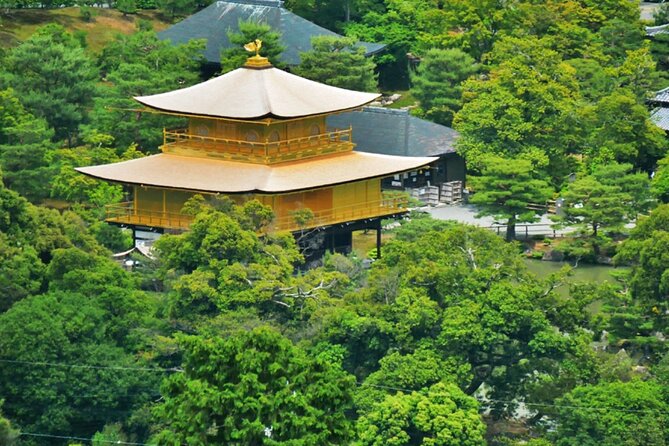
- Three signature sights in one morning: See Kinkakuji, Arashiyama’s Bamboo Forest, and Togetsukyo Bridge during a 4-hour-30-minute outing.
- A Kyoto guide leads the way: Ask questions about the old imperial family, aristocrats, samurai, religion, and modern Japanese life.
- Transport is part of the experience: The route uses train, bus, and walking rather than keeping you inside one sightseeing district.
- Kinkakuji admission is included: The two upper outdoor stops do not require a separate admission ticket.
- Expect a moderate physical effort: You will walk between sights and use public transport, so comfortable shoes matter.
- The group is limited to 15 people: That is small enough for questions, though it does not remove the crowds at the sights themselves.
A morning across northwest Kyoto
This tour begins at 8:30 am at Kyoto Station, a practical starting point for anyone staying near the station or arriving from another part of the city. The meeting point is listed at Higashishiokoji Kamadonocho in Shimogyo Ward, and the activity returns to that same meeting point at the end.
The route is built around public transportation and walking. That matters because northwest Kyoto is spread out. Kinkakuji and Arashiyama are not next-door sights, and moving between them gives the morning a sense of progress rather than making you circle one small area.
You should expect a steady pace. The tour lasts about four and a half hours, with roughly an hour and a half at Kinkakuji, one hour at the Bamboo Forest, and one hour around Togetsukyo Bridge. The remaining time is used for transportation, meeting points, and moving through the sites.
The guide is there to explain what you are seeing and to help when needed. No guide name is provided, but the experience is described as being led by a native Kyoto guide. If you want context rather than a simple ride to photo stops, that local connection is the main reason to consider this outing.
More Garden Tours in Kyoto:
- Kyoto Zen Meditation & Garden Tour at a Zen Temple with Lunch
★ 5.0 · 441 reviews - Kyoto Arashiyama Bamboo forest & Garden Half-Day Walking Tour
★ 5.0 · 413 reviews - Kyoto Kiyomizu Tea Ceremony with Scenic Garden Views
★ 5.0 · 101 reviews
Kinkakuji: the Golden Pavilion and its complicated past
Kinkakuji, also called the Golden Pavilion, receives the largest block of time. You have about 90 minutes, and admission is included in the price.
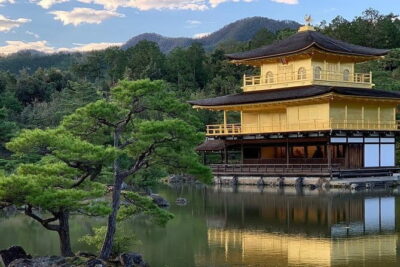
The pavilion was built in the 14th century at the request of shogun Ashikaga Yoshimitsu, who used the site as a private villa. That background gives the building more meaning than its famous appearance alone. It reflects the world of powerful military rulers who adopted the refined arts and courtly tastes associated with Kyoto’s imperial culture.
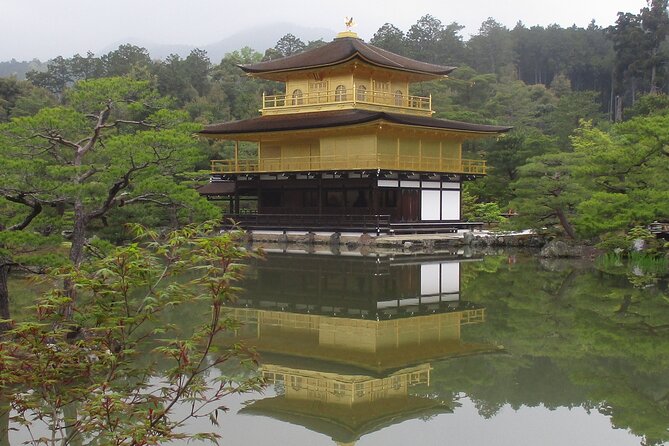
The setting is designed to be viewed as a complete composition: water, trees, the pavilion, and the surrounding grounds. From the usual viewing area, the gold-covered structure catches the eye immediately. It is a place where the setting matters as much as the building.
There is an important historical detail to keep in mind. The present pavilion is a reconstruction because the earlier building burned in 1955. That does not erase its value, but it changes how you may think about the sight. You are not looking at the original 14th-century structure. You are looking at a later rebuilding of a place with a long and often troubled past.
Some people find the pavilion too shiny for a Zen Buddhist setting. That reaction is understandable. The gold surface is deliberately bold, and the site can feel more like a major sightseeing attraction than a quiet place for reflection.
Crowding is the larger practical concern. Kinkakuji is one of Kyoto’s best-known sights, and large numbers of people may gather around the main view. The tour does not control how many people are admitted to the temple grounds, so do not expect solitude. Your guide can add meaning to the visit, but no explanation can remove the press of a busy viewing area.
The 90-minute stop is useful because it gives you time to see the pavilion, listen to the historical explanation, and move through the grounds without treating Kinkakuji as a five-minute photo stop. Still, the pace may feel long if the crowd is heavy and your main goal is one photograph.
The Bamboo Forest: famous, photogenic, and busy
The second major stop is Bamboo Forest Street, with about one hour to walk through the area. Admission is free.
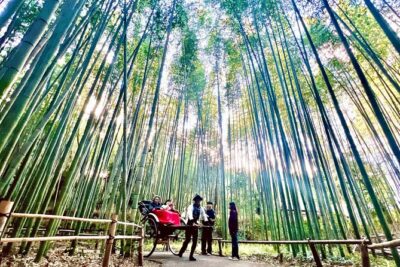
The forest is one of Japan’s most recognizable places. Tall bamboo rises on both sides of the path, creating a narrow corridor of filtered light and vertical green stems. It has appeared in films and is widely photographed, so the route is instantly familiar even if you have never visited Kyoto.
The setting can feel strikingly different from Kinkakuji. At the Golden Pavilion, you focus on a single building framed by gardens and water. In the bamboo area, the path and the height of the stalks shape the experience. You keep moving through a simple natural scene rather than stopping at one architectural viewpoint.
Yet this is not a secret corner of Arashiyama. Its fame brings crowds, and the narrow path can lose the calm mood you may expect from photographs. The best approach is to treat it as a short scenic walk, not a private forest retreat.
The one-hour allocation gives you enough time to walk the route at a reasonable pace and take photographs. Your guide can also place the forest within the wider story of Arashiyama and Kyoto’s old suburban districts. The supplied information does not specify a particular route through the bamboo area, so the exact amount of walking and the points reached can vary.
Because the tour uses public transportation and includes several stops, you should wear shoes that are comfortable for standing and walking. The activity calls for a moderate level of physical fitness. This is not an intense hike, but it is also not a vehicle-based sightseeing loop.
Togetsukyo Bridge and the old Arashiyama setting
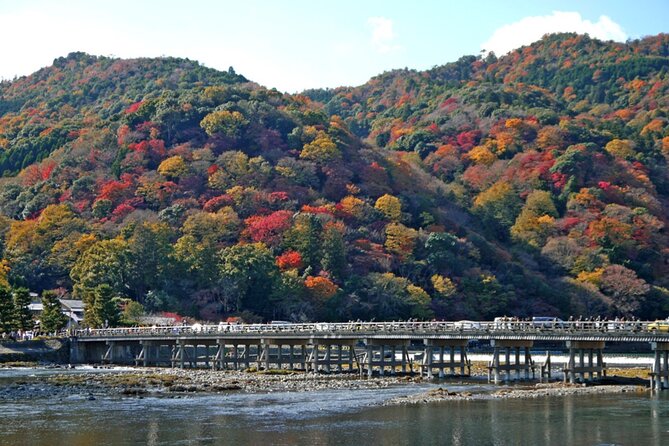
The final listed stop is Togetsukyo Bridge, where you have about one hour. The bridge has existed since the ninth century and crosses the river in Arashiyama.
The bridge is a strong contrast to the enclosed bamboo path. Here, you get a wider view of the river and the surrounding historic district. The name Togetsukyo is often translated as Moon Crossing Bridge, an appropriate image for a structure associated with open views and changing light.
The point of this stop is not simply to cross from one side to the other. You walk on the bridge, pause for the scenery, and consider Arashiyama as a preserved suburb of the old capital. The guide’s comments about aristocrats, imperial family members, writers, and the older rustic life of the area can help connect the view to Kyoto’s long role as a retreat from the city center.
This is likely the most relaxed part of the outing, though conditions can vary. The tour information does not promise a particular view, weather, or amount of free time beyond the approximate one-hour stop. You should think of it as a scenic walk with historical context rather than a formal temple visit.
The bridge also gives the tour a good closing image. Kinkakuji is polished and highly controlled. The bamboo route is enclosed and vertical. Togetsukyo opens the view and lets the morning end with river scenery.
Same corner of the map, a different planting:
- Kyoto: Private Tea Ceremony with a Garden View
★ 4.9 · 61 reviews - Bamboo Grove Temple and Garden Views Tour
★ 5.0 · 41 reviews - Stunning Private Tea Ceremony: Camellia Garden Teahouse
★ 5.0 · 28 reviews - Kyoto Hidden Treasures: Special Temple & Garden Access Tour
★ 4.5 · 25 reviews
What the guide adds to the day
A local guide can make a real difference on a route filled with famous sights. Without context, Kinkakuji is easy to reduce to a gold building, the bamboo forest to a photo backdrop, and Togetsukyo to a bridge.
The guide is expected to explain the area’s connection to the imperial household, aristocrats, writers, and samurai. You can also ask about modern Japanese life, culture, and history. That open question period is valuable if you want more than memorized facts.
The experience includes assistance for participants during the tour. Flexible itineraries and times may be possible on request, but they are not guaranteed. You should ask before booking if you need a particular adjustment.
The group limit of 15 is a useful middle ground. It is not a private tour, yet it is much more manageable than a large coach group. You have a better chance of hearing the guide and asking a question without interrupting the whole morning. Keep in mind that the limit applies to the tour group, not to the public sights.
Is $113.85 a fair price?
At $113.85 per person, this is not the cheapest way to see these locations. You can reach the sights independently by using Kyoto’s public transportation system, paying the separate entrance fee at Kinkakuji, and planning your own route.
The price makes more sense if you value structure and explanation. You are paying for a guide, help during the outing, public transportation as part of the route, and a planned sequence that connects three major sights. Kinkakuji admission is included, while the Bamboo Forest and Togetsukyo Bridge are free places.
The strongest value is for a first visit to Kyoto, especially if you do not want to work out the connection between the station, Kinkakuji, and Arashiyama yourself. A guide can also help you understand why these places matter instead of leaving you with three unrelated photographs.
Independent visitors may find the price harder to justify. The sights themselves do not require a premium ticket, and the tour cannot guarantee quiet conditions or special access. If you are comfortable with Kyoto’s transport system and prefer to set your own pace, self-guided sightseeing will cost less.
Who should book this Kyoto outing?
I would recommend this tour to someone visiting Kyoto for the first time who wants a compact introduction to the northwest side of the city. It also suits anyone who prefers to ask questions in person rather than read short signs or guidebook entries.
It works well for people who want a mix of architecture, nature, and scenery. Kinkakuji supplies the major cultural attraction, the bamboo forest offers a famous outdoor setting, and Togetsukyo provides a broader view of Arashiyama.
The tour may not suit you if you dislike crowds, need a slow pace, or want long periods of quiet reflection. Kinkakuji and the bamboo route can be crowded, and the four-and-a-half-hour schedule leaves limited room to linger.
The moderate physical requirement is worth taking seriously. You will use trains and buses and spend a fair amount of time walking and standing. Anyone who needs a highly accessible route should ask for details before booking, since the available information does not specify step-free access.
A mobile ticket is provided, and confirmation comes at booking. Free cancellation is available if you cancel at least 24 hours before the local start time. Changes or cancellations inside that window are not accepted, and the tour requires a minimum number of participants. If that minimum is not reached, you are offered another date or experience, or a full refund.
My booking advice
Book this if you want guided context and an efficient route through three major Kyoto sights, and if you accept that famous places will not feel secluded. The native Kyoto guide, small group size, included Kinkakuji admission, and mix of transport and walking give the morning a clear purpose.
Skip it if your priority is saving money, avoiding crowds, or spending an entire morning at one site. The Golden Pavilion is a reconstruction, the gold surface may feel too polished for your taste, and the bamboo forest is far busier than its photographs suggest.
For the right visitor, this is a useful first look at northwest Kyoto: practical, varied, and full of recognizable places, with enough local explanation to make the scenery mean more than a series of quick stops.
FAQ
Where does the tour begin?
It begins at Kyoto Station, at Higashishiokoji Kamadonocho in Shimogyo Ward, Kyoto.
What time does the tour start?
The scheduled start time is 8:30 am.
Where does the tour finish?
The activity ends back at the meeting point near Kyoto Station.
How long does the experience last?
The tour lasts approximately 4 hours and 30 minutes.
Which sights are included?
The tour visits Kinkakuji Temple, Bamboo Forest Street, and Togetsukyo Bridge.
Is Kinkakuji admission included?
Yes. Admission to Kinkakuji is included in the tour price.
Do I need to pay admission for the Bamboo Forest?
No separate admission ticket is listed for Bamboo Forest Street.
How does the group travel between sights?
The route uses trains, buses, and walking.
How large is the group?
The tour accepts a maximum of 15 participants.
What happens if I cancel?
You can receive a full refund if you cancel at least 24 hours before the experience starts. Cancellations or changes made less than 24 hours before the start time are not accepted for a refund.
Just added around Kyoto
- Kyoto Hidden Treasures: Special Temple & Garden Access Tour★ 4.5 · 25 reviews
- Stunning Private Tea Ceremony: Camellia Garden Teahouse★ 5.0 · 28 reviews
- Kyoto: Kinkaku-ji Temple & Serene Garden Guided Tour with Tickets★ 5.0 · 9 reviews
- Guided Kyoto City Cherry Blossom One Day Private Tour★ 5.0 · 16 reviews
- Private & Unique Kyoto Cherry Blossom “Sakura” Experience★ 5.0 · 5 reviews
- Kyoto Japanese Garden Lover’s Private Tour with Government-Licensed Guide★ 4.5 · 10 reviews
- Bamboo Grove Temple and Garden Views Tour★ 5.0 · 41 reviews
- Kyoto Spring Evening (Cherry Blossom) Food Tour★ 3.0 · 4 reviews
Kyoto Garden Tours, compared.
Kyoto Zen Meditation & Garden Tour at a Zen Temple with Lunch
Read our review →
Kyoto Kiyomizu Tea Ceremony with Scenic Garden Views
Read our review →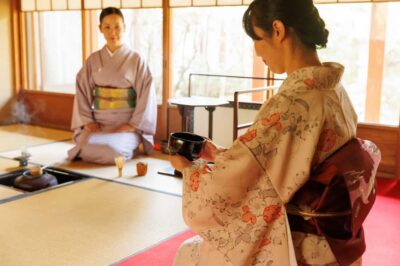
Stunning Private Tea Ceremony: Camellia Garden Teahouse
Read our review →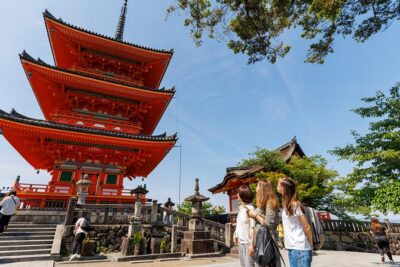
Kyoto Hidden Treasures: Special Temple & Garden Access Tour
Read our review →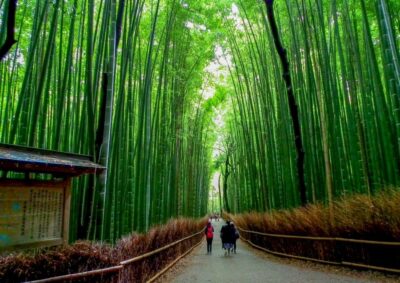
Guided Kyoto City Cherry Blossom One Day Private Tour
Read our review →Browse the lists this tour appears in