
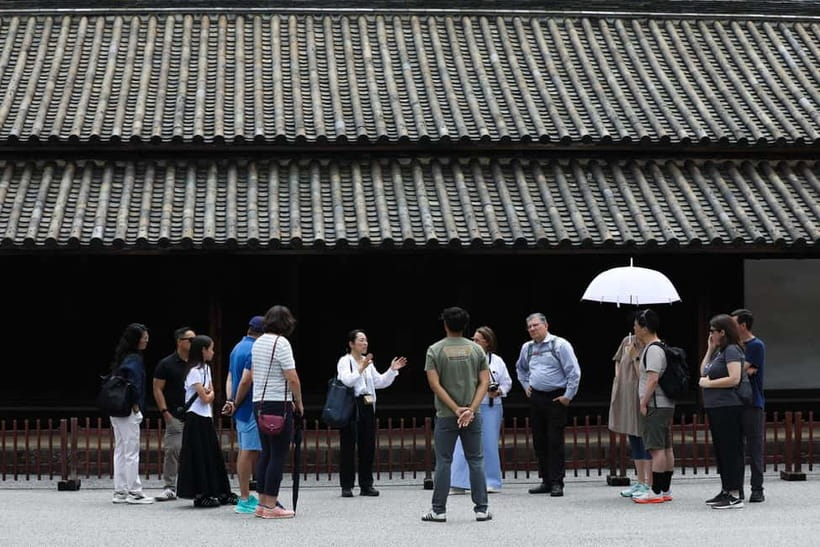
Review · TOKYO GARDEN TOURS
Tokyo: Imperial Palace East Gardens Walking Tour
Tokyo’s Imperial Palace East Gardens give you two very different views of the city in one walk. One moment you are looking at quiet ponds, pruned trees, and stone lanterns. The next, you are standing beside the massive foundations of Edo Castle, once the center of shogun power. The old castle ruins are the star, especially if you enjoy history more than postcard scenery.
I like two things here. First, the English-speaking guides, including Mei, Kei, Wakana, and Loc, make the surviving stones easier to understand with maps, old images, and stories. Second, the tour connects garden design with military planning, so you are not simply walking past walls and gates without knowing why they mattered.
The main drawback is simple: this is not a tour inside the Imperial Palace itself. You visit the East Gardens on the former Edo Castle grounds, and the tour requires 150 minutes of walking, which may feel long in hot, rainy, or humid weather.
Key points to know before you book

- Edo Castle comes back to life through maps and stories: Much of the original castle is gone, so the guide’s explanation matters.
- Ninomaru Garden offers the calmest part of the walk: Ponds, bridges, stone lanterns, shaped shrubs, and bonsai show classic Japanese garden design.
- The tour covers both beauty and defense: Stone walls, guard houses, gates, and watch towers reveal how the castle worked.
- Seasonal timing changes the mood: Cherry blossoms brighten spring, while fall brings colorful foliage.
- You finish where you started: Meet near Starbucks Coffee at Kokyo Gaien Wadakura Fountain Park and return there after the walk.
- The price is modest for a history-focused tour: At $19 per person, the main value comes from interpretation rather than exclusive access.
Why the East Gardens are worth your time
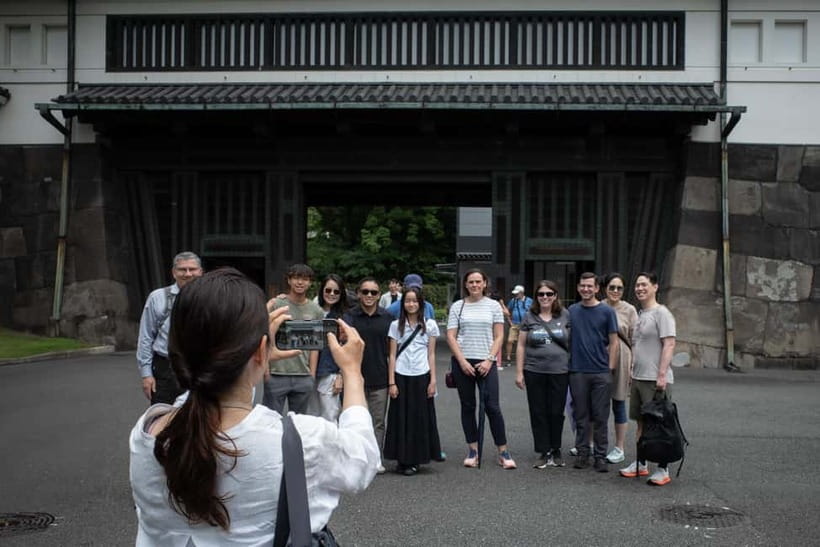
Tokyo has no shortage of temples, shrines, shopping streets, and high-rise views. The Imperial Palace East Gardens offer something different: a quiet central setting where the city’s modern rhythm gives way to the remains of Edo Castle.
The grounds once formed part of the residence and power base of the Tokugawa shoguns during the Edo period. That background gives the walk more weight than an ordinary park visit. You are not only seeing attractive trees and ponds. You are following the outline of a castle compound that once shaped Japan’s politics.
I especially like the contrast between what remains and what has disappeared. The gardens are carefully maintained, but the castle itself survives mainly through foundations, walls, gates, defensive structures, and related artifacts. That makes the guide important. A good explanation helps you picture the Honmaru area as the main compound it once was, rather than seeing only an open section of grass and stone.
The tour also helps bridge Old and New Tokyo. You begin near a modern city center and then spend time among feudal-era defenses and traditional garden forms. It is a useful choice if you want history without giving up half a day to a museum.
More Garden Tours in Japan:
- Osaka: teamLab Botanical Garden Entry Ticket
★ 4.5 · 1,710 reviews - Imperial Palace East Garden and Edo Castle Walking Tour in Tokyo
★ 5.0 · 510 reviews - Kyoto Zen Meditation & Garden Tour at a Zen Temple with Lunch
★ 5.0 · 441 reviews
Starting near Wadakura Fountain Park
The meeting point is near Starbucks Coffee at Kokyo Gaien Wadakura Fountain Park. Your guide waits nearby, and the tour returns to this same area after about two and a half hours.
This location is practical for a Tokyo sightseeing day because it puts you close to the Imperial Palace grounds without requiring a complicated transfer during the activity. Still, you should allow a little time to find the exact meeting spot. The supplied coordinates are 35.68299330000001, 139.7611971, so checking the map before you leave your hotel is sensible.
The tour is listed as wheelchair accessible, but the East Gardens include outdoor paths and historic structures. If you use a wheelchair or have limited mobility, confirm the route and current access conditions when booking. The activity information supports accessibility, but it does not describe every surface or slope.
Once the group gathers, the guide sets the period context. The strongest guides use stories about shoguns, emperors, Japanese customs, and the modern royal family to make the setting feel connected to present-day Japan. Guides such as Mei and Tatsie have been praised for making the material light and easy to follow, while Midori has been noted for personalizing the walk despite poor weather.
Honmaru: reading the castle through its remains
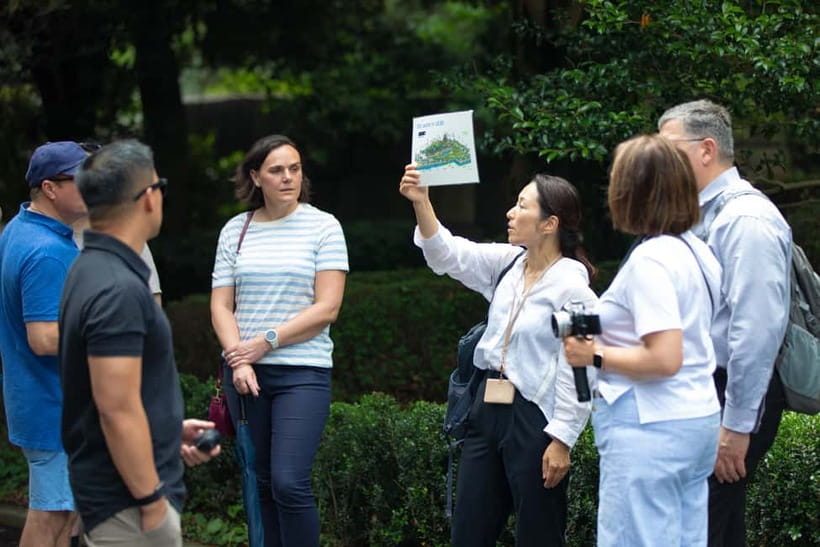
The Honmaru area was once the main compound of Edo Castle. Today, you see remnants rather than a complete palace, including castle foundations, gates, and defensive features.
This is where the walk becomes more than a garden visit. Your guide explains how the castle was arranged and how its defenses worked. Stone walls and strategic gateways show that the site was planned for control and protection, not just ceremony. Watch towers and guard houses help you picture the people who monitored movement through the compound.
The limited remains can disappoint anyone expecting an intact European-style castle. There is no full keep to enter here, and the tour does not take you inside the Imperial Palace. But that absence is also part of the lesson. You learn to read a site through its foundations, scale, walls, and position.
Printed maps and old photographs can be especially useful. Mei has used laminated images to show how the castle looked when more of it survived. This kind of visual aid gives you a better sense of the former layout than bare stones can provide on their own.
I would pay close attention when the guide discusses military architecture. The stonework is impressive, but the real interest lies in how the different pieces worked together. You get a clearer picture of Edo Castle as a functioning seat of power rather than a collection of scenic ruins.
Ninomaru Garden and traditional Japanese design
Ninomaru Garden is the gentler part of the route. Its ponds, bridges, shaped shrubs, trees, and stone lanterns create a carefully arranged setting for quiet observation.
The design is not accidental or loose. Japanese gardens guide your eye through changes in shape, texture, height, and reflection. The water adds movement, while the stone elements provide structure. Carefully pruned trees and bonsai show the same respect for form on a smaller scale.
You will likely have time to pause and take photographs, but this is still a guided walk rather than free time in a park. The best approach is to listen first, then take a few minutes to appreciate the setting without rushing from one photo point to the next.
Several guides have made a point of suggesting good picture locations and offering to take photographs. That is a small but useful touch, especially if you are traveling alone or want a picture of your whole group.
The garden changes with the calendar. Spring brings cherry blossoms, while fall adds red, orange, and yellow foliage. The tour is available in other seasons too, and winter can make the castle stones and garden structure easier to study because there may be less visual clutter from thick foliage. The activity details specifically highlight spring and fall, so those are the strongest choices if seasonal color matters to you.
Same corner of the map, a different planting:
- Kyoto Arashiyama Bamboo forest & Garden Half-Day Walking Tour
★ 5.0 · 413 reviews - Mt. Fuji, Cherry Blossom & Shiba Sakura Pvt. Day Tour
★ 5.0 · 326 reviews - Kyoto Kiyomizu Tea Ceremony with Scenic Garden Views
★ 5.0 · 101 reviews - Kanazawa: Samurai, Matcha, Gardens and Geisha Full-Day Tour
★ 4.9 · 75 reviews
Stone walls, guard houses, and the practical side of power
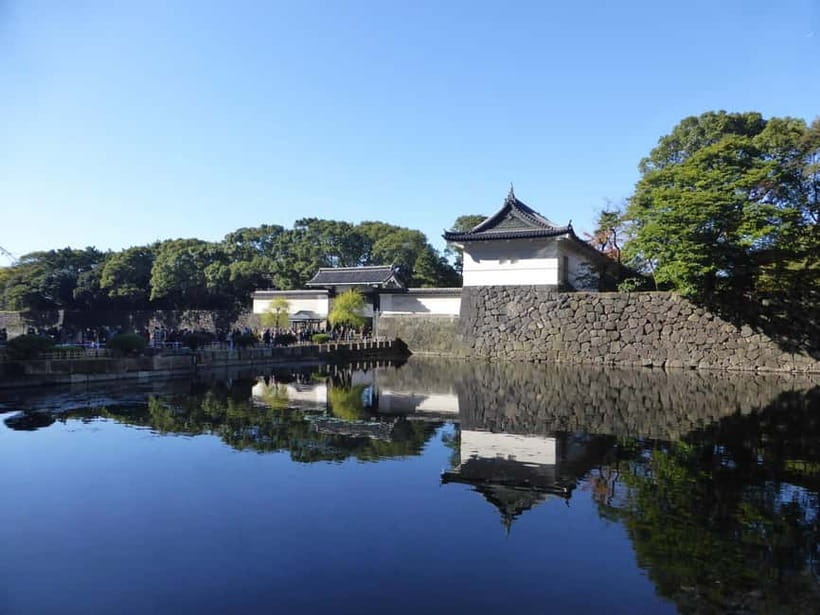
The East Gardens contain more than pleasant views. Along the route, you encounter stone walls, guard houses, watch towers, gates, and other traces of the castle system.
These structures explain how status and security shaped the site. The walls were not simply decorative. The gates controlled access, the guards watched key points, and the castle’s layout reflected the need to protect the shogun and manage visitors.
This is one of the tour’s best features because it gives purpose to details you might otherwise overlook. A wall can look like an attractive piece of old masonry. With the right explanation, it becomes evidence of construction skill, political power, and military planning.
The guide’s storytelling makes a real difference here. Mei has been praised for combining history with humor, while Kei has been singled out for answering questions and explaining the castle in a friendly way. Wakana and Loc have also been described as clear and engaging, with English that makes the material accessible to international visitors.
Expect a broad introduction rather than an academic lecture. The tour covers shoguns, emperors, castle history, customs, garden design, and present-day Japan. If you want a specialist study of Tokugawa architecture, you may want a longer or more narrowly focused experience. For a first visit, the range is useful.
What the 150-minute pace feels like
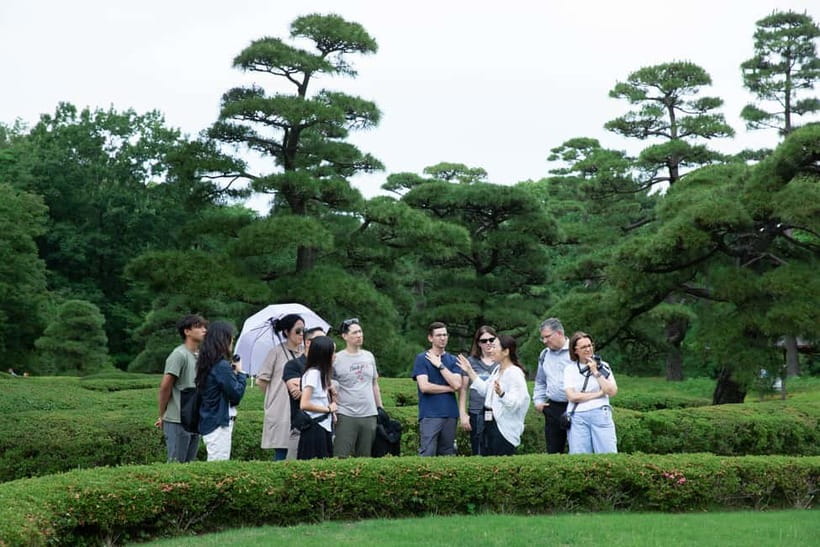
Two and a half hours is long enough to give the gardens proper attention, but short enough to fit around other Tokyo plans. You are not merely walking to one viewpoint, taking a picture, and leaving. The time allows the guide to explain several sections and gives you some room to look around.
The pace appears to be a steady sightseeing walk, not a forced march. A well-paced route lets you listen, ask questions, and stop for photographs. One guide was specifically praised for allowing time to absorb the gardens, while another was noted for answering questions patiently.
Weather can shape the experience. Rain does not necessarily cancel the walk, and Miko was praised for keeping the group comfortable during wet conditions. Still, you should bring suitable shoes and weather protection. Tokyo’s heat and humidity can make an outdoor walk feel harder than the distance suggests.
The activity is in English. The strongest match is for someone who wants context while walking, not someone who prefers to explore every path alone. If you want total freedom to linger, sketch, or sit beside the pond for a long stretch, the guided format may feel restrictive. You can still enjoy some personal time, but the main structure is group-based.
Is $19 a fair price?
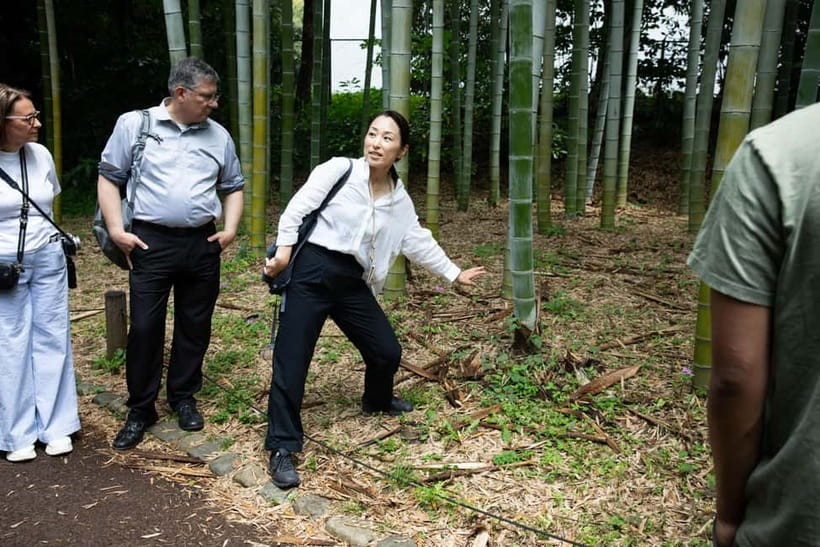
At $19 per person, this is a reasonable buy if you value explanation. You are paying for a guide who connects the ruins, gardens, shoguns, emperors, and Japanese customs into one readable story.
The price does not include entry to the Imperial Palace, and the tour does not go inside the palace. That point matters. You should book this for the East Gardens and former Edo Castle grounds, not because you expect access to royal interiors.
The value is strongest for a first visit to Tokyo, especially if you are unsure how to interpret the site. A self-guided walk may cost less, but you would need to supply your own background and work out how the remaining walls and foundations fit together. The guide can also answer questions about other parts of your Japan trip, and Mei has offered restaurant and sightseeing suggestions after the walk.
At the same time, the tour is not built around exclusive access, a meal, transportation, or a special performance. If you are comfortable reading signs and researching Edo Castle before visiting, you may prefer to walk independently. The $19 fee pays for human explanation and a planned route.
Who should book this walk?
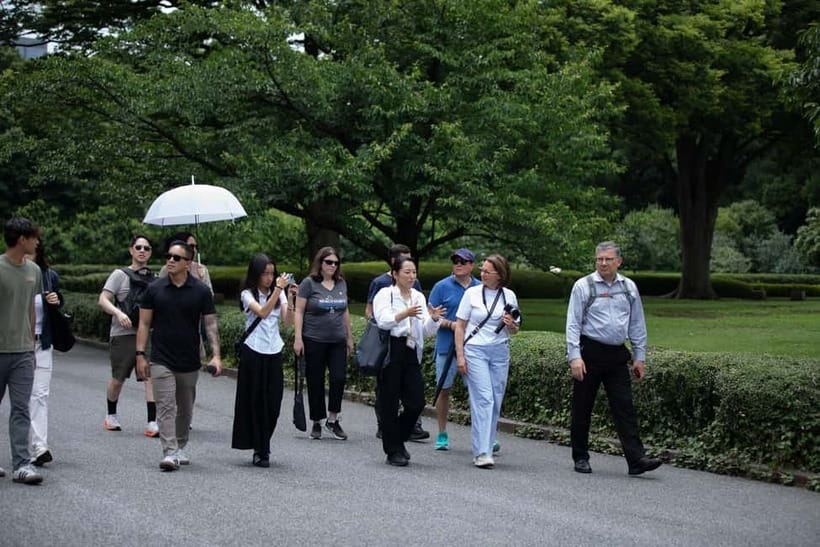
I would recommend it to first-time visitors who want a clear introduction to Tokyo’s political and architectural past. It also suits families, since guides such as Laura and Mei have used humor, visual material, and simple explanations to keep history approachable.
History fans will appreciate the focus on castle layout, defenses, shoguns, and the transition from Edo-era power to modern Japan. Garden lovers will enjoy Ninomaru, the ponds, seasonal trees, and traditional design, though this is not solely a horticultural tour.
You should think twice if you dislike walking for 150 minutes, want to enter the Imperial Palace, or prefer a completely unstructured visit. The surviving castle remains may feel sparse without the guide’s maps and stories.
Should you book the Imperial Palace East Gardens tour?
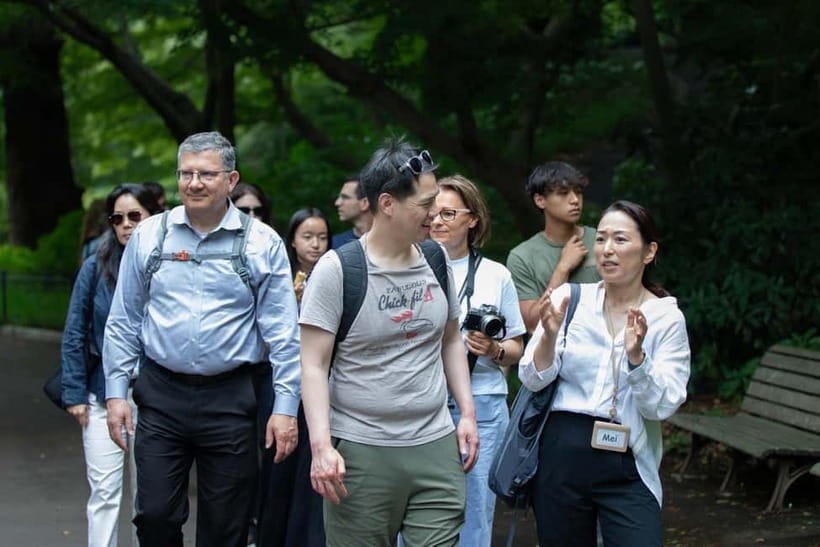
Book it if you want the East Gardens to make sense, not just look pretty. The combination of Honmaru ruins, defensive stonework, Ninomaru Garden, and seasonal scenery gives you a well-rounded view of the former Edo Castle grounds.
The best reason to choose this tour is the guide-led interpretation. Names such as Mei, Kei, Wakana, Loc, Tatsie, and Midori appear repeatedly in the experience’s strongest feedback, with praise for clear English, warmth, humor, patience, and useful visual aids.
Skip it if your main goal is to enter the Imperial Palace or wander alone at your own pace. For $19, though, this is a practical way to connect Tokyo’s modern center with the shogun-era site beneath it.
FAQ
How long does the Imperial Palace East Gardens tour last?
The tour lasts 150 minutes, or two and a half hours.
Where does the tour start?
You meet your guide near Starbucks Coffee at Kokyo Gaien Wadakura Fountain Park. The listed coordinates are 35.68299330000001, 139.7611971.
Where does the tour finish?
The walk returns to the same area near Starbucks Coffee at Kokyo Gaien Wadakura Fountain Park.
Does the tour enter the Imperial Palace?
No. The activity does not go inside the Imperial Palace. It visits the East Gardens, which form part of the former Edo Castle grounds.
What language is the tour conducted in?
The tour is conducted in English with a live guide.
Is entry to the Imperial Palace included?
No. Entry to the Imperial Palace is not included, and the tour does not go inside the palace.
Can I cancel for a full refund?
Yes. You can cancel up to 24 hours in advance for a full refund. You can also reserve now and pay later, which keeps your plans flexible.
Just added around Japan
- Himeji: Himeji Castle & Kokoen Garden 3.5-Hour Guided Tour★ 4.9 · 30 reviews
- Tokyo: Ashikaga Flower Park with Entry Ticket★ 5.0 · 3 reviews
- 1-Day Tour from Okayama: Kurashiki, Gardens & Okayama Castle★ 5.0 · 2 reviews
- Osaka: Daytime Hanami (Cherry Blossom) and Food Tour★ 4.7 · 7 reviews
- Private Car Day Trip to the Kobe Mountains, Gardens and Hot Springs from Osaka★ 4.5 · 16 reviews
- Private Car Full Day Tour of Osaka Temples, Gardens and Kofun Tombs★ 5.0 · 24 reviews
- Full-Day Tour from Kanazawa: Samurai, Matcha, Gardens and Geisha★ 5.0 · 68 reviews
- Kyoto Kiyomizu Tea Ceremony with Scenic Garden Views★ 5.0 · 101 reviews
Tokyo Garden Tours, compared.

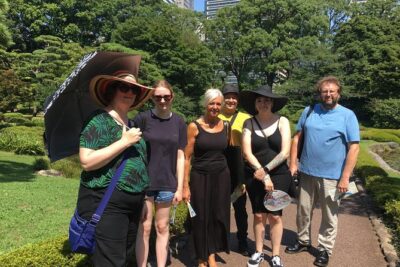
Tokyo Japanese Garden Lover’s Private Tour with Government-Licensed Guide
Read our review →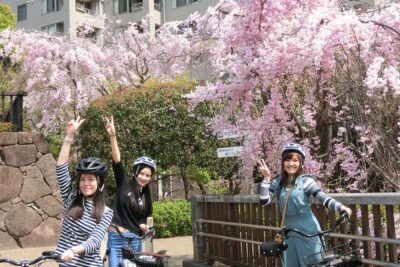
Tokyo Cherry Blossoms blooming spots E-bike Tour, 3hrs
Read our review →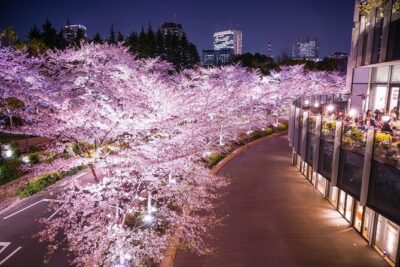

Experience Crafting a Flower-Adorned Mini Japanese Garden
Read our review →Browse the lists this tour appears in