
Review · TOKYO GARDEN TOURS
Tokyo: Edo Castle Ruins & Imperial Palace East Garden Tour
Edo Castle was once the seat of Japan’s shoguns, and this tour lets you trace that power through massive gates, guardhouses, moats, and stone foundations in the center of modern Tokyo. You’ll also see the gardens that now belong to the Imperial Palace grounds, including the peaceful Ninomaru Garden and its koi pond.
I like the way the route links samurai defenses with imperial history, rather than treating the park as a simple stroll. I also like the small-group or private format, which gives you a better chance to ask questions. The main drawback is clear: you cannot enter the Imperial Palace buildings or the inner palace grounds, and the quality of the experience depends heavily on how much your guide explains.
Key points to know before you book
- Otemon Gate sets the scene: Enter through the grand historic gateway and follow the old defensive route into the castle grounds.
- Samurai history is built into the walk: Ote-San-no-mon ruins, Doshin Bansho, and Hyakunin Bansho show how castle security worked.
- The Imperial Palace itself is not open here: You explore the East Gardens and former Edo Castle site, not the palace interiors.
- Tenshu-dai offers a useful city view: The former keep’s base helps you picture the scale of Edo Castle and the modern city around it.
- Ninomaru Garden slows the pace: Expect ponds, koi, carefully arranged plantings, and a quiet break near the end.
- The guide matters: Mari and Isao are names associated with especially warm, patient guiding, but commentary can vary.
Why Edo Castle is more than a park in central Tokyo
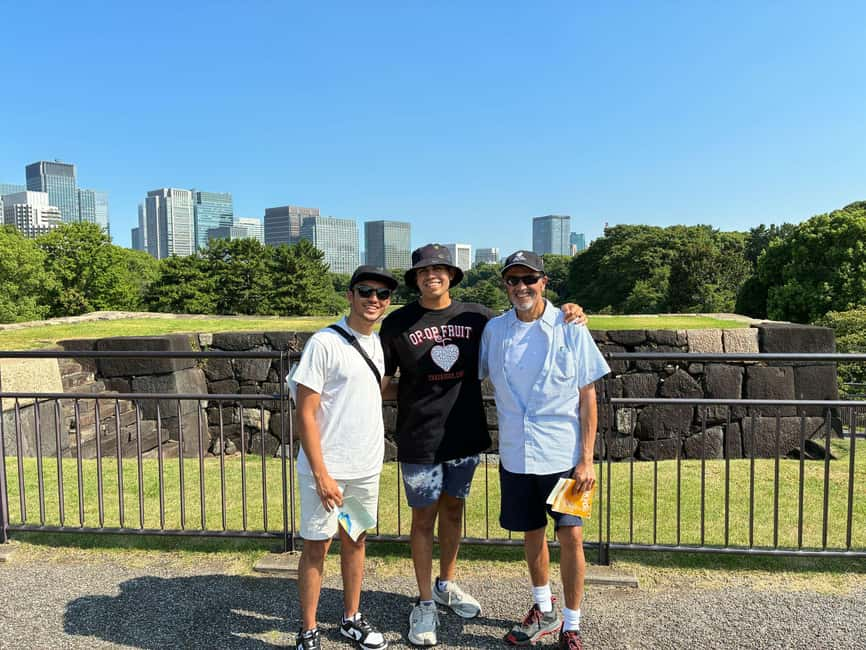
The Imperial Palace East Gardens can look calm and orderly today, but under the greenery are the remains of Edo Castle, one of the great power centers of old Japan. The castle was tied to the shoguns, the military rulers who governed Japan for centuries, while the emperor represented a different line of authority.
That distinction is one reason a guide helps. Without explanation, you see walls, gates, lawns, and a pond. With context, the same route becomes a lesson in who controlled access, where guards waited, and how visitors moved toward the castle’s inner areas.
This is not a palace interior tour. The Imperial Family still resides at the palace, so the inner grounds and palace buildings are closed to this experience. Your visit focuses on the public gardens and the former castle site, which is a useful expectation to set before paying.
At $37 per person for two hours, I find the tour fairly priced if you want the history explained as you walk. You are not paying for a rare interior entrance. You are paying for a guide who can turn scattered ruins into a coherent story. If you already know Edo-period history and enjoy reading signs at your own pace, you may prefer visiting independently.
More Garden Tours in Tokyo:
- Imperial Palace East Garden and Edo Castle Walking Tour in Tokyo
★ 5.0 · 510 reviews - Tokyo: Imperial Palace East Gardens Walking Tour
★ 4.8 · 353 reviews - Mt. Fuji, Cherry Blossom & Shiba Sakura Pvt. Day Tour
★ 5.0 · 326 reviews
Meeting at Wadakura Fountain and the moat
The meeting point is outside the Wadakura Free Rest Area, directly in front of the entrance. Look for the guide holding a yellow sign. This indoor rest area gives you a practical place to orient yourself before setting off.
The first stop is Wadakura Fountain National Park. The fountain was built to commemorate a royal wedding, and the guide uses it to introduce the connection between the present Imperial Palace area and Japan’s modern imperial family.
This opening stop also helps you understand the setting. You begin in a formal public park, then move toward the moat and castle gates. The change is subtle, but it gives the tour a useful rhythm: modern Tokyo first, then the older military structure beneath it.
The Wadakura Moat receives only a short explanation, yet it matters. Water defenses were not decoration. They helped separate the castle from the surrounding city and made direct approach harder. The moat also provides a calm contrast to the thick stone walls and controlled entrances ahead.
Otemon Gate and the castle’s first line of defense
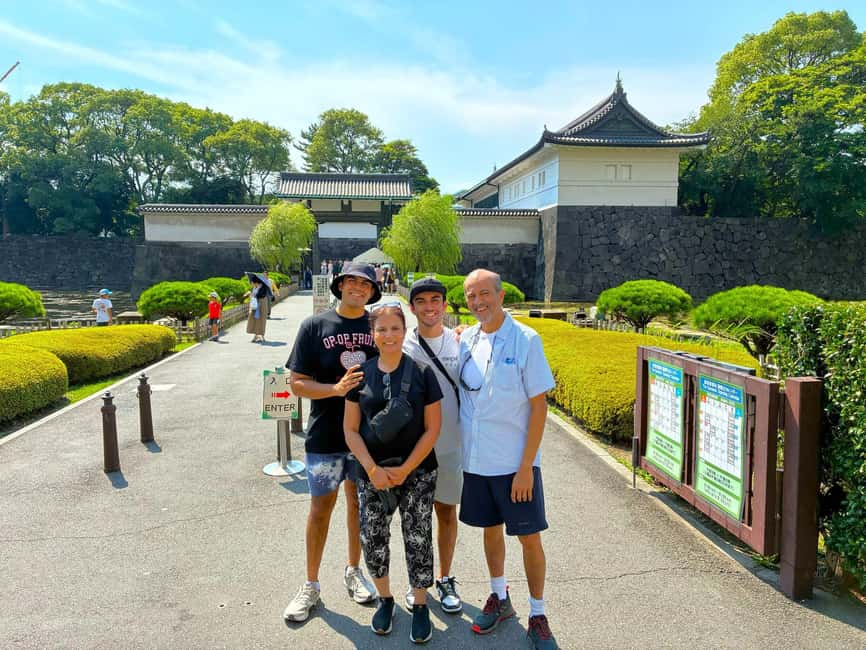
Otemon Gate is one of the strongest visual moments on the route. This was a major entrance to Edo Castle, and its scale helps you understand that the castle was not just a residence. It was a fortified political center.
As you approach the gate, pay attention to how movement is controlled. A castle entrance could slow people down, expose them to guards, and force them through planned turns rather than allowing a straight rush inward.
The tour then continues to the Ote-San-no-mon Gate Ruins. Ruins can be easy to skip when you are alone, especially when only foundations or partial structures remain. A guide can explain where the old gate sat and how it fit into the larger defense system.
This is also where the tour’s value depends most on the guide. Some feedback describes guides who explain the palace and national history with real enthusiasm and patiently answer questions. Other feedback describes a walk with very little commentary. If you book, ask questions early. That can help set the tone for the rest of your two hours.
Doshin Bansho and Hyakunin Bansho
Doshin Bansho was a guardhouse, and it gives the tour a more human scale. Instead of only looking at giant walls and broad lawns, you begin thinking about the people who watched the gates and checked those entering the castle.
Hyakunin Bansho, another guardhouse, adds to that picture. Its name is connected with a large guard unit, and the stop helps explain how castle security relied on layers of personnel as well as stone, water, and gates.
These stops are especially useful if you are curious about samurai life but do not want a museum lecture. You are standing where guards once worked, near the route into the castle’s most important areas. The physical setting does part of the teaching.
The itinerary allows about ten minutes at each guardhouse. That is enough for a focused explanation and questions, but not enough for a long historical talk. If you want a detailed discussion of military ranks, castle administration, or the full political rise of the shoguns, this tour may feel brisk.
Same corner of the map, a different planting:
- Tokyo: Edo Castle & East Garden of the Imperial Palace Tour
★ 4.7 · 112 reviews - Tokyo Private Tour! Edo Castle & Imperial Palace East Gardens
★ 5.0 · 105 reviews - Tokyo: Tsukiji Market and Hama-rikyu Gardens Guided Tour
★ 4.8 · 73 reviews - Tokyo: Pvt. Tour – Edo Castle & Imperial Palace East Gardens
★ 4.8 · 63 reviews
Edo Castle ruins and the former Honmaru
From the guardhouses, the route moves into the Edo Castle ruins. The castle itself is not preserved as a complete building, so you should come expecting foundations, stonework, open spaces, and reconstructed markers rather than grand rooms.
That may sound modest, but the open site helps you picture the castle’s scale. The former Honmaru, or main area, was the heart of the complex. The Site of Edo Castle Honmaru gives the guide a chance to explain how the main hall functioned within the castle and why this central zone mattered.
I like this part because it corrects a common assumption about historic castles. The most important remains are not always the tallest walls. A foundation or open footprint can tell you where power was organized, how buildings were grouped, and how far the castle extended.
The experience includes a restoration model of the Edo Castle keep. This is one of the most useful visual aids on the route. Seeing a model of the keep makes it easier to imagine what the original structure looked like when the surviving stone base is otherwise hard to interpret.
Tenshu-dai and the view across Tokyo
The Tenshu-dai is the base of the former castle keep. The keep itself is not presented as a standing building, so the platform and its surroundings carry the story.
From here, you get panoramic views of the area around the former castle grounds. The view is not a single dramatic lookout in the mountain sense. Its value is more historical: you can look outward from the place where the castle’s highest structure once helped define the center of power.
Take time to compare the open garden with the modern city beyond it. Tokyo’s scale becomes easier to grasp when you are standing on the old castle site, surrounded by quiet grounds but still close to the capital’s dense urban core.
The guide also stops near the prefectural tree area, listed in the route as 都道府県の木. This is a smaller stop, but it adds a modern civic note to the historical walk. It is a reminder that the grounds now serve public and national purposes, not only royal or military ones.
Suwa-no-Chaya and the Imperial Palace East Gardens
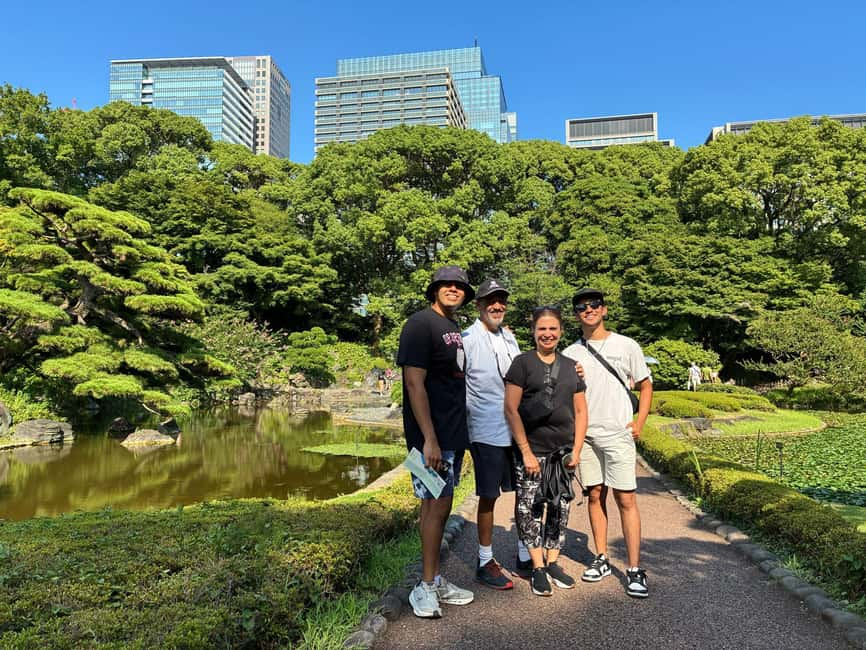
Suwa-no-Chaya, a traditional tea house, adds a different mood after the castle ruins. The route shifts from defense and political control toward gardens, rest, and formal Japanese aesthetics.
You should not expect a tea ceremony or an indoor cultural demonstration. The value here is visual and atmospheric. It gives you a chance to see how the palace gardens balance structured design with quiet spaces.
The Imperial Palace East Gardens are the broad setting for the second half of the walk. They are open to the public, but they are not the private palace buildings. That distinction is important. If your main goal is to see where the Imperial Family lives inside, this is not the right experience.
If your goal is to connect the present palace grounds with the earlier Edo Castle site, the gardens work well. You move through a place that carries several layers of Japanese government and royal history without needing a long transfer across Tokyo.
The gardens can also be a welcome pause after the stone walls and gate explanations. Wear comfortable shoes. The tour is only two hours, but it includes repeated walking between stops and is not designed for wheelchair users or people with mobility impairments.
Ninomaru Garden and the koi pond
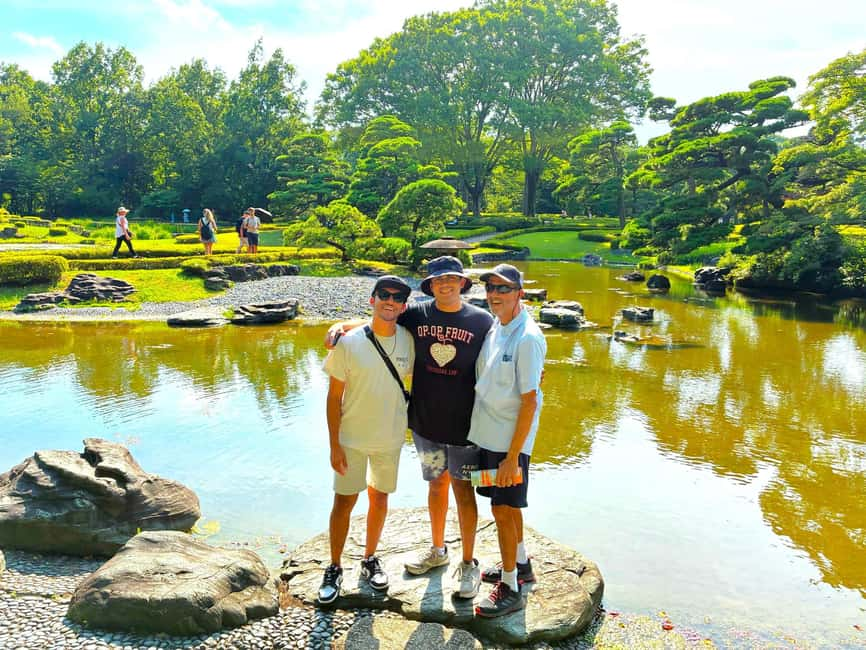
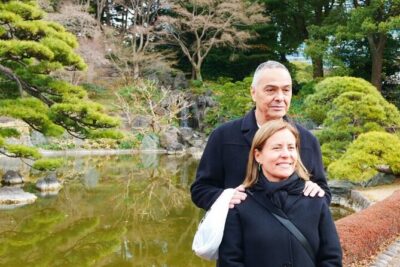
Ninomaru Garden is the gentlest part of the route. Here, the pace slows and the focus turns to water, plants, paths, and careful garden design.
The pond’s koi fish are an easy detail to enjoy, especially after the heavier castle history. You can take photographs and let the setting settle. Flash photography is not allowed, so use natural light and keep your camera ready without interrupting the quiet atmosphere.
This garden also helps explain the difference between seeing a site and understanding it. A short stop here may not provide the dramatic remains of a castle tower, but it shows how the grounds function today. You get a calm public garden set within a place once built for military authority.
The tour returns to the Wadakura Free Rest Area. That makes the route straightforward, with no need to find a separate ending point in an unfamiliar part of the city.
How much history will your guide provide?
This is the most important variable. The strongest guide experiences appear to be warm, patient, and full of historical detail. Mari and Isao are names associated with friendly guiding and careful answers to questions. One guide was also praised for spending extra time explaining the palace and the history of Japan.
But you should not assume every departure will feel like a private history seminar. One account describes the walk as little more than a park stroll because the guide offered very little explanation. That contrast matters more than the modest price.
If you want the most from the tour, ask about the shoguns, the castle’s defensive layout, the purpose of each guardhouse, and the difference between Edo Castle and the Imperial Palace. Specific questions give the guide room to tailor the walk to your interests.
Private and small-group options are available. A smaller group usually makes it easier to hear, ask questions, and pause at the places you care about. If you are deciding between this and a self-guided visit, the choice comes down to how much interpretation you want.
Who will get the most from this two-hour walk?
I would recommend this experience to a first-time visitor who wants a manageable introduction to the shoguns, emperors, and palace grounds without spending half a day in a museum. It also suits anyone who likes combining historical remains with gardens and city views.
The tour works particularly well for adults and older children who can walk comfortably and stay engaged with verbal explanations. Children under six are not accepted, and the activity is not suitable for wheelchair users or people with mobility impairments.
Bring water, a camera, and comfortable shoes. Food and drinks are not included, and there is no hotel pickup or drop-off, so you arrange your own way to the meeting point.
The commemorative photo opportunity is a small extra, not a reason to book by itself. The real value lies in having someone explain why an old gate, a moat, or a stone platform matters.
Should you book the Edo Castle tour?
Book it if you want context, not palace access. For $37, the tour can make the East Gardens and castle ruins far more meaningful, especially when your guide is as engaged as Mari or Isao are described to be.
Skip it if you prefer complete independence, already know the history, or expect to walk inside Imperial Palace buildings. The tour does not provide that access.
My practical advice is to choose a small-group or private option if available, arrive ready with questions, and treat the garden portion as part of the experience rather than a filler. With those expectations, this is a compact, sensible way to connect Tokyo’s imperial present with Edo’s samurai past.
FAQ
How long does the Edo Castle and Imperial Palace East Garden tour last?
The tour lasts two hours and returns to the Wadakura Free Rest Area.
What is the tour price?
The price is $37 per person.
Where do I meet the guide?
Meet outside the Wadakura Free Rest Area, in front of the entrance. The guide will be holding a yellow sign.
Is the tour conducted in English?
Yes. The tour includes a live English-speaking guide.
Can I enter the Imperial Palace buildings?
No. The Imperial Palace buildings and inner palace grounds are not open to this tour. The visit focuses on the East Gardens and the historic Edo Castle ruins.
What places are included on the route?
The route includes Wadakura Fountain, Wadakura Moat, Otemon Gate, Ote-San-no-mon Gate Ruins, Doshin Bansho, Hyakunin Bansho, Edo Castle ruins, the Honmaru site, the keep restoration model, Suwa-no-Chaya, the Imperial Palace East Gardens, and Ninomaru Garden.
Is the tour suitable for wheelchair users?
No. It is not suitable for wheelchair users or people with mobility impairments.
What should I bring?
Bring comfortable shoes, water, and a camera. Smoking and flash photography are not allowed.
Just added around Tokyo
- TOKYO: Tailored Gardens tour with Pro Gardener by E-bike -BASIC★ 5.0 · 2 reviews
- Tsukiji Food Strolling and Hama Rikyu Garden Walking Tour★ 5.0 · 7 reviews
- Tokyo: Serene Sakura & Sake: An Exclusive Brewery Pairing Lunch★ 5.0 · 2 reviews
- Tokyo: Kimono Experience inside Shinjuku Gyoen National Garden★ 5.0 · 3 reviews
- Tokyo Cherry Blossom Half Day Walking Tour with a Local Guide★ 3.5 · 4 reviews
- Cherry Blossom Highlights, Asakusa, Ueno, Imperial Palace Garden★ 4.5 · 4 reviews
- Sumida Riverside Walk: Garden &Temple Ritual (4 Meeting Points)★ 5.0 · 5 reviews
- Full Guided Mt. Fuji & Shiba-Sakura Festival One Day Pvt.Tour★ 5.0 · 6 reviews
Tokyo Garden Tours, compared.
Edo Castle & East Garden of the Imperial Palace Tour
Read our review →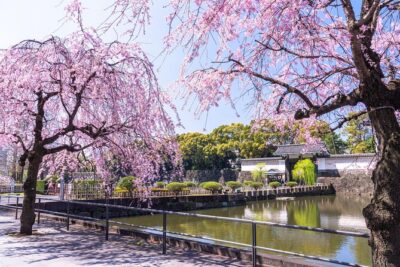
Tokyo Private Tour! Edo Castle & Imperial Palace East Gardens
Read our review →
Tsukiji Market and Hama-rikyu Gardens Guided Tour
Read our review →
Pvt. Tour – Edo Castle & Imperial Palace East Gardens
Read our review →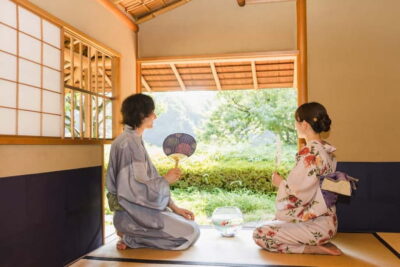
Kimono Rental inside Shinjuku Gyoen National Garden
Read our review →
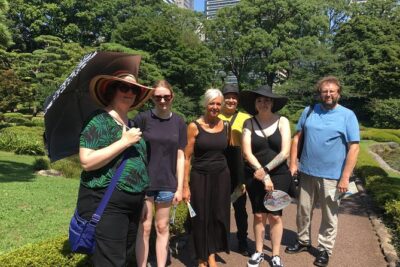
Tokyo Japanese Garden Lover’s Private Tour with Government-Licensed Guide
Read our review →Browse the lists this tour appears in