
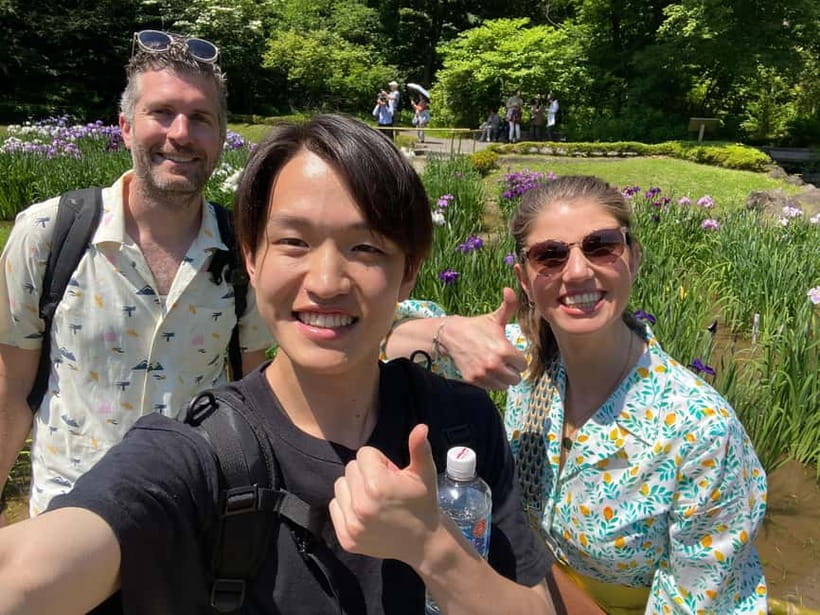
Review · TOKYO GARDEN TOURS
Tokyo: Imperial Palace East Gardens and Tokyo Station Tour
The most rewarding part of this tour is the way it links Edo Castle’s stone walls and gardens with Tokyo’s polished office district. In 150 minutes, you move from shogun-era history to the restored red-brick façade of Tokyo Station, with guide Yuki bringing the past to life through clear explanations and humor.
I like the thoughtful route and the chance to see places that are easy to pass without understanding. I also like the practical format: no admission fee for the East Gardens, an English-speaking guide, and a finish at Tokyo Station, where you can continue exploring or catch a train. The main consideration is the walking. Expect a moderate amount of time on foot, limited shade in some areas, and no backpacks or smoking.
Key points at a glance
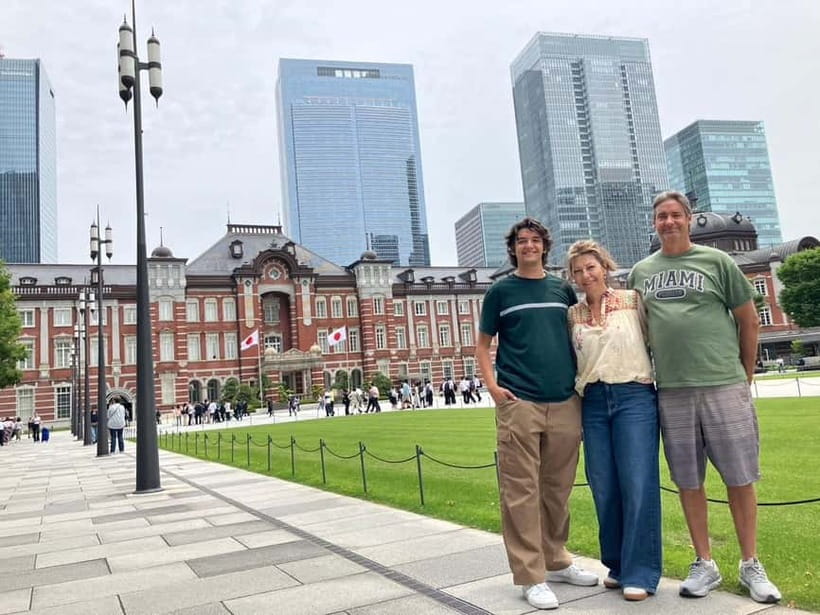
- Edo Castle remains: See Ote-mon Gate, the Hyakunin Bansho Guardhouse, stone walls, the Fujimi-yagura watchtower, and a scale model of the former main keep.
- Ninomaru Garden: Enjoy a calmer garden setting that helps explain Japanese garden design and the contrast between power and peace.
- Nijubashi views: Take in one of the Imperial Palace area’s best-known scenes from Kokyo Gaien National Garden.
- Marunouchi contrast: Shift from palace grounds to modern buildings, public art, and Tokyo’s central business district.
- Tokyo Station finish: End at the beautifully restored red-brick station exterior, a fitting symbol of Tokyo’s change over time.
From Wada Kurayama Fountain Park to the palace grounds
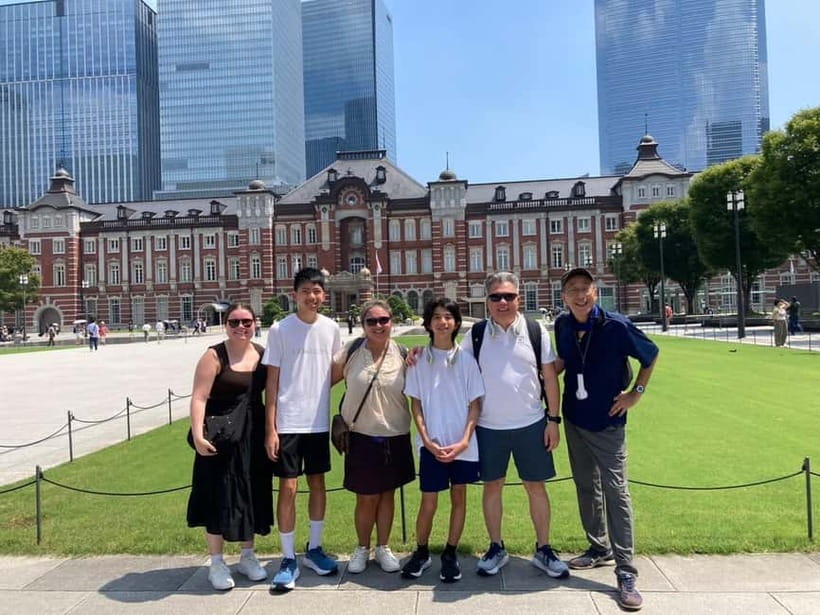
The meeting point is the Starbucks Coffee Imperial Palace Gaien Wada Kurayama Fountain Park store. That gives you a simple landmark at the start, but you should still allow enough time to arrive without rushing. The tour finishes at Tokyo Station, so the route is useful if you want to continue by train or explore the Marunouchi area afterward.
This is a walking tour rather than a sightseeing bus with brief photo stops. The short transfer from the East Gardens to Marunouchi takes about 10 minutes on foot, but the full outing includes more walking inside the gardens and around the palace approaches. Comfortable shoes are not optional here.
The route begins near one of Tokyo’s most famous historic zones, yet it does not treat the palace as a distant backdrop. You move through actual gates, garden spaces, former castle areas, and open public grounds. That physical movement helps you understand the scale of the old castle site better than a short view from the street.
More Garden Tours in Tokyo:
- Imperial Palace East Garden and Edo Castle Walking Tour in Tokyo
★ 5.0 · 510 reviews - Tokyo: Imperial Palace East Gardens Walking Tour
★ 4.8 · 353 reviews - Mt. Fuji, Cherry Blossom & Shiba Sakura Pvt. Day Tour
★ 5.0 · 326 reviews
Ote-mon Gate and the first lessons in Edo Castle
Ote-mon Gate is one of the natural places to begin a story about Edo Castle. The gate and surrounding defenses introduce the practical side of samurai-era power: controlled entrances, guard posts, thick stone construction, and careful movement through the castle grounds.
The Hyakunin Bansho Guardhouse adds another useful detail. Instead of hearing only about shoguns and grand ceremonies, you learn how the castle was watched and protected. These smaller sites often make the past easier to picture because they point to daily duties rather than only famous rulers.
The guide’s role matters most here. Yuki has received repeated praise for making the subject easy to follow, using humor and vivid explanations rather than presenting a list of dates. Her style is especially helpful if Japanese political history is new to you.
The East Gardens do not require an admission fee, which improves the value of the tour. You are paying for the interpretation and route rather than an expensive ticket. Without a guide, you could still walk through the gardens, but you might miss why a gate, mound, watchtower, or foundation matters.
Ninomaru Garden: a quieter side of palace history
Ninomaru Garden provides a change of mood. After the defensive character of the gates and guardhouse, the garden gives you space to consider Japanese design, balance, and the role of beauty within a place built for political control.
This is one of the tour’s strongest contrasts. Edo Castle was a center of military authority and government, but its grounds also included carefully designed gardens. The tour connects those two ideas without treating the garden as mere decoration.
You should bring a camera, but keep the setting in mind. Flash photography is not allowed, and the gardens are better suited to patient viewing than rapid snapshots. A hat, sunscreen, and water are sensible, especially in warm or sunny weather.
The supplied schedule allows about 30 minutes for the guided visit to the East Gardens. That is enough for a focused introduction, but not enough to inspect every corner at a slow pace. If gardens are your main interest, you may want to return independently another time.
Reading the ruins of Edo Castle
The East Gardens include portions of the former Edo Castle grounds, including the Honmaru area. The remains do not give you a complete castle with rooms and roofs. Instead, you read the site through foundations, stonework, open spaces, watchtowers, and explanations from the guide.
That can be more rewarding than a fully reconstructed building because the missing pieces require you to imagine the original scale. Yuki’s storytelling is particularly useful at this point. Her explanations help you picture what the castle may have been like several hundred years ago, while keeping the physical remains in front of you.
The Fujimi-yagura watchtower is another important stop. The name and structure point to the defensive planning of the castle, while the surrounding views help you understand why elevated watchpoints mattered. The tour also includes a scale model of the former Edo Castle main keep, giving you a clearer idea of the building that no longer dominates the grounds.
This is where the tour earns its price most clearly. You are not simply looking at an old wall and being told that it is historic. You get a visual aid, a guided explanation, and a route that connects individual remains into a larger picture.
Same corner of the map, a different planting:
- Tokyo: Edo Castle & East Garden of the Imperial Palace Tour
★ 4.7 · 112 reviews - Tokyo Private Tour! Edo Castle & Imperial Palace East Gardens
★ 5.0 · 105 reviews - Tokyo: Tsukiji Market and Hama-rikyu Gardens Guided Tour
★ 4.8 · 73 reviews - Tokyo: Pvt. Tour – Edo Castle & Imperial Palace East Gardens
★ 4.8 · 63 reviews
Kokyo Gaien and the view toward Nijubashi
The route continues through Kokyo Gaien National Garden, the broad public area near the Imperial Palace. This open setting gives you room to appreciate the relationship between the palace grounds, the moats, the stone walls, and central Tokyo beyond them.
The view toward Nijubashi is a highlight for many first-time visitors. It is one of the best-known palace scenes, and the tour gives you historical context instead of leaving you with only a photo stop. Your guide can explain why the bridge and palace approach carry such symbolic weight in the modern imperial setting.
Keep your expectations realistic. This is an exterior walking tour, not a visit inside the Imperial Palace buildings. The appeal comes from the gardens, public grounds, historic remains, and views. If you want an interior palace visit, this experience does not provide it.
The open grounds also mean weather matters. Bring weather-appropriate clothing, sunscreen, and water. On a hot day, the moderate walking can feel more demanding than the 150-minute duration suggests. On a wet or cold day, the route remains appealing, but good preparation will make it far more comfortable.
Marunouchi: from moats to modern Tokyo
The move into Marunouchi takes about 10 minutes on foot, but it changes the subject completely. You leave the old castle grounds and enter one of Tokyo’s best-known business districts, where modern architecture, public art, and historic references share the same streets.
I like this section because it prevents the tour from becoming a narrow lesson in the past. Tokyo’s story is not only about samurai and shoguns. It is also about how a former seat of power became part of a modern capital filled with offices, shops, transport links, and carefully designed public spaces.
The guide-led walk through Marunouchi helps you notice the transition. Look for the contrast between the open palace grounds and the dense urban blocks around them. The change happens quickly, which makes the route feel like a short lesson in Tokyo’s transformation.
The modern architecture and art stops are less precisely described than the palace landmarks, so the experience may depend more on the guide’s commentary here. That is not necessarily a weakness, but it means you should choose this tour for the full connection between old and new Tokyo, not only for a detailed architecture walk.
Tokyo Station and the red-brick finale
The tour concludes at Tokyo Station, whose restored red-brick exterior provides a strong ending. After stone castle walls, garden paths, and palace views, the station shows another chapter of Tokyo’s development.
The building works well as a final stop because it is both historic and useful. You can admire the exterior, take photographs, and then continue into Marunouchi or use the station for onward travel. The finish is more practical than ending at a remote garden entrance.
The station also reinforces the tour’s central idea. Tokyo has changed dramatically, but older layers remain visible beside newer ones. The route lets you experience that change on foot instead of treating each sight as an unrelated stop.
Do not expect an extended interior tour of Tokyo Station. The listed experience focuses on the exterior and guided sightseeing around the station. If you want to explore the building, shops, or nearby streets in detail, plan extra time after the tour.
What the $38 price gives you
At $38 per person, this is a reasonable price for a 150-minute guided walk, especially if you want historical explanation rather than a self-guided visit. Admission to the East Gardens is free, so the value comes from the guide, structure, language support, and access to a coherent route.
You are paying to understand what you see. Ote-mon Gate, the guardhouse, castle ruins, a watchtower, gardens, Nijubashi, Marunouchi, and Tokyo Station can all be visited independently. The challenge is knowing what deserves attention and how those places connect. A good guide saves you from turning the visit into a series of disconnected photographs.
Yuki’s approach receives especially strong praise for clear explanations, humor, and the ability to make the Edo period easier to picture. Several comments also point to her kindness, organization, and hospitality. That combination matters on a walking tour because a technically accurate guide can still make the experience feel stiff or tiring.
There are limits. You do not receive admission to a major paid attraction, private access, or a long stop inside a palace building. If you already know Edo Castle well, you might prefer exploring independently. For a first visit, however, the price is easier to justify.
Who should book this walk
I would recommend this tour to anyone visiting the Imperial Palace area for the first time, especially if you want a clear introduction to Japanese political and urban history. It suits history fans, architecture enthusiasts, and people who like seeing how an old site fits into the present city.
It also works well for visitors who want a guided experience without giving up half a day. The 150-minute length leaves room for another activity, a meal, or independent time around Tokyo Station.
Families and mixed-interest groups may find the route useful because it changes subject often. Gardens, samurai-era structures, castle remains, modern buildings, public art, and a major railway station offer more variety than a single-site tour.
The walk may be less suitable if you have limited mobility or want a relaxed, seated experience. The activity is wheelchair accessible, but it still involves a moderate amount of walking. You should also note that backpacks are not allowed, and flash photography and smoking are prohibited.
The language options include English, Japanese, Spanish, Chinese, and French. Check the available starting time and language when booking, since the guide language will affect how much you get from the commentary.
Practical advice before you go
Wear shoes that can handle garden paths and city sidewalks. Bring water, a hat, sunscreen, a camera, and clothing suited to the forecast. The route is outdoors, so a comfortable day can make a major difference.
Leave the backpack behind because backpacks are not allowed. Pack lightly and keep your hands free for walking and photographs.
The activity offers free cancellation up to 24 hours in advance and a reserve-now, pay-later option. Those terms are useful if your Tokyo plans are still shifting, but you should still check the current availability and starting time before committing.
The tour has a perfect rating from 16 reviews, with repeated praise directed at Yuki’s explanations and friendly manner. I would treat that as a strong sign that the guide-led storytelling is the main reason to book, not as a promise that every tour will feel identical.
Should you book the Imperial Palace and Tokyo Station walk?
Book it if you want the Imperial Palace East Gardens to make sense, rather than simply wanting a quick palace-area photo. The route gives you gates, guardhouses, castle remains, gardens, Nijubashi views, Marunouchi architecture, and Tokyo Station in one well-shaped outing.
Skip it if you prefer a slow, self-guided garden visit or already know Edo Castle’s story. The walking, outdoor exposure, and restrictions on backpacks may also be inconvenient for some visitors.
For most first-time visitors, the $38 cost is fair. You get a focused history lesson, a useful city walk, and a finish at one of Tokyo’s most practical landmarks. Choose it for the connection between old and new Tokyo, with Yuki’s clear and good-humored guiding as the central draw.
FAQ
How long does the tour last?
The tour lasts 150 minutes, or two and a half hours.
Where does the tour start?
It starts at Starbucks Coffee Imperial Palace Gaien Wada Kurayama Fountain Park.
Where does the tour finish?
The tour finishes at Tokyo Station.
Is admission to the Imperial Palace East Gardens included?
Entry to the Imperial Palace East Gardens does not require an admission fee, and the guided visit is included in the activity.
What places are visited during the tour?
The route includes Ninomaru Garden, the Imperial Palace East Gardens, Ote-mon Gate, the Hyakunin Bansho Guardhouse, Edo Castle ruins, the Fujimi-yagura watchtower, the Honmaru area, Kokyo Gaien National Garden, Marunouchi, and Tokyo Station.
Is the tour conducted in English?
English is one of the available guide languages. Japanese, Spanish, Chinese, and French are also listed.
Is the activity wheelchair accessible?
Yes, the activity is listed as wheelchair accessible.
What should I bring?
Bring comfortable shoes, a hat, a camera, sunscreen, water, and clothing suited to the weather.
Are backpacks allowed?
No. Backpacks are not allowed on the tour.
Can I cancel for a full refund?
Yes. You can cancel up to 24 hours in advance for a full refund.
Just added around Tokyo
- TOKYO: Tailored Gardens tour with Pro Gardener by E-bike -BASIC★ 5.0 · 2 reviews
- Tsukiji Food Strolling and Hama Rikyu Garden Walking Tour★ 5.0 · 7 reviews
- Tokyo: Serene Sakura & Sake: An Exclusive Brewery Pairing Lunch★ 5.0 · 2 reviews
- Tokyo: Kimono Experience inside Shinjuku Gyoen National Garden★ 5.0 · 3 reviews
- Tokyo Cherry Blossom Half Day Walking Tour with a Local Guide★ 3.5 · 4 reviews
- Cherry Blossom Highlights, Asakusa, Ueno, Imperial Palace Garden★ 4.5 · 4 reviews
- Sumida Riverside Walk: Garden &Temple Ritual (4 Meeting Points)★ 5.0 · 5 reviews
- Full Guided Mt. Fuji & Shiba-Sakura Festival One Day Pvt.Tour★ 5.0 · 6 reviews
Tokyo Garden Tours, compared.
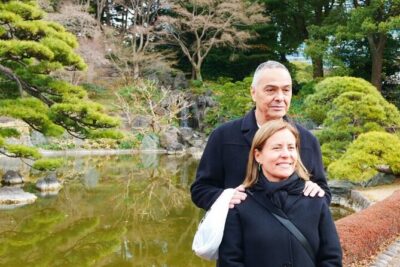
Edo Castle & East Garden of the Imperial Palace Tour
Read our review →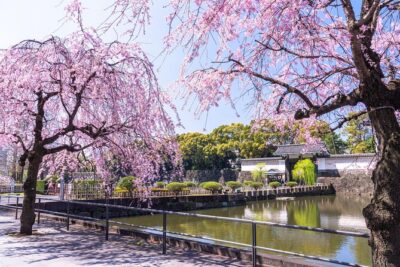
Tokyo Private Tour! Edo Castle & Imperial Palace East Gardens
Read our review →
Tsukiji Market and Hama-rikyu Gardens Guided Tour
Read our review →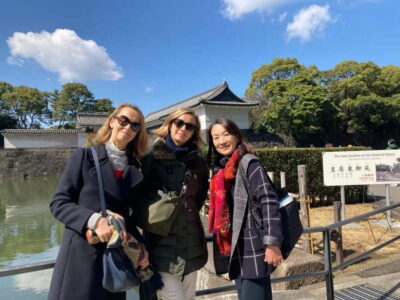
Pvt. Tour – Edo Castle & Imperial Palace East Gardens
Read our review →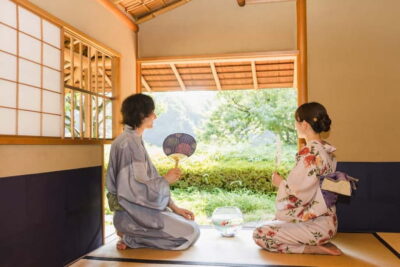
Kimono Rental inside Shinjuku Gyoen National Garden
Read our review →
Tokyo Japanese Garden Lover’s Private Tour with Government-Licensed Guide
Read our review →Browse the lists this tour appears in