
Review · JAPAN GARDEN TOURS
Walking Tour in Himeji Castle Garden and Aizome Indigo Dyeing
Himeji’s great surprise is that one of Japan’s finest castles comes with a full day of smaller cultural discoveries. You’ll tour Himeji Castle, stroll through nine Edo-period garden styles at Koko-en, visit Itatehyōzu Shrine, and finish by making something with traditional indigo dye.
I like the balance here: the castle gives you Japan’s grand military past, while the Aizome workshop brings you close to a living craft. I also like that transport, admissions, and the workshop fee are covered, so the $158.02 price is easier to judge as an all-day package rather than a castle ticket with extras.
The main drawback is the length. At about eight hours, this is a full day with no lunch included, and the four stops are given roughly two hours each. If you prefer a quick castle visit, this schedule may feel too packed.
Key points at a glance
- Himeji Castle takes center stage: Spend about two hours at Japan’s largest existing castle, a World Heritage Site and National Treasure.
- Koko-en adds nine garden styles: The adjacent garden gives you a calmer look at Edo-period design after the castle.
- Itatehyōzu Shrine brings local tradition into the day: Its Ilsan ritual occurs every 60 years, while the Samsan ritual occurs every 20 years.
- Aizome is the most unusual stop: At Wataya, you take part in traditional indigo dyeing rather than simply watching a demonstration.
- Two guides may lead the day: Justin is one named guide, and the guiding team has been praised for making the experience friendly and easy to follow.
- The package covers the practical basics: Entrance fees, required bus tickets, the dyeing activity, and English-language guiding are included.
Why Himeji makes a strong day of culture
Himeji is best known for its castle, but the city offers more than a single famous building. This tour uses the castle as an anchor, then adds gardens, shrine customs, and a hands-on craft so you can see several sides of Japanese culture in one day.
That variety matters. A castle visit can sometimes become a long sequence of walls, rooms, and defensive features. Here, the pace changes as the day goes on. You move from a major historic site to garden design, then to a shrine with unusual ritual traditions, and finally to a workshop where you use your hands.
You meet at 9:30 a.m. just after leaving the Central Gate of JR Himeji Station. The meeting point is practical, especially if you are arriving by train, and the tour ends back at the same meeting point. The transfer to Himeji Castle takes about 15 minutes.
The group can include up to 20 people. That is large enough for a social outing but small enough to keep an English-speaking guide within reach. Two guides have led the experience together, and Justin is one guide named in the feedback. His approach was described as keeping the day interesting and fun, which is useful during a long itinerary with several distinct stops.
More Palace and Castle Gardens in Japan:
- Cherry Blossom Highlights, Asakusa, Ueno, Imperial Palace Garden
★ 4.5 · 4 reviews - Paris: Versailles Palace and Gardens Full Access Ticket
★ 4.6 · 41,579 reviews - Versailles: Skip-the-Line Tour of Palace and Gardens Access
★ 4.7 · 10,429 reviews
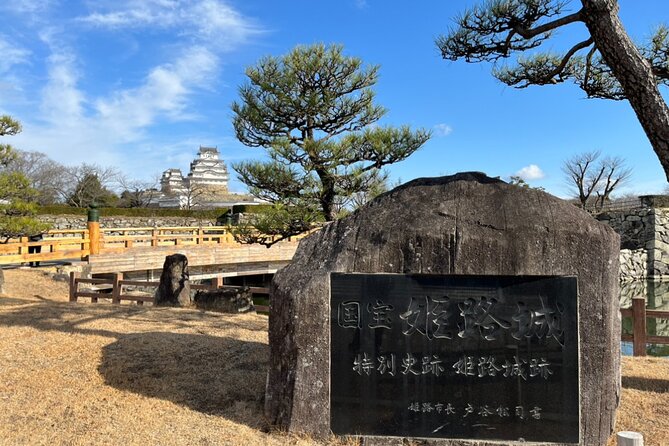
Entering Himeji Castle, Japan’s great white fortress
The first stop is Himeji Castle, and it gets about two hours. That is enough time to give the building proper attention instead of treating it as a quick photo stop.
Himeji Castle is the largest existing castle in Japan. It is also a World Heritage Site and a National Treasure, so this is not simply a famous-looking building. Its importance comes from its survival, scale, and place in Japanese history.
The castle has become one of the images most associated with Japan. Its pale exterior gives it the nickname White Egret Castle, although that nickname is not supplied as part of the tour details. What matters for your visit is that you are seeing a major national site with an English-speaking guide to explain what you are looking at.
A guide makes a difference here because the value of a castle is not limited to its appearance. Walls, gates, defensive arrangements, and architectural choices mean more when someone explains how the site functioned. The tour is designed to give you that context rather than leaving you to wander without a plan.
Two hours is also a useful middle ground. You get a serious introduction without giving the castle the entire day. Still, the castle is likely to be the most demanding part of the schedule for anyone who prefers a slower pace, since the tour continues afterward to three more stops.
I would begin the day ready to focus. Himeji Castle is the headline attraction, and you will want your attention fresh for it. The tour then becomes more varied as you move away from the main fortress.
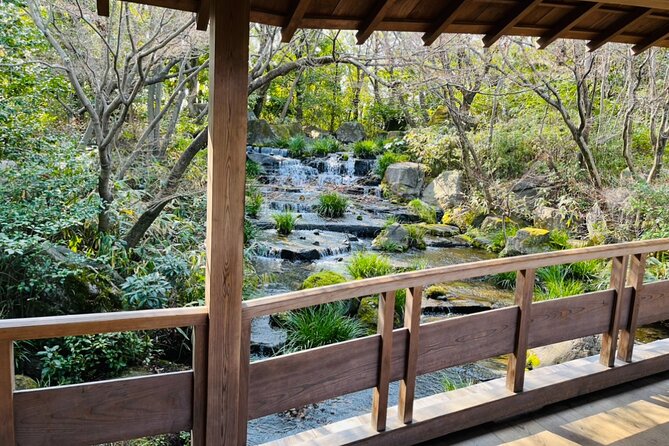
Koko-en’s nine Edo-period garden styles
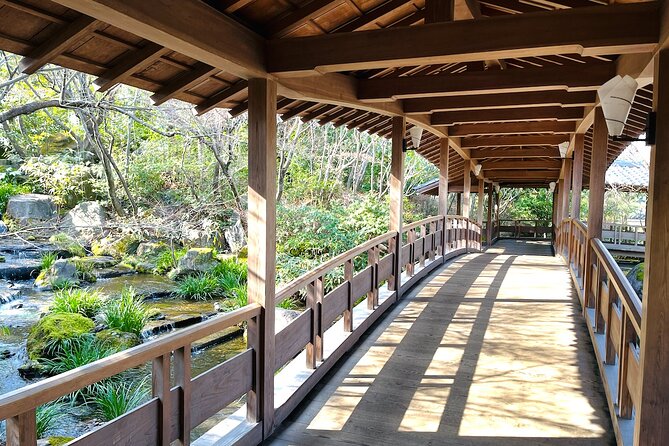
After the castle, you visit Koko-en, an authentic Japanese garden beside the castle. The garden contains nine strolling gardens, each shaped around a different Edo-period style and landscaping theme.
That number gives Koko-en a different character from a single formal garden. You can compare the way each section handles space, planting, paths, and atmosphere. The point is not just to take a pleasant walk. It is to see how garden design changed according to the theme and period being represented.
Koko-en also provides a welcome change after the castle. Himeji Castle is about scale, defense, and national importance. Koko-en is quieter and more controlled, asking you to notice details rather than imposing itself from a distance.
The garden visit is scheduled for about two hours. That is generous enough to avoid a rushed circuit, though the full day means you should keep an eye on the schedule. The garden’s admission is listed as free, while the tour package includes entrance fees for each applicable stop.
I like this pairing because the castle and garden sit next to each other but serve very different purposes. You can see the power of a major castle, then consider the careful design of a traditional Japanese garden without making a separate trip across the city.
Itatehyōzu Shrine and long-running rituals
The third stop is Itatehyōzu Shrine, visited on the way back toward the shopping district. The shrine is known for two major rituals: the Ilsan ritual, held every 60 years, and the Samsan ritual, held every 20 years.
Those intervals give you a sense of how long religious customs can continue across generations. You may not arrive during one of the ceremonies, but knowing about them changes the way you look at the shrine. It becomes more than a short stop for architecture or photographs.
The shrine receives about two hours in the schedule. That allows the guide to explain its place in local culture and gives you time to take in the setting without reducing the visit to a quick walk past the entrance.
This stop also helps the day move beyond the best-known sights. Himeji Castle is famous well beyond the city, while Itatehyōzu Shrine represents a more local layer of Himeji. If you want every minute devoted to headline attractions, you may find the shrine less essential. If you want a broader picture of the city, it earns its place.
The route back toward the shopping district makes the shrine a practical link between the morning’s major sights and the afternoon workshop. Bus tickets required during the tour are included, so you do not need to budget separately for those transfers.
More Garden Tours in Japan:
- Osaka: teamLab Botanical Garden Entry Ticket
★ 4.5 · 1,710 reviews - Imperial Palace East Garden and Edo Castle Walking Tour in Tokyo
★ 5.0 · 510 reviews - Kyoto Zen Meditation & Garden Tour at a Zen Temple with Lunch
★ 5.0 · 441 reviews - Kyoto Arashiyama Bamboo forest & Garden Half-Day Walking Tour
★ 5.0 · 413 reviews
Wataya and the hands-on Aizome workshop
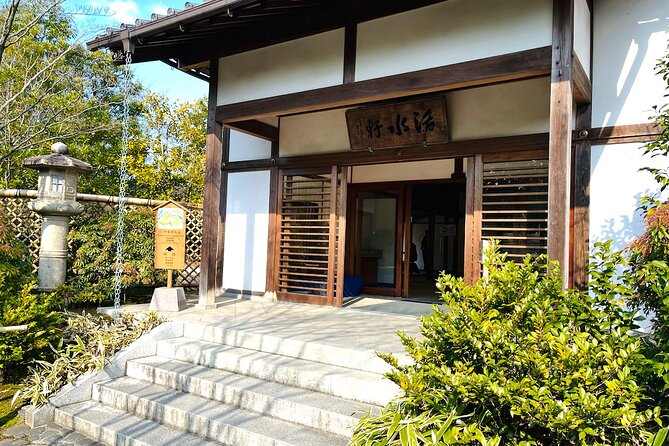
The afternoon ends at Wataya with Aizome, the traditional Japanese art of indigo dyeing. This is the part of the tour that gives the day its most personal touch.
Indigo is one of the oldest vegetable dyes in existence, with origins reaching back to the ancient kingdoms of the Middle East. It later became an important part of Japanese craft culture. At Wataya, you do not simply hear about the dye. The Aizome experience fee is included, allowing you to take part in the process.
A workshop changes your role. At the castle, you listen and observe. In the garden, you walk and compare design. At the shrine, you learn about ritual tradition. With Aizome, you work with the craft yourself, which makes the final stop feel less like another sightseeing appointment.
The dyeing master is described as extremely interesting, charming, and funny, with a strong interest in connecting with participants throughout the workshop. That personality matters because craft demonstrations can become formal or passive. A lively teacher can make the process easier to understand and more memorable.
The workshop receives about two hours, the same broad amount of time as the other stops. That gives Aizome enough weight in the itinerary. It is not a token activity added at the end of a castle tour.
If you are looking for a keepsake, this is the experience to pay close attention to, though the supplied details do not specify exactly what item you make or take home. You can ask the provider for that information before booking if the finished piece is important to you.
What the $158.02 price includes
At $158.02 per person, this is not a budget sightseeing walk. The price makes more sense if you plan to use the tour as a full day in Himeji rather than buying a single attraction visit.
The package includes:
- Entrance fees for each applicable stop
- Bus tickets needed during the tour
- The Aizome experience fee
- An English-speaking guided tour
Those inclusions remove several small decisions during the day. You do not need to work out transport between the stops or pay separately for the workshop. The guide also gives the itinerary a clear structure, which is useful when you are visiting Himeji for the first time.
Lunch is not included. You should plan for that before the morning begins, since the tour runs from 9:30 a.m. for roughly eight hours. The supplied information does not state where the lunch break takes place or how much time is allowed, so ask the operator if meal planning is a concern.
For me, the strongest value comes from the combination of guided interpretation and the craft workshop. A castle entrance alone would not justify the price, but a full day with four distinct stops, transport, admissions, and an included hands-on activity is easier to defend.
The group limit is 20 people. That is not an intimate private tour, but it is also not an enormous bus group. Your experience will depend partly on the guide and group size on your chosen date.
Who will enjoy this full Himeji day

I would recommend this tour to you if you want more than a castle photograph. It suits first-time visitors who want a clear route through Himeji and would rather have transport and admissions handled together.
It is also a good fit if you enjoy practical cultural activities. The castle and shrine offer context, while Aizome lets you participate. That combination works well for couples, families, and solo visitors who want a structured day with a social element.
The tour may also suit you if you are staying in another part of Japan and have only one day for Himeji. Meeting at JR Himeji Station and returning there keeps the start and finish simple. The 15-minute trip to the castle means the day gets moving quickly.
I would hesitate if you want a slow, unplanned day. Four stops at roughly two hours each creates a clear schedule, and the total duration is about eight hours. The absence of included lunch also means you need to think ahead rather than assuming every need is covered.
The activity is described as suitable for most people, and it is near public transportation. No specific accessibility details are provided, so you should contact the provider if you need information about mobility, surfaces, or the workshop setup.
Booking details worth knowing

Your meeting point is JR Himeji Station, Japan, 670-0927, immediately after the Central Gate. The start time is 9:30 a.m., and the tour returns to the same meeting point at the end.
A mobile ticket is available, and confirmation is received at the time of booking. The provider is Snow Monkey Resorts Tours, operated by Machinovate Japan Ltd.
Free cancellation is available if you cancel at least 24 hours before the local start time. Cancellations made less than 24 hours before the start, along with changes inside that window, are not accepted for a refund.
The experience has a small set of published ratings, all at the top score, but I would still judge it by the itinerary and your own travel style. The most consistent praise is directed at the friendly guiding, the clear explanation of Himeji Castle, and the unusual Aizome workshop. Justin is specifically named as a guide who kept the day engaging, while the dyeing master is praised for his humor and personal connection with the group.
Should you book the Himeji Castle and Aizome tour?
Book it if you want Himeji Castle paired with local culture rather than treated as a single stop. The strongest reason to choose it is the route: a major castle, nine garden styles, a shrine with rare long-cycle rituals, and a hands-on indigo workshop.
The $158.02 cost is fair for an eight-hour guided day with transport, admissions, and Aizome included, though lunch remains your responsibility. I would choose this over a castle-only visit if you value explanation and variety.
Skip it if you prefer independent sightseeing, need a short itinerary, or want to spend an entire day at the castle. For everyone else, this is a well-shaped introduction to Himeji, with the indigo workshop giving the day a memorable finish.
FAQ
Where does the tour start?
The tour starts at JR Himeji Station, immediately after exiting the Central Gate.
What time does the tour begin?
The start time is 9:30 a.m.
Where does the tour end?
The activity ends back at the meeting point at JR Himeji Station.
How long does the tour last?
The tour lasts approximately eight hours.
Is Himeji Castle admission included?
Yes. Entrance fees for each applicable spot during the tour are included.
Is lunch included?
No. Lunch is not included in the tour price.
Is the Aizome indigo dyeing fee included?
Yes. The Aizome experience fee is included.
How far in advance can I cancel for a full refund?
You can cancel for a full refund up to 24 hours before the experience start time. Cancellations or changes made less than 24 hours before the start are not accepted.
Just added around Japan
- Tokyo: Serene Sakura & Sake: An Exclusive Brewery Pairing Lunch★ 5.0 · 2 reviews
- TOKYO: Tailored Gardens tour with Pro Gardener by E-bike -BASIC★ 5.0 · 2 reviews
- Tsukiji Food Strolling and Hama Rikyu Garden Walking Tour★ 5.0 · 7 reviews
- Tokyo: Kimono Experience inside Shinjuku Gyoen National Garden★ 5.0 · 3 reviews
- Tokyo Cherry Blossom Half Day Walking Tour with a Local Guide★ 3.5 · 4 reviews
- Cherry Blossom Highlights, Asakusa, Ueno, Imperial Palace Garden★ 4.5 · 4 reviews
- Sumida Riverside Walk: Garden &Temple Ritual (4 Meeting Points)★ 5.0 · 5 reviews
- Full Guided Mt. Fuji & Shiba-Sakura Festival One Day Pvt.Tour★ 5.0 · 6 reviews
Japan Garden Tours, compared.


Kyoto Zen Meditation & Garden Tour at a Zen Temple with Lunch
Read our review →

Edo Castle & East Garden of the Imperial Palace Tour
Read our review →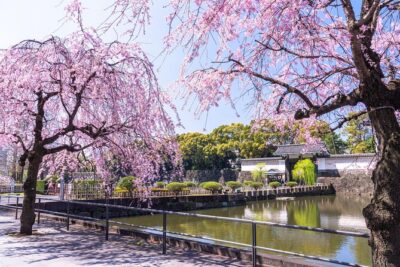
Tokyo Private Tour! Edo Castle & Imperial Palace East Gardens
Read our review →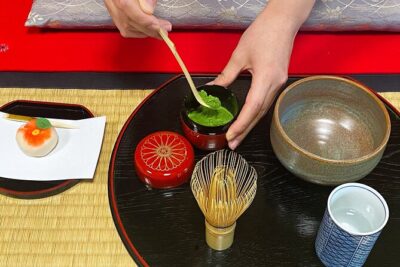
Kyoto Kiyomizu Tea Ceremony with Scenic Garden Views
Read our review →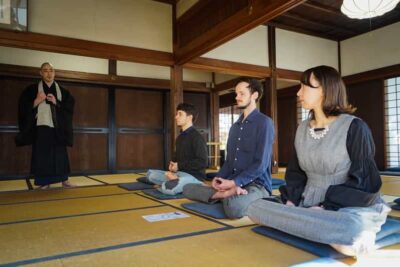
Zen Meditation and Garden Tour at a Temple with Lunch
Read our review →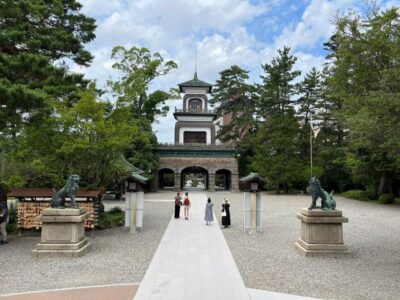
Kanazawa: Samurai, Matcha, Gardens and Geisha Full-Day Tour
Read our review →Browse the lists this tour appears in