
Review · OSAKA GARDEN TOURS
Cherry Blossom Buddha and Mt.Yoshino with Strawberry Picking Tour
Mount Yoshino is the star here, with cherry trees spread across the mountain in the famous Senbonzakura, or Thousand Cherry Blossoms, display. The route adds two fine extras: strawberry picking in Asuka Village and Tsubosaka-dera Temple, where a giant Buddha sits among the blossoms and stone figures from India.
I like the easy round-trip bus ride from Osaka and the variety packed into one spring day. I also like the local touch of Kakinohazushi, sushi wrapped in persimmon leaves, when the lunch plan is selected. The main caution is timing: blossoms can be late, weather can shorten stops, and the guide’s English may be limited.
Key points
- Thirty minutes of all-you-can-eat strawberry picking in Asuka Village
- Tsubosaka-dera’s Great Cherry Blossom Buddha, plus large stone Buddhas from India
- Two hours at Mount Yoshino, one of Japan’s best-known cherry blossom sites
- Round-trip air-conditioned bus transport from Osaka’s Umeda district
- Local bento option with Kakinohazushi, fried food, omelet, a seasonal side dish, and green tea
- Spring-only timing, with no guarantee that blossoms will be open on your date
Why this spring day trip works
This is a good choice if you want to see Mount Yoshino without piecing together trains, buses, temple tickets, and food on your own. The day combines three very different parts of southern Nara: a farm, a Buddhist temple, and a mountain famous for its cherry trees.
That variety matters. A cherry blossom day can feel short if the flowers are late or rain settles in. Here, the strawberry farm gives you something enjoyable to do even if the trees are not at their best, while Tsubosaka-dera offers a striking cultural stop that is not just another viewing platform.
The pace is full, but not built around long stretches of walking. The bus handles the main transfers, with about nine and a half hours from departure to return. You should still expect a long day, especially if traffic slows the route.
The tour price is $114.02 per person. That is fair value if you want the convenience of transport, an English-speaking guide, strawberry picking, the Tsubosaka-dera admission fee, and a planned Yoshino visit. It is less attractive if you prefer to set your own pace, spend a full day on the mountain, or avoid group schedules.
More Cherry Blossom Tours in Japan
- Mt. Fuji, Cherry Blossom & Shiba Sakura Pvt. Day Tour
★ 5.0 · 326 reviews - Nagano: 1-Day Snow Monkey & Cherry Blossom Tour in Spring
★ 4.8 · 51 reviews - Mt. Fuji & Hakone Cherry Blossom private One Day Tour
★ 4.5 · 35 reviews
Starting from Umeda at 8:30 in the morning
The meeting point is outside the Mainichi Newspaper building at 3-chōme-4-5 Umeda, Kita Ward, Osaka. Plan to arrive at least 15 minutes early. The bus leaves on schedule and will not wait for late arrivals, and a missed departure does not qualify for a refund.
You travel in an air-conditioned bus with a maximum group size of 40. This is a shared tour, not a private outing, so the day follows a fixed timetable and you will be moving with other people. The advantage is simple: you can relax between stops instead of navigating rural transport during one of Japan’s busiest sightseeing seasons.
The group can include many Japanese participants, and the guide may use only limited English at times. That does not make the trip impossible, but you should be comfortable with clear meeting instructions and a more practical style of guiding rather than a long English lecture at every stop.
One guide described in the feedback used quiz questions on the bus and pointed out places to visit after the tour. That gives you an idea of the tone to expect: friendly and social, with useful commentary, but not necessarily a detailed English-language tour at every moment.
Strawberry picking in Asuka Village
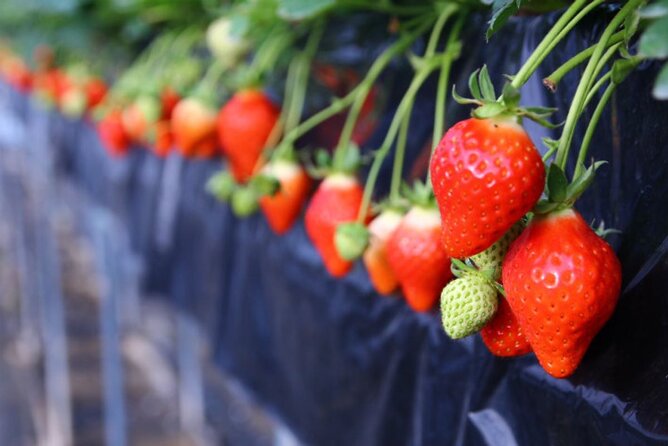
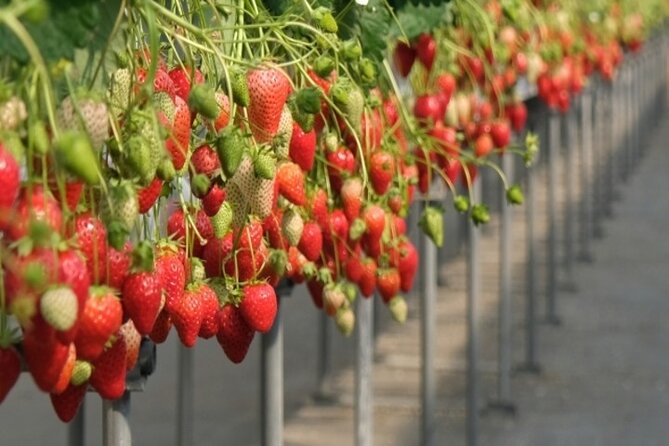
The first stop is Asuka-mura, or Asuka Village, for a 30-minute strawberry-picking session. You can eat as many local strawberries as you like during the allotted time.
This is more than a quick photo stop. You get to pick the fruit yourself and eat it on site, which gives the morning a relaxed start before the temple and mountain viewing. The strawberries were one of the strongest parts of the day for several people, especially because the all-you-can-eat format lets you take your time and try plenty without ordering or waiting.
Thirty minutes is enough for a satisfying taste, but it is not a farm tour. The focus is picking and eating, not a long explanation of cultivation. If you love strawberries, this may feel too brief. If you see it as a pleasant seasonal extra, the timing works well.
Wear shoes that are easy to walk in and avoid bringing large luggage. Large bags are not allowed on the tour, so pack only what you need for the day. The farm stop also gives you a useful chance to buy or eat something before the later sightseeing, though the official lunch arrangement is separate.
Tsubosaka-dera and the Great Cherry Blossom Buddha
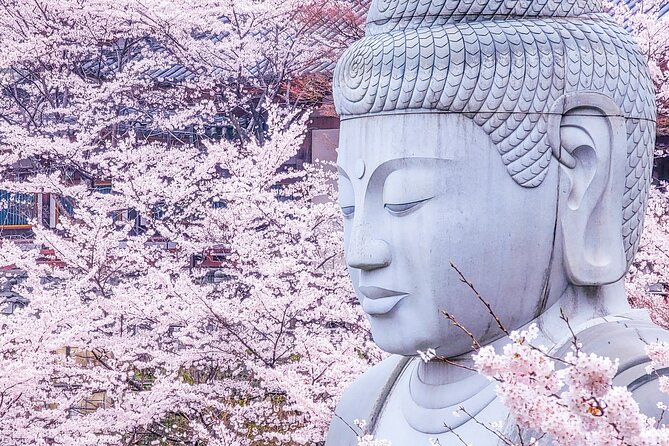
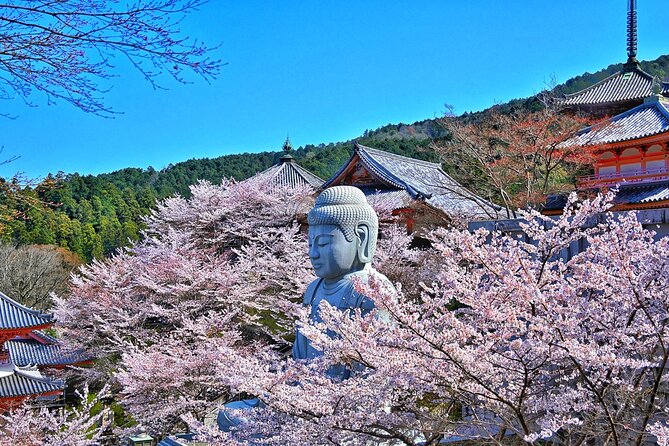
Next comes Tsubosaka-dera Temple, with about 45 minutes to explore. The temple is known for its Great Cherry Blossom Buddha, an impressive figure set among spring blossoms.
The setting is unusual because the Buddha is joined by several giant stone Buddhas brought from India. That combination gives the stop a distinct character. You are not simply walking through a temple gate and looking at a single statue. The large figures create a memorable scene, especially when mist or drizzle softens the background.
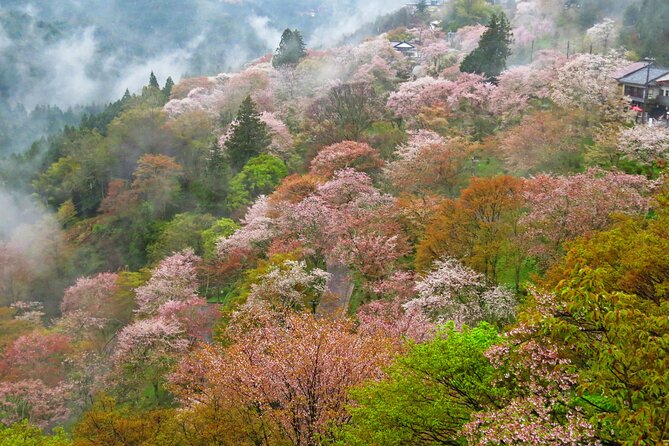
One account of the day described rain and mist adding a mysterious quality to the Buddha and cherry trees. That is a useful point to keep in mind. Gray weather is not ideal for distant mountain views, but it can make this temple feel atmospheric. Bring rain protection rather than assuming a wet forecast will ruin the whole day.
The 45-minute visit is enough for the main sights, but you will not have unlimited time for quiet temple wandering. Stay aware of the meeting time. The admission fee is included, so you do not need to arrange a separate temple ticket.
Same corner of the map, a different planting:
- Osaka: teamLab Botanical Garden Entry Ticket
★ 4.5 · 1,710 reviews - Imperial Palace East Garden and Edo Castle Walking Tour in Tokyo
★ 5.0 · 510 reviews - Kyoto Zen Meditation & Garden Tour at a Zen Temple with Lunch
★ 5.0 · 441 reviews - Kyoto Arashiyama Bamboo forest & Garden Half-Day Walking Tour
★ 5.0 · 413 reviews
Two hours among Mount Yoshino’s cherry trees
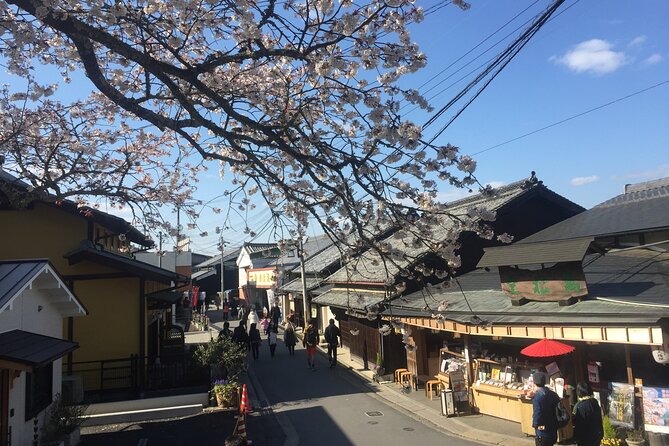
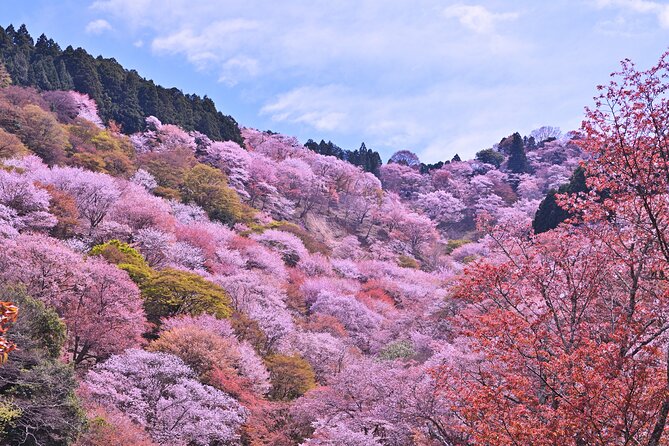
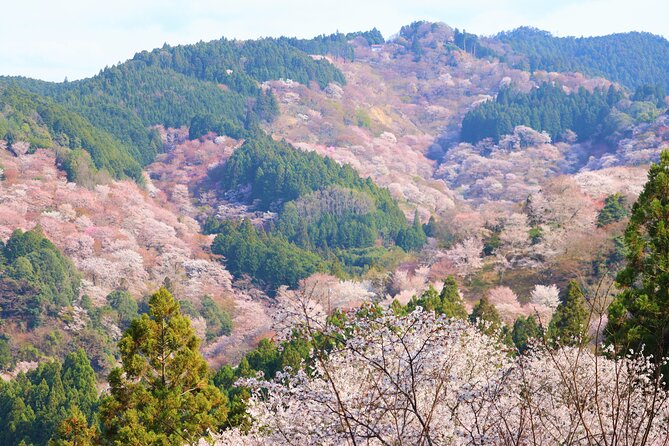
Mount Yoshino is the reason most people book this tour. The mountain is famous for Senbonzakura, the Thousand Cherry Blossoms, with trees spread across different elevations and viewpoints rather than gathered in one flat park.
That arrangement creates the classic Yoshino view: layers of flowering trees running over the slopes. In a strong bloom year, the scale is impressive, and two hours gives you a chance to see several viewpoints instead of stopping for one quick photograph.
The schedule allows enough time to enjoy the main area, but you should not expect a full independent hike across Mount Yoshino. The tour has to return to Osaka, and traffic can affect the time available. If Yoshino is your main reason for coming to Japan, an overnight stay or a self-guided full day would give you more freedom. If you want a well-organized first look, this bus visit is much easier.
The biggest risk is the bloom calendar. Cherry blossoms do not follow the tour date perfectly. A late season can leave the mountain below its full display, and wind or rain can remove flowers quickly. One person still found the visit worthwhile in a late blossom year because the mountain’s bare branches suggested what the full show would look like, but you should book with realistic expectations.
The tour operator does not promise blossoms, and the schedule may change without notice. Traffic or other conditions can shorten the time at a stop and delay the return. Those are normal concerns during spring weekends around a famous viewing site, but they matter more here because the day includes several stops.
The bento lunch and the Kakinohazushi question
The lunch information needs careful attention. The tour details describe an included picnic bento with four pieces of Kakinohazushi, fried food, Japanese-style rolled omelet, a seasonal Japanese side dish, and one pack of green tea. Kakinohazushi is a local Nara specialty: sushi wrapped in persimmon leaves.
At the same time, the booking choices include a no-lunch plan, and the general inclusions also say lunch is not included. In practical terms, check the exact plan you select before paying. If you choose the lunch option, the bento contents cannot be changed.
This is important for anyone with allergies, dietary restrictions, or strong food preferences. The ingredients are fixed, so the safer choice is the no-lunch plan and your own meal. The boxed meal is a handy way to try a regional food, but it is not a custom order.
Eating amid the cherry blossoms is part of the appeal. It turns lunch into part of the seasonal outing rather than a rushed stop at a restaurant. Still, because the food plan can vary by booking option and seasonal availability, confirm the details on your reservation.
Roadside Station Katsuragi for a final local stop
Before returning to Osaka, the bus stops for about 20 minutes at Roadside Station Katsuragi. This is a short break for local products, souvenirs, and Japanese sweets.
Do not expect a long shopping session. Twenty minutes gives you time to look around and pick up a small edible souvenir, but you will need to keep an eye on the bus departure. The stop adds a useful local-food element to the day and can be a welcome pause after Yoshino.
This is also the kind of stop that makes a group tour practical. You get a defined break before the final ride, rather than staying on the bus continuously. If shopping is your main interest, the time will feel limited. If you simply want a chance to browse regional goods, it fits the schedule.
Language, group size, and comfort
The tour includes an English-speaking guide, but the level of spoken English may vary. One account specifically found that the guide spoke limited English and still tried to help by pointing out places to visit. Another described a friendly male guide who shared information and used quiz questions on the bus.
I would book this expecting useful assistance with timing, locations, and basic explanations, not a fully detailed English commentary from start to finish. The tour can still work well for you if you enjoy independent looking around once the guide has explained where to go.
The bus is air-conditioned, and most people can participate. Public transportation is near the meeting point, which makes the early start easier to reach from other parts of Osaka. Large luggage is not allowed, so leave suitcases at your hotel.
The group may reach 40 people. That is a reasonable size for a coach excursion, but it means you need to keep track of the meeting times and stay alert when the guide gives instructions. This is not the format for stopping whenever you see an interesting side street.
Is $114.02 a fair price?
At $114.02, the tour earns its value through convenience and variety. You are paying for the bus from Osaka and back, a guide, the strawberry session, admission to Tsubosaka-dera, and access to a carefully timed Yoshino visit. Add the optional bento and the price becomes easier to justify if you want a full day without planning each connection.
The value is strongest during peak cherry blossom season, when transport and popular viewing areas can be tiring to arrange independently. You trade flexibility for a simpler day.
The value is weaker if the blossoms are your only goal. A two-hour Yoshino visit may not satisfy someone who wants to hike, photograph every viewpoint, or wait for the best light. You also need to accept the chance of a late bloom, shortened stops, or a delayed return.
Free cancellation is available up to 24 hours before the start time. Changes or cancellations inside that window are not refunded. The tour also requires a minimum of 10 participants, and the date can be canceled if that number is not reached by 14 days before departure. Bad weather or a natural disaster can also lead to cancellation, with a full refund or another date offered.
Who should book this tour?
I would recommend it to you if you are staying in Osaka, want to see Mount Yoshino in spring, and prefer a single organized day over a complicated rural journey. It suits first-time visitors who want cherry blossoms plus a few local experiences, rather than a day devoted to one mountain.
It also works well for people who like a mixed itinerary. The strawberries, Indian stone Buddhas, local bento, mountain views, and roadside sweets keep the day from depending entirely on one flower forecast.
I would hesitate if you have strict dietary needs and do not want to bring your own food, need extensive English guiding, dislike fixed departure times, or want a quiet, private day. I would also avoid booking it solely for peak blossoms unless your plans can handle the possibility of early or late flowering.
FAQ
Where does the tour begin?
It begins at the Mainichi Newspaper building, 3-chōme-4-5 Umeda, Kita Ward, Osaka, 530-0001, Japan.
What time does the tour leave Osaka?
The scheduled start time is 8:30 am. You should arrive at least 15 minutes early because the bus will not wait for late arrivals.
How long does the tour last?
The experience lasts approximately 9 hours and 30 minutes, including the return to the original meeting point.
Is strawberry picking included?
Yes. Strawberry picking in Asuka Village is included, with an all-you-can-eat session lasting 30 minutes.
Is lunch included?
The lunch arrangement depends on the plan selected. The lunch option includes a bento with Kakinohazushi, fried food, Japanese-style rolled omelet, a seasonal side dish, and green tea. A no-lunch plan is also available, so check your chosen option carefully.
Can the lunch ingredients be changed?
No. The bento ingredients cannot be changed. If you have allergies or dietary restrictions, choose the no-lunch plan and prepare your own meal.
Is the Tsubosaka-dera Temple admission fee included?
Yes. Admission to Tsubosaka-dera Temple, including the Great Cherry Blossom Buddha visit, is included.
What happens if the cherry blossoms are not in bloom?
The tour can operate even if the blossoms are late or have already fallen. Blossom viewing depends on weather and seasonal timing, so flowers are not guaranteed. If poor weather causes the tour to be canceled, you can be offered another date or a full refund.
Should you book it?
Book this tour if you want a practical spring day from Osaka that combines Mount Yoshino with strawberry picking and an unusual temple stop. The bus, admission, guide, and varied schedule make the $114.02 price reasonable for a first visit.
Go in with two clear expectations: the blossoms may not be perfect, and the English guiding may be limited. If you can accept those conditions, this is a pleasant and efficient way to reach Yoshino without handling the transport yourself.
Just added around Japan
- TOKYO: Tailored Gardens tour with Pro Gardener by E-bike -BASIC★ 5.0 · 2 reviews
- Tsukiji Food Strolling and Hama Rikyu Garden Walking Tour★ 5.0 · 7 reviews
- Tokyo: Serene Sakura & Sake: An Exclusive Brewery Pairing Lunch★ 5.0 · 2 reviews
- Tokyo: Kimono Experience inside Shinjuku Gyoen National Garden★ 5.0 · 3 reviews
- Tokyo Cherry Blossom Half Day Walking Tour with a Local Guide★ 3.5 · 4 reviews
- Cherry Blossom Highlights, Asakusa, Ueno, Imperial Palace Garden★ 4.5 · 4 reviews
- Sumida Riverside Walk: Garden &Temple Ritual (4 Meeting Points)★ 5.0 · 5 reviews
- Full Guided Mt. Fuji & Shiba-Sakura Festival One Day Pvt.Tour★ 5.0 · 6 reviews
Osaka Garden Tours, compared.
Private Car Full Day Tour of Osaka Temples, Gardens and Kofun Tombs
Read our review →
Private Car Day Trip to the Kobe Mountains, Gardens and Hot Springs from Osaka
Read our review →
Osaka Private Cherry Blossom Tour with a Local – Picnic Included
Read our review →
Browse the lists this tour appears in