
Review · JAPAN GARDEN TOURS
Kagoshima Gardens & Shrines — Local Bus Guided Tour (Small-Group)
Kagoshima’s best moments are not always found at its headline sights. This small-group outing takes you by city bus and tram to a quiet daimyo garden and two historic shrines, with local guide Hitomi explaining the customs that can be easy to miss when you visit alone.
I like the calm pace and the useful cultural guidance, especially learning how to pass through a torii, use the water basin, and pray at a shrine. I also like that the group is capped at five people, while public transport fares are already covered. The main consideration is time: each shrine visit is brief, and the tour depends on good weather and public transport.
Key points
- A peaceful start at Tamazato House Gardens: Walk beside ponds, bamboo, and old garden features connected with the Shimazu family.
- Practical shrine etiquette: Learn the steps for entering a shrine, washing your hands, and offering a respectful prayer.
- A very small group: The maximum is five people, making it easier to ask questions and hear the guide.
- A personal touch from Hitomi: Her English explanations cover both history and everyday Japanese customs, with a short crystal singing bowl meditation sometimes included in the garden.
- Transport made simple: Bus and tram fares used during the tour are included in the price.
- A holiday backup plan: If Tamazato House Gardens is closed around New Year, the tour changes to a three-shrine visit by tram and runs about 30 minutes shorter.
Why this Kagoshima tour feels different
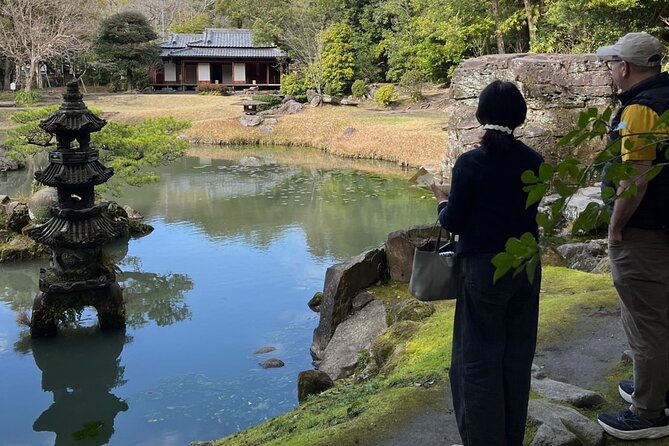
This is not a rapid checklist of famous sights. It is a quiet morning or afternoon built around gardens, shrines, and small cultural details. You spend about 40 minutes at Tamazato House Gardens, 20 minutes at Kagoshima Shrine, and 30 minutes at Kagoshima Gokoku Shrine, with local transport connecting the stops.
That structure works well if you want to understand what you are looking at. A Japanese garden can appear simple at first glance: pond, trees, stones, bamboo, and perhaps a former tea-house site. A shrine can also seem mysterious if you do not know the purpose of the gate, basin, or offering area. Hitomi gives those details a place in the larger story.
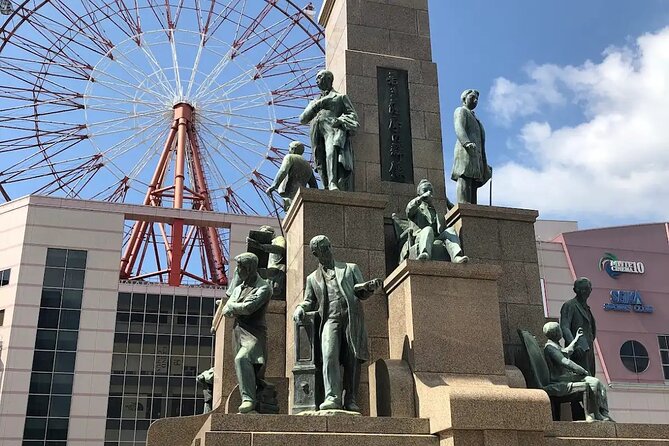
The tour begins at the statues of Satsuma Domain samurais in the east plaza outside JR Kagoshima-Chuo Station. This is a practical meeting point, especially if you are arriving by train or using the station as your base. The tour ends back at the same place, so you do not need to work out a new route at the end.
The published price is $71.67 per person. That is not the cheapest way to see a garden and two shrines, but the comparison is not quite fair if you count only admission. You are paying for a private-style small group, an English-speaking local guide, and the bus and tram fares used during the outing. Admission to the three listed sites is free, so the value rests mainly on the guidance and the ease of getting around.
More Garden Tours in Japan:
- Osaka: teamLab Botanical Garden Entry Ticket
★ 4.5 · 1,710 reviews - Imperial Palace East Garden and Edo Castle Walking Tour in Tokyo
★ 5.0 · 510 reviews - Kyoto Zen Meditation & Garden Tour at a Zen Temple with Lunch
★ 5.0 · 441 reviews
Tamazato House Gardens and the Shimazu connection
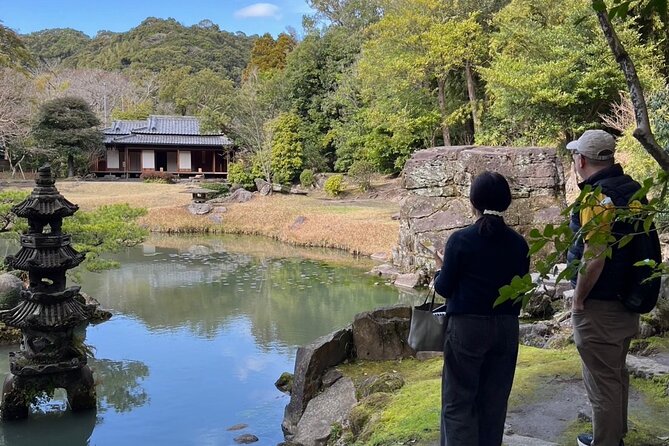
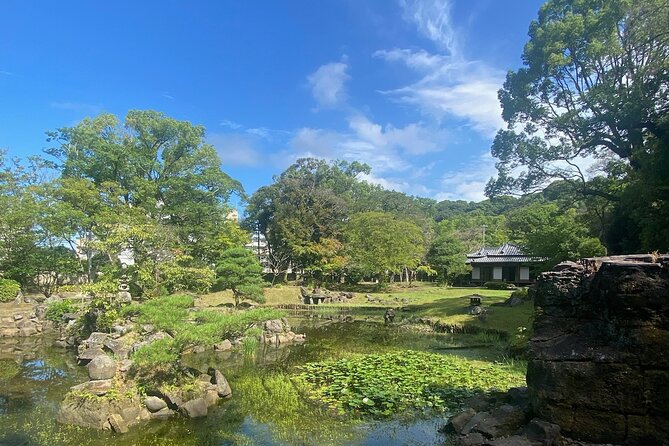
The first stop is the former Tamazato House Gardens, a quiet garden once arranged by the Shimazu family during the Edo period. The Shimazu clan played a major role in the history of southern Kyushu, and the garden gives you a more domestic, reflective setting than a grand castle compound.
You have about 40 minutes here. Expect a gentle look at ponds, bamboo, and remnants connected with tea culture. The appeal is not a long list of monuments. It is the way the garden gives you time to notice water, planting, and the controlled movement from one view to another.
This is also the place where the tour’s slower style makes the most sense. A guide can point out why a garden was arranged in a certain way and explain how it served the household that created it. Without that context, you might walk through in ten minutes, take a few photographs, and miss the point.
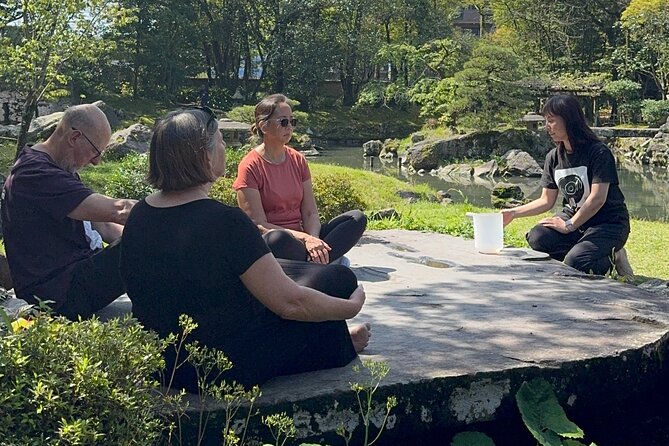
A short crystal singing bowl meditation has been part of the experience described by the provider. It takes place in the garden and may be one of the tour’s most unusual touches. If you enjoy a quiet pause rather than constant commentary, this should appeal to you. If you prefer a strictly historical tour, you may find the meditation less essential, though it does fit the peaceful setting.
Admission is free, but the garden has an important seasonal limitation. It closes around the New Year period. When that happens, the first stop changes, rather than simply disappearing from the program. The replacement is a three-shrine tour in the southern part of the city, using the tram, and the total experience is expected to be about 30 minutes shorter.
Check the date carefully if Tamazato House Gardens is the main reason you want to book. The alternative still focuses on shrine culture, but it is not the same garden experience.
Kagoshima Shrine and the basics of respectful worship
The next visit is Kagoshima Shrine, also known as Ujise Daimeijin. It is described as one of the city’s oldest shrines and is dedicated to Emperor Ojin. For you, the most useful part may be the chance to learn shrine manners in the actual setting rather than from a guidebook paragraph.
Your time here is about 20 minutes. That is enough for an introduction to the grounds, the large camphor tree, and the main steps of a visit. Hitomi explains how to approach the torii, how to use the hand-washing basin, and how to carry out the customary prayer.
These actions are simple once you know them, but the first shrine visit in Japan can feel uncertain. Should you bow at the gate? What do you do at the basin? How do you offer a prayer without copying the person in front of you a little too obviously? The tour gives you a clear answer without making the ceremony feel like a performance.
The short stop also keeps the day moving. You will not have a long free period to explore every corner of the grounds, so people who want extended photography time should plan another visit. The benefit is that the guide keeps the focus on the cultural details most visitors need.
Look for the large camphor tree as a natural focal point. The tree, the shrine setting, and the explanation of local worship help connect the place to daily religious practice rather than presenting it as an old building to photograph.
Kagoshima Gokoku Shrine and a quieter historical mood
The final listed stop is Kagoshima Gokoku Shrine, with about 30 minutes on site. This shrine honors people connected with Kagoshima who died in conflicts from the end of the shogunate period through the modern era.
That gives this visit a different tone from Kagoshima Shrine. Here, the focus includes the city’s passage from the late samurai age into modern Japan. The setting is described as quiet and restrained, which suits a place of remembrance.
You will again receive help with shrine etiquette and an explanation of notable features within the grounds. The repetition is useful. By the second shrine, the actions should feel more natural, and you can pay closer attention to the setting and the history.
Some people will find the war memorial aspect more emotionally serious than the garden. That is not a flaw, but it is worth knowing before you book. This is a cultural tour with a wide lens. It includes beauty, ritual, family history, and remembrance, not just pleasant scenery.
The 30-minute visit gives you more breathing room than the stop at Kagoshima Shrine. Still, this is an introduction rather than a full historical study. If you have a particular interest in the Satsuma domain, the Meiji Restoration, or Japanese memorial shrines, you will likely want to continue learning on your own afterward.
Same corner of the map, a different planting:
- Kyoto Arashiyama Bamboo forest & Garden Half-Day Walking Tour
★ 5.0 · 413 reviews - Tokyo: Imperial Palace East Gardens Walking Tour
★ 4.8 · 353 reviews - Mt. Fuji, Cherry Blossom & Shiba Sakura Pvt. Day Tour
★ 5.0 · 326 reviews - Tokyo: Edo Castle & East Garden of the Imperial Palace Tour
★ 4.7 · 112 reviews
Getting around by local bus and tram
The use of public transport is one of the tour’s strongest practical features. You do not need to work out which bus or tram to take between unfamiliar parts of Kagoshima. The guide handles the route, and all bus and tram fares used during the tour are included.
That matters because the experience is designed around less obvious places, not just the station area. A taxi could make the route easier, but it would also cost more and remove part of the local feel. Using the city system lets you see how Kagoshima connects its neighborhoods.
This is not a sightseeing bus with a reserved seat and a window view all day. You are using regular city transport, so the experience may feel more active and less controlled. That is a plus if you want a taste of ordinary city movement. It may be less appealing if you need a highly structured tour with no changes in pace.
The tour lasts roughly two and a half to three hours. The stated schedule includes visits of 40, 20, and 30 minutes, plus the transport between them. Allow yourself enough time at the start to find the samurai statues in the east plaza outside JR Kagoshima-Chuo Station.
If you plan to keep using public transport after the tour, you can ask in advance about a one-day pass for Kagoshima city buses and trams. The pass is not part of the tour price, but the guide can prepare one if requested beforehand.
The value of a group capped at five
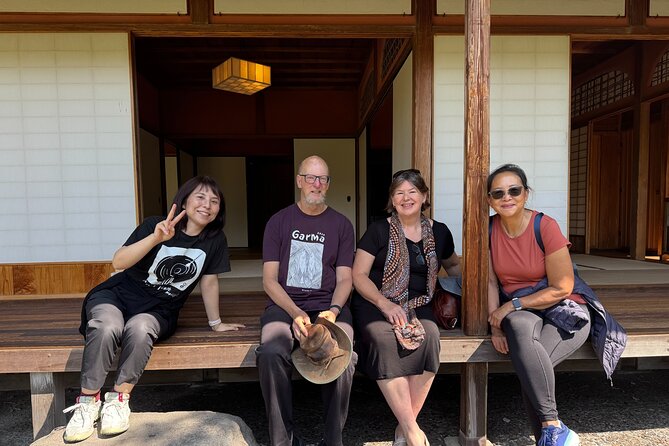
A maximum of five people changes the feel of a guided outing. You can usually hear the explanation without standing at the back, and you have a better chance to ask about customs that interest you personally.
Small groups also help at shrines. The guide can show you the correct order of actions without turning the lesson into a formal class. If you have questions about the meaning of a ritual or the history of a site, you are not competing with a large crowd for attention.
The tradeoff is that the tour may require a minimum number of participants to operate. If that minimum is not reached, the provider may offer another date or experience, or a full refund. Confirmation is sent within 48 hours of booking, subject to availability.
Hitomi is the named guide associated with this experience. Her English explanations cover Japanese culture, history, and shrine customs. A short crystal singing bowl meditation in the garden is another personal element connected with her approach.
You should not book this expecting a lecture packed with dates and academic detail. The emphasis is on clear explanations and a calm cultural encounter. That makes it a good fit for a first visit to Japan, or for someone who wants to understand etiquette without feeling tested.
Who should book this experience
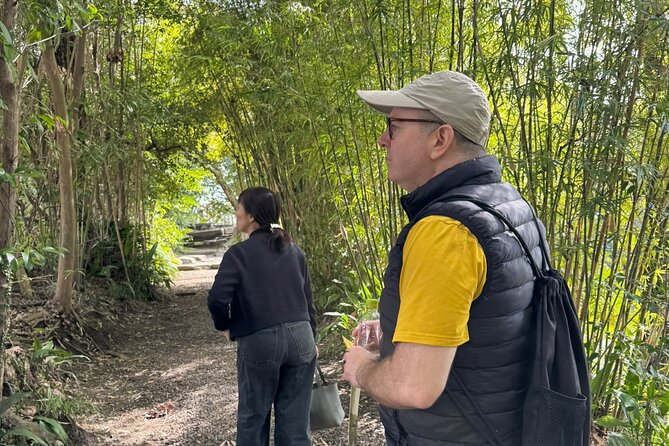
I would choose this tour if you enjoy quiet places, local transport, and cultural explanation more than major attractions. It suits solo visitors and couples who want a personal guide without paying for a fully private tour.
It is also useful for anyone who feels unsure about shrine etiquette. You will learn the basic customs in a real setting, then have several chances to practice them. That can make later independent visits easier.
The tour may appeal to repeat visitors to Japan, too. If you have already seen the best-known sights in Kagoshima, these garden and shrine visits offer a different angle on the city. The places are not presented as grand spectacles. Their value comes from their setting, history, and quiet mood.
You should think twice if your priority is food, shopping, Sakurajima views, or a long visit at one major attraction. There is no meal break, and lunch afterward is not included. You also need to be comfortable with city buses and trams, as well as a schedule that can change for weather or seasonal closures.
The experience requires good weather. If poor weather causes cancellation, you can receive a different date or a full refund. Travel insurance is not arranged by the provider, so you must decide for yourself if you need coverage.
Booking advice and final verdict
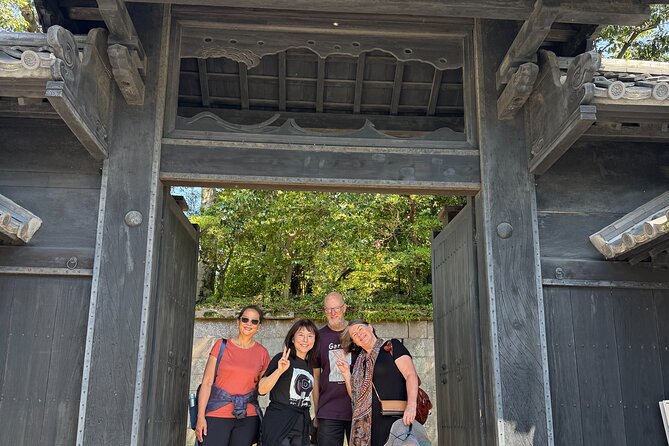
The best reason to book is the combination of small-group guidance and places that reward attention. Tamazato House Gardens provides the quiet opening, Kagoshima Shrine teaches the basic ritual, and Gokoku Shrine adds a more serious historical note. Together, they create a balanced half-day look at Kagoshima culture.
The price makes sense if you value explanation and convenience. Free admission means you are not paying for costly entry tickets, but the included transport and five-person limit add real value. An optional tip for Hitomi is not required, though the provider welcomes it.
Before booking, confirm the date if you are visiting around the end of December or the start of January. The garden may be closed, and the tour will switch to a three-shrine route that is around 30 minutes shorter.
I would book this for a calm, thoughtful introduction to Kagoshima, especially if you want to learn how shrines work and enjoy meeting the city by local transport. I would skip it if you want a fast list of major sights or a long uninterrupted garden visit. For the right pace, it offers a rare thing in sightseeing: room to notice where you are.
FAQ
Where does the tour begin?
It begins at the statues of Satsuma Domain samurais in the east plaza outside JR Kagoshima-Chuo Station, at Chuocho, Kagoshima.
Where does the tour end?
The tour ends back at the starting meeting point.
How long does the experience last?
The tour lasts approximately two and a half to three hours.
How many people can join?
The maximum group size is five people.
Is public transportation included?
Yes. The city bus and tram fares used during the tour are included in the tour price.
Are admission tickets included?
Admission to the listed stops is free, and the tour includes the guide. There are no paid admission charges listed for the garden or shrines.
Is lunch included?
No. The tour does not include a meal break, and any lunch you have afterward is at your own cost.
What happens if Tamazato House Gardens is closed around New Year?
The tour changes to a three-shrine visit in the southern area of Kagoshima using the tram. It is expected to be about 30 minutes shorter.
Is the tour available every day?
The listed operating schedule is Monday from 9:00 AM to 12:00 PM and from 1:30 PM to 4:30 PM, for dates from May 14, 2025, through December 29, 2026.
What is the cancellation policy?
You can cancel at least 24 hours before the start time for a full refund. Cancellations or changes made less than 24 hours before the start time are not accepted for a refund. Weather or minimum-participant cancellations may result in another date or a full refund.
Just added around Japan
- TOKYO: Tailored Gardens tour with Pro Gardener by E-bike -BASIC★ 5.0 · 2 reviews
- Tsukiji Food Strolling and Hama Rikyu Garden Walking Tour★ 5.0 · 7 reviews
- Tokyo: Serene Sakura & Sake: An Exclusive Brewery Pairing Lunch★ 5.0 · 2 reviews
- Tokyo: Kimono Experience inside Shinjuku Gyoen National Garden★ 5.0 · 3 reviews
- Tokyo Cherry Blossom Half Day Walking Tour with a Local Guide★ 3.5 · 4 reviews
- Cherry Blossom Highlights, Asakusa, Ueno, Imperial Palace Garden★ 4.5 · 4 reviews
- Sumida Riverside Walk: Garden &Temple Ritual (4 Meeting Points)★ 5.0 · 5 reviews
- Full Guided Mt. Fuji & Shiba-Sakura Festival One Day Pvt.Tour★ 5.0 · 6 reviews
Japan Garden Tours, compared.


Kyoto Zen Meditation & Garden Tour at a Zen Temple with Lunch
Read our review →
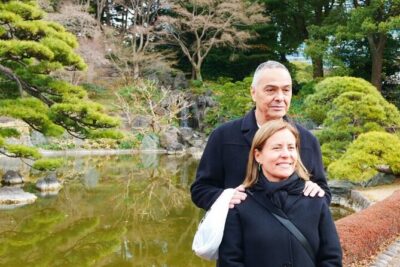
Edo Castle & East Garden of the Imperial Palace Tour
Read our review →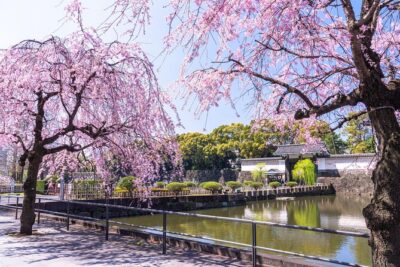
Tokyo Private Tour! Edo Castle & Imperial Palace East Gardens
Read our review →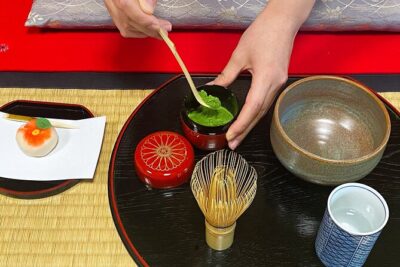
Kyoto Kiyomizu Tea Ceremony with Scenic Garden Views
Read our review →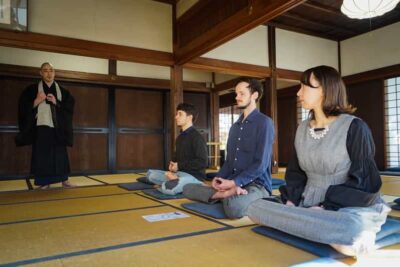
Zen Meditation and Garden Tour at a Temple with Lunch
Read our review →
Kanazawa: Samurai, Matcha, Gardens and Geisha Full-Day Tour
Read our review →Browse the lists this tour appears in