
Review · ITALY GARDEN TOURS
Join us for a Sicilian cooking class in a professional kitchen on Etna, using fresh ingredients from our organic garden
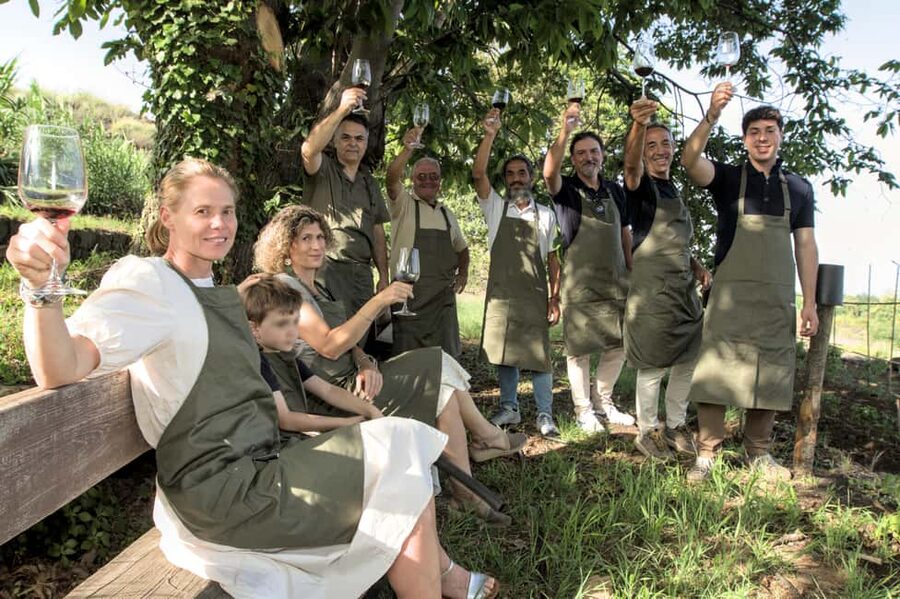
At Favazza Etna Winery, you make fresh pasta with vegetables and herbs from the organic garden, then sit down to eat your work with wine from the estate. The setting at the foot of Mount Etna gives this short class a strong sense of place, and the kitchen keeps the focus on Sicilian food rather than polished cooking-school theater.
I like two things right away: the garden-to-table link makes the ingredients feel real, and the small group of no more than eight people should give you a fair chance to work with the chef. You also learn a useful zero-waste approach, using as much of each ingredient as possible.
The main caution is value. Although the class is priced at $94 per person, several participants finished the hands-on work in about 1.5 hours, or roughly two hours including the meal. If you expect several courses or a full three-hour workshop, you may find the class brief.
Key points
- Fresh produce from the organic garden: Seasonal vegetables and herbs come from the property’s own garden.
- Pasta-making is the main hands-on task: You get your hands in the dough and prepare fresh pasta.
- Pasta alla Norma may be on the menu: The dish centers on a classic Sicilian combination, though recipes can follow the season.
- A small class of up to eight: This keeps the kitchen more personal than a large group demonstration.
- Wine is served with lunch: Your cooked dish is paired with Favazza wine.
- Allow about two hours: The actual cooking may be shorter, depending on the pace and amount of guest participation.
Cooking at the foot of Mount Etna
This class connects Sicilian food with the land that produces it. You are not simply handed a bowl of premeasured ingredients in a city kitchen. The plan is to use seasonal vegetables, herbs, and other local products grown on the slopes of Etna, with a short garden visit to collect what will go into the meal.
That matters because Sicilian cooking is often at its best when it is simple. Fresh produce, good olive oil, pasta, herbs, and careful seasoning can carry a dish without a long list of tricks. The garden gives you a clearer idea of where the meal begins.
The meeting point is Favazza Etna Winery, at Via Fossapoliti Formazzo 46 in Sant’Alfio. Check the address closely before setting out. One participant accidentally went to a nearby house and lost about 30 minutes, so this is not the moment to rely on a quick glance at the map.
Cooking classes around Italy:
- Shared Cooking Class with Fresh Garden Ingredients in Sorrento
★ 5.0 · 194 reviews - Cooking Class in a Typical Sorrento Garden
★ 5.0 · 100 reviews - Cooking Class with garden visit
★ 5.0 · 57 reviews
The garden visit sets the tone
The class begins with a small walk through the organic garden. You collect ingredients for the day’s recipe, which may include seasonal vegetables and aromatic herbs. It is not presented as a major farm tour, so keep your expectations in check. The garden stop is brief, but it gives the food a direct connection to the property.
I like this part because it turns a familiar cooking lesson into something more grounded. You can see that the vegetables are not just decorative props placed on the counter. They are part of the meal you are about to prepare.
The seasonal nature of the menu also means that the exact dish may change. The activity describes a typical Sicilian dish rather than promising one fixed recipe every day. Pasta alla Norma has been prepared, using fresh pasta with a vegetable-based sauce, but you should treat that as a possible example rather than a guaranteed menu.
Making fresh pasta with the chef nearby
The clearest hands-on element is the pasta. You work with the dough, shape the fresh noodles, and learn the basic steps needed to turn simple ingredients into the foundation of the meal.
This is the part where you are most likely to feel involved. Pasta-making is tactile, a little messy, and easy to remember after the class. The supplied materials include an apron, dishcloth, pencil, notebook, and handouts, so you can take notes and keep the recipe details for later.
The chef guides the group in Italian and English. No chef’s name is provided, but the format is intended to keep the chef close by as you cook. With a maximum of eight people, the group is small enough for questions and corrections, though your exact amount of individual work will depend on the class pace.
Here is the important distinction: you are not promised a fully hands-on restaurant kitchen session. One account describes the pasta as the main task completed by participants, while much of the sauce preparation was explained or handled by the chef. You may help with individual steps, but the chef may finish the dish.
That setup can work well for a first cooking class or for anyone who wants a relaxed introduction rather than a demanding lesson. If your priority is mastering several techniques yourself, you may want a longer class with more separate dishes.
Sicilian flavor in a short menu
The food is built around the ingredients of the area, and Pasta alla Norma is one example of what may be prepared. This classic Sicilian dish is associated with pasta, tomato sauce, eggplant, and cheese, though the exact preparation here is not fully specified.
The appeal is not complexity. The point is to see how fresh produce and good timing create a satisfying meal. You learn how vegetables are handled, how sauce and pasta come together, and how local ingredients shape the character of the dish.
The zero-waste element adds a practical note. The chef explains how to use every part of the ingredients where possible. That may not become a full lesson in preserving or composting, but it encourages a sensible Sicilian habit: waste less, season carefully, and let the main ingredients do the work.
If you are hoping to prepare a starter, main course, dessert, and several sauces, this is not that kind of class. The experience centers on one principal dish. That focus keeps the class manageable, but it also explains why some people may consider the $94 price high for the amount of cooking involved.
More Garden Tours in Italy:
- Florence: Reserved Entry Ticket to the Boboli Gardens
★ 4.4 · 5,275 reviews - Rome: Borghese Gallery and Gardens Guided Small-Group Tour
★ 4.6 · 2,783 reviews - Rome: Borghese Gallery & Gardens Small Group Guided Tour
★ 4.5 · 2,190 reviews - Florence: Pitti Palace and Boboli Gardens Ticket & eBook
★ 4.5 · 835 reviews
From kitchen counter to shared table
After the cooking, you eat the prepared dish together. The meal is served with a glass of Favazza wine, and the social side of the class can add real value, especially if you enjoy talking with a small group over food.
The wine is part of lunch, not a separate winery tasting program described in detail. You should expect a pairing with the cooked meal rather than a long formal tasting. One account notes that a bottle was shared among four people, so the amount of wine may be modest.
The meal also gives the class a natural finish. You do not simply pack up your pasta and leave. You get to taste the result while the preparation is still fresh in your mind, and the shared table gives the experience a warmer feel than a demonstration followed by a quick goodbye.
Still, the meal does not turn this into a long food tour. The activity lasts two hours according to the supplied details, and some sessions have ended earlier than expected. If you linger over lunch and conversation, you may get closer to the full advertised time. If the group eats quickly, the visit could feel short.
How much cooking will you actually do?
This is the most important question before booking. The class promises hands-on work, but the amount of participation appears uneven across the meal.
You should expect to:
- Gather or identify garden ingredients
- Make fresh pasta
- Follow the chef’s instructions for a Sicilian recipe
- Help with selected preparation steps
- Eat the finished dish with Favazza wine
You should not assume that every person will prepare every component from start to finish. The sauce and final cooking may be partly prepared in advance or completed by the chef. That is common in a short class, since a group of eight needs to eat within a limited time, but it should be clear in your expectations.
I would book this for the pleasure of making pasta in a beautiful rural setting, not as a serious technical course. If you want a recipe, a story about local food, and a meal at the end, the format makes sense. If you want to spend three full hours cooking multiple dishes, the class may leave you wanting more.
Price, time, and the question of value
At $94 per person, this is not a bargain cooking lesson. The price includes the chef-led class, lunch, Favazza wine, and useful materials such as handouts, an apron, dishcloth, pencil, and notebook. It also covers the setting, the garden connection, and the small-group format.
The value depends on what you count as the main attraction. If the location at Etna, organic produce, personal hospitality, and shared meal matter to you, the price may feel reasonable. You are paying for a local setting and a cultural activity, not only for the cost of flour and vegetables.
If you judge the price by kitchen time alone, the calculation is less favorable. A few participants expected a three-hour session and finished the active work in about 1.5 hours, with the whole visit taking around two hours. One person also expected a second dish. That expectation was not met.
The safest approach is to book this as a compact experience. Think of it as a short pasta workshop with lunch, not a full morning of cooking. You may have more time if the group talks over the meal, but do not reserve it expecting a long multi-course class.
Who will enjoy this Etna cooking class?
I see this working best for several types of visitors.
Food-focused visitors will appreciate the chance to use seasonal produce and make fresh pasta. The garden gives the recipe a local link that a generic cooking class cannot offer.
Couples and families may like the manageable length. Two hours is easy to fit between other Etna activities, and the meal creates a relaxed shared finish.
First-time cooks should find the format approachable. The chef handles the more complex timing, while you take part in the dough and selected preparation steps.
People interested in sustainable cooking will value the zero-waste lesson and the use of ingredients from the organic garden. The class does not promise a full sustainability course, but the idea is present in the way the food is prepared.
I would be more cautious if you are an experienced home cook seeking advanced instruction. You may want more independence, more dishes, and more detailed technique than this short class provides.
Practical details before you go
The meeting point is Favazza Etna Winery, Via Fossapoliti Formazzo 46, 95010 Sant’Alfio CT, Italy. Use the full address when planning your route, since a nearby wrong turn can cost you valuable time.
The class is available in Italian and English. The group is limited to eight participants, and the activity is wheelchair accessible. Starting times vary, so check the available time when booking.
The listed duration is two hours. Some descriptions have presented the activity as three hours, but actual sessions have sometimes finished in 1.5 hours, or around two hours with the meal. I would keep the rest of your day flexible, but I would not build a full afternoon around this class.
Cancellation is free up to 24 hours in advance for a full refund. You can also reserve now and pay later, which helps if your Etna plans depend on weather or transport.
Should you book the Favazza Etna Winery class?
Book it if you want fresh pasta, garden-grown ingredients, a small group, and a shared Sicilian meal in a setting connected to Mount Etna. The kind staff, attractive surroundings, fresh produce, and flavorful food are the strongest reasons to go.
Think twice if you are paying $94 mainly for a long, fully hands-on cooking course. The workshop may be shorter than expected, and the chef may complete much of the sauce and final dish.
My advice is simple: treat this as a short local food experience with pasta-making at its center. Arrive at the correct winery, expect one main dish rather than a feast, and value the setting and hospitality as much as the cooking time. With those expectations, it can be a pleasant and memorable stop on an Etna visit.
FAQ
Where does the cooking class take place?
The class takes place at Favazza Etna Winery, Via Fossapoliti Formazzo 46, 95010 Sant’Alfio CT, Italy.
How much does the experience cost?
The listed price is $94 per person.
How long does the class last?
The stated duration is two hours. Some sessions have finished in about 1.5 hours, while the activity has also been presented elsewhere as lasting three hours.
What food will I prepare?
You will prepare fresh pasta and a typical Sicilian dish using seasonal ingredients. Pasta alla Norma has been prepared during the class, but the menu may follow the season.
Are the ingredients grown on the property?
The class uses fresh seasonal vegetables and aromatic herbs from the provider’s organic garden, along with other local ingredients.
Is wine included?
Yes. Lunch with Favazza wine is included. The cooked dish is served with a glass of wine.
Is the class available in English?
Yes. The instructor and activity are available in Italian and English.
How many people can join the class?
The class is limited to eight participants.
Is the activity wheelchair accessible?
Yes, the activity is listed as wheelchair accessible.
What materials are provided?
The class provides handouts, an apron, a dishcloth, a pencil, and a notebook.
Can I cancel the booking?
Yes. You can cancel up to 24 hours in advance for a full refund.
Do I have to pay when I reserve?
No. The reserve-now, pay-later option lets you book without paying immediately.
Just added around Italy
- Lake Maggiore Gourmet: Gardens, Lake Cruise, & Food Tasting★ 4.5 · 19 reviews
- Vatican: Gardens, Museums and Sistine Chapel Guided Tour★ 4.2 · 98 reviews
- Venice: Convent Garden of Redentore Entry Ticket★ 4.3 · 5 reviews
- Varenna: Villa Cipressi Gardens Entry Ticket on Lake Como★ 4.6 · 39 reviews
- Vatican Gardens & Castel Sant’Angelo Skip-the-line tickets★ 4.3 · 20 reviews
- Valley of the Temples: Kolymbethra Garden Entry Ticket★ 3.5 · 43 reviews
- Typical Apulian menù in the garden of an ancient Trullo★ 5.0 · 11 reviews
- Venice: panoramic lunch in St. Mark’s Square Royal Gardens★ 3.0 · 12 reviews
Italy Garden Tours, compared.
Borghese Gallery & Gardens Small Group Guided Tour
Read our review →
Caserta Royal Palace & Gardens Small Group Tour with Shuttle
Read our review →
Pitti Palace, Boboli Garden, Palatine Gallery Tour
Read our review →
Tremezzina: Villa Carlotta Museum and Garden Entry Ticket
Read our review →
Sorrento: Lemon Garden Tour with Marmalade Tasting
Read our review →
Vatican: Vatican Gardens with Bus Tour & Vatican Museums
Read our review →Caserta Royal Palace & Gardens Small Group Tour with Shuttle
Read our review →Browse the lists this tour appears in