
Review · ITALY GARDEN TOURS
Guided visit to the Medieval Gardens of Ostuni
The most surprising part of Ostuni may be below its whitewashed lanes. At the Giardini della Grata, old vegetable plots sit beneath the city, reached through a green gate on Via Salvatore Tommasi. Dry stone walls, rock-cut wells, canals, and rare local crops tell a different story of Ostuni, one built on farming and careful use of water.
I like the way this visit links food with history, rather than treating them as separate subjects. I also like the hands-on parts: you can identify and harvest vegetables, taste produce picked in the gardens, and leave with a small gift of EVO oil or tomatoes. The main caution is that this is an outdoor walk on stone terraces, so it is not suitable for wheelchair users or anyone who struggles on uneven ground.
Key points to know before you go
- Old farming methods: See dry stone walls, wells cut into rock, and irrigation channels that supported Ostuni’s gardens.
- Rare local vegetables: Learn about native varieties, including the violetta di Ostuni, and taste fresh produce during the walk.
- Warm local guiding: Antonio and Deborah explain the gardens, crops, and conservation work in English, Italian, or French.
- A proper tasting: Acquasale, seasonal vegetables, and a traditional hot dish follow the guided visit.
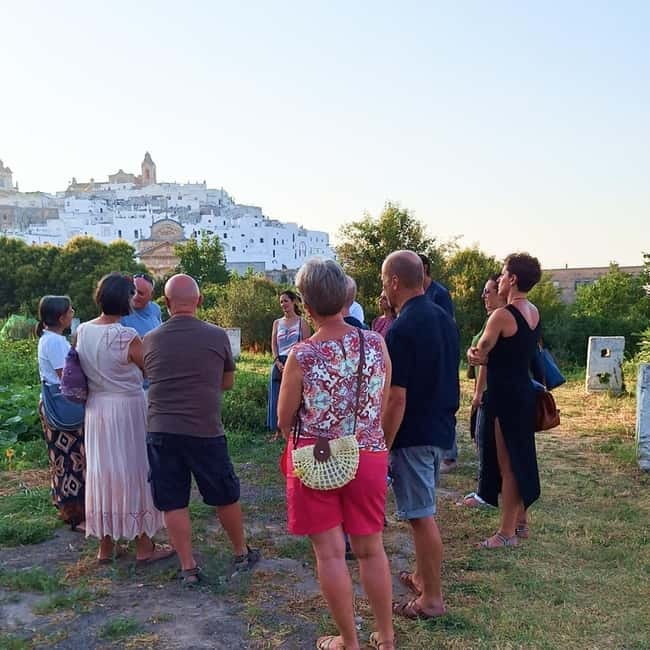
- A fine White City view: The gardens give you a less familiar angle on Ostuni’s bright hilltop center.
- Practical limit: The route is easy but rural, with stone terraces and outdoor footing that can be difficult for people with reduced mobility.
Beneath Ostuni, a working garden with a past

Ostuni is famous for its white buildings and hilltop streets. The Giardini della Grata show what lies below that polished image: a patchwork of small growing plots shaped by water, stone, and local knowledge.
The gardens are not simply decorative grounds. They are part of an agricultural and social project that brings forgotten local crops back into use. That gives the tour a clear purpose. You are not only looking at old structures. You are seeing how a community protects plant varieties suited to Apulia’s dry conditions.
The setting also helps explain why these gardens mattered. Water was precious, and the old canals, wells, and terraces made cultivation possible close to the city. Your guide connects those features with the rural life that once supported Ostuni.
I find this more rewarding than a standard walk through monuments because the subject is tangible. You can see the soil, touch the stone, smell the plants, and taste what grows there. The story is carried by food and farming, not just by dates and names.
More Garden Tours in Italy:
- Florence: Reserved Entry Ticket to the Boboli Gardens
★ 4.4 · 5,275 reviews - Rome: Borghese Gallery and Gardens Guided Small-Group Tour
★ 4.6 · 2,783 reviews - Rome: Borghese Gallery & Gardens Small Group Guided Tour
★ 4.5 · 2,190 reviews
Meeting Antonio and Deborah at the green gate
The entrance is on Via Salvatore Tommasi, near a paid parking area and within walking distance of central Ostuni. Look for the green gate. Your guide waits there, and arriving about 10 minutes early is sensible since the entrance is easy to miss if you are focused on the old town.
Antonio and Deborah lead the visits, and their approach is personal rather than formal. The experience works especially well when they explain why certain crops were saved, how seeds are chosen, and what makes local plants useful in a dry climate.
The guide speaks English, Italian, or French. Some material may be presented in its original language, so ask for clarification if a farming term or local name passes too quickly.
Group size can make a difference here. A small group allows more questions and makes the harvesting and tasting feel less like a set performance. The garden setting is intimate, so this is not the right place to expect a large, fast-moving tour with a microphone.
Following the canals, wells, and dry stone terraces
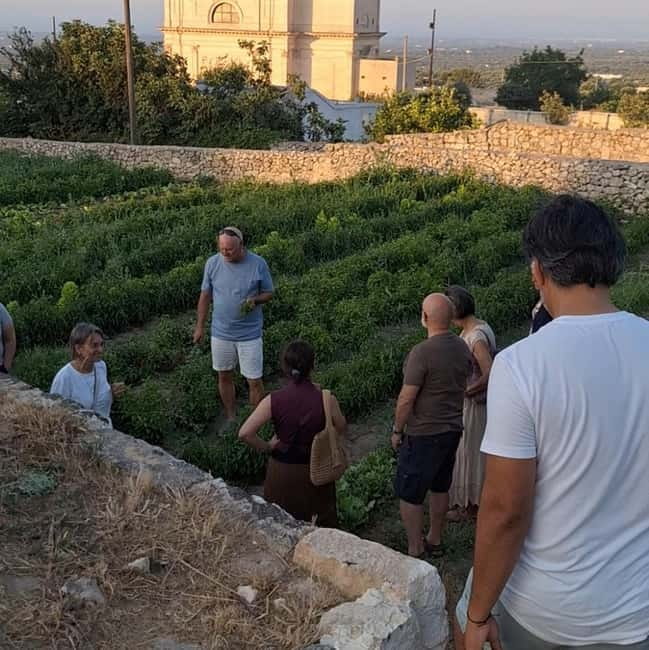
The guided walk lasts about 1.5 hours. It takes place outdoors, among vegetable beds and stone terraces, rather than along a smooth urban path.
You will see dry stone walls that divide and support the plots. These walls are a familiar feature of Apulia, but here they have a direct farming role. They create usable ground, help define the gardens, and form part of the old agricultural system.
The route also includes canals and wells dug into the rock. These details are easy to miss if you walk through the area alone. A local guide helps you read the site: where water moved, how it was collected, and how irrigation allowed crops to grow in a region with hot, dry weather.
The walk is described as easy, but easy does not mean fully accessible. Expect rural footing and stone surfaces. Comfortable shoes are important, and outdoor clothing is the sensible choice. The route is not suitable for wheelchair users, and anyone with limited mobility should consider the terraces carefully before booking.
There is also a shaded area for the tasting, which matters in the warmer months. The visit is outdoors, so conditions can change with the weather. If rain arrives, the tour may be rescheduled or changed to an alternative version.
Meeting the vegetables that nearly disappeared
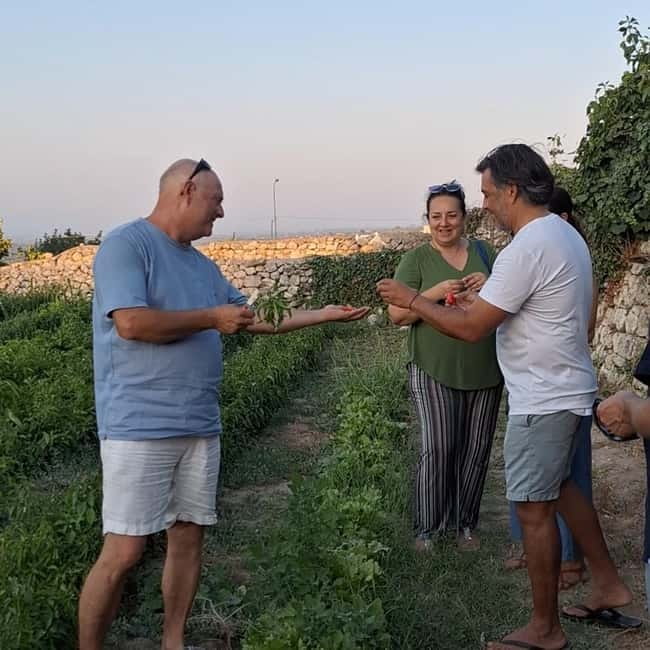
The crops are the heart of the visit. You learn to recognize seasonal vegetables grown with organic and biodynamic methods, then take part in harvesting with tools and containers supplied on site.
This hands-on section gives the tour its strongest sense of place. You are not just told that Apulia has distinctive produce. You see the plants where they grow and taste them close to the soil that produced them.
A special example is the violetta di Ostuni, a local variety that is difficult to discover through an ordinary city tour. The project also protects other native vegetables, many of which are adapted to dry weather and local growing conditions.
The guide explains how seeds are selected and harvested for future planting. That small detail matters. It shows that biodiversity is not an abstract slogan here. It depends on practical choices made season after season.
Freshly cut vegetables are shared during the walk, and you may receive rare produce picked directly from the garden. Children can enjoy this part because it turns a lesson into an activity. Couples and food-focused visitors will appreciate the chance to taste ingredients before they appear in a prepared dish.
The visit is not a cooking class, and the range of crops will depend on the season. You should come ready to learn about what is growing at that time, rather than expecting a fixed list of vegetables.
Same corner of the map, a different planting:
- Florence: Pitti Palace and Boboli Gardens Ticket & eBook
★ 4.5 · 835 reviews - Caserta Royal Palace & Gardens Small Group Tour with Shuttle
★ 4.9 · 632 reviews - Florence: Pitti Palace, Boboli Garden, Palatine Gallery Tour
★ 4.9 · 558 reviews - Tremezzina: Villa Carlotta Museum and Garden Entry Ticket
★ 4.7 · 556 reviews
The tasting: from raw produce to Apulian comfort food

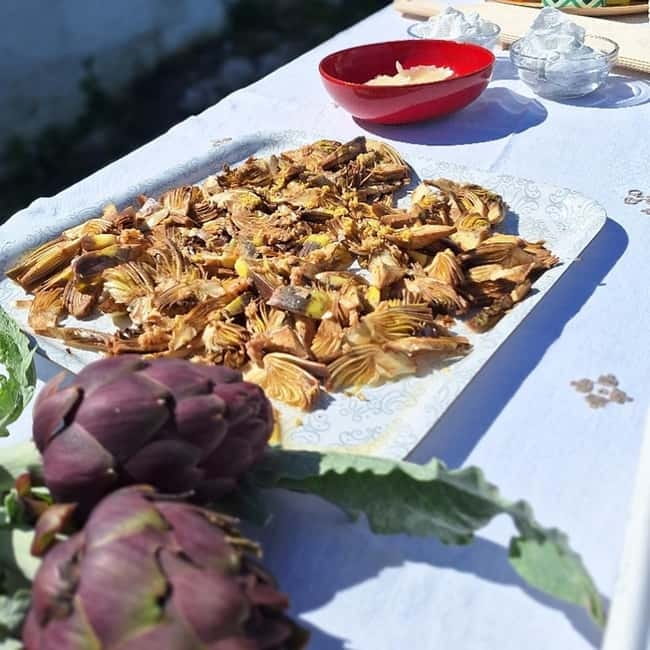
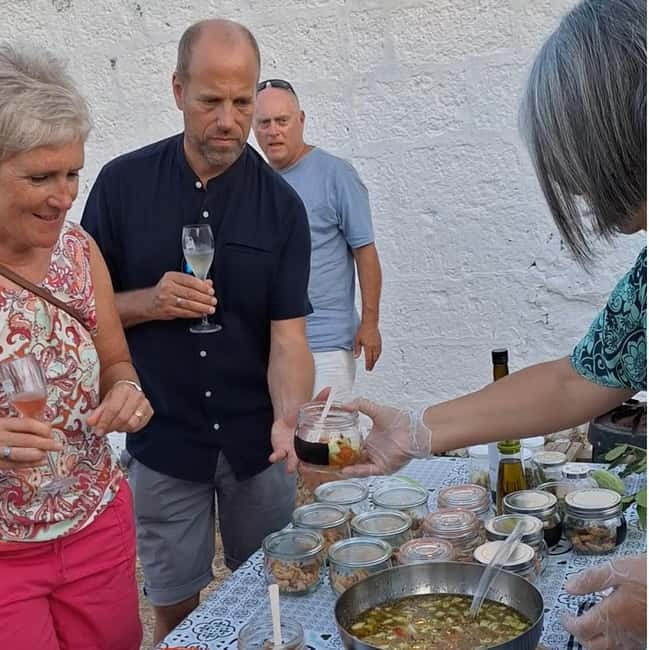
After the walk, the experience continues with a tasting in a shaded area. The included food features acquasale, seasonal vegetables, and a traditional hot dish.
Acquasale is a simple Apulian preparation built around bread and fresh ingredients. It fits the setting well because it reflects the region’s habit of making good use of basic local products. The tasting gives you a chance to understand how vegetables from the garden work in everyday regional food, not only in a chef’s presentation.
The seasonal vegetables may be served fresh, and the tour includes produce picked on site. Drinks beyond those included in the tasting are not covered, so budget for additional beverages if you want them.
The food is not an afterthought. It completes the garden story. First, you see the old water system. Then you learn about the plants. Finally, you eat the result. That sequence gives the experience a clear rhythm and makes the $83 price easier to judge.
You also get a small gift to take home: either a 100 ml can of extra-virgin olive oil or a cioppa of tomatoes. It is modest, but useful. The gift extends the experience beyond the garden and gives you a taste to remember after leaving Ostuni.
An optional evening food event may be available for an extra charge. One version included vegetarian specialties prepared by a chef, local wine, and a marmalade tart served under the night sky. This is not part of the listed included tasting, so confirm the cost and availability before counting on it.
A different angle on the White City
One of the included features is access to a panoramic viewpoint overlooking Ostuni. The view is not the same as looking at the city from its main roads or terraces.
From the gardens, the White City appears in relation to the cultivated ground below. That perspective helps connect the hilltop buildings with the fields and rural spaces that supported them. Bring a camera, but do not treat the viewpoint as the whole reason to book. It is a strong extra within a tour whose main focus is farming and food.
The viewpoint is especially useful for visitors who have already seen Ostuni’s center and want a new way to understand it. It gives your city walk a wider frame without requiring a separate excursion.
Is $83 good value for this Ostuni visit?
At $83 per person, this is not a bargain-priced stroll. The value depends on what you want from your time in Ostuni.
You are paying for a local guide, a 1.5-hour visit, the agricultural activity, harvesting tools and containers, the tasting, a take-home gift, and access to the viewpoint. The price also supports a project that protects local varieties and restores an old agricultural site.
I would find the cost easier to justify if you care about food, local history, conservation, or small-scale community projects. The experience offers more than a view and more than a snack. It ties together irrigation, crops, rural customs, and the people working to keep those traditions alive.
If you only want a quick look at Ostuni’s main sights, the price may feel high. You could spend the same time walking the old town at no cost beyond your own meal. This visit makes sense when you want something specific and less conventional.
The tasting adds real value, especially because it includes food grown on site. The gift is a pleasant extra, but it should not be the reason you book. The strongest value comes from the explanations, the setting, and the chance to handle and taste rare vegetables.
Who will enjoy the Giardini della Grata most?

I would recommend this for couples who want a quieter activity away from the busiest streets. The shaded tasting area and panoramic viewpoint also give the visit a relaxed pace.
Families can enjoy it too, especially if children like plants, food, or practical activities. The opportunity to identify and harvest vegetables is more engaging than simply looking at garden beds. Still, parents should remember that the setting is rural and includes stone terraces.
Food lovers will get the most from the tasting and the discussion of local varieties. The visit is also a good choice if you have already seen Ostuni’s cathedral, lanes, and viewpoints and want to understand the area’s agricultural side.
This is less suitable for anyone seeking a polished museum-style presentation. You will be outside, close to working plots, and dealing with seasonal conditions. People using wheelchairs should not book, and anyone with reduced mobility should ask detailed questions before committing.
Timing, access, and useful planning tips
The meeting point is easy to reach on foot from central Ostuni. Paid parking is available nearby, but parking is not included, and transportation to the garden is your responsibility.
The formal guided portion lasts 1.5 hours. The schedule also allows about one hour for the food tasting, so plan more than 90 minutes if you want to stay for the full experience. Starting times vary, and you should check availability for your date.
Wear shoes that can handle stone and soil. Outdoor clothing is best, even though the tasting area has shade. Bring water for your own use if needed, since additional drinks are not part of the included food service.
The provider uses WhatsApp or email for post-booking messages. Keep an eye on those messages, especially if weather affects the schedule. You can cancel up to 24 hours in advance for a full refund, and reserve now while paying later if you want to keep your plans flexible.
My recommendation for booking
I would book the Giardini della Grata if you want Ostuni to make sense beyond its white facades. The combination of old irrigation, rare vegetables, direct harvesting, a local tasting, and a new city view gives you a well-shaped two-part experience.
Book it with realistic expectations. This is an outdoor agricultural visit, not a grand monument tour, and the ground is not fully accessible. But if you enjoy food with a story, Antonio and Deborah’s warm guiding style and the garden’s practical details can make this one of the most distinctive things you do in Ostuni.
FAQ
Where does the Giardini della Grata tour start?
The entrance is on Via Salvatore Tommasi at the Giardini della Grata. Your guide waits in front of the green gate, near a paid parking lot and within walking distance of central Ostuni.
How long does the experience last?
The guided visit lasts 1.5 hours. The planned food tasting takes about one additional hour, so allow roughly 2.5 hours for the full scheduled program.
What languages are available?
The tour is available in English, Italian, and French. Some content may be presented in its original language.
What food is included?
The tasting includes acquasale, seasonal vegetables, and a traditional hot dish. Additional drinks are not included.
Do I get anything to take home?
Yes. You receive either a 100 ml can of extra-virgin olive oil or a cioppa of tomatoes.
Is transportation included?
No. You must make your own way to the starting point. Paid parking is available nearby.
Is the route suitable for wheelchair users?
No. The tour is not suitable for wheelchair users. The route passes through rural gardens and stone terraces and may also be difficult for people with reduced mobility.
What should I wear?
Bring comfortable shoes and outdoor clothing. The experience takes place outside among vegetable gardens and stone terraces.
What happens if it rains?
The tour may be rescheduled or changed to an alternative version. Schedule updates are sent by WhatsApp or email after booking.
Just added around Italy
- Guided Tour to the Royal Palace of Caserta: discover the Royal Palace and gardens★ 4.5 · 113 reviews
- From the garden to the table: Sicilian cooking class★ 5.0 · 4 reviews
- From Rome: Castel Gandolfo and Gardens Day Trip★ 3.2 · 5 reviews
- Day trip from Rome: Garden of Ninfa and village of Sermoneta★ 5.0 · 5 reviews
- Florence: Culinary Experience in a Lemon House with Sunset and Enchanted Garden★ 5.0 · 3 reviews
- Florence: David, Pitti Palace, & Gardens Combination Tickets★ 4.5 · 59 reviews
- Florence: Pitti Palace and Boboli Gardens Guided Tour★ 4.9 · 14 reviews
- Florence: Museum Pass–David, Uffizi, Pitti Palace & Gardens★ 4.2 · 134 reviews
Italy Garden Tours, compared.


Borghese Gallery & Gardens Small Group Guided Tour
Read our review →
Caserta Royal Palace & Gardens Small Group Tour with Shuttle
Read our review →
Pitti Palace, Boboli Garden, Palatine Gallery Tour
Read our review →
Tremezzina: Villa Carlotta Museum and Garden Entry Ticket
Read our review →
Sorrento: Lemon Garden Tour with Marmalade Tasting
Read our review →
Vatican: Vatican Gardens with Bus Tour & Vatican Museums
Read our review →Caserta Royal Palace & Gardens Small Group Tour with Shuttle
Read our review →Browse the lists this tour appears in