
Review · INDIA GARDEN TOURS
Flower Market Colors and Ganges Ghat Experience
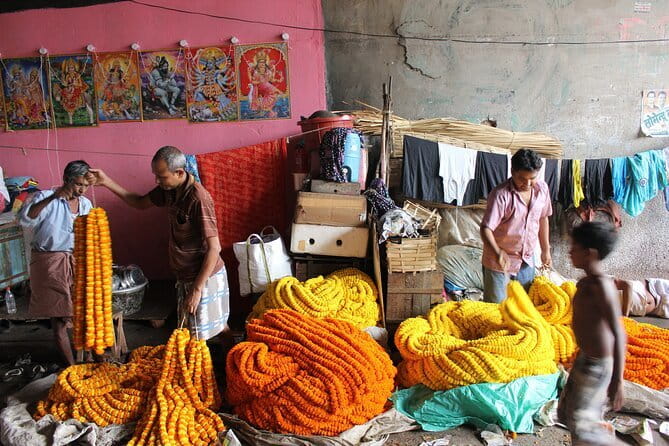
Kolkata is at its most revealing before breakfast, when Mullick Ghat Flower Market fills with heaps of marigolds, roses, and other blooms beneath the steel span of Howrah Bridge. This is not a polished sightseeing stop. It is a working market, a place of quick deals, heavy baskets, prayer, sweat, and color.
I like the early start because it puts you close to the city’s daily rhythm rather than its visitor routine. I also like the private format: guide Kaushik has been praised for explaining details clearly, adjusting the walk to fit time limits, and adding a few extra stops when possible.
The tradeoff is simple: this is an early, walking-focused outing with no private transport included. The market can feel crowded and rough around the edges, and the total visit may last only two to three hours, so you should book it for local texture, not a long list of major monuments.
Key points to know before booking
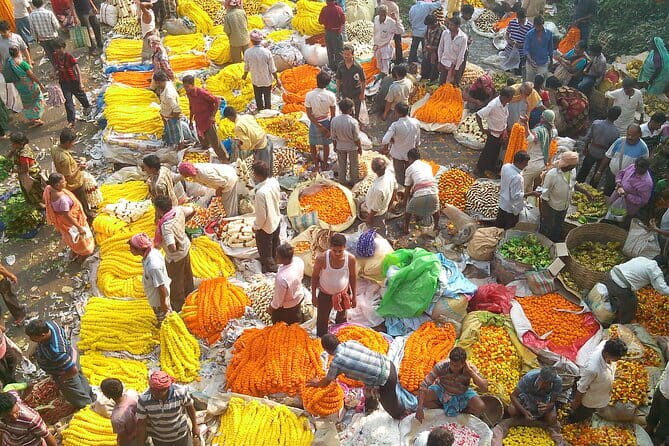
- Mullick Ghat at dawn: See Kolkata’s major wholesale flower market while traders sort, carry, and sell fresh blooms.
- Howrah Bridge overhead: Spend time beneath one of the city’s defining landmarks, where river traffic and road traffic meet.
- Hooghly river rituals: Watch bathing, prayer, and ceremonies for the departed along the Ganges in Kolkata.
- Private guiding: Only your group takes part, giving you more room to ask questions and adjust the pace.
- Chai included: The guide serves hot tea in a small earthen cup during the walk.
- One-way route: You meet near K.C. Das on Central Avenue and finish at the Mullick Ghat Flower Market entryway.
Why the 6:30 am start matters
The meeting time is 6:30 am at K.C. Das, 11A&B Central Avenue, near Esplanade and Bow Barracks. That early hour is not just a scheduling detail. It is what makes the market worthwhile.
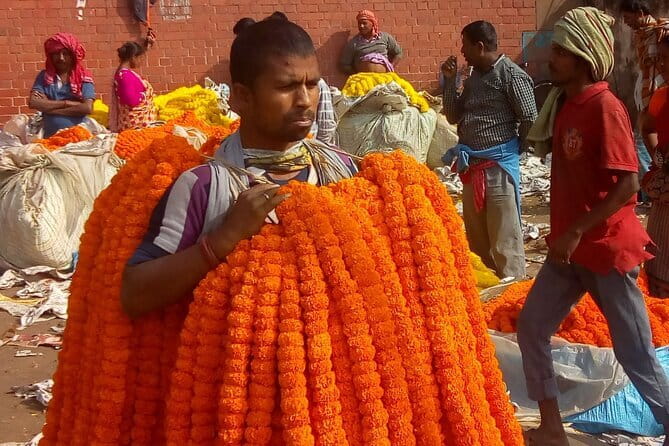
By starting early, you see the flower trade during its working hours, when fresh stock arrives and sellers arrange large piles for buyers. The tour description points to marigolds, roses, and less familiar flowers, so the appeal is not only visual. You get a close look at how flowers move through a city where they serve everyday worship, ceremonies, and public life.
I would allow time to reach the meeting point without rushing. The tour does not include private transportation, though the start is near public transport. The route ends near the market, so you should think of it as a short walking journey rather than a round-trip excursion.
The private format helps here. A large group would be harder to manage among sellers, baskets, and narrow market areas. With only your own party taking part, you can stop for a question, spend longer on a display of flowers, or move along when the crowd tightens.
More Flower Markets and Flower Fields in India
- Kolkata’s Flower Market – Hooghly’s Flower Fest Tour
★ 5.0 · 35 reviews - Jaipur Sunrise Tour with Morning Flower Market Walk
★ 5.0 · 16 reviews - Jaipur: Half-Day or Full-Day Tour with Flower Market
★ 4.9 · 14 reviews
Mullick Ghat Flower Market: Kolkata’s morning workplace

The first main stop is Malik Ghat Flower Market, also written as Mullick Ghat. Plan on about an hour here.
The market is described as Kolkata’s largest wholesale flower bazaar, and that distinction matters. You are not entering a shop designed for sightseeing. You are seeing a place where flowers are bought and sold in quantity, with traders focused on work. The piles of color make strong photographs, but the market’s real value is watching the people who keep the trade moving.
Expect a busy setting. Sellers bargain, buyers make decisions, and flowers change hands quickly. The guide can help you understand what you are looking at, point out details hidden in the action, and explain why the market matters to the city.
This is where Kaushik’s role sounds especially useful. He has been described as clear, flexible with time limits, and good at noticing things you could miss on your own. That kind of guiding is more valuable here than a memorized speech. The market does not present itself in neat order, so a local guide gives the scene shape.
You should bring a camera if photography matters to you, but keep it secondary to awareness. This is a working market, not a staged photo set. Watch where you step, avoid blocking business, and follow your guide’s lead around people carrying flowers or goods.
The tour gives this stop about an hour, which is enough for an introduction but not an exhaustive study. If you want extended time for photographs, tell the guide early. The private arrangement may allow some adjustment, but the full outing still has to reach the bridge and river stops.
Howrah Bridge from below and around the market
The next stop lasts about 20 minutes and focuses on Howrah Bridge. The bridge is one of Kolkata’s best-known landmarks, but seeing it in the context of Mullick Ghat gives it more meaning than a quick photograph from a distant viewpoint.
Here, the bridge frames the flower market and the river edge. Its steel structure rises above a scene of people, goods, and traffic. The contrast is part of the appeal: a major piece of infrastructure overhead, and a very human street economy below.
Twenty minutes is a short visit, so this is a viewpoint and orientation stop rather than a full bridge tour. You will have time to look, take photographs, and hear how the bridge connects with the city’s daily movement. If you want a quiet architectural study, this is not the right setting. The attraction is the combination of landmark and working surroundings.
I like this part because it keeps the tour from becoming only a flower-market walk. You see how the market fits into Kolkata’s wider system of roads, river access, and trade. The bridge is not isolated from city life. It is part of the scene.
The Hooghly River and its daily rituals
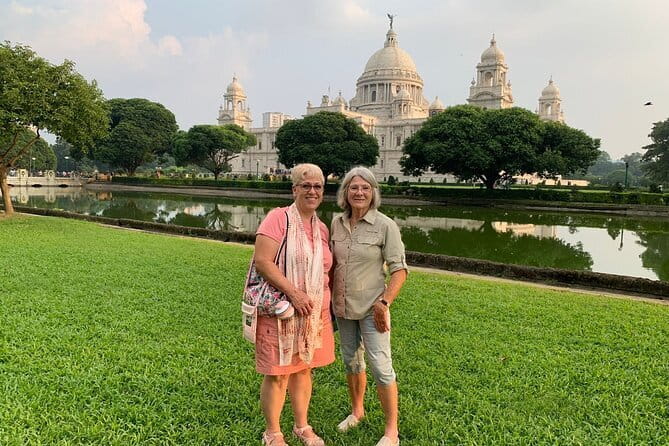
The Hooghly River stop lasts about 30 minutes. In Kolkata, the Hooghly is the city’s branch of the Ganges, and the riverbank brings together work, faith, and family ceremony.
You might see people bathing, offering prayers, or taking part in ceremonies for relatives who have died. The tour description also points to ascetics in meditation and locals carrying out regular religious practices. The guide’s job is important here, since a short explanation can help you understand the difference between an ordinary river ritual and a ceremony with deeper personal meaning.
This is the most reflective part of the walk. The flower market is noisy and fast. The riverbank may still be active, but the attention shifts toward prayer and ritual. You should watch respectfully and avoid treating private ceremonies as a performance.
The wording of the route refers to the Ganges, but the water beside Kolkata is the Hooghly. That small point helps you keep the geography clear while still understanding the river’s religious importance.
There is no admission charge for the river stop. More important, the tour does not turn it into a formal attraction with barriers or a scripted show. You see the ghats as part of the city’s ordinary life. Conditions can be visually and emotionally intense, especially if you have not seen river ceremonies before, so this part suits people who want context as much as photographs.
Same corner of the map, a different planting:
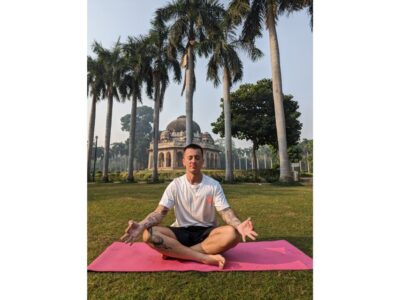
- Delhi: Yoga in Lodhi Garden
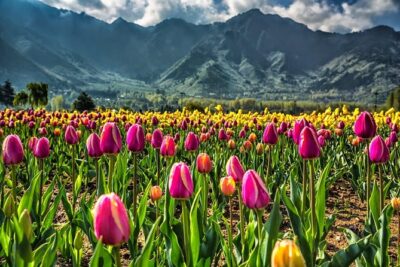
★ 4.9 · 53 reviews - Kashmir Tulip Festival
★ 5.0 · 43 reviews - Mughal Heritage Tour Including Lodhi Garden, Humayun Tomb and Akshardham Temple
★ 4.5 · 15 reviews - Mumbai:Dhobi Ghat Laundry,Dharavi Slum & Flower market Tour
★ 5.0 · 12 reviews
Mallick Ghat’s smaller details
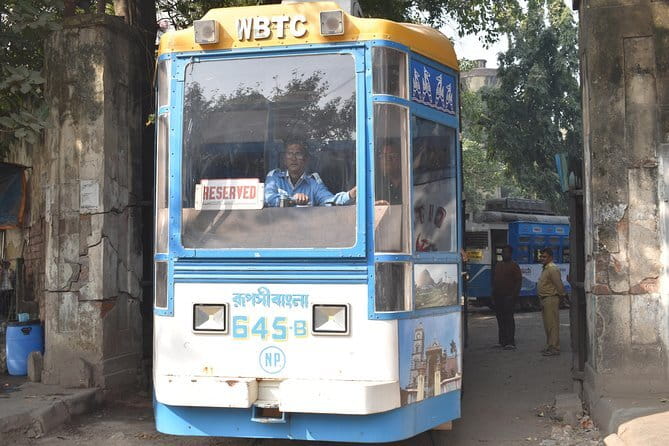
The final listed stop is Mallick Ghat and lasts about 10 minutes. It covers details that many short visits to the area would probably miss: an adjacent former ladies’ bathing ghat, iron scaffolding brought from England, and pigeon feeding.
Ten minutes is enough for a quick explanation and a look around, but not for lingering over every feature. Still, these details add depth to the walk. The former bathing area points to older patterns of public space and privacy. The imported ironwork connects the ghat with the city’s colonial-era construction. Pigeon feeding brings the focus back to a small, continuing local habit.
This is the sort of stop that benefits from a guide who pays attention. On your own, you might photograph the bridge and market, then leave without noticing the nearby structures. Kaushik was specifically praised for pointing out things that would otherwise be missed and for adding extra stops when time allowed.
Do not assume the schedule guarantees extra detours. The stated route is short, and the exact pace depends on your group and the morning conditions. But the private format gives you a better chance of asking about something that catches your eye.
Chai, walking, and what is actually included
Hot coffee or tea is included, specifically steaming chai served in an earthen disposable cup. It is a small touch, but it fits the setting. A cup of chai during an early morning walk gives you a pause without turning the outing into a restaurant stop.
A guide is included. Private transportation is not. Personal expenses and gratuities are also not included, so carry whatever money you may need for your own purchases or an optional tip.
The route is mainly about seeing and walking. The supplied details do not promise a meal, vehicle transfers, hotel pickup, or a long indoor break. I would wear comfortable shoes and choose clothing suited to an early outing in a working market, while remembering that exact weather and ground conditions are not specified.
The meeting and end points are different. You begin at K.C. Das near Central Avenue and Esplanade, then finish at the Mullick Ghat Flower Market entryway on Strand Bank Road. In special cases, the guide may escort you back to the original meeting point when possible, but you should not count on that as standard transportation.
Is $30 a fair price?

At $30 per person, the value depends on what you want from a city tour. You are paying for a private guide, a focused route, local interpretation, and a dawn visit that would be difficult to organize with the same context on your own.
The price is less attractive if you expect admission to a major monument, a private car, breakfast, or a full-day program. None of those are included. The tour lasts about two to three hours, and much of the appeal comes from places that do not require an entrance ticket.
For a solo visitor or small party, the private setup can make $30 reasonable, especially if you have limited time in Kolkata and want a strong first look at the city. Group discounts are offered, though the amount is not specified, so larger parties should check the final price before booking.
I see the best value in the guide’s interpretation. The market, bridge, and river are accessible areas, but a local guide can explain what the sellers are doing, why the ghats matter, and which small features deserve attention. If you are comfortable exploring independently and only want photographs, you may prefer to go alone. If you want the place to make sense, the fee is easier to justify.
Who will enjoy this morning walk?
This tour suits you if you like working markets, street photography, religious customs, and short walks with a local guide. It is especially useful for a first morning in Kolkata, when you want a quick orientation to the city’s riverfront and its older trade traditions.
It also suits photographers who prefer people, texture, and changing light over carefully framed monuments. The flowers, steel bridge, river, bathing ghats, and clay chai cup give you several very different subjects in a short route.
You should think twice if you dislike early starts, crowded public places, religious activity, or uneven urban surroundings. The tour is not built around comfort or slow luxury. It presents Kolkata in active form, with all the noise and disorder that come with a real wholesale market.
Most people can participate, and the activity is near public transportation. The supplied details do not give specific accessibility information for the market or ghats, so anyone with mobility concerns should ask the provider before booking.
Booking, cancellation, and practical details
Confirmation is normally provided at booking. If you reserve within one day of travel, confirmation arrives as soon as possible and depends on availability.
You can cancel for a full refund up to 24 hours before the start time. Cancellations or changes made inside that 24-hour window are not refunded or accepted. The cut-off follows Kolkata local time.
The activity is operated by Kolkata Story Tours. It is a private experience, so only your group participates, even though group discounts may be available. The listed rating is five from two reviews, with particularly strong praise for Kaushik’s clear explanations, flexibility with time limits, and habit of adding useful stops when possible.
Should you book the Flower Market and Ghat Experience?
Book it if you want Kolkata before the city settles into its regular day, and if you value a guide who can explain ordinary places rather than simply point at famous ones. The flower market and Hooghly ghats offer a strong mix of color, work, worship, and architecture in a compact morning route.
Skip it if you need private transportation, a later start, a long itinerary, or a polished sightseeing environment. At $30, the tour makes the most sense as a focused introduction, not a complete Kolkata program.
For most first-time visitors with an open morning, I would book it, wear practical shoes, keep the camera ready, and leave room for the market to set the pace.
FAQ
What time and where does the tour start?
The tour starts at 6:30 am at K.C. Das, 11A&B Central Avenue, Esplanade, Chowringhee North, Bow Barracks, Kolkata, West Bengal 700069.
Where does the tour end?
The standard end point is the Mullick Ghat Flower Market entryway at 223 Strand Bank Road, Fairley Place, B.B.D. Bagh, Kolkata, West Bengal 700001. In special cases, an escort back to the original meeting point may be possible.
How long does the experience last?
The experience lasts approximately two to three hours. The listed stops include about one hour at the flower market, 20 minutes at Howrah Bridge, 30 minutes by the Hooghly River, and 10 minutes at Mallick Ghat.
Is transportation included?
Private transportation is not included. The meeting point is near public transportation, and the tour finishes at a different location from where it starts.
Is the tour private?
Yes. Only your group participates in the activity. Group discounts are also offered, although the discount amount is not specified.
What is included in the price?
The price includes a guide and hot coffee or tea, specifically chai served in an earthen disposable cup. Personal expenses and gratuities are not included.
Just added around India
- Visit to Sahelion Ki Bari, Garden of the Maidens, Udaipur★ 4.0 · 2 reviews
- Kashmir Tulip Festival★ 5.0 · 43 reviews
- Sunder Nursery Delhi’s Heritage Garden Walk Tour★ 5.0 · 3 reviews
- Lodhi Garden Heritage Walk★ 5.0 · 7 reviews
- Delhi historical Gardens & Ruins★ 5.0 · 3 reviews
- Private Half-Day Delhi Flower Market Tour★ 5.0 · 5 reviews
- Dhobi Ghat, Ancient Stepwell and Lodhi Gardens Tour★ 5.0 · 2 reviews
- Kolkata’s Flower Market – Hooghly’s Flower Fest Tour★ 5.0 · 35 reviews
India Garden Tours, compared.

Kolkata’s Flower Market – Hooghly’s Flower Fest Tour
Read our review →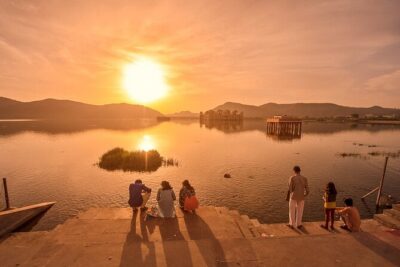
Jaipur Sunrise Tour with Morning Flower Market Walk
Read our review →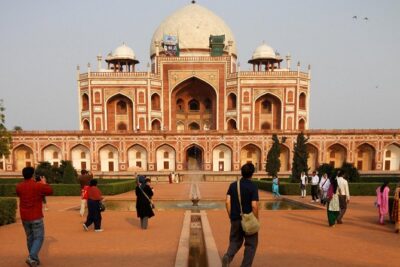
Mughal Heritage Tour Including Lodhi Garden, Humayun Tomb and Akshardham Temple
Read our review →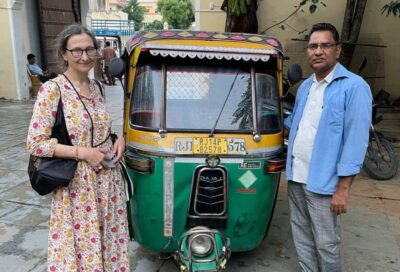
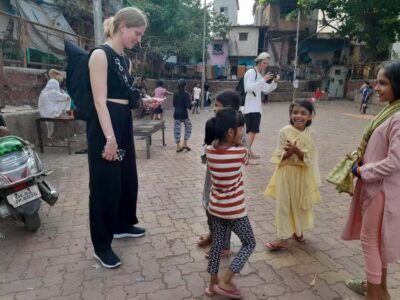
Dhobi Ghat Laundry,Dharavi Slum & Flower market Tour
Read our review →
Jaipur Nahargarh Fort Sunrise or Sunset Tour with Flower Market
Read our review →Browse the lists this tour appears in