
Review · INDIA GARDEN TOURS
Mandore Garden Walking Tour
Mandore Garden preserves the remains of an old royal capital just north of Jodhpur. You’ll walk among carved stone memorials, temple details, high terraces, and the remains of a fort abandoned after the capital moved to Mehrangarh in 1459.
I like the compact two-hour format, which gives you a focused look at Mandore without taking a full day. I also like that this is a private tour, so your group can set the pace and ask questions without being folded into a large crowd.
The main drawback is transport: you must make your own way to Mandore Garden Bus Stop, and the walk requires moderate fitness. The museum may also be closed, as has happened before, so do not plan the visit around museum access alone.
Key points to know before you book
- An abandoned capital near Jodhpur: Mandore was left behind in 1459 when the royal seat moved to safer Mehrangarh Fort.
- Three main sights in one walk: Expect the Hall of Heroes, old fort ruins, and royal cenotaphs.
- Private rather than group-based: Only your party takes part, which makes the pace more flexible.
- Good value at $16: Bottled water is included, while transportation is not.
- Unexpected details: Monkeys, formal gardens, carved temples, and a toy train may be part of the setting.
- Allow two to three hours: The stated walking portion lasts about two hours and returns to the meeting point.
Why Mandore tells Jodhpur’s earlier story
Most people first meet Jodhpur through Mehrangarh Fort and the blue-painted old city. Mandore gives you the chapter that came before. It was once the capital used by Jodhpur’s rulers, but repeated threats from rival dynasties made the location harder to defend.
The Muslim rulers of Gujarat and Malwa were among the forces involved in Mandore’s turbulent past. The decision to move the capital to the hilltop fort at Mehrangarh was practical. Higher ground offered stronger protection, and Mandore gradually lost its royal role.
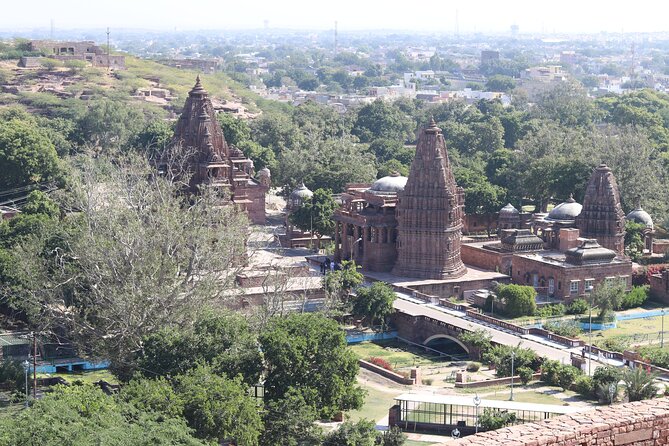
By 1459, the old town had been abandoned. What remains is not a fully preserved medieval city with intact streets and occupied homes. It is a collection of gardens, memorials, temple structures, terraces, and fort remnants. That partial survival is exactly what gives the walk its character.
You can see how a royal center becomes a memorial site. The polished stone of the cenotaphs contrasts with rougher ruins, while garden paths make the remains easy to explore. I find this kind of place more rewarding when you appreciate fragments rather than expect a complete palace complex.
More Garden Tours in India:
- Delhi: Yoga in Lodhi Garden
★ 4.9 · 53 reviews - Kashmir Tulip Festival
★ 5.0 · 43 reviews - Kolkata’s Flower Market – Hooghly’s Flower Fest Tour
★ 5.0 · 35 reviews
Starting at Mandore Garden Bus Stop
The meeting point is Mandore Garden Bus Stop in Mandore, Jodhpur. You arrange your own transportation, so allow enough time to reach the site before the scheduled start. The tour does not include a private vehicle.
That detail matters more than it may first appear. If you are staying in central Jodhpur, you need to plan the ride out and back separately. The activity ends at the same meeting point, so you can continue your day from there once the walk is over.
The garden is open daily from 8:30 AM to 8:00 PM for the dates provided. A morning visit may be more comfortable in Rajasthan’s heat, though the exact start time depends on the booking you make.
Bring sensible walking shoes and water needs that go beyond the single bottle provided. The walking route includes gardens, terraces, monuments, and ruins, and the experience calls for a moderate level of fitness. You do not need to treat it like a strenuous hike, but this is not a sit-down sightseeing stop either.
The Hall of Heroes and its colorful figures
The Hall of Heroes is one of the walk’s named stops. It helps explain why Mandore is more than a pleasant garden with old stones. The site connects royal memory with figures honored in local tradition.
The exact presentation can depend on the guide and current site conditions, but you should expect a monument-focused stop rather than a modern museum experience. The value comes from seeing how stories of rulers and heroes were preserved in stone and placed within the former capital.
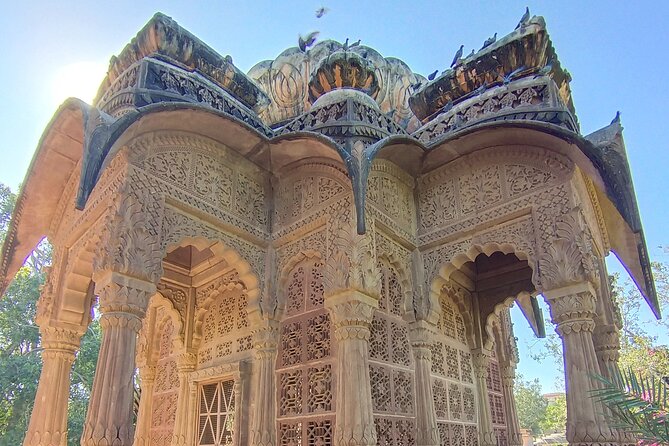
Take time to look closely at the surfaces. Mandore is known for stone buildings and detailed temple work, and the smaller carvings can reward patient attention. I would not rush this section just to reach the larger memorials.
If your guide is able to provide historical context, this is a good point to ask how Mandore relates to Jodhpur’s later royal center. The move to Mehrangarh is not a disconnected fact. It explains why the site has the remains of an earlier capital instead of a functioning palace district.
Old fort ruins and the shape of the abandoned town
The ruins of the old fort offer the clearest reminder that Mandore was once a defended settlement. These are not presented as a fully restored fortress, and that is important when setting expectations. You are seeing remnants of a place that lost its political purpose centuries ago.
The walk lets you connect the ruins with Mandore’s wider setting. High-rock terraces and scattered structures show how the town used elevation and stone. The remains are more atmospheric than complete, so your enjoyment will depend on your interest in history, architecture, and partial ruins.
I like this kind of stop because it asks you to picture the missing town. The gardens soften the rough edges, but they do not erase the sense of abandonment. You may see worn surfaces, broken sections, and uneven areas rather than a polished monument prepared for a quick photograph.
The fort ruins also give the move to Mehrangarh practical meaning. Mehrangarh’s hilltop position was chosen for safety, while Mandore became increasingly exposed. Once the royal center shifted, the old capital no longer received the same attention or maintenance.
Same corner of the map, a different planting:
- Jaipur Sunrise Tour with Morning Flower Market Walk
★ 5.0 · 16 reviews - Mughal Heritage Tour Including Lodhi Garden, Humayun Tomb and Akshardham Temple
★ 4.5 · 15 reviews - Jaipur: Half-Day or Full-Day Tour with Flower Market
★ 4.9 · 14 reviews - Mumbai:Dhobi Ghat Laundry,Dharavi Slum & Flower market Tour
★ 5.0 · 12 reviews
Cenotaphs, temples, and careful stonework
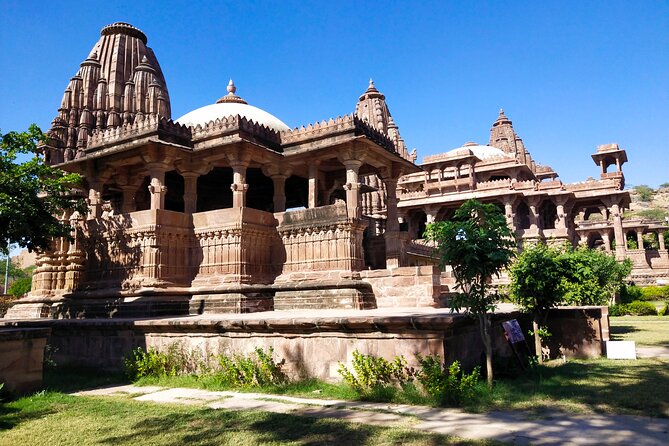
The cenotaphs are among Mandore’s most impressive features. These memorial structures honor members of Jodhpur’s royal family and use elaborate stone architecture to create a formal setting among the gardens.
You’ll find high terraces and carved details that make the cenotaphs more than simple markers. Look at the proportions, columns, and ornament rather than viewing them only from a distance. The site’s appeal comes from the combination of open garden space and dense architectural detail.
The temples add another layer. Their decoration rewards a slower pace, especially if you enjoy examining figures and patterns cut into stone. One useful piece of practical advice is to keep your schedule flexible enough for close inspection. A hurried walk would reduce Mandore to a series of photo stops.
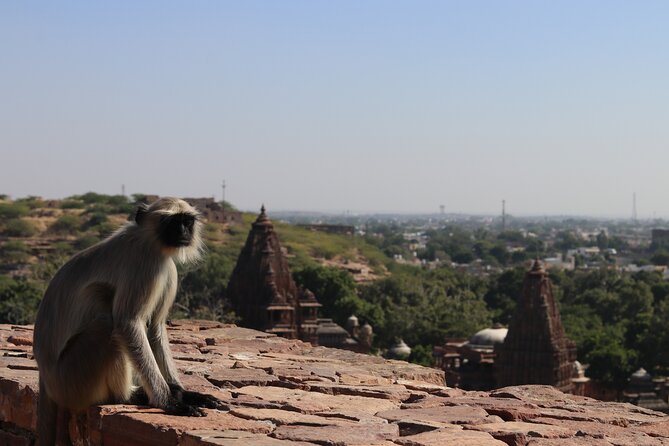
The grounds can also include monkeys. They are part of the atmosphere, but you should give them space and avoid treating them as a reason to get too close. The presence of animals, gardens, ruins, and memorials makes the visit feel less controlled than a formal museum, which can be appealing but also calls for ordinary care.
What the gardens add to the ruins
Mandore Garden is not only an archaeological site. The greenery and open paths change how the old structures feel. Instead of moving through one enclosed ruin after another, you pass between memorials, terraces, and temple remains in a garden setting.
That mix makes the stop approachable for people who want history without spending an entire day inside a fort. You can pause, look around, and let the setting give scale to the buildings. The gardens also provide visual relief from Jodhpur’s stone-heavy monuments.
At the same time, do not expect a perfectly maintained formal garden at every turn. The site’s identity comes from the contrast between cared-for public areas and structures worn by time. The result is uneven but engaging.
A toy train is also associated with the grounds. It may appeal to families or add a light touch to a visit centered on royal memorials and ruins. Treat it as an extra feature rather than the reason to book the walking tour, since the main focus is the historic site.
The museum may not be available
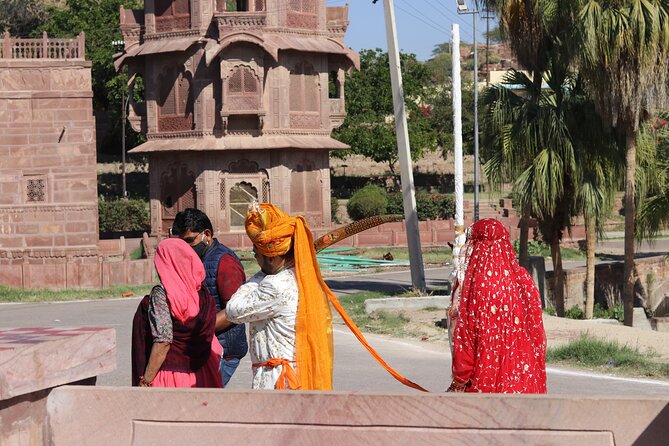
Mandore includes a museum, but it may be closed. That means you should not count on indoor displays to fill out the history or provide shade during the visit.
The walking tour is strongest when you want to see the outdoor monuments directly. If the museum is open, it could add useful context. If it is closed, the Hall of Heroes, fort ruins, temples, cenotaphs, and terraces still form the core of the experience.
This is one reason a guide can matter. Without interpretation, some structures may look like attractive stone buildings without a clear connection to the old capital. The experience provider is Jodhpur Heritage Walk, but no individual guide name is supplied, so you cannot choose a specific guide in advance from the available information.
A private format for a short visit
Only your group participates in this activity. That is useful if you want to ask about a carving, pause at the cenotaphs, or move through the garden at your own speed.
A private tour does not automatically mean the guide will customize every detail, so it is sensible to make your interests clear early. Tell the guide if you care most about architecture, royal history, religious details, or photography. The compact format should leave room for a focused conversation.
The listed duration is about two hours, while the general tour description allows two to three hours. Plan on roughly two hours of walking, with a little flexibility for stops and site conditions.
This length works well beside other Jodhpur plans. You can pair it with a morning or afternoon in the city rather than giving up an entire day. Since the tour returns to the starting point, your onward plans are easier to organize than they would be with a one-way outing.
Is $16 a fair price?
At $16 per person, the tour is reasonably priced for a private, guided visit lasting about two hours. You are paying for the guide’s time and the convenience of having the main features connected into one visit, not for transportation or a full-day excursion.
The value is strongest if Mandore is unfamiliar to you. A self-guided visit may show you the gardens and monuments, but the story of the abandoned capital, the move to Mehrangarh, and the role of the royal memorials can be harder to piece together on your own.
The price is less compelling if you already know the site well and prefer to wander independently. You also need to budget separately for getting to Mandore, since private transport is not included.
Bottled water is included, which is a small but practical touch in Jodhpur. Still, bring whatever else you normally need for a warm outdoor walk. The price does not cover transport, meals, or any unlisted extras.
Who will enjoy this walk most
I would recommend Mandore Garden to you if you like historic places that show age rather than hiding it. The site suits people interested in royal memorials, temple carving, fort ruins, and the way political power shifts from one place to another.
It also works well for families who want a manageable outing. The toy train may add interest for children, while the gardens give the visit more variety than a single monument. Keep an eye on younger children around the ruins and monkeys.
Architecture fans should allow time for the carved stonework. The cenotaphs and temples are the places to slow down, not rush through. If your main goal is a grand, intact fort with broad city views, Mehrangarh itself may be the better priority.
This tour may not suit you if you want air-conditioned transport, a fully restored site, or a museum-led history lesson. You need to organize your own ride and be comfortable walking outdoors on a site where some sections may feel worn and uneven.
Booking, weather, and cancellation details
You receive confirmation when you book, and the activity is near public transportation. The tour requires good weather. If poor weather causes cancellation, you are offered another date or a full refund.
You can cancel for a full refund up to 24 hours before the start time. Cancellations or changes made within 24 hours are not accepted and are not refunded. The cut-off uses local time in Jodhpur, so check the timing carefully if you are booking from another time zone.
Because the tour is private, a change affects only your party rather than a shared group. That makes the arrangement simple, but it also means you should be clear about your meeting time and transport plan before the day begins.
Should you book Mandore Garden Walking Tour?
Book it if you want a short, private introduction to the older royal center of Jodhpur. For $16, you get a focused walk through the Hall of Heroes, fort ruins, cenotaphs, temples, and garden terraces, with bottled water included.
I would choose this over a casual unstructured visit if you want the ruins tied to the story of the capital’s move to Mehrangarh. I would skip it only if transport arrangements are a problem, your fitness makes outdoor walking difficult, or your main aim is an intact palace and indoor museum.
Keep your expectations grounded. Mandore is a weathered former capital, not a fully rebuilt attraction. That is its appeal: you see royal ambition, memorial architecture, and the quiet remains of a town that lost its place in Jodhpur’s story.
FAQ
Where does the tour begin?
The tour begins at Mandore Garden Bus Stop in Mandore, Jodhpur, Rajasthan 342007, India.
Where does the tour end?
The activity ends back at the meeting point at Mandore Garden Bus Stop.
How long does the tour last?
The walking portion lasts about two hours, while the overall experience is described as approximately two to three hours.
How much does the tour cost?
The listed price is $16 per person.
Is transportation included?
No. Private transportation is not included. You must arrange your own way to and from the meeting point.
What does the tour include?
Bottled water is included. The tour also includes admission to the stated Mandore Garden visit.
Is this a private tour?
Yes. Only your group participates in the activity.
Can I cancel for a full refund?
Yes. You can cancel at least 24 hours before the start time for a full refund. Cancellations or changes made less than 24 hours before the start time are not refunded or accepted.
Just added around India
- Visit to Sahelion Ki Bari, Garden of the Maidens, Udaipur★ 4.0 · 2 reviews
- Kashmir Tulip Festival★ 5.0 · 43 reviews
- Sunder Nursery Delhi’s Heritage Garden Walk Tour★ 5.0 · 3 reviews
- Lodhi Garden Heritage Walk★ 5.0 · 7 reviews
- Delhi historical Gardens & Ruins★ 5.0 · 3 reviews
- Private Half-Day Delhi Flower Market Tour★ 5.0 · 5 reviews
- Dhobi Ghat, Ancient Stepwell and Lodhi Gardens Tour★ 5.0 · 2 reviews
- Flower Market Colors and Ganges Ghat Experience★ 5.0 · 2 reviews
India Garden Tours, compared.



Kolkata’s Flower Market – Hooghly’s Flower Fest Tour
Read our review →
Jaipur Sunrise Tour with Morning Flower Market Walk
Read our review →
Mughal Heritage Tour Including Lodhi Garden, Humayun Tomb and Akshardham Temple
Read our review →

Dhobi Ghat Laundry,Dharavi Slum & Flower market Tour
Read our review →
Jaipur Nahargarh Fort Sunrise or Sunset Tour with Flower Market
Read our review →Browse the lists this tour appears in