

Review · JAIPUR GARDEN TOURS
Jaipur City Tour with Traditional Flower Market Visit
Jaipur’s best local moment comes before the palaces: an early walk through the flower and vegetable market, followed by masala chai and a samosa or kachori at an old food shop. Then the day shifts to royal Jaipur, with Amer, Panna Meena Stepwell, Hawa Mahal, City Palace, and Jantar Mantar packed into a private car tour.
I like the private transport, which saves time between far-flung sights, and I like the way the morning market adds real daily life to a palace-heavy itinerary. Vinod is repeatedly named as the driver-guide, and the comments describe him as friendly, funny, helpful, and good at offering advice on food, shopping, and places to stay.
The main drawback is the pace. Ten hours is a long day, and the advertised route includes many stops. Entrance fees are also extra, with combined monument admission listed at about $30 per person, so the bargain headline price does not represent your final cost.
Key points at a glance
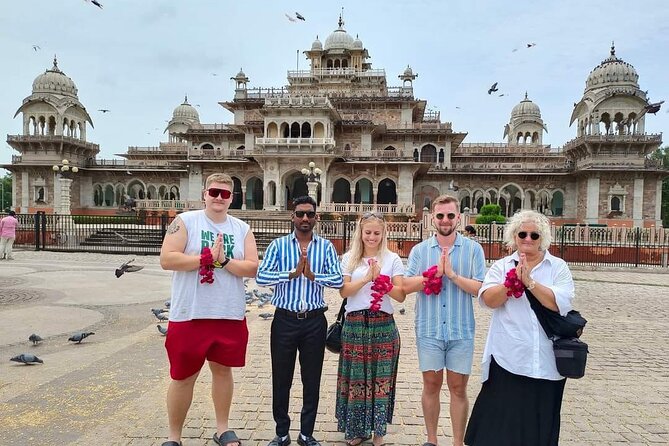
- The 7:00 to 8:00 AM start includes the flower market, a more local opening than a standard monument-only tour.
- Masala chai and a snack are included, with samosa or kachori listed as the food choices.
- Amer and Panna Meena Stepwell give you two of Jaipur’s most rewarding historic stops beyond the central city.
- The private air-conditioned car makes the long route easier and lets your group travel at its own pace.
- Vinod and his team are specifically named, with praise for friendly service, local advice, and flexible help.
- Admission, camera fees, and tips are extra, so budget beyond the low group price.
Why the flower market is the right way to start
If you choose the 7:00 to 8:00 AM time slot, the tour begins at Hawa Mahal for a photo stop before you walk toward the flower and vegetable market. This is a smart order. You see the famous pink facade first, then step away from the postcard view and into a working part of Jaipur.
The route passes an 18th-century heritage building on the way to the market. That small detail matters. You are not simply driven to a viewing platform, handed a camera moment, and moved on. You get a short walk through the old city and a look at how flowers and vegetables are sold in everyday Jaipur.
The market visit is likely to be most useful for you if this is your first time in India or your first morning in Jaipur. It gives you an early sense of the city’s street life before the monument circuit begins. You can ask about the flowers, buying customs, and local produce, though the exact amount of walking and explanation will depend on your guide.
Afterward, the tour stops at one of the oldest local food shops for masala chai and a snack. Samosa or kachori is included, along with bottled water. This is a simple food break, not a full breakfast, so eat something beforehand if you need a substantial meal.
If you start later, the flower market portion is not included. That is an important booking detail. The market is not a separate add-on described for every departure, it is tied to the early time slot.
More Flower Markets and Flower Fields in India
- Kolkata’s Flower Market – Hooghly’s Flower Fest Tour
★ 5.0 · 35 reviews - Jaipur Sunrise Tour with Morning Flower Market Walk
★ 5.0 · 16 reviews - Jaipur: Half-Day or Full-Day Tour with Flower Market
★ 4.9 · 14 reviews
Amer brings the royal setting
From the city, the route heads to Amer Town, about 11 kilometers from Jaipur. This is where the day turns from street-level Jaipur to the grand world of Rajput rulers and Mughal-influenced design.
Amer is known for palaces, temples, carved stonework, and a mix of Mughal and Rajput styles. The major highlights include Sheesh Mahal, the Mirror Palace, and Sila Devi Temple. The tour description does not promise a separate entrance to every named building, so you should confirm which parts are covered by your admission ticket and guide service.
Amer is one of the places where a local guide adds real value. A palace can become a blur of courtyards, gates, rooms, and decorative walls without context. With good explanations, you can better understand how the complex reflects royal life and the artistic tastes of Rajasthan.
The tradeoff is time. Amer can easily absorb much of a day by itself, while this itinerary continues to several more major sites. If you want a slow, room-by-room palace visit, you may find the full route too ambitious. If you want a broad first look at Jaipur, the stop gives you a strong introduction.
Panna Meena Stepwell rewards a short stop
Near Amer, you visit Panna Meena Ka Kund, a 16th-century stepwell set below a famous fortress. Its repeated stair patterns make it one of the most visually striking stops on the route.
Stepwells were built to reach and store water, but they also became social and architectural spaces. Here, the design is the main attraction. Look down into the geometric well and take time to notice how the stairs form a changing pattern from different angles.
The stop is described as a lesser-known place compared with Jaipur’s headline monuments. That makes it a useful counterpoint to the palaces. You are seeing a practical structure that also carries careful design.
Access conditions can vary, and the tour information does not state how long you will spend there. Use comfortable shoes and follow your guide’s instructions. Do not count on a long, unhurried photography session if the schedule is running behind.
Jal Mahal is a quick but worthwhile viewpoint
Jal Mahal appears on the drive back toward the central monuments. The palace sits in Man Sagar Lake and is one of Jaipur’s most recognizable views.
The value here is the setting rather than a full palace visit. The itinerary presents Jal Mahal as a sightseeing stop on the way, not as an interior tour. You should expect a chance to view and photograph the palace from outside, with the lake creating the picture.
This is a good example of how the private car helps. You can stop on the route without arranging another taxi or trying to work out the city’s traffic on your own. Still, ask your driver how long the stop will last, since the schedule includes many places and the exact stop length is not specified.
Same corner of the map, a different planting:
- Delhi: Yoga in Lodhi Garden
★ 4.9 · 53 reviews - Kashmir Tulip Festival
★ 5.0 · 43 reviews - Mughal Heritage Tour Including Lodhi Garden, Humayun Tomb and Akshardham Temple
★ 4.5 · 15 reviews - Mumbai:Dhobi Ghat Laundry,Dharavi Slum & Flower market Tour
★ 5.0 · 12 reviews
Royal Gaitor offers a quieter change of pace
Royal Gaitor sits at the foot of the Nahargarh hills and contains the cenotaphs of Maharaja Pratap Singh, Madho Singh II, and Jai Singh II. These are memorial monuments, not working palaces, and the mood is more restrained.
The stonework is carefully carved, and Jai Singh II’s marble cenotaph is singled out for its dome supported by 20 carved pillars. This is one of the more peaceful stops in a day otherwise filled with major sights and city traffic.
I like having a place such as Royal Gaitor in the route because it gives you a different view of Jaipur’s royal past. You are not only seeing where rulers lived. You are also seeing how they were remembered.
Hawa Mahal is more than a photo stop
The day includes Hawa Mahal, or the Wind Palace, which is also the first landmark you see if you take the early market route. Its five-story facade is built with a distinctive curved, honeycomb-like design and was linked to royal women viewing street life without being seen.
The description calls it the world’s tallest building built without a foundation and says it leans at an 87-degree angle. Those claims should be treated as tour talking points rather than the main reason to visit. The important thing for you is the facade itself, its unusual shape, and its role in Jaipur’s old city.
Because Hawa Mahal appears twice in the morning plan, the first visit is mainly for a photo before the market walk. The later sightseeing stop may give you more time to consider the building. Ask your guide whether the itinerary includes an interior visit, since the supplied details do not clearly state that entrance is included.
City Palace and Jantar Mantar show Jaipur’s intellectual side
City Palace lies inside Jaipur’s walled city. Maharaja Sawai Jai Singh II, the city’s founder, began the complex, which combines Rajput and Mughal design. Part of the palace remains connected to the former royal family, while other sections are open for visitors.
The palace gives you the grand courtly side of Jaipur: decorated spaces, formal architecture, and royal history. Since entrance fees are separate, confirm the current ticket price and exactly which areas your ticket covers before you enter.
Jantar Mantar is close by and offers a useful change in subject. Built in the early 18th century, it contains about 20 large fixed instruments used for astronomical observation. These are not small museum objects behind glass. They are huge masonry forms designed to measure the movement of celestial bodies.
Jantar Mantar makes far more sense with a guide than without one. The instruments can look like abstract sculptures if you do not know what each was built to measure. Give this stop your attention, even if you are beginning to tire, because it shows Jaipur as a center of science and planning as well as royal display.
Isarlat and Albert Hall add two different city views
Isarlat, also called Sargasuli Tower, is a seven-story monument built by Sawai Ishwari Singh in 1749. You can see panoramic city views from the top of this historic minaret.
The tour information does not make clear whether climbing the tower is included or how much time is allowed. If access is open during your visit, the view can help you understand Jaipur’s layout after seeing the city from street level. If the stop is exterior only, it still adds a useful landmark between the larger attractions.
Albert Hall Museum is located in Ram Niwas Garden, outside the old city wall near New Gate. It is Rajasthan’s oldest museum and is housed in an Indo-Saracenic building.
This stop is best for architecture and a broad museum visit rather than a quick checklist item. The itinerary includes the museum, but it does not specify how long you spend inside or which galleries you see. With so many stops in one day, you may have to accept a short visit.
Galta Ji closes the day with temples and water tanks
Galta Ji is about 10 kilometers from Jaipur and occupies a series of temples in a narrow gap between hills. Natural springs feed sacred water tanks where Hindu pilgrims bathe.
The setting gives you a final change from palace courtyards and city streets. The site is tied to the story of Saint Galav, who is said to have lived, meditated, and practiced penance here. A higher temple offers views across the valley and toward Jaipur’s fortifications.
You should be prepared for a religious site rather than a standard museum attraction. Dress and behave respectfully, and follow local instructions around the water tanks and temples. The tour details do not specify the amount of walking or the condition of every path, so ask your guide before heading farther uphill.
Galta Ji may be especially appealing if you want a spiritual and scenic stop. It may be less appealing if you are already worn out after Amer, the palace district, and the museum. The long day is the central compromise of this tour.
How the private car changes the day
The tour lasts about 9 to 10 hours and uses a private air-conditioned car. Pickup and drop-off are offered from a Jaipur hotel, airport, railway station, or another desired place in Jaipur, with private transportation, fuel, parking, and taxes included.
For this particular route, private transport is more than a comfort feature. Amer, the central monuments, Royal Gaitor, Albert Hall, and Galta Ji are spread across different parts of Jaipur. A private car keeps you from arranging separate rides between each cluster.
The group is limited to your party, up to three people at the advertised $13.59 group price. That can be excellent value for a couple or small family, especially because the price is not charged per person for the transport portion.
The low price needs careful reading. Combined admission to Jaipur’s popular monuments is listed separately at about $30 per person. Camera fees are also extra, and tips are recommended. Add those costs before comparing this tour with a more expensive option.
The day is also only as good as the guide and driver assigned to you. Vinod is named in the tour information, and the comments about his service repeatedly focus on friendliness, humor, professional driving, and useful advice about eating, shopping, and accommodation. The same name appears in accounts of repeat contact over several years, which suggests a strong connection with the operator, but you should confirm who will lead your particular booking.
Markets after the monuments
If you still have energy, the driver can take you to Jaipur markets after sightseeing. The suggested shopping includes fabrics, sandals, bags, and other goods at low prices.
This flexibility can be useful, but shopping time changes the shape of the day. You already have a long list of monuments, so tell the driver how much time you want to spend browsing. If shopping is not a priority, say so clearly and use the remaining time for rest or a direct return to your hotel.
The market option is best viewed as flexible local help, not a guaranteed shopping tour with a set list of stores. The exact shops and length of the stop are not specified.
Who should book this Jaipur tour?
I would choose this experience if you have one full day in Jaipur and want a broad first look without arranging transport at every turn. It is particularly well suited to couples, families, and small groups who value a private car and want both major sights and a local morning stop.
It also suits you if you want practical help from a driver-guide. The repeated praise for Vinod centers on his friendly manner, local suggestions, and willingness to help, which can make a busy day feel easier.
I would hesitate if you want slow museum visits, long meals, or extended time at each palace. The itinerary is ambitious, and the 9 to 10 hour schedule leaves limited room for lingering. You should also budget carefully for entrance tickets, camera charges, and gratuities.
Cancellation is free up to 24 hours before the start time. Poor weather or failure to meet the minimum number of participants can lead to a different date, another experience, or a full refund.
Should you book it?
Book this tour if you want Jaipur’s major monuments in one private day and you value the early flower market, chai break, and local guidance as much as the famous palaces. At $13.59 for up to three people, the transport and planning value is strong, even after adding admission fees.
Choose another plan if you would rather focus deeply on Amer and City Palace, or if a packed schedule sounds tiring. For most first-time visitors with limited time, though, the mix of market life, royal architecture, astronomy, temples, and private transport makes this a practical way to get your bearings in Jaipur.
FAQ
Does the tour include hotel pickup and drop-off?
Yes. Pickup and drop-off are offered from hotels in Jaipur, as well as the airport, railway station, or another desired place in Jaipur.
Is the flower market included on every departure?
No. The flower and vegetable market visit is tied to the 7:00 to 8:00 AM time slot. That early option also includes the walk from Hawa Mahal toward the market.
What food and drinks are included?
Bottled water is included, along with complimentary tea, coffee, or lassi and a snack such as samosa or kachori.
Are monument entrance fees included?
No. Combined entry fees for Jaipur’s popular monuments are listed at about $30 per person. Camera fees at the monuments are also separate.
How many people can join the private tour?
The advertised price is for one group of up to three people. Only your group participates in the private activity.
How long does the tour last?
The tour takes approximately 9 to 10 hours, depending on the day’s schedule and stops.
Just added around India
- Visit to Sahelion Ki Bari, Garden of the Maidens, Udaipur★ 4.0 · 2 reviews
- Kashmir Tulip Festival★ 5.0 · 43 reviews
- Sunder Nursery Delhi’s Heritage Garden Walk Tour★ 5.0 · 3 reviews
- Lodhi Garden Heritage Walk★ 5.0 · 7 reviews
- Delhi historical Gardens & Ruins★ 5.0 · 3 reviews
- Private Half-Day Delhi Flower Market Tour★ 5.0 · 5 reviews
- Dhobi Ghat, Ancient Stepwell and Lodhi Gardens Tour★ 5.0 · 2 reviews
- Flower Market Colors and Ganges Ghat Experience★ 5.0 · 2 reviews
Jaipur Garden Tours, compared.
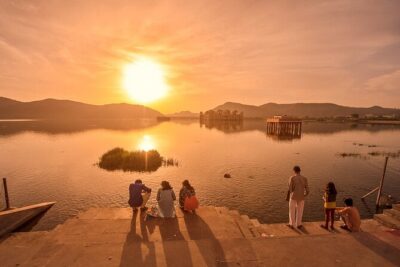
Jaipur Sunrise Tour with Morning Flower Market Walk
Read our review →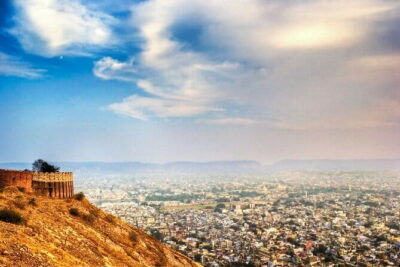
Jaipur Nahargarh Fort Sunrise or Sunset Tour with Flower Market
Read our review →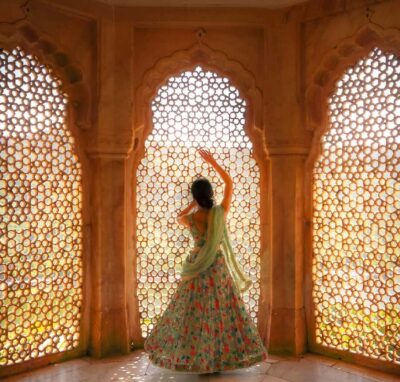
Half or Full-Day Sightseeing Tour with Flower Market
Read our review →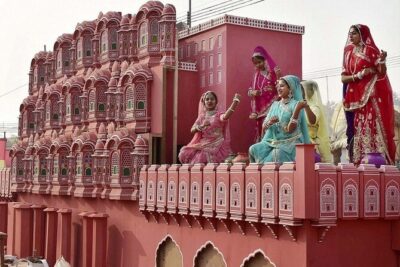
Jaipur Half-Day Tour with Flower Market and Block Printing
Read our review →
Jaipur Half-Day Tour with Flower Market & Sunset Views
Read our review →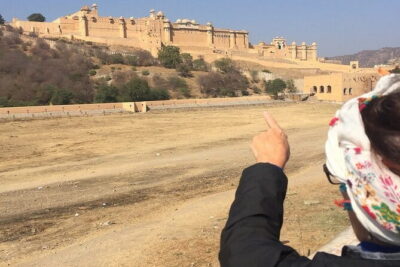
Jaipur Half-Day Tour with Flower Market by Tuk-Tuk or Car
Read our review →Browse the lists this tour appears in