
Review · NETHERLANDS GARDEN TOURS
Brussels: Holland Keukenhof & Kinderdijk Guided Day Tour
The star of this long day is the contrast: Kinderdijk’s working windmills explain how the Dutch hold back water, while Keukenhof covers an enormous garden in tulips, hyacinths, and daffodils. You get canals, old machinery, flower beds, and the Dutch countryside in one ambitious outing from Brussels.
I like the chance to enter two furnished windmills rather than simply photograph them from a path. I also like the canal cruise, which gives you a calm, clear view of all 19 mills. The main drawback is the travel time: expect more than six hours on the coach during a 12-hour day, and flower displays depend on the weather and season.
Key points at a glance
- Two real windmills at Kinderdijk: Walk through the cramped rooms, wooden gears, and living quarters used by miller families.
- A canal view of all 19 mills: The boat ride is an easy way to see how the mills line up beside the dikes.
- A 30-minute Keukenhof introduction: Your guide points out the park’s story, layout, and best areas before you explore alone.
- Free time at Holland’s best-known flower park: You have about 2 hours and 45 minutes for gardens, pavilions, photographs, and flower beds.
- A 12-hour round trip from Brussels: Central pickup is convenient, but the coach ride takes up a large part of the day.
- A good spring-only choice: Tulips and field views cannot be guaranteed because nature and weather set the schedule.
Why this Brussels day trip works
This tour links two places that tell different parts of the Dutch story. At Kinderdijk, the subject is survival: water is everywhere, and the windmills helped pump it away from low-lying land. At Keukenhof, the mood changes completely. You move from engineering and water control to carefully planned gardens filled with spring bulbs.
That pairing makes the tour more useful than a simple photo trip. You see the pretty side of the Netherlands, but you also learn why the country looks the way it does. Dikes, canals, drainage systems, and mills are not just scenery here. They are part of daily life and national history.
The price is $192 per person. That is a serious outlay, but it includes central Brussels pickup and return, a single-deck coach, both entrance fees, the Kinderdijk cruise, entry to two windmills, and a guide in English or Spanish. Buying separate transport and tickets would require more planning and would be difficult to fit into one day from Brussels. The value is strongest if you want both destinations and prefer someone else to handle the cross-border travel.
You should not book this as a relaxed local outing. It is a full day with an early start time determined by availability, long road sections, and several hours of walking. If your priority is one place in great depth, a shorter tour focused only on Keukenhof or Kinderdijk may suit you better.
More Tulip Fields and Keukenhof Gardens in the Netherlands:
- Amsterdam: Keukenhof Entry & Shuttlebus with Flexible Return
★ 4.7 · 11,891 reviews - From Amsterdam: Keukenhof Ticket with Transfer
★ 4.4 · 4,089 reviews - Amsterdam: Tour to Keukenhof Gardens with Windmill Cruise
★ 4.5 · 2,819 reviews
Meeting in central Brussels
The meeting point is on Boulevard de Berlaimont, about a six-minute walk from Brussels Central Station. Look for the guide holding a sign with the tour company logo and the tour title. Using Google Maps is sensible, since a short walk in central Brussels can still be confusing if you are carrying luggage or arriving by train.
The group travels in a single-deck bus. The tour can include additional pickup locations along the route, so the exact departure may shift slightly. Traffic can also change the timing. Keep your morning flexible and do not schedule a tight evening connection immediately after the return.
The guide speaks English and Spanish, and the tour may be operated in both languages. Guides on different departures have included Matteo, Bruno, David, and James. The guide’s role matters most during the short introduction at Keukenhof and while explaining Kinderdijk. You also get quiet time on the coach, which is welcome during such a long day.
Bring comfortable shoes. The sites require walking on paths, dikes, and garden routes, and Kinderdijk includes narrow staircases inside the mills. A camera is useful, though your phone will handle most flower photographs well.
The coach ride from Brussels to Kinderdijk
The first road section takes about 2 hours and 15 minutes. That is the price of seeing a Dutch site from a Belgian base. You cross from the city into open countryside, and the coach gives you a chance to rest before the walking begins.
This section is not sightseeing in the usual sense. You may see farms, canals, and flat countryside from the window, but the main benefit is convenience. You avoid changing trains or arranging a separate connection to a rural UNESCO site.
The full day includes several hours in transit. Previous schedules have included more than six hours of road time, and traffic can stretch that further. Bring water and consider packing a snack because food and drinks are not included. The coach is comfortable enough for the journey, but you should be realistic about the pace.
Kinderdijk and the Dutch battle with water
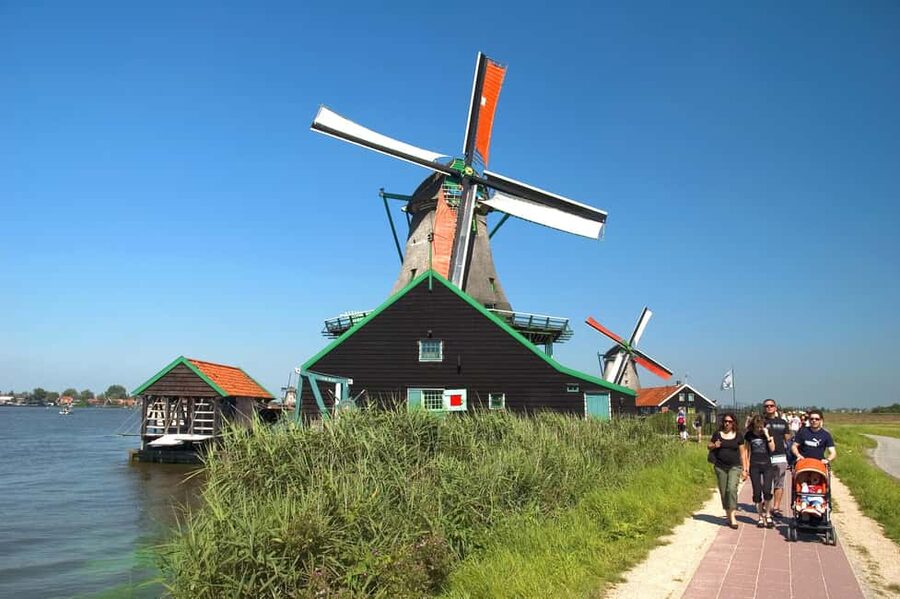
Kinderdijk is the more meaningful stop for understanding the Netherlands. Its 19 historic windmills date from the 18th century and remain part of a water management system that is still maintained today. The mills sit beside dikes and canals in a carefully controlled area where water is never merely background scenery.
The key idea is simple. Much of the Netherlands lies at or below sea level, so people have long needed to move water away from inhabited and cultivated land. Windmills once provided the power. Modern pumping systems now handle much of the work, but Kinderdijk shows the earlier method in its original setting.
You begin with time to visit the site, use the multilingual audio guide, and explore on your own. The visitor center and Wisboom Pumping Station add modern context. Together, they show the change from wind-powered machinery to newer technology without treating the old mills as frozen museum pieces.
This is not just an open-air collection of pretty buildings. The water system still functions, and that gives the visit more weight. You are looking at practical infrastructure that helped shape Dutch life.
More Garden Tours in the Netherlands:
- From Amsterdam: Keukenhof Gardens Ticket and Transfer
★ 4.5 · 2,741 reviews - Utrecht: De Haar Castle + Gardens Entry Ticket
★ 4.7 · 1,838 reviews - Amsterdam: Day Tour Keukenhof and Zaanse Schans Windmills
★ 4.5 · 1,549 reviews - Amsterdam: Keukenhof and Zaanse Schans Live Guided Day Tour
★ 4.6 · 1,089 reviews
Inside two furnished windmills
The strongest part of Kinderdijk is entering two windmills. From the outside, a mill can look like a charming country symbol. Inside, the scale and awkwardness make the work more real.
You will see wooden gears, tight stairways, and the small spaces where millers and their families lived and worked. The rooms help you understand that operating a mill was not a romantic hobby. It was a demanding occupation tied to weather, machinery, water levels, and the safety of the surrounding community.
The staircases are narrow, so this section is not suitable for everyone. The activity is specifically not recommended for wheelchair users or people with mobility impairments. If you are steady on your feet but dislike confined spaces, take your time and follow the guide’s instructions.
The audio guide fills in details that a quick walk past the mills would miss. It explains the water system, the daily routine, and the purpose of the buildings. I would give the audio guide your attention here, then save more casual photography for the paths and boat.
Seeing Kinderdijk from the canal
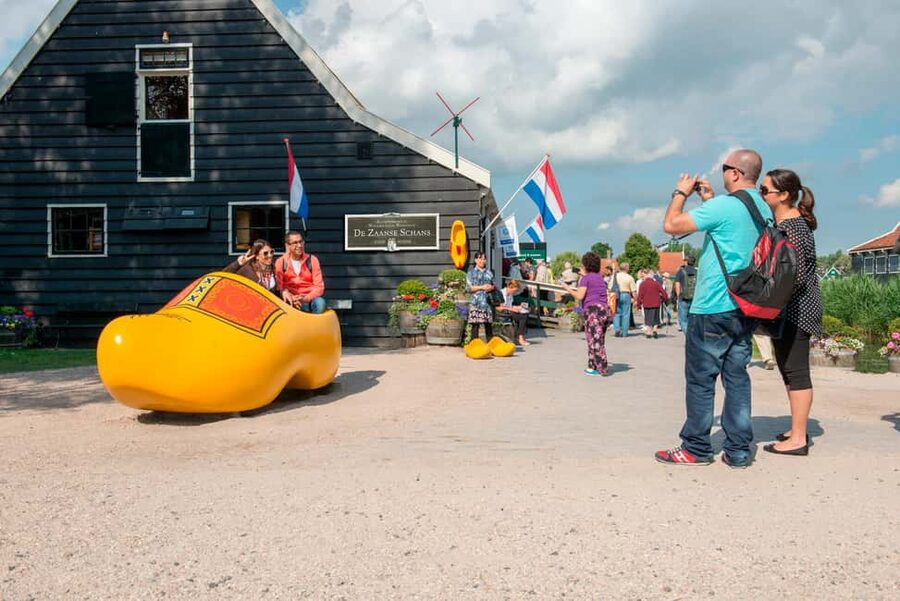
The canal cruise gives the site its best wide view. From the water, the windmills line up beside the dikes, and you can see how the buildings relate to the canals and drainage system. It is also an easier way to appreciate the scale of the site after walking through the mills.
The boat ride is scenic rather than a separate history lecture, so do not expect a long narrated cruise. Its value is the viewpoint. You can photograph the repeating mills, reflections, and open countryside without trying to fit the whole scene into one narrow path.
You also have time to walk the dikes and footpaths. Use that time for the details: mill blades, water channels, wooden construction, and views across the flat Dutch countryside. Kinderdijk rewards a slower pace, but the scheduled 2.5 hours must cover the visit, cruise, and independent exploration. Keep an eye on the meeting time.
The road to Keukenhof
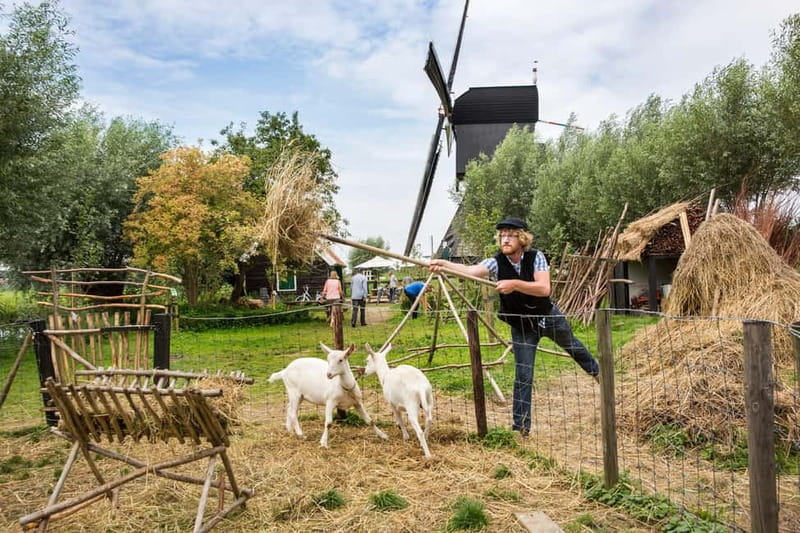
After Kinderdijk, the coach continues for about 1 hour and 30 minutes toward Keukenhof. This break is useful because the second stop is another walking-heavy visit.
The exact arrival time can shift with traffic. That matters in spring, when Keukenhof is popular and the roads around the flower-growing area can be busy. The tour includes entry, so you avoid arranging admission yourself, but you cannot control how much time remains if the road journey runs late.
The schedule allows a 30-minute guided introduction followed by about 2 hours and 45 minutes of free time. That is a sensible split. A short orientation helps you get your bearings fast, then you can choose your own route instead of following a guide through every path.
Keukenhof’s flowers, paths, and pavilions
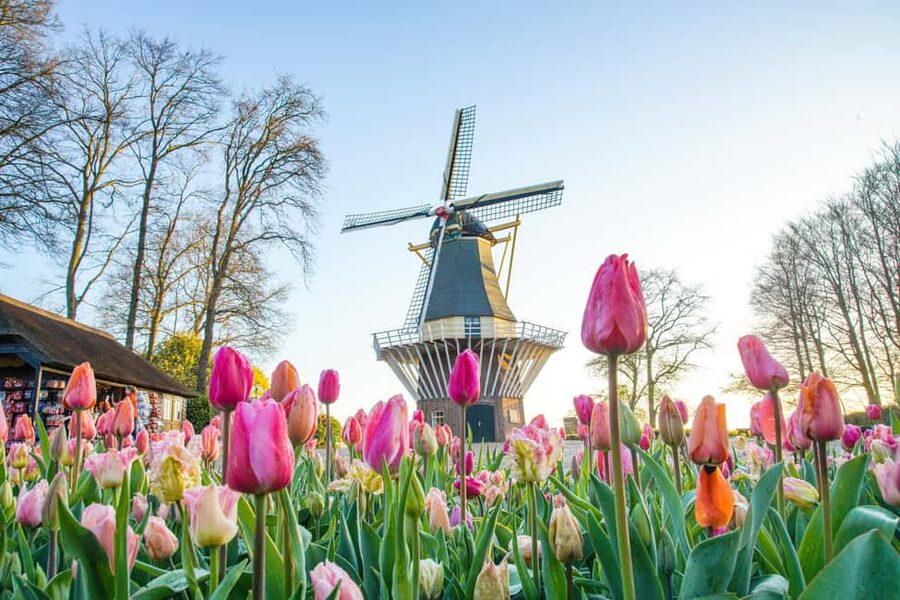
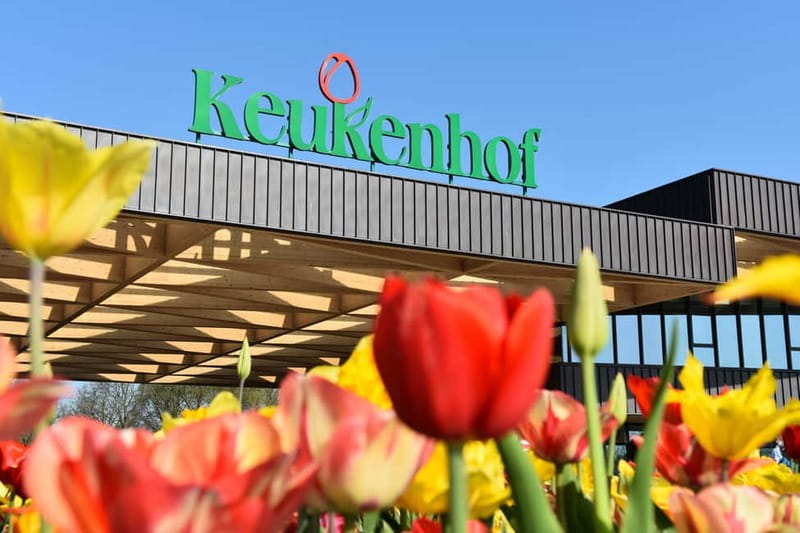
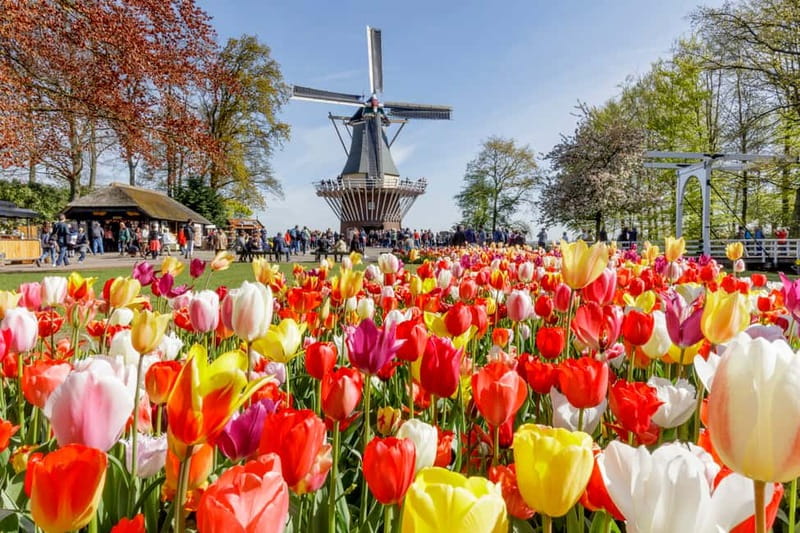
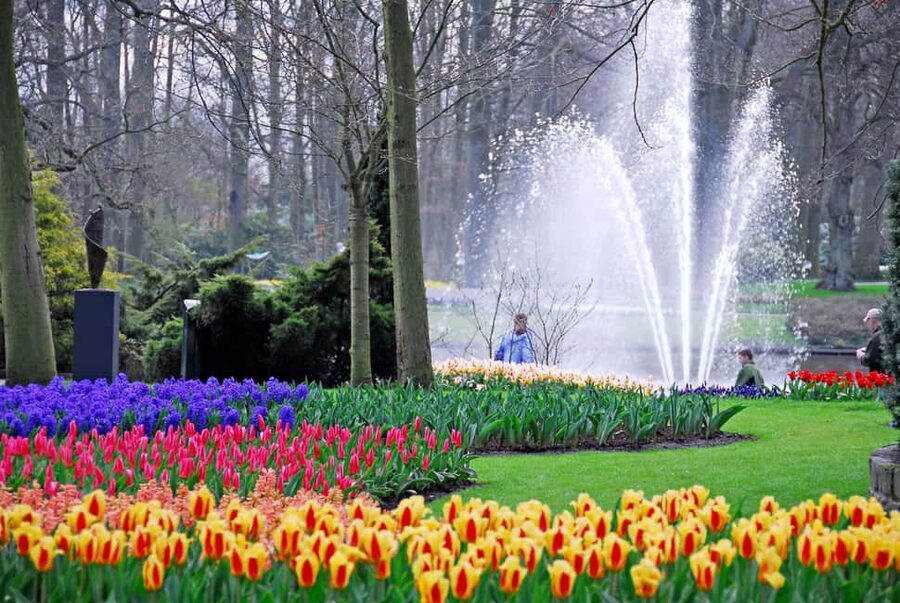
Keukenhof is the visual high point of the day. The park is known for millions of spring bulbs, including tulips, hyacinths, daffodils, and other flowers. Garden beds are arranged in themed designs among mature trees, paths, and pavilions.
The scale is important. This is not a single tulip bed beside a village street. It is a large garden made for wandering, with different sections and changing views around each turn. The flowers are arranged with care, so even visitors who do not usually plan their trips around gardens can find plenty to see.
The 30-minute introduction gives you the park’s background, explains the floral designs, and points out areas worth your time. Listen closely at the start, then use the free period to set your own pace. You might spend your time on the main beds, visit a pavilion, or concentrate on photographs.
The park can be crowded during the best bloom periods. The tour does not promise an empty garden, and you should expect to share popular paths and viewpoints. Still, the free time is long enough to avoid feeling pushed from one bed to the next.
Flower fields and the limits of nature
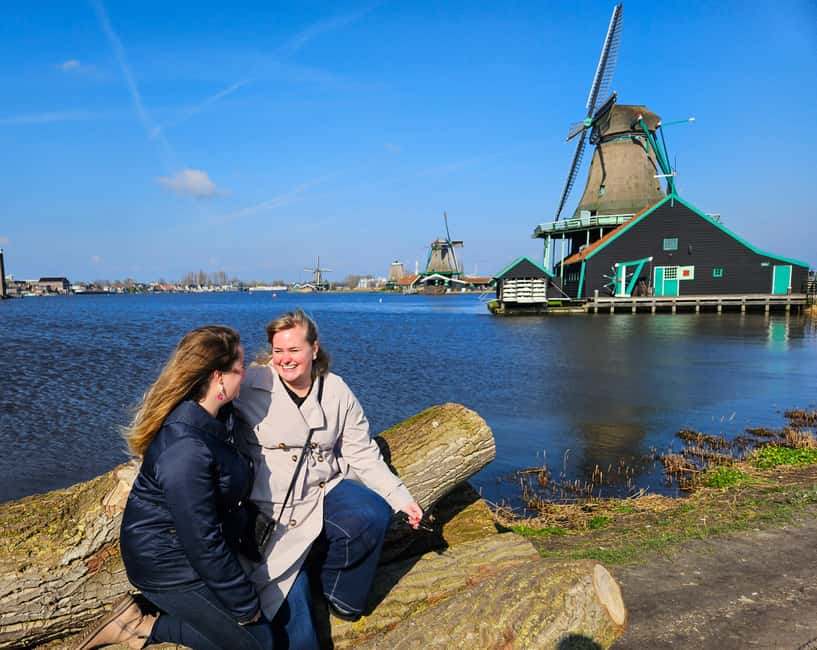
The surrounding flower fields can add a memorable view, but they depend on timing and weather. The tour specifically warns that tulips and other bulbs are natural products. Advanced growing methods help, but they cannot guarantee how many flowers will be open or how much of the surrounding fields you will see.
That warning is important. Keukenhof controls its garden displays, but it cannot control a cold spring, heavy rain, or an early blooming period. If you book mainly for the fields outside the park, accept some uncertainty.
The park itself is the safer reason to book. It has planned displays and multiple indoor and outdoor areas, so you still have a worthwhile visit if the surrounding fields are not at their best. Weather also affects photography, walking comfort, and the color of the day, so bring a light layer and shoes you can use for several hours.
What the $192 price really buys
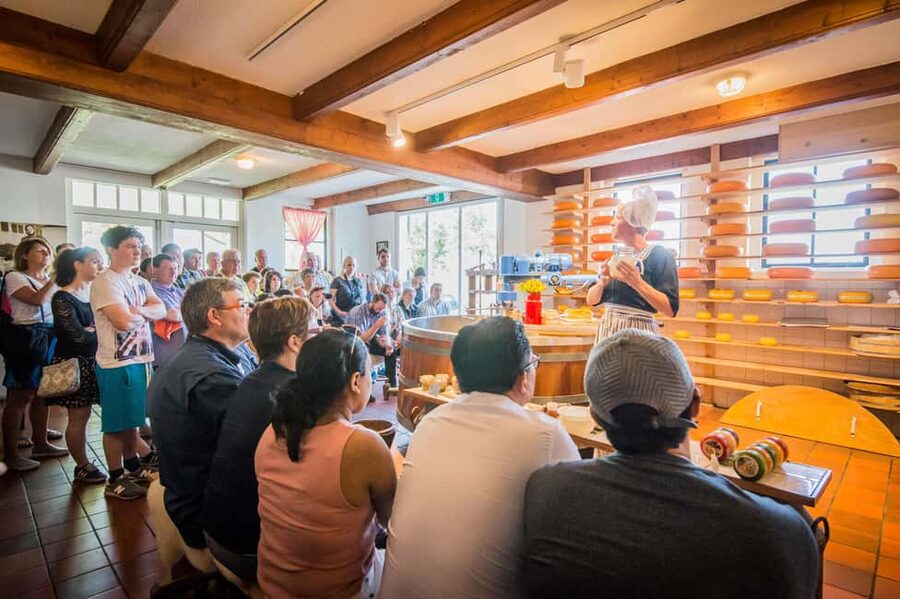
At $192, this is not the cheapest way to see Dutch flowers. You are paying for a complete day from Brussels, including transportation across the border, entry to both attractions, the Kinderdijk boat, two windmills, and a live guide.
The package makes the most sense for you if:
- You are based in Brussels and want both sites in one day.
- You do not want to plan Dutch train and bus connections.
- You value a guide’s explanations at Kinderdijk.
- You are visiting during the short Keukenhof season.
- You are comfortable with a long coach ride and an active schedule.
The value is weaker if you want plenty of time at either site. Kinderdijk receives about 2.5 hours, while Keukenhof receives a little over three hours including the introduction. That is enough for a solid first visit, not enough for a slow photographic study.
Food and drinks are not included, so budget for your own meals and carry water. The coach return takes about three hours, followed by arrival back at Boulevard de Berlaimont. You should be ready for a late finish depending on traffic.
Who should book this tour
I would recommend it to first-time visitors who have one spring day available and want the two most recognizable sides of Dutch culture: water management and flowers. Couples, families with older children, and active sightseers can get a lot from it if they accept the long schedule.
It is less suitable for anyone who needs step-free access, dislikes coaches, or wants a quiet, unhurried garden visit. The narrow windmill stairs and extended walking make comfortable footwear essential. Pets are not allowed.
The tour is also a good match for English and Spanish speakers who want live explanations rather than a purely independent outing. Guides such as Matteo, Bruno, David, and James have led different departures, but the exact guide is not guaranteed.
FAQ
How long is the Brussels to Kinderdijk and Keukenhof tour?
The advertised duration is 12 hours. Times can change because of traffic and additional pickup locations along the route.
Where does the tour start and finish?
It starts and ends on Boulevard de Berlaimont in central Brussels, about a six-minute walk from Brussels Central Station.
What languages are available?
The live tour guide is available in English and Spanish. The tour may be operated in multiple languages.
Are meals and drinks included?
No. Food and drinks are not included, so you should plan to bring or buy your own refreshments.
Does the tour include the Kinderdijk boat cruise and windmills?
Yes. Admission to Kinderdijk, entry to two windmills, and the canal cruise are included.
Can I use a wheelchair on this tour?
The activity is not suitable for wheelchair users or people with mobility impairments. The windmills include narrow staircases, and the tour involves walking at both sites.
Should you book it?
Book this tour if you want Keukenhof and Kinderdijk in one day without arranging Dutch transport yourself. The canal cruise, two mill interiors, and free time among the spring flowers give you more than a quick photo stop, while the English or Spanish guide adds useful context.
Skip it if six or more hours on a coach sounds tiring, or if you need step-free access. The $192 price is fair for a full cross-border day with admissions and transport, but the real bargain is convenience. You trade independence and extra time at each site for an easy way to see both before returning to Brussels.
Just added around the Netherlands
- Hillegom: Tulip Barn Entry Ticket★ 4.6 · 81 reviews
- From Rotterdam: Private Keukenhof & Windmills Tour★ 5.0 · 2 reviews
- From The Hague: Private Sightseeing tour to Keukenhof★ 5.0 · 2 reviews
- Lisse: Enjoy the Tulip Fields by Bike with a Local Guide!★ 4.7 · 65 reviews
- Enjoy the tulip fields in a Landrover with a local guide!★ 4.9 · 14 reviews
- From Amsterdam: The Early Flower Tour, full day with Lunch★ 5.0 · 2 reviews
- From Amsterdam: VIP Keukenhof Tulip Tour with Private Driver★ 5.0 · 2 reviews
- From Amsterdam: take the famous Tulip route tour★ 4.9 · 12 reviews
Netherlands Garden Tours, compared.
Keukenhof Entry & Shuttlebus with Flexible Return
Read our review →
Tour to Keukenhof Gardens with Windmill Cruise
Read our review →
Day Tour Keukenhof and Zaanse Schans Windmills
Read our review →
Keukenhof and Zaanse Schans Live Guided Day Tour
Read our review →
Keukenhof and Zaanse Schans Windmills Guided Day Trip
Read our review →
Go City Amsterdam Pass: 40+ Attractions including Keukenhof
Read our review →Browse the lists this tour appears in