
Review · IRELAND GARDEN TOURS
Irish National Stud & Gardens Skip the line Entrance
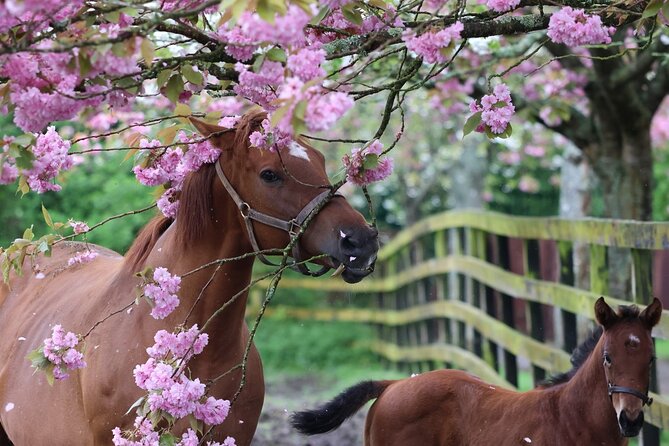
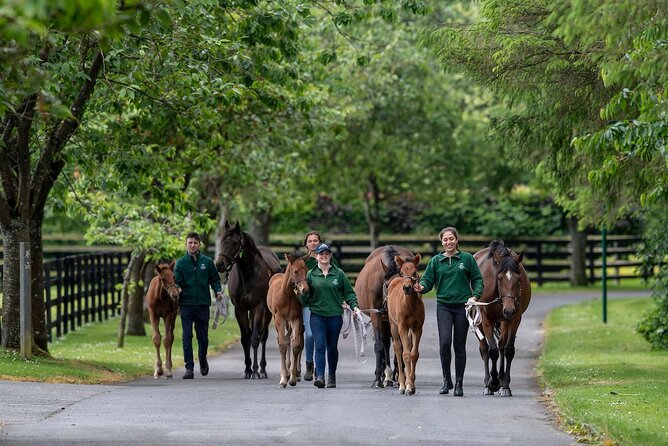
The most unusual part of this outing is the chance to see a working thoroughbred stud open to the public. You can meet stallions, mares, foals, and retired racing stars such as Hurricane Fly, Beef or Salmon, and Faugheen, then follow the story of Irish racing through an interactive exhibit.
I like the mix of animals and gardens. The public tour gives you a clear look at breeding and racing, while the Japanese Gardens and St Fiachra’s Garden reward a slower wander afterward. The main caution is simple: horse numbers and activity can vary, and some visitors find empty stables and limited information when the farm is quiet.
Key points to know before you go
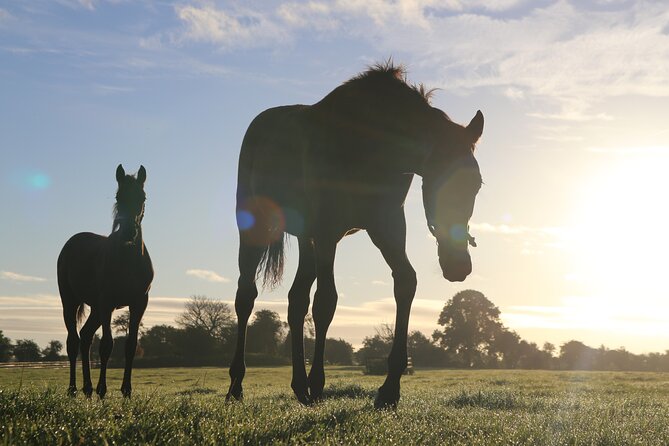
- Retired champions on site: The Living Legends team includes Hurricane Fly, Beef or Salmon, and Faugheen.
- Three main activities: Plan time for the stud tour, Irish Racehorse Experience, and both gardens.
- A calm change of pace: The Japanese Gardens and St Fiachra’s Garden add beauty beyond the horse displays.
- Near Dublin, but not in Dublin: The stud is about 40 minutes from the city, while Kildare train station is roughly three miles away on foot.
- Flexible visit length: Your stay can run from about one hour to seven, depending on how much time you give the gardens and exhibits.
- Good value for horse lovers: At $22.98 per person, admission covers the tour, guide, racehorse exhibit, and gardens.
Why this stud is worth the trip from Dublin
The Irish National Stud & Gardens gives you something unusual: an attraction built around elite racehorses that also works as a garden visit. Ireland has plenty of historic houses and scenic estates, but far fewer places where you can see thoroughbred breeding as part of a public visit.
The stud began in the early 1900s and helped produce some of Europe’s finest racehorses. You are not simply looking at a museum display. The tour takes you around an active stud environment, where the focus is on stallions, mares, foals, and the work behind racing success.
That makes this a strong choice for anyone who already follows horse racing. You get a closer look at the animals and the breeding process, along with background on the stud itself. If you know little about racing, the guided portion and the Irish Racehorse Experience help explain why these horses matter.
The setting also broadens the appeal. The property covers 850 acres of rolling green ground, and the gardens give you room to slow down after the more focused horse sections. I would not treat this as a quick photo stop. The advertised visit can last from one to seven hours, and the longer end makes sense if you walk both gardens at an easy pace.
Skip-the-line tickets around the world:
- Versailles: Skip-the-Line Tour of Palace and Gardens Access
★ 4.7 · 10,429 reviews - Vienna: Schönbrunn Palace & Gardens Skip-the-Line Tour
★ 4.7 · 7,739 reviews - Vienna: Skip-the-Line Sisi Museum, Hofburg and Gardens Tour
★ 4.8 · 5,918 reviews
What happens during the public stud tour
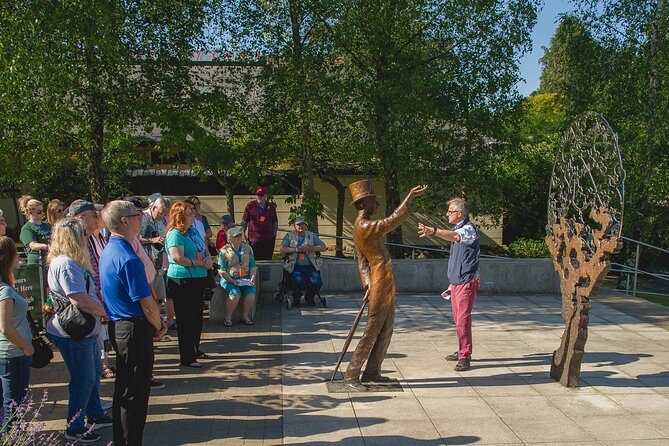
The public tour is the heart of the visit. A guide takes you around the stud and explains the breeding side of racing, the history of the farm, and the role of its horses. The exact animals visible can vary, so you should arrive with realistic expectations rather than assuming every stable will be full.
You can expect to see stallions, mares, and foals when they are present in the accessible areas. The best part is the connection between the animals in front of you and the wider racing world. These are not generic farm horses. The stud’s purpose is tied to the breeding and training of thoroughbreds, which gives the tour a more specialized feel.
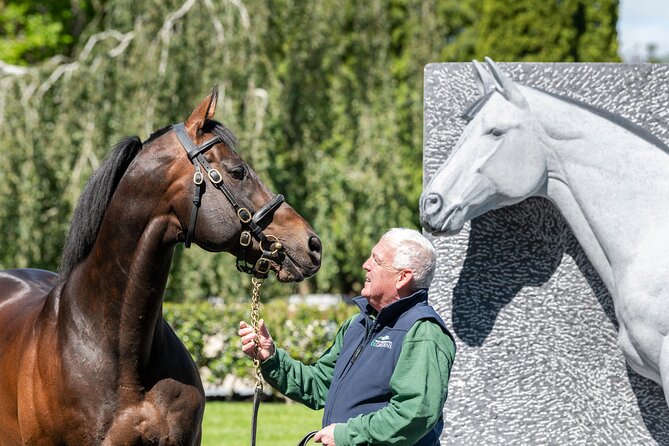
The retired racing stars are a particular draw. Hurricane Fly, Beef or Salmon, and Faugheen are part of the Living Legends team. Seeing celebrated horses after their racing careers gives the experience a human element. You are reminded that a racehorse’s story does not end when it leaves the track.
I like the guided format because it gives structure to what could otherwise be a walk around stables. One well-prepared guide can make the difference, especially when explaining breeding terms or the history of the stud. Still, the tour is not a guarantee of constant horse action. Some areas may be quiet, and you may encounter empty stables.
That is the main weakness to keep in mind. If your priority is seeing a large number of horses at close range, the experience may feel uneven. The farm is a working place, not a staged animal show. On a quieter visit, the grounds and gardens carry more of the day.
The Irish Racehorse Experience explains the sport
The interactive Irish Racehorse Experience is included in admission and helps fill in the parts that live animals cannot show you. It brings the world of thoroughbred racing to life through an activity designed to be more hands-on than a standard display.
This is useful even if you already like horses. The public tour shows you the farm and animals, while the exhibit gives you a broader view of the sport and the racehorse’s place in Irish culture. You can use it to connect the breeding process with the excitement and pressure of racing.
For families and first-time racegoers, this section may be the easiest way to understand what makes a racehorse special. It gives the visit a clearer story, rather than leaving you with only a series of stables and garden paths.
I would make a point of doing all three main parts of the attraction. Some people may be tempted to tour the stud and leave, but that would cut out much of the value. The racehorse exhibit adds context, while the gardens provide the quietest and most visually appealing part of the visit.
The Japanese Gardens deserve unhurried time
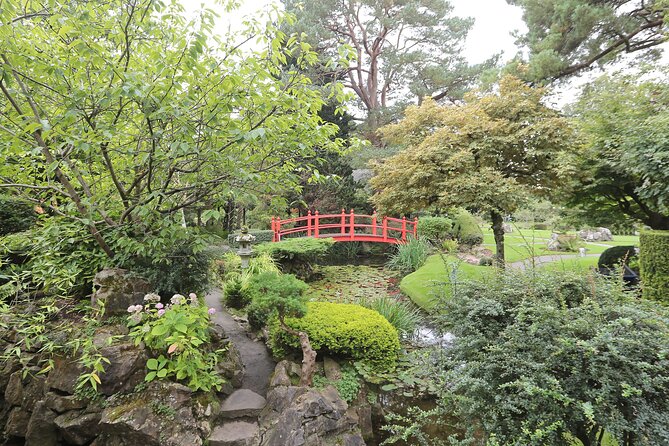
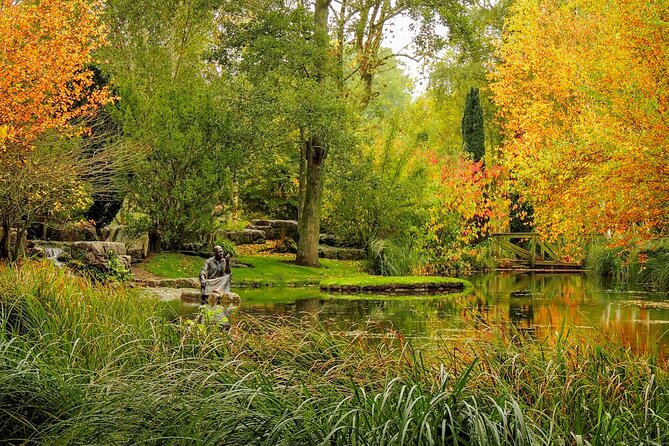
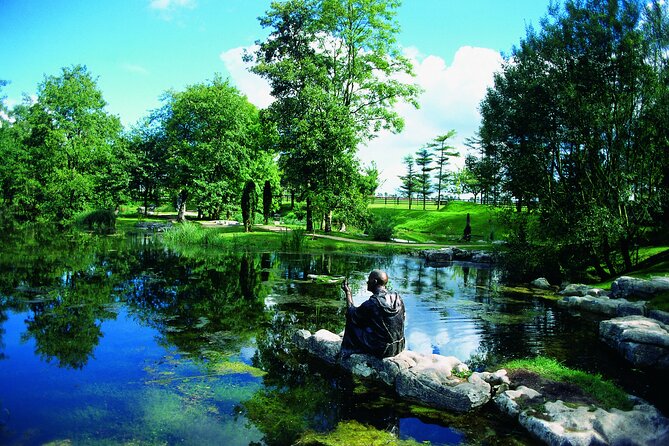
The Japanese Gardens are one of the strongest reasons to visit even if horse racing is not your main interest. They offer a sharp change from the practical setting of the stud, with a carefully arranged garden designed for walking and reflection.
Give yourself time here rather than treating it as a short add-on. The garden is repeatedly singled out as a highlight, and its appeal comes from the way the paths, planting, and features guide you through the space. You do not need specialist gardening knowledge to enjoy it.
I would also save some energy for the garden after the farm tour. The stud section is more information-heavy, while the Japanese Gardens let you set your own pace. You can pause, take photographs, and enjoy the setting without needing to follow a guide.
The garden also improves the value of the admission price. If the horse areas happen to be quiet, you still have a substantial attraction to explore. This is why the experience works better as a half-day outing than as a quick visit built only around the famous horses.
More Garden Tours in the world:
- Paris: Versailles Palace and Gardens Full Access Ticket
★ 4.6 · 41,579 reviews - Amsterdam: Keukenhof Entry & Shuttlebus with Flexible Return
★ 4.7 · 11,891 reviews - Marrakesh: Majorelle Garden Entry Tickets
★ 4.5 · 9,651 reviews - Granada: Alhambra & Gardens Tour w/Nasrid Palaces Option
★ 4.2 · 7,022 reviews
St Fiachra’s Garden adds a different mood
St Fiachra’s Garden gives you a second garden experience rather than repeating the Japanese style. Together, the two gardens make the visit feel broader and more balanced.
The information provided does not give a detailed design description of St Fiachra’s Garden, so I would not arrive expecting a particular layout or feature. Instead, think of it as another chance to walk through the stud’s grounds and see how the site moves from horse breeding to horticulture.
This second garden matters because the attraction covers a large property. You are not confined to one exhibit building or one short viewing area. The gardens help you use more of the site and make the longer one-to-seven-hour visit feel worthwhile.
For a first-time visitor, I would plan the tour and racehorse exhibit before taking your garden walk. That order gives you the explanation first, then lets you enjoy the grounds without watching the clock. If you have only an hour, focus on the guided stud tour and the most important garden sections.
How much time should you allow?
The stated visit length ranges from one to seven hours. That is a wide range, but it reflects the fact that you can approach this attraction in two very different ways.
A short visit can cover the main tour and a quick look at the gardens. This suits you if the stud is one stop on a broader Kildare outing or if you mainly want to see the horses.
A longer visit lets you complete the public tour, spend time with the Irish Racehorse Experience, and walk both gardens without rushing. I would allow several hours if you want the day to feel relaxed. The 850-acre setting is too large in spirit for a hurried dash, even if you do not walk every part of it.
Horse activity can also affect your timing. If the stable areas are lively, you may want to stay longer. If they are quiet, you may move more quickly and give extra attention to the Japanese Gardens.
Is $22.98 good value?
At $22.98 per person, the price is reasonable if you use the full admission. It includes the public tour, guide, Irish Racehorse Experience, and access to both gardens. You are paying for several connected attractions rather than a single viewing point.
The value is strongest for horse lovers, garden enthusiasts, and families looking for an outing with different types of activity. The visit gives you animals, racing background, a guided walk, and formal gardens in one ticket.
The value is less certain if you want only a large collection of horses. Empty stables and quiet periods are possible, and the horse section may not feel as full as you expect. In that case, the gardens need to be part of your plan for the price to make sense.
The supplied information also includes an older price reference of €16, while the current stated price is $22.98. Prices can change, so use the current booking amount when comparing this with other Dublin-area attractions.
The ticket includes skip-the-line entry, which can matter on a busy day. It allows you to spend more of your time inside the stud rather than waiting at the entrance. The attraction is popular enough that advance booking is common, with an average booking lead time of 23 days.
Getting there from Dublin and Kildare
The Irish National Stud & Gardens is about 40 minutes from Dublin. That makes it a practical day trip rather than an overnight destination, especially if you want to add another stop in the Kildare area.
Public transport requires more planning. Kildare train station is about three miles from the stud, and there is no bus connecting the station directly to the attraction. That walk may be too long or inconvenient if you are carrying bags, traveling with children, or trying to fit the visit into a tight schedule.
A taxi is the sensible solution from the station. One reported trip cost €13 and was driven by Declan Shea, a professional jockey, which is a memorable bit of local flavor. Do not treat that fare as a guaranteed current price, but it gives you a rough idea that a short taxi ride may be manageable.
The site is near public transportation in the broad sense, and service animals are allowed. Most people can take part, but the grounds and gardens involve walking, so plan your day around your own comfort and pace.
Who will enjoy this most?
I would recommend the Irish National Stud & Gardens to you if horses or racing already interest you. The chance to see famous retired horses and learn about breeding gives the visit real purpose.
It also suits you if you want a quieter day outside Dublin. The gardens prevent the attraction from feeling too specialized, and the Japanese Gardens in particular can appeal to people who know little about racing.
Families may like the combination of animals, an interactive exhibit, and open grounds. The different sections help keep the visit from becoming one long lecture. Still, the experience is not built around constant entertainment, so children who need nonstop activity may find the quieter garden sections slow.
I would be more cautious if you have limited time and want guaranteed horse sightings. The number of animals visible can change, and some parts may feel underused on a quiet day. In that case, book only if you are also interested in the gardens and the Irish Racehorse Experience.
Practical tips for a better visit
Start with the guided tour so you understand what the stud does before exploring on your own. Then visit the Irish Racehorse Experience while the horse-breeding details are still fresh.
Set aside proper time for both gardens. A rushed walk can make the ticket feel expensive, while a slower visit lets the attraction show its full range.
If you arrive by train at Kildare, arrange a taxi rather than assuming a bus will take you to the entrance. The station is about three miles away, and that distance can change the feel of the day.
Book ahead if your schedule is fixed. The experience is often reserved well in advance, and the skip-the-line feature is useful when arrival queues build.
The ticket is mobile, and the experience is offered in English. Free cancellation is available until 24 hours before the start time. Cancellations or changes inside that window are not accepted for a refund.
Should you book the Irish National Stud & Gardens?
Book it if you want a distinctive half-day outing from Dublin that combines thoroughbred horses, racing background, and two very different gardens. The retired champions, guided tour, and Japanese Gardens give you several good reasons to visit, and the all-in admission makes sense when you complete the full experience.
Skip it if you want a guaranteed parade of horses or a short, tightly packed attraction. Quiet stables and limited animal information can disappoint if you come with narrow expectations.
My advice is to treat the stud as both a horse attraction and a garden visit. That approach gives you the best value, makes the changing horse activity less important, and lets you enjoy one of Ireland’s more unusual public estates at your own pace.
FAQ
Where is the Irish National Stud & Gardens?
The attraction is in County Kildare, about 40 minutes from Dublin.
How long does a visit take?
The visit can take about one to seven hours, depending on how much time you spend on the tour, racehorse exhibit, and gardens.
What is included in admission?
Admission includes the Irish Racehorse Experience, the public tour, a guide, and access to the Irish National Stud & Gardens.
Can I see famous racehorses?
The Living Legends team includes retired racing stars Hurricane Fly, Beef or Salmon, and Faugheen. You can also see stallions, mares, and foals, although the number of horses visible can vary.
Are the gardens included?
Yes. Admission includes the Japanese Gardens and St Fiachra’s Garden.
Can I reach the stud by public transportation?
The attraction is near public transportation, but there is no bus from Kildare train station to the stud. The stud is about three miles from the station, so a taxi may be more practical.
Is the experience offered in English?
Yes. The experience is offered in English.
Can I cancel for a full refund?
Yes, if you cancel at least 24 hours before the experience start time. Cancellations or changes made less than 24 hours beforehand are not accepted for a refund.
Just added around the world
- Hillsborough Castle Gardens Entrance Ticket★ 4.7 · 47 reviews
- Himeji: Himeji Castle & Kokoen Garden 3.5-Hour Guided Tour★ 4.9 · 30 reviews
- Hantan Canyon & Goseokjeong Flower Garden & Pink Muhly Park★ 5.0 · 4 reviews
- Hillegom: Tulip Barn Entry Ticket★ 4.6 · 81 reviews
- Heidelberg: Heidelberg Castle Garden & Outside Private Tour★ 4.9 · 18 reviews
- Versailles: Skip-the-Line Versailles Palace and Gardens Tour★ 4.7 · 110 reviews
- Hanover: Royal Gardens of Herrenhausen Guided Tour★ 4.6 · 78 reviews
- Hatta Safari & Honey Bee Garden Visit★ 4.8 · 52 reviews
Ireland Garden Tours, compared.


Self-Guided Bike Tour of Killarney National Park, Muckross Gardens & Waterfall
Read our review →
Easy Access Blarney Stone and Castle Gardens Tour
Read our review →
Lafcadio Hearn Japanese Gardens Admission Adult Ticket
Read our review →
Browse the lists this tour appears in