
Review · IRELAND GARDEN TOURS
Kildare: Irish National Stud & Gardens
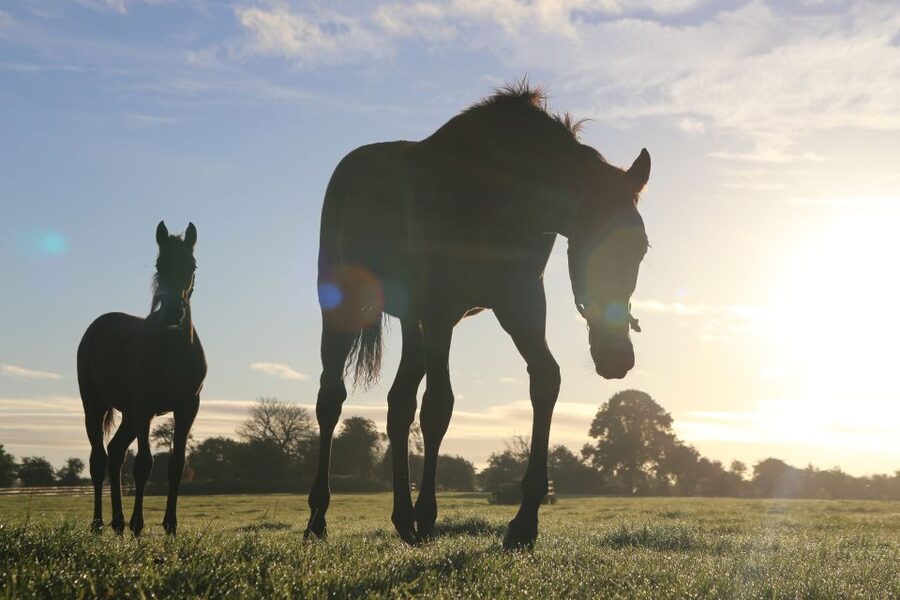
The Irish National Stud gives you something rare: a public look at a working thoroughbred breeding farm. You can watch stallions, mares, and foals in their paddocks, then meet retired champions such as Hurricane Fly, Beef, Salmon, and Faugheen.
I like the free guided tour, where guides such as Sue and Amanda bring the breeding operation to life with clear, practical detail. I also like the two very different gardens, especially the Japanese Gardens and their symbolic path through the stages of human life. The main drawback is seasonal: from October onward, there are fewer horses on the grounds and fewer tour times.
Key points to know before you go
- See a working thoroughbred stud: View stallions, protective mares, and playful foals across the 850-acre grounds.
- Meet famous retired racehorses: The Living Legends area includes Hurricane Fly, Beef, Salmon, Faugheen, and other well-known names.
- Allow time for the interactive racehorse experience: It takes you from foaling and yearling sales through training, racing, and retirement.
- Visit two very different gardens: The Japanese Gardens offer calm and symbolism, while St Fiachra’s Garden reflects Irish nature.
- Plan around tour times: Public tours run at set times, with more choices in summer and only 11 a.m. and 2 p.m. from October.
- Best from February through September: This is when the stud has the most stock on its grounds.
Why the Irish National Stud is worth your time
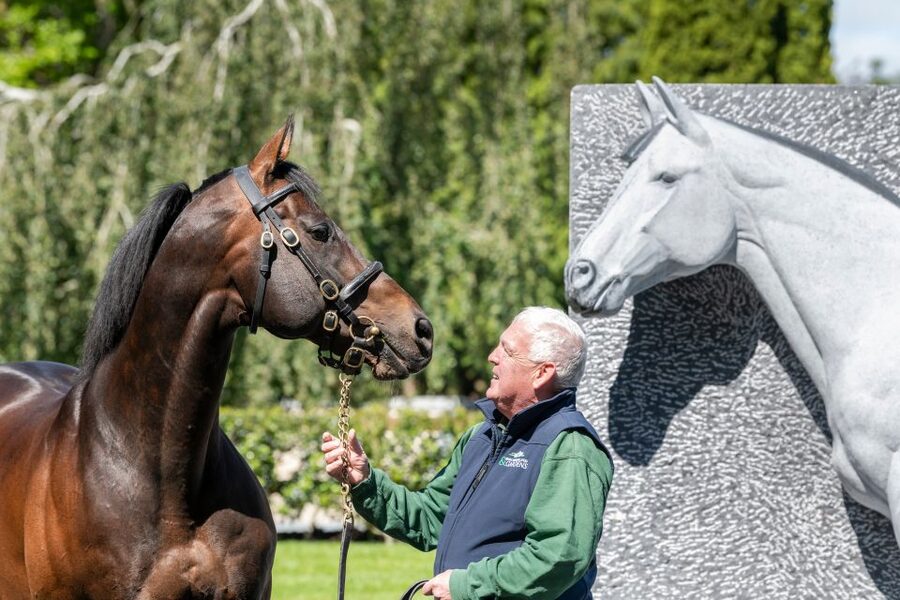
County Kildare is Ireland’s horse country, and the Irish National Stud lets you see that tradition up close rather than treating it as a distant part of Irish culture. The setting covers 850 acres of green rolling hills, with horses at the center of the visit.
This is not just a garden stop with a few animals in the background. The stud explains how breeding, early training, racing, and retirement fit together. You also get a sense of the money and judgment behind the sport, including how a future racehorse is selected and why not every promising youngster becomes a champion.
At $22 per person, the admission is good value if you stay for the tour, gardens, Living Legends horses, and racehorse experience. You get several different activities for one ticket, but you need to give the site enough time to enjoy them. A quick one-hour visit would leave much of the experience untouched.
The setting is about 40 minutes outside Dublin, making it a practical day trip by car or a useful stop if you are exploring County Kildare. The attraction is wheelchair accessible, though much of the visit involves moving around the grounds and gardens, so you should check current conditions if you need specific access details.
More Garden Tours in the world:
- Paris: Versailles Palace and Gardens Full Access Ticket
★ 4.6 · 41,579 reviews - Amsterdam: Keukenhof Entry & Shuttlebus with Flexible Return
★ 4.7 · 11,891 reviews - Versailles: Skip-the-Line Tour of Palace and Gardens Access
★ 4.7 · 10,429 reviews
Start with the Irish Racehorse Experience
The award-winning Irish Racehorse Experience works best as your introduction. It gives you the basic story before you head outside to see the real horses.
The journey begins with foaling and the early years of a horse’s life. You then learn about the thoroughbred, its body, and the work needed to prepare it for competition. The presentation uses a series of specially arranged rooms rather than relying only on written panels, which helps keep the subject moving for families and first-time racegoers.
The most playful part is the auction. You receive a horse box and get the chance to act as an owner, choosing an unbroken yearling. From there, the experience takes you through training, racecourses, jockeys, betting, and race-day fashion.
You then see your chosen horse in an animated race setting and can ride in a simulated race to see how your investment performs. It is a clever way to explain the uncertainty of the sport. A horse may have an impressive pedigree and still fail to become a star.
Allow at least 40 minutes for this section. It is easy to underestimate the time, especially if children want to try every interactive element. The experience is not available to children under seven unless accompanied by an adult, so families should check the age rule before planning their visit.
The final room looks out through floor-to-ceiling windows toward retired racehorses in their paddock. It explains what happens after racing and follows the careers of famous horses and people around the world. This ending gives the sport a wider human story and reminds you that a racing career is only one part of a horse’s life.
Take the guided tour through the stud
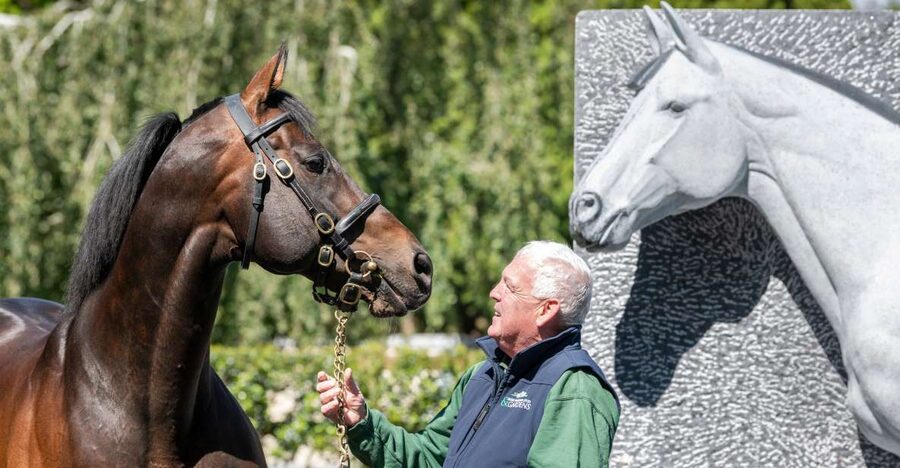
The public tour is the heart of the visit. The exact schedule changes by season, so check the current times before arriving. Standard times are 10:30 a.m., noon, 2 p.m., and 4 p.m. Summer adds tours at 1 p.m. and 3 p.m. From October, the schedule is reduced to 11 a.m. and 2 p.m.
The tour usually lasts a little over an hour. That matters because you should not book the racehorse experience too close to your tour time. Start with the interactive section, allow about 40 minutes, and leave a buffer before joining the guide.
The guide explains how the stud operates and how it earns income. You will hear about the steps used to select a possible future stallion, which gives the visit more substance than simply looking over fences at handsome horses.
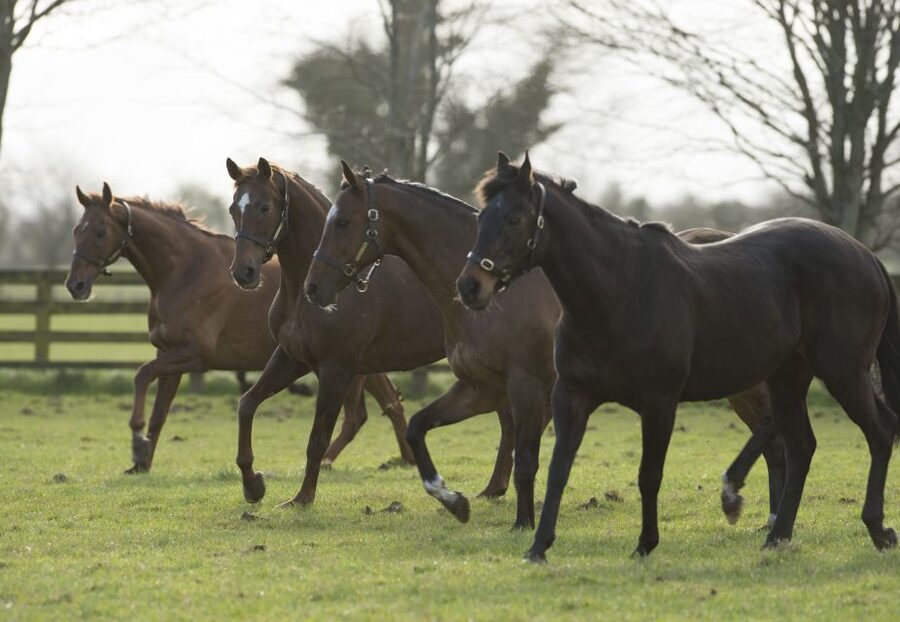
You then move through areas for the stallions, mares, and foals. The stallions are the showy stars, but the mares and young foals often provide the most memorable scenes. The mares protect their young while the foals test their legs and race around the paddock.
Guides Sue and Amanda have both been praised for making the subject easy to follow. Amanda, in particular, is known for a clear talk about the horses and the stud’s work. Since guides and schedules can change, treat those names as useful possibilities rather than a promise that either will lead your tour.
The outdoor portion depends on weather. Rain does not stop the visit, but it can make time in the open grounds less comfortable. Bring suitable clothing if the forecast is unsettled. The horses and gardens remain the main attraction, but you will enjoy them more if you are prepared to walk outside.
Meet the Living Legends

The Living Legends team gives the visit an emotional center. These are retired racing stars, including Hurricane Fly, Beef, Salmon, and Faugheen. Seeing them after their racing careers helps you understand the difference between a famous name in a race result and a living animal with a long life beyond the track.
The paddocks also show the level of care given to horses at the stud. You are not simply looking at racing equipment or old photographs. You can watch retired horses graze while learning about their later lives and the careers of other well-known horses and people connected with the sport.
This is one of the strongest parts for anyone who already follows racing. It also works for newcomers because the horses give the history a physical focus. If you know little about thoroughbreds, the Living Legends room helps connect the names and stories to the animals outside.
Stock levels are seasonal. February through September is the best period to visit if you want the fullest possible experience with horses on the grounds. From October, the stud begins to wind down, and there may be limited stock to see.
Same corner of the map, a different planting:
- Marrakesh: Majorelle Garden Entry Tickets
★ 4.5 · 9,651 reviews - Vienna: Schönbrunn Palace & Gardens Skip-the-Line Tour
★ 4.7 · 7,739 reviews - Granada: Alhambra & Gardens Tour w/Nasrid Palaces Option
★ 4.2 · 7,022 reviews - From Paris: Versailles Palace & Gardens with Transportation
★ 4.6 · 6,222 reviews
Walk the Japanese Gardens
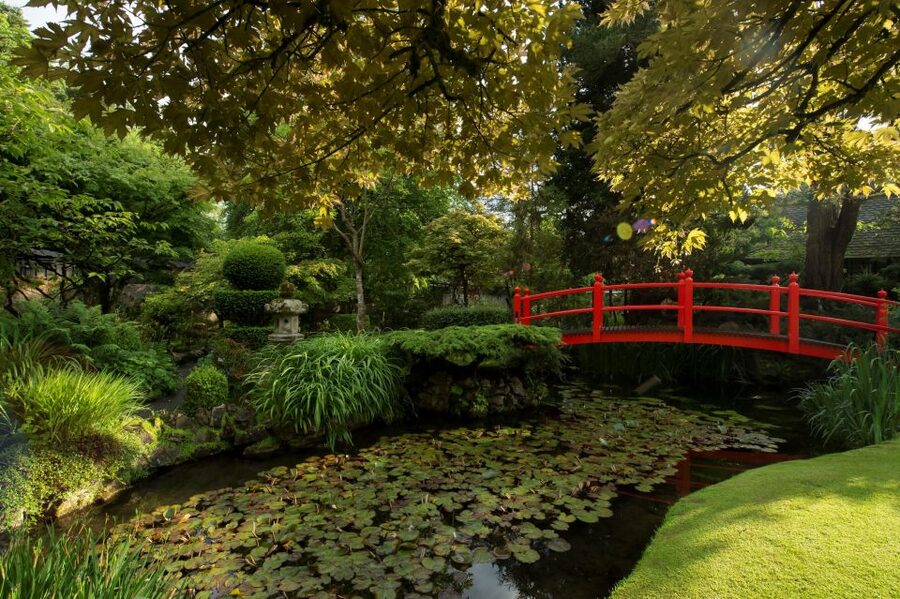
The Japanese Gardens offer a sharp change of pace after the stud tour. Instead of paddocks, breeding, and racing, you get a quiet garden arranged around the idea of a human life cycle.
Follow the path known as the Life of Man. It traces a soul from birth through death and beyond, using the garden’s design to mark different stages. The symbolism gives you a reason to slow down rather than simply stroll past beds and trees.
I would allow more time here than you might expect. The garden is one of the places where the visit becomes reflective. It is also a good counterpoint to the competitive world of horse racing, with its auction prices, betting, training, and winners.
The Japanese Gardens are carefully maintained, and their calm atmosphere makes them appealing even if you are not especially interested in horses. On a wet day, take care on paths and give yourself time to enjoy the garden without rushing to the next scheduled tour.
See St Fiachra’s Garden and Irish wildlife
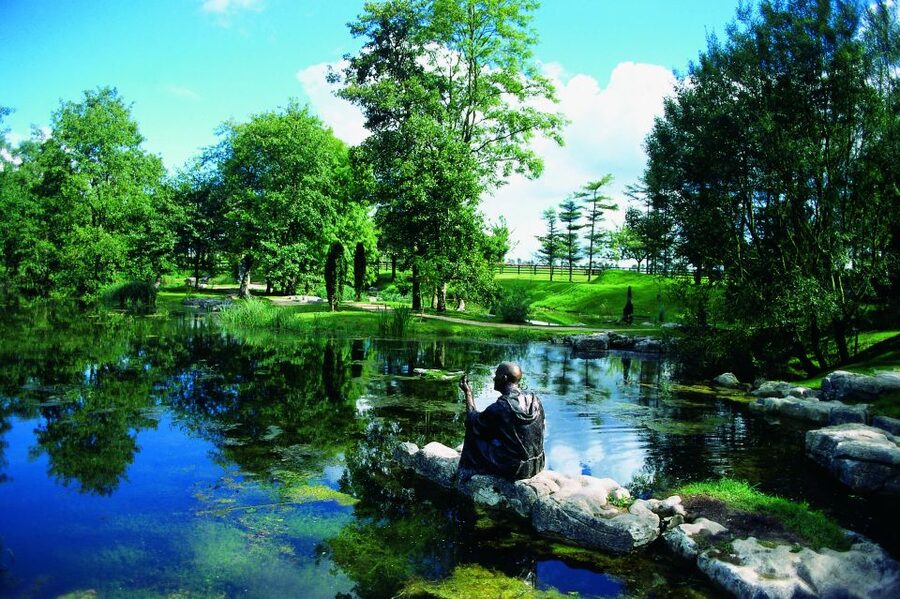
St Fiachra’s Garden has a different purpose and a more distinctly Irish feel. It represents the power of the Irish land and includes native species and Irish wildlife.
Where the Japanese Gardens guide you through a symbolic sequence, St Fiachra’s Garden is more about place. It connects the stud to Ireland’s plants, animals, and countryside rather than focusing on imported garden traditions.
Together, the gardens make the admission more worthwhile. If you only came for the horses, they add variety. If you prefer gardens, they offer two very different styles within the same grounds.
The gardens are also useful if your group has mixed interests. One person can focus on breeding and racing, while another can spend time with the planting, paths, and wildlife. You do not have to choose between a horse attraction and a garden visit because both are built into the day.
Build a practical one-day plan

You can use the site as a half-day stop, but the experience works best when you treat it as a relaxed day visit. A sensible order is:
- Start with the Irish Racehorse Experience, allowing at least 40 minutes.
- Join a public tour with enough time to arrive before the start.
- Visit the stallions, mares, foals, and Living Legends.
- Walk through the Japanese Gardens and St Fiachra’s Garden.
- Use any remaining time to revisit the areas that interested you most.
The last entry is at 5 p.m., while the Irish Racehorse Experience runs from 11 a.m. to 4 p.m. Do not arrive late in the afternoon expecting to fit everything in. A 4 p.m. tour may leave too little time for the gardens and interactive exhibits.
Summer offers the most flexibility, with public tours at 10:30 a.m., noon, 1 p.m., 2 p.m., 3 p.m., and 4 p.m. Outside summer, the schedule is tighter. From October, the two listed public tours are at 11 a.m. and 2 p.m., and the stud has fewer horses on the grounds.
The attraction offers free cancellation up to 24 hours before the visit and allows you to reserve now and pay later. Those options help if your Ireland plans depend on changing weather or day-trip arrangements, but the main practical issue remains timing. Match your booking to the tour schedule first.
Who will enjoy it most
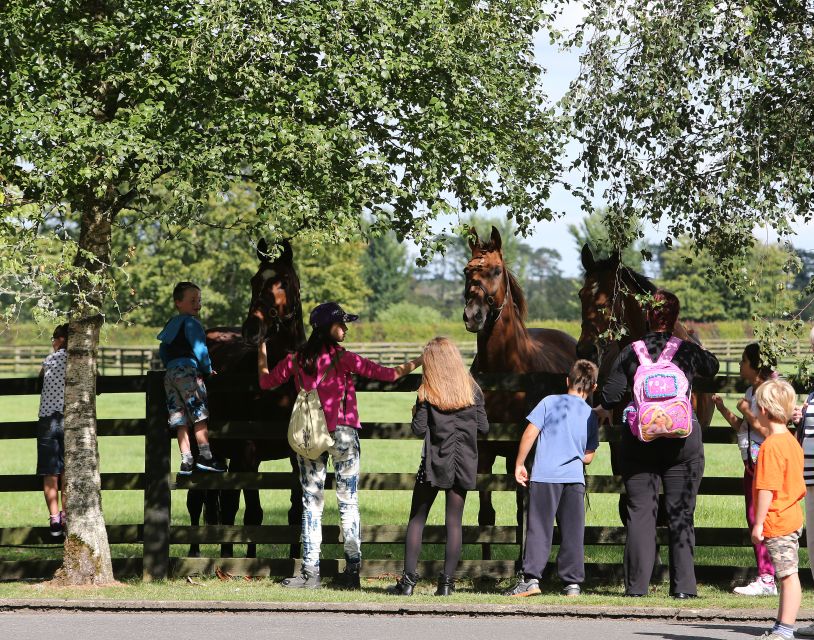
This is an easy choice for horse lovers, racing fans, and anyone curious about how a thoroughbred is bred and trained. The Living Legends horses add a personal element, while the interactive race gives children and adults a way to understand the business side of racing.
Families should pay attention to the age rule for the racehorse experience. Children under seven need to be accompanied by an adult for that section. The rest of the grounds offer plenty to see, but the interactive part is likely to be a major draw for older children.
Garden lovers also get real value here. The Japanese Gardens and St Fiachra’s Garden are not filler between horse displays. They are distinct attractions with different ideas and moods.
You may want to skip it if you have only a short window in County Kildare, dislike outdoor walking, or are visiting from October specifically to see a large number of horses. The stud remains worthwhile outside the main season, but the limited stock and reduced tour times can make the visit feel less complete.
Is the $22 admission good value?
For $22, you receive entrance to the stud, both gardens, the public tour, and the Irish Racehorse Experience. That is a strong package if you use all parts of the ticket.
The value is especially good for a mixed group. One person can enjoy famous racehorses, another can focus on garden design, and children can take part in the simulated race. You are not paying for one short viewing point and leaving.
The price is less compelling if you plan to stay for only an hour or arrive after the main interactive experience has closed. Schedule your day so you can see the outdoor horses, join a tour, and spend time in both gardens.
Should you book the Irish National Stud?
Book it if you want a distinctly Irish experience that combines breeding, racing, gardens, and open countryside. The best visit runs from February through September, starts early enough to include the racehorse experience, and leaves room for a public tour and both gardens.
I would be more cautious from October onward. The attraction still offers the gardens, Living Legends, and tour, but the stud has less stock and only two listed tour times. Check the current schedule before paying.
For most visitors with a free day near Dublin or County Kildare, the $22 ticket earns its place. You get real horses, memorable names, useful explanations, and two gardens that keep the day from feeling one-note.
FAQ
Where is the Irish National Stud and Gardens?
It is in County Kildare, Ireland, about 40 minutes outside Dublin.
How much does admission cost?
The listed price is $22 per person.
What does the ticket include?
Admission includes the stud, the Japanese Gardens, St Fiachra’s Garden, the public tour, and the Irish Racehorse Experience.
How long should I allow for the visit?
The ticket is valid for a one-day visit. Allow enough time for the public tour, both gardens, the horses, and at least 40 minutes for the Irish Racehorse Experience.
What are the public tour times?
The listed standard times are 10:30 a.m., noon, 2 p.m., and 4 p.m. Summer adds tours at 1 p.m. and 3 p.m. From October, tours are listed at 11 a.m. and 2 p.m.
When does the Irish Racehorse Experience open?
It is open from 11 a.m. to 4 p.m.
Can young children take part in the racehorse experience?
Children under seven may take part only when accompanied by an adult.
Which horses can I see at the stud?
You can see stallions, mares, and foals, along with retired racing stars such as Hurricane Fly, Beef, Salmon, and Faugheen.
When is the best time to visit?
February through September is the best time because the stud has more stock on the grounds. From October, the stud begins to wind down and stock is limited.
Is the Irish National Stud wheelchair accessible?
Yes, the experience is listed as wheelchair accessible.
Can I cancel the booking?
You can cancel up to 24 hours in advance for a full refund. Reserve now and pay later is also available.
Just added around the world
- Hillsborough Castle Gardens Entrance Ticket★ 4.7 · 47 reviews
- Himeji: Himeji Castle & Kokoen Garden 3.5-Hour Guided Tour★ 4.9 · 30 reviews
- Hantan Canyon & Goseokjeong Flower Garden & Pink Muhly Park★ 5.0 · 4 reviews
- Hillegom: Tulip Barn Entry Ticket★ 4.6 · 81 reviews
- Heidelberg: Heidelberg Castle Garden & Outside Private Tour★ 4.9 · 18 reviews
- Versailles: Skip-the-Line Versailles Palace and Gardens Tour★ 4.7 · 110 reviews
- Hanover: Royal Gardens of Herrenhausen Guided Tour★ 4.6 · 78 reviews
- Hatta Safari & Honey Bee Garden Visit★ 4.8 · 52 reviews
Ireland Garden Tours, compared.

Self-Guided Bike Tour of Killarney National Park, Muckross Gardens & Waterfall
Read our review →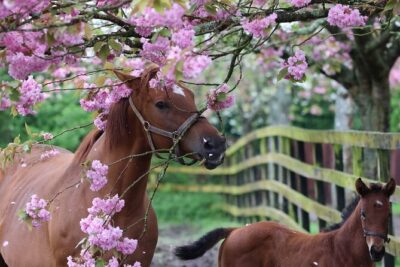
Irish National Stud & Gardens Skip the line Entrance
Read our review →
Easy Access Blarney Stone and Castle Gardens Tour
Read our review →
Lafcadio Hearn Japanese Gardens Admission Adult Ticket
Read our review →
Browse the lists this tour appears in