
Review · SOUTH KOREA GARDEN TOURS
Jinhae Cherry Blossom Festival Gyeonghwa Stn Day Tour from Busan
Jinhae’s cherry blossoms turn ordinary railway tracks and a small stream into two of South Korea’s most photogenic spring scenes. This day trip takes you from Busan to Gyeonghwa Station and Yeojwacheon Stream, with round-trip transport so you do not have to wrestle with festival traffic and crowded local connections.
I like the generous time at both stops, especially the chance to wander the old tracks instead of making a rushed photo stop. I also like the guides’ practical help. Yoona has helped with photos, Joon has recommended a good restaurant and shared useful information, and Victoria has assisted with meals and wheelchair loading.
The catch is the length. You are away for about 10 to 11 hours, and much of the day is transport or free time rather than guided sightseeing. If you only want a brief look at cherry blossoms, this may feel longer than necessary.
Key points to know before you book
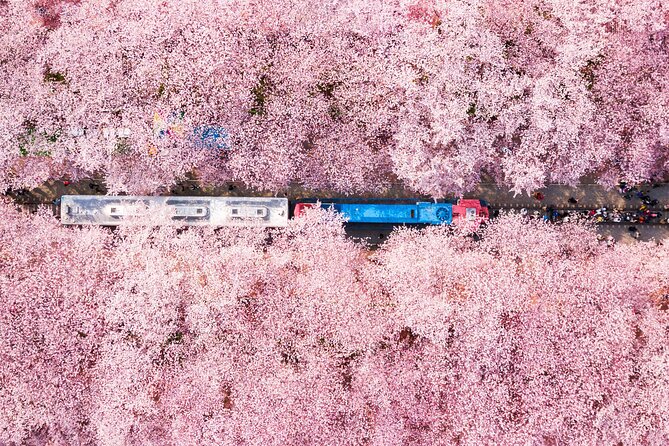
- Gyeonghwa Station is an abandoned railway setting: Railway service ended in 2006, leaving tracks lined with cherry trees and a flower tunnel effect.
- Yeojwacheon Stream is the stronger second stop: The stream, bridges, and famous Romance Bridge provide a different view from the railway tracks.
- You get real wandering time: The schedule allows about 2 hours 20 minutes at Gyeonghwa Station and 3 hours 10 minutes by Yeojwacheon Stream.
- The bus solves a real spring problem: Round-trip transport from downtown Busan is useful when festival roads are crowded and local buses may be slow.
- Guide quality can shape the day: Yoona, Joon, and Victoria have each been praised for organization, patience, photos, food suggestions, and practical help.
- Bloom timing is not guaranteed: The route depends on flower conditions, traffic, and weather, and may change if the blossoms are poor.
Why this Busan day trip makes sense
Jinhae is in Changwon, outside Busan, and its annual Gunhangje festival draws people for the spring blossoms. Getting there independently is possible, but festival traffic can make a simple route feel complicated. This tour removes the main chore: finding your way there and back during one of the busiest flower periods of the year.
You ride in an air-conditioned vehicle with round-trip transport from downtown Busan. That matters more than it might sound. A full day in spring sun, walking around flower-lined tracks and streams, can be tiring. Having a set vehicle waiting for the return journey means you can enjoy the scenery without keeping one eye on a timetable.
The price is $59.47 per person. I consider that fair if you value convenience and want both major Jinhae sights in one day. The fee includes transport and English or Chinese-speaking staff, but not meals, personal expenses, or travel insurance. You are paying mainly for the vehicle, route planning, and a guide who keeps the group moving.
The group may include up to 43 people. That is not a small private outing, so do not expect constant personal attention or a quiet vehicle. The upside is a likely lower price than a private car. The tradeoff is that departure, boarding, and regrouping can take time.
More Cherry Blossom Tours in South Korea
- Jinhae Cherry Blossom Day trip from Busan – A Spring Adventure!
★ 4.5 · 13 reviews - Chasing Cherry Blossom & Spring Flowers Day Tour from Seoul
★ 5.0 · 11 reviews - Jinhae Cherry Blossom Festival Gyeonghwa Stn Day Tour from Seoul
★ 4.0 · 8 reviews
Gyeonghwa Station and the flower tunnel
The first main stop is Gyeonghwa Station Cherry Blossom Road. The station is small, and railway services in and out of it ended in 2006. That closure gives the place its unusual character. You are not watching an active railway from a platform. You are walking along old tracks surrounded by rows of cherry trees.
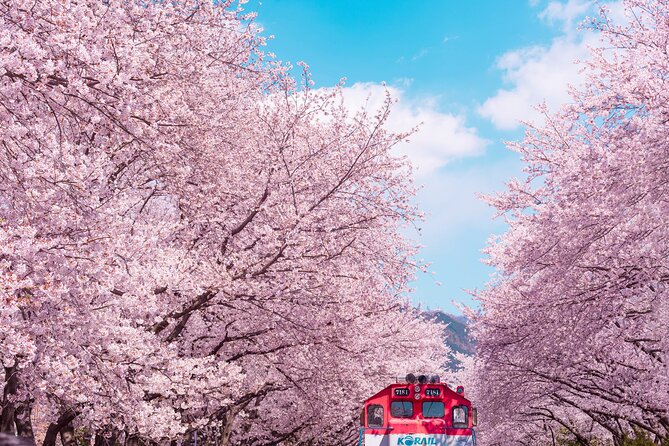
When the blossoms are at their best, branches meet above the rails and create a tunnel of flowers. The straight lines of the track make photographs easy to frame, while the old station setting gives the stop more atmosphere than a standard roadside flower garden.
You have about 2 hours and 20 minutes here. That is a useful amount of time. You can walk along the tracks, stop for photographs, and enjoy the trees without being pushed back to the bus after a few minutes. Guides may help with photos, which is especially handy for solo visitors or couples who want a picture together.
The long stop also explains one common concern about this tour. If you are mainly interested in seeing as many different places as possible, two hours at an old station may feel excessive. Gyeonghwa is a focused sight, not a large district packed with separate attractions. You will spend much of the time walking, taking pictures, and looking at the blossoms from slightly different angles.
During the Gunhangje festival, the area may also feature cultural performances, military performances, and other programs. A festival shuttle train has traditionally offered a slow ride through the flower-filled area. The tour information does not promise a place on that train, so treat it as a possible seasonal feature rather than part of your guaranteed plan.
Yeojwacheon Stream and the Romance Bridge
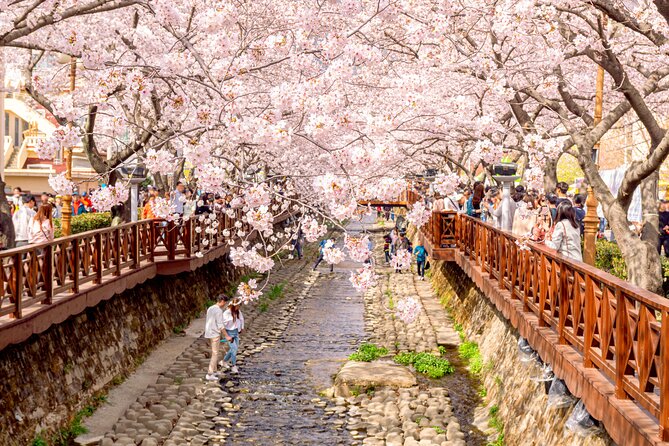
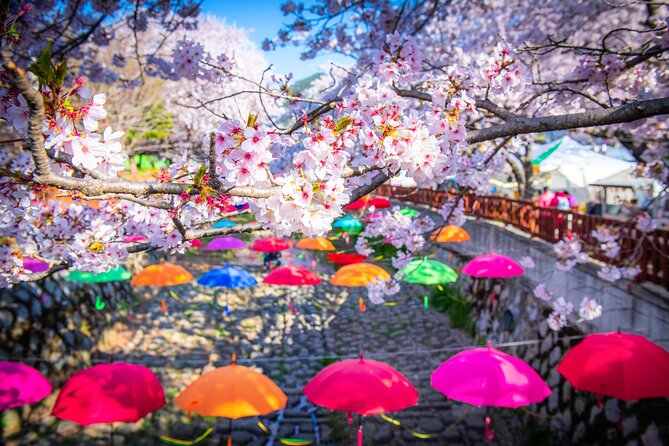
The second stop is Yeojwacheon Stream, one of Jinhae’s best-known blossom areas. Here the setting changes from railway tracks to water, bridges, walking paths, and trees arching above the stream.
You have about 3 hours and 10 minutes in this area. That is the longest stop, and it gives you time to see the stream at an unhurried pace. The extra time is useful because the area is not just one viewpoint. You can walk beside the water, cross the bridges, pause beneath the trees, and find your own angle for photographs.
The Romance Bridge is the best-known landmark here. It became popular after appearing in the 2002 MBC television series Romance, where the leading characters first met while visiting Jinhae’s festival. You do not need to know the show to enjoy the bridge, but the television connection explains why this particular crossing attracts so much attention.
I prefer this stop for travelers who want a more varied setting. Gyeonghwa Station gives you the flower tunnel and railway lines. Yeojwacheon adds water and bridges, so the two places do not feel like duplicates. The stream area also gives you more room to simply stroll and settle into the mood of the festival.
Meals are not included. With more than three hours at Yeojwacheon, you will likely need to arrange food during this part of the day. Guides may help point you toward a restaurant. Joon, for example, has been singled out for recommending a particularly good place to eat. Still, you should budget separately for lunch and not assume the guide will provide a meal or that one specific restaurant is guaranteed.
The value of free time
This tour does not appear to be built around a running commentary at every stop. It is closer to guided transportation with organized access to the main flower sites. That suits you if you want freedom to take photos, walk at your own speed, or sit for a while under the trees.
Several guides have been praised for keeping the group organized and allowing ample time at each location. Yoona has been described as attentive and helpful with photos. Joon has been noted for being patient, friendly, and informative. Victoria has helped visitors find food and assisted with loading and unloading a wheelchair.
Those details matter because free time works best when the basic logistics are handled well. You can explore independently, but you still need clear instructions about when and where to meet the vehicle. A well-organized guide keeps a large group from turning that freedom into confusion.
The limitation is that the quality of commentary may vary by guide and departure. One unhappy experience focused on the long bus journey and a lack of information about Korea during the ride. If you want a history-heavy tour with a guide speaking throughout the drive, this may not be the right format. If you mainly want transport, the two flower areas, and room to explore, the setup is more suitable.
Same corner of the map, a different planting:
- Mt. Seorak+Nami Island+Garden of Morning Calm Day Trip from Seoul
★ 5.0 · 959 reviews - Seoul: Nami Island and Garden of Morning Calm opt Railbike
★ 4.6 · 907 reviews - From Seoul: Nami Island, K-drama Garden & Rail Bike Day Tour
★ 4.6 · 724 reviews - Seoul: Mt.Seorak, Nami Island & Korean Garden, No Shopping
★ 4.8 · 614 reviews
Timing, crowds, and blossom conditions
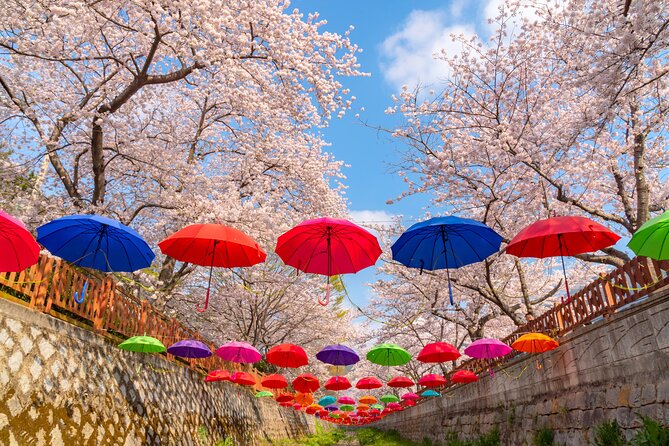
Cherry blossom trips are always tied to nature’s calendar. The festival takes place each spring, but the exact condition of the trees changes with temperature, rain, and wind. A single shower can reduce the number of flowers, while a warm spell can bring a sudden peak.
The tour operates according to blossom conditions. If the flowers are not in good shape, the operator says you will be notified at least one day ahead and the route may change. That is a useful safeguard, but it also means you should avoid booking this as a fixed sightseeing plan far in advance if the blossoms are your only reason for going.
Traffic and weather can also alter the schedule. Festival roads may be crowded, so the 10 to 11 hour duration is approximate. You should avoid booking another fixed activity in Busan immediately after the planned return. Give yourself some breathing room.
The best photographs depend on timing as much as location. At peak bloom, both stops can be beautiful. After rain, the trees may still look impressive, but fallen petals can change the scene quickly. The tour cannot guarantee a particular number of blossoms or clear weather, so book with some flexibility.
Comfort, accessibility, and practical details
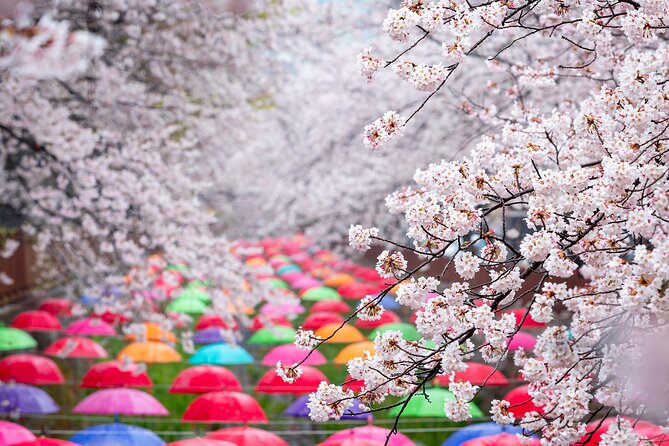
The vehicle is air-conditioned, a welcome feature on a long spring day. The ride gives you a place to rest between walking sections, though the experience still involves substantial time on your feet at the two stops.
Most people can participate. One guide successfully helped load and unload a wheelchair, which is encouraging for visitors who need that kind of assistance. Still, the information does not promise a fully accessible route at every point. Old railway tracks, stream paths, bridges, and crowded festival areas can present different surfaces and conditions. If you use a wheelchair, confirm the details with the operator before booking.
English and Chinese-speaking staff are included. The actual guide may be Yoona, Joon, Victoria, Eiemmy, or another member of the team, so you should not assume a particular person will lead your departure. The strongest experiences appear to come when the guide is organized, communicative, and willing to help with small practical needs.
The mobile ticket is convenient, and confirmation is provided when you book. The tour is near public transportation, but the main convenience remains the included round-trip vehicle from downtown Busan.
Free cancellation is available if you cancel at least 24 hours before the local start time. Changes or cancellations inside that window are not accepted for a refund.
Who will enjoy this Jinhae outing
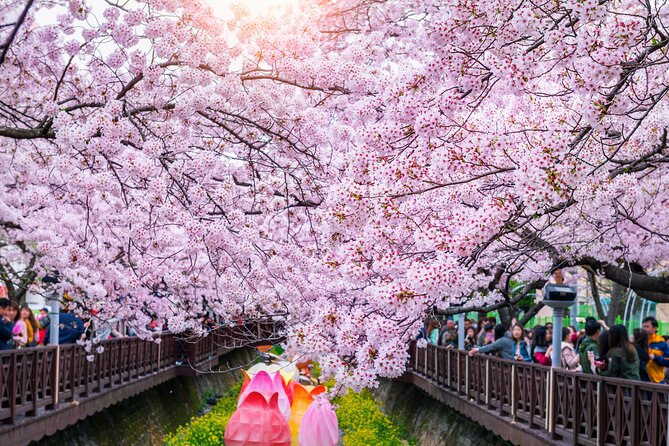
I would choose this tour if you are staying in Busan and want Jinhae’s two signature blossom spots without arranging a complicated day on your own. It is especially useful for first-time visitors, couples who want time for photographs, and solo visitors who appreciate help taking pictures.
It also suits you if you like a loose schedule. You are not marched from one short viewpoint to another. The long stops let you walk, eat, photograph, and rest according to your own pace.
I would hesitate if you dislike long coach days, prefer small private groups, or want a guide to provide detailed commentary throughout the journey. The 43-person maximum can feel large, and the route may seem padded if you see the railway station and stream quickly.
The cost makes the most sense when transport convenience is your priority. If you are confident navigating South Korean transport during festival season and want only a short visit, independent travel may offer more control. If you want someone else to handle the road logistics, $59.47 is a reasonable price for a full-day outing.
Should you book it?
Book this tour if peak-season transport from Busan sounds like a nuisance and you want the two most recognizable Jinhae blossom settings in one day. The strongest reasons are the comfortable vehicle, generous time at Gyeonghwa Station and Yeojwacheon Stream, and the practical help offered by guides such as Yoona, Joon, and Victoria.
Skip it if you want a short half-day visit or a small, highly narrated tour. This is a long day with plenty of independent walking time. When the trees are in bloom, that can be exactly the point. When conditions are poor or the bus ride feels too long, the same schedule may test your patience.
FAQ
How long does the Jinhae Cherry Blossom Festival tour take?
The tour lasts approximately 10 to 11 hours, including transport between Busan and Jinhae and time at both sightseeing stops.
What places does the tour visit?
The route includes Gyeonghwa Station Cherry Blossom Road and Yeojwacheon Stream, including the area around the Romance Bridge.
How much time is provided at Gyeonghwa Station?
The scheduled time at Gyeonghwa Station is about 2 hours and 20 minutes.
How long do you spend at Yeojwacheon Stream?
The scheduled time at Yeojwacheon Stream is about 3 hours and 10 minutes.
Is transportation included?
Yes. Round-trip transportation from downtown Busan in an air-conditioned vehicle is included.
Are meals included?
No. Meals and personal expenses are not included in the tour price.
Is the tour available in English?
English and Chinese-speaking staff are included.
Can the itinerary change if the blossoms are poor?
Yes. The operating period depends on cherry blossom conditions, and the route may change if the flowers are not in good condition. You should be notified at least one day in advance in that situation.
What is the cancellation policy?
You can cancel up to 24 hours before the experience start time for a full refund. Cancellations or changes made less than 24 hours before the start time are not accepted for a refund.
Just added around South Korea
- Hantan Canyon & Goseokjeong Flower Garden & Pink Muhly Park★ 5.0 · 4 reviews
- Jinhae Cherry Blossom Festival Gyeonghwa Stn Day Tour from Seoul★ 4.0 · 8 reviews
- Maisan Cherry Blossom and Jeonju Hanok Village★ 5.0 · 8 reviews
- Chasing Cherry Blossom & Spring Flowers Day Tour from Seoul★ 5.0 · 11 reviews
- Jinhae’s Cherry Blossoms Shuttle Bus depart from Seoul/Busan★ 4.5 · 8 reviews
- Jinhae Cherry Blossom Day trip from Busan – A Spring Adventure!★ 4.5 · 13 reviews
- Gyeongju Cherry Blossom Day Tour from Busan (2~3 spring spots)★ 5.0 · 3 reviews
- Jinhae Pink Cherry Blossom One Day Tour From Busan★ 4.0 · 6 reviews
South Korea Garden Tours, compared.
Mt. Seorak+Nami Island+Garden of Morning Calm Day Trip from Seoul
Read our review →
Trip to Nami Island with Petite France & Italian Village, Garden of Morning Calm
Read our review →
Nami Island & Garden of Morning Calm & Gangchon Railbike Tour
Read our review →
Nami+Alpaca+Garden of Morning Calm (+Rail Bike Option)
Read our review →
Alpaca, Nami, Morning Calm or Eobi (+Rail Bike)
Read our review →
Day Trip to Nami Island with The Garden of Morning Calm
Read our review →
Nami Island, Garden and Petite France (opt. Railbike)
Read our review →
Jinhae Cherry Blossom Day trip from Busan – A Spring Adventure!
Read our review →Browse the lists this tour appears in