
Review · VERSAILLES GARDEN TOURS
Versailles, Gardens & Hamlet: Full-Day Guided Small-Group Tour
The most rewarding part of this Versailles day is not simply walking through the Hall of Mirrors. It is seeing how the gardens, fountains, mythology, and royal politics fit together, then reaching Marie Antoinette’s Hamlet at the far end of the estate. Alistair Douglas leads the outdoor portion with stories about Louis XIV, court life, art, fashion, and the French Revolution.
I like the small maximum of 10 people, which makes it easier to hear Alistair and ask questions. I also like the sensible division of the day: a guided walk through the vast gardens and Trianon area, followed by timed palace entry for your own exploration. The drawback is simple: this is a long walking day, and lunch, snacks, weather gear, and transportation to Versailles are not included.
Key points to know before booking
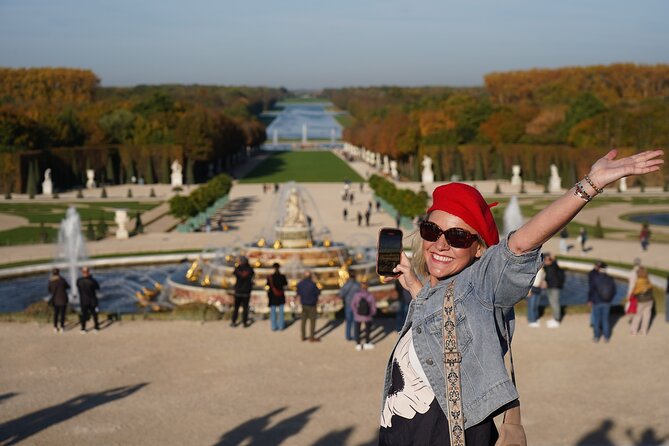
- The gardens get the best guiding: Alistair explains the fountains, groves, symbols, and royal power behind the design.
- Marie Antoinette’s Hamlet is included: You reach the Petit Trianon area and the rustic village she used as a private retreat.
- The palace visit is self-guided: You receive timed entry and an overview of the key rooms, then explore at your own pace.
- The group is capped at 10 people: That is a useful size for a large and sometimes confusing estate.
- You will walk about 1.5 miles downhill: Comfortable shoes and reasonable fitness matter, and strollers are not permitted.
- The little train saves your legs: Its ticket is included for the return toward the palace after the Trianon visit.
Why this full-day Versailles plan works
Versailles can be a difficult place to tackle on your own. The palace is famous, but the estate is huge, and the most interesting gardens and royal retreats stretch well beyond the main building. A basic palace ticket may get you through the Hall of Mirrors, but it does not necessarily help you understand why the fountains, groves, canals, and private retreats were placed where they are.
This tour gives you a clear route. You meet at 9:30 am at 2 Place Léon Gambetta in Versailles, then begin with the gardens before ending at the palace. That order matters. By the time you enter the royal rooms, you have already seen the outdoor stage Louis XIV created to project his power.
Alistair Douglas is the guide throughout the garden portion. His approach, based on the experience described, leans heavily on storytelling rather than a dry list of dates. He connects the buildings and sculptures with religion, court manners, philosophy, money, fashion, and the political forces that eventually helped bring down the monarchy.
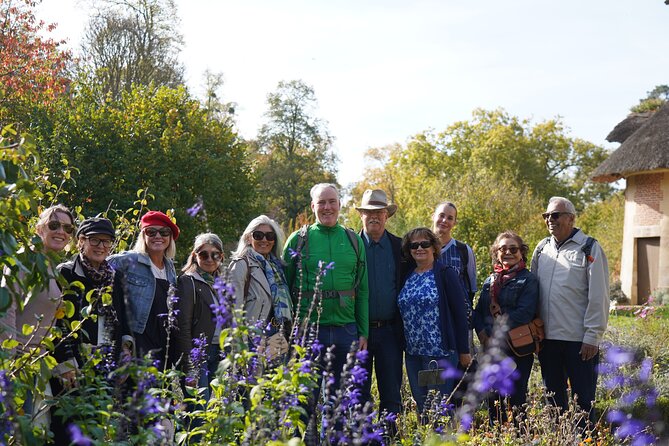
The small group is one of the strongest practical features. Versailles is too large for a guide to make every detail personal in a group of 25 or 40. With a maximum of 10, you can ask about a fountain, pause for a question, and still keep moving without losing the thread.
More Palace and Castle Gardens in France
- Paris: Versailles Palace and Gardens Full Access Ticket
★ 4.6 · 41,579 reviews - Versailles: Skip-the-Line Tour of Palace and Gardens Access
★ 4.7 · 10,429 reviews - From Paris: Versailles Palace & Gardens with Transportation
★ 4.6 · 6,222 reviews
Starting at Louis XIV’s grand entrance
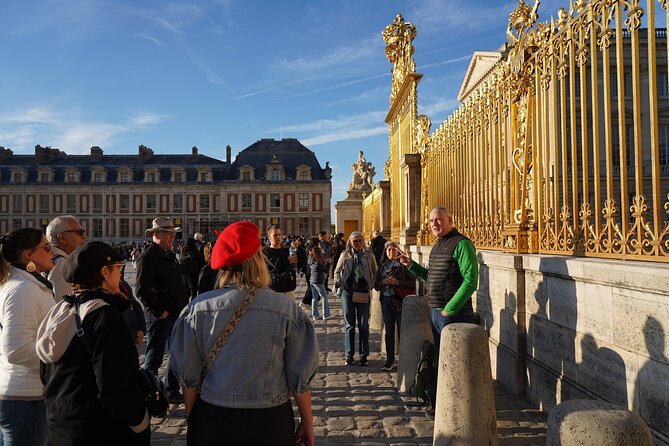
The day begins at the Grille d’Honneur, the formal gate facing the palace. This is a good place to set the scale of the project. Louis XIV began transforming a hunting lodge in 1661, and construction continued for more than 50 years.
The point is not just that Versailles is large. It was designed to make the monarchy appear larger than ordinary life. The approach, palace, gardens, water features, and views all worked together. Louis XIV placed himself at the center of this ordered world, with the estate reflecting his claim to absolute authority.
You get about 15 minutes here, enough to meet the guide, take in the façade, and hear the basic story before moving into the gardens. Do not expect a long interior lecture at this stage. The strongest interpretation comes as you walk through the outdoor spaces.
Walking through André Le Nôtre’s formal gardens
The gardens are the heart of the guided portion. André Le Nôtre created a French formal style built on symmetry, straight lines, geometric patterns, clipped plantings, and carefully controlled views. Nature here is not left to wander. It is arranged to serve the royal plan.
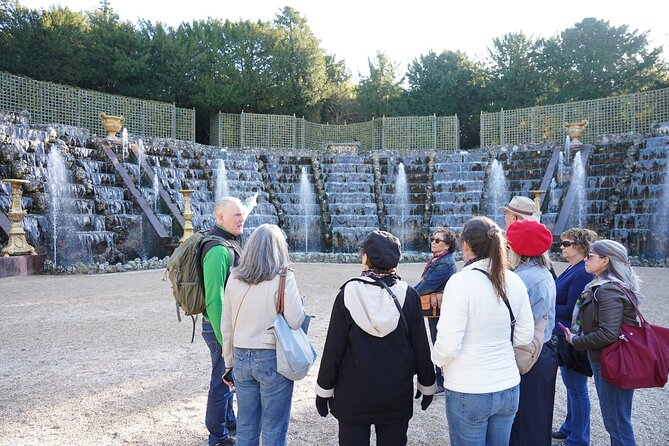
The walk takes you through several bosquets, or enclosed garden groves. Each has its own design and purpose. Some were used for performances and dancing. Others offered quiet retreats for Louis XIV and his court. The constant contrast between open avenues and enclosed rooms gives the walk variety.
This is also where Alistair’s storytelling seems most useful. The garden design makes more sense once you understand that Versailles was not simply a pretty place for strolling. It was a setting for ceremony, display, entertainment, and control.
The route includes a number of short stops, usually 10 to 20 minutes each. That keeps the day moving, though it also means you should not expect a long, quiet stay at every fountain. The estate is too big for that in a single day.
The Orangery and Latona Fountain
The Orangery shows how royal ambition reached even into horticulture. Its thick walls protected citrus trees from freezing temperatures, allowing the court to grow exotic fruit in a climate that could not support it outdoors year-round.
This is a small stop, about 15 minutes, but it gives you a practical look at the engineering behind the gardens. Versailles was not only decoration. It required systems, labor, money, and constant care.
At the Latona Fountain, the focus shifts from gardening to political symbolism. The fountain presents a mythological story that helped express Louis XIV’s authority. Alistair explains how art and design allowed the king to present his rule as natural, sacred, and protected by divine order.
This context is valuable because the sculptures can otherwise seem like attractive but confusing decorations. With a guide, you have a better chance of seeing the political message behind the marble and water.
More Palace and Castle Gardens in Versailles
- Versailles Palace and Gardens Tour from Paris
★ 4.5 · 3,390 reviews - Versailles Full Day Bike Tour with Palace, Gardens, & Picnic
★ 5.0 · 2,217 reviews - Versailles Château and Gardens Walking Tour
★ 4.5 · 727 reviews - From Paris: Versailles Palace Live Tour with Gardens Access
★ 4.5 · 706 reviews
Grand Canal, Ballroom Grove, and Mirror Basin
The Grand Canal gives you one of the estate’s clearest open views. Its long axis reinforces the straight lines and careful balance of the French garden style. From the palace, the canal helps draw your eye outward, making the royal residence feel like the center of an enormous ordered world.
At the Ballroom Grove, you see a more theatrical side of Versailles. Louis XIV used the space for entertainment and dance, and he famously appeared as Apollo, the sun god. This was not a minor costume choice. It supported the image of Louis as the Sun King, the central figure around whom court life revolved.
The stop at the Ballroom Grove lasts about 20 minutes. It is a good example of how the tour combines architecture, performance, and royal propaganda rather than treating the gardens as a collection of unrelated sights.
The Bassin du Miroir, or Mirror Basin, offers another pause beside the water. The rectangular pool reflects the sky, trees, and nearby structures, making the relationship between water, planting, and architecture easy to see. Admission is included, though this stop itself is not listed as an additional ticketed sight.
Colonnade Grove and Apollo’s chariot
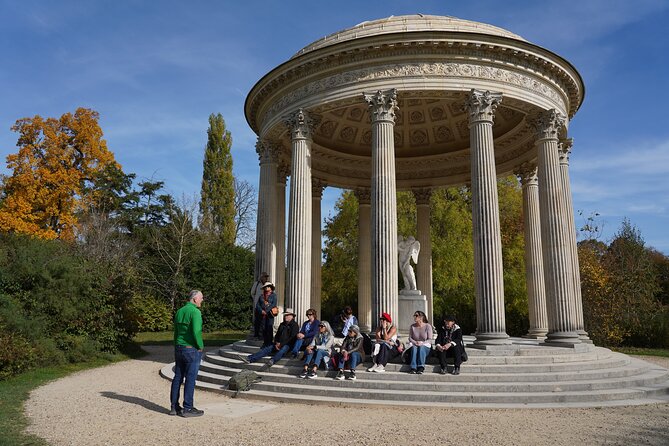
The Colonnade Grove is one of the more architectural garden rooms. Classical columns form a circular frame around the space, with fountains and plantings completing the design. It was intended as a retreat where Louis XIV and his court could relax away from the main ceremonies.
I like this stop because it shows that Versailles was not always about giant avenues and public display. The estate also contained places designed for conversation, leisure, and escape from court formalities.
At the Apollo Fountain, the symbolism becomes especially direct. Apollo rises from the water in a chariot pulled by four horses, surrounded by sea creatures and allegorical figures. Apollo was linked to the sun, so the fountain reinforces Louis XIV’s public identity as the Sun King.
You get about 10 minutes here. That is enough to understand the main image, but if sculpture is your chief interest, you may wish you had more time to study every figure. This is a full estate tour, not a specialist sculpture seminar.
Enceladus and the long walk toward Trianon
The Bosquet d’Encelade presents a dramatic mythological scene. The giant Enceladus is shown being defeated by the gods, symbolizing order triumphing over chaos. Like the Latona and Apollo fountains, this grove uses ancient mythology to support a message about power and authority.
The walk between these spaces is part of the experience, but it is also the day’s main physical demand. The route covers about 1.5 miles and is downhill. Add the palace stairs, broad paths, pauses, and time on your feet, and you should plan for a genuinely active day.
The tour is intended for people age seven and older. Babies may come if parents carry them in a baby carrier, but strollers are not allowed inside the palace. If you have knee trouble, limited mobility, or young children who tire quickly, think carefully before booking.
A useful break at Petite Venise
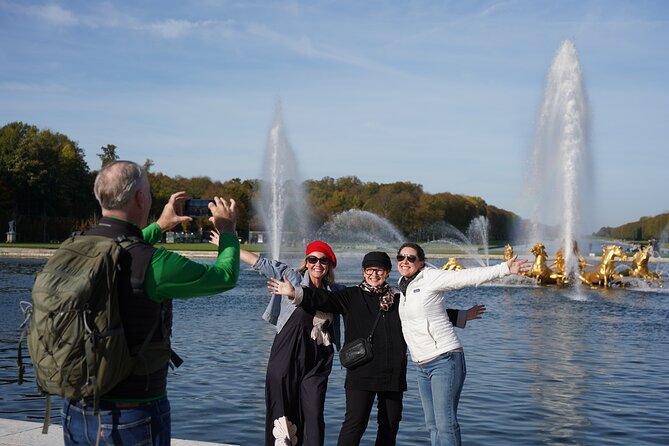
The Terrasses de la Petite Venise café provides a sensible pause before the Trianon visit. You can buy pastries, coffee, or sandwiches and use nearby restrooms. Food is not included, so this is the point to budget for lunch or a snack.
Do not assume the café stop replaces a full meal break for everyone. The scheduled time is about 30 minutes, and food service can take part of that time. If you need a substantial lunch, plan to keep your order simple.
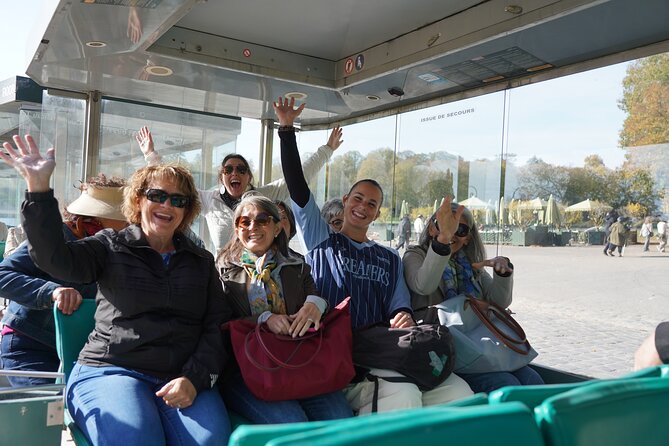
The nearby hop-on hop-off train is included. Alistair arranges the tickets, and the train helps you cover the long distance back toward the palace after the Petit Trianon and Hamlet. This is a practical benefit, especially after several hours of walking.
The train also gives you access to more of the estate than you might manage on foot. The Grand Trianon is the first stop, and the Petit Trianon is the second. The tour focuses on the Petit Trianon and Hamlet, while the Grand Trianon is described as a beautiful retreat built for Louis XIV.
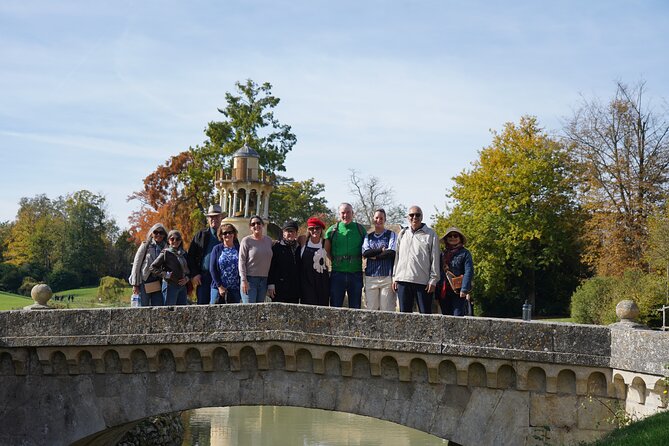
Petit Trianon and Marie Antoinette’s Hamlet
The Petit Trianon served as Marie Antoinette’s private escape from court life. That phrase can sound simple, but the setting helps explain what she wanted. The formal palace imposed rules, schedules, appearances, and constant observation. At the Trianon estate, she could create a more personal world.
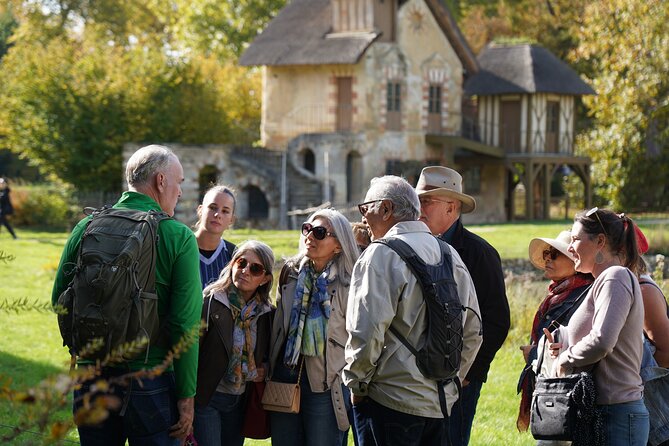
Her Hamlet was designed as a rustic village, with farm buildings and picturesque cottages arranged to suggest rural simplicity. It can feel almost theatrical, because it was. The buildings offered an idealized version of country life rather than the hard work and poverty faced by actual farm families.
That tension makes the site especially interesting. You can admire the charm while also asking what it meant for a queen to play at rural life within a royal estate. Alistair’s explanations connect the Hamlet with Marie Antoinette’s personality and the pressures around her.
The Petit Trianon portion lasts about an hour. For many people, this will be the most memorable part of the day because it feels different from the palace and the formal gardens. It is quieter, more intimate, and more personal, even though it remains carefully designed.
Finishing inside the Palace of Versailles
The tour ends at the main palace, where Alistair gives you an overview of the Royal Chapel, Marie Antoinette’s bedchamber, the State Apartments, and the Hall of Mirrors. You then enter with a timed ticket and explore the interior on your own for about 1 hour and 15 minutes.
This arrangement is worth understanding before you book. You do not have Alistair beside you for a room-by-room palace tour. Instead, you receive the historical framework first, then move through the palace independently.
That can be an advantage. Palace interiors can become crowded, and a self-guided visit lets you pause where you want, move past rooms that interest you less, or spend extra time with a painting or furnishing. The timed entry also helps you avoid the longest queues.
The downside is that you need to pay attention during the final overview. If you want detailed explanations of every room, ceiling painting, and royal object, this format may feel too brief. If you prefer freedom after a strong introduction, it is a sensible balance.
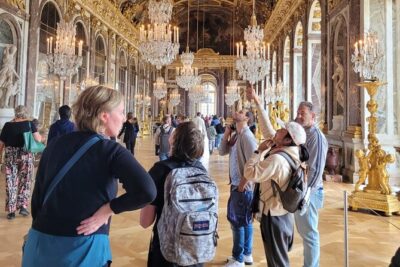
Expect crowds inside, particularly around the Hall of Mirrors. The gardens usually provide more breathing room and more space to listen. That is another reason this tour gives extra attention to the outdoor estate.
Is $131.87 a fair price?
At $131.87 per person, this is not the cheapest way to enter Versailles. You are paying for more than admission, though. The price includes the garden ticket, guided garden walk, Marie Antoinette’s Hamlet and Petit Trianon access, timed palace entry, and the hop-on hop-off train.
The small group and the guide are the main value. Versailles is a place where a good explanation can change what you notice. The price makes more sense if you want help understanding the symbolism and layout, rather than simply taking photos and reading signs.
It is less compelling if you already know Versailles well or prefer to wander alone for an entire day. You can also spend less by arranging a basic visit yourself, but you will need to plan the route, buy the right admissions, and make sense of the estate without a guide.
The tour is typically booked well ahead, with an average booking point of about 63 days in advance. If your dates are fixed, do not leave it until the last minute.
Practical details that affect your day
Wear comfortable walking shoes. The route is long, downhill, and spread across broad garden paths. Bring water and plan to buy or carry food, since lunch and snacks are not included.
Check the weather before you go. Rain jackets are not supplied, and much of the day takes place outdoors. The fountains may operate as part of the fountain shows on weekends from April through October, but the experience should not be booked on the assumption that every fountain will be running at every visit.
You arrange your own transportation to Versailles. The meeting point is in Versailles rather than central Paris, so allow enough time to arrive by the 9:30 am start. The tour finishes at the Palace of Versailles, Place d’Armes.
Give the operator your own mobile phone number with country code. This matters if you arrive late or become separated from the group, since the guide can contact you directly and send tickets if needed.
Free cancellation is available up to 24 hours before the start time. Changes or cancellations inside that window are not accepted and are not refunded.
Who should book this Versailles tour?
I would choose this tour if you are visiting Versailles for the first time and want the gardens, Trianon estate, Hamlet, and palace in one well-organized day. It suits adults, older children, and anyone who likes history explained through stories rather than a long list of facts.
It is also a good fit if the gardens interest you as much as the palace. The outdoor route is where the guide adds the most value, especially at the Latona, Apollo, and Enceladus fountains.
I would hesitate if you dislike group tours, cannot manage a long walk, or want a fully guided palace interior visit. The self-guided palace portion is clear and flexible, but it is still self-guided.
Should you book it?
Book this tour if you want to understand Versailles as a complete royal estate, not just a glittering palace. Alistair Douglas brings the gardens, fountains, court customs, and royal personalities together, while the small group keeps the day personal.
The best reasons to book are the guided garden route, the included Hamlet visit, the train ride after Trianon, and the useful timed entry into the palace. Just bring good shoes, prepare for changing weather, and accept that this is an active day with a self-guided final chapter.
FAQ
How long does the Versailles tour last?
The experience lasts approximately 6 to 7 hours.
What time does the tour start?
The tour starts at 9:30 am.
Where does the tour meet?
You meet at 2 Place Léon Gambetta, 78000 Versailles, France.
Where does the tour finish?
The tour ends at the Palace of Versailles, Place d’Armes, 78000 Versailles, France.
Is transportation to Versailles included?
No. You must arrange your own transportation to Versailles.
Is the palace visit guided?
The palace visit is self-guided. Alistair provides an overview of key highlights before you begin exploring with your timed entry ticket.
Is Marie Antoinette’s Hamlet included?
Yes. Admission to Marie Antoinette’s Hamlet and a guided tour of the area are included.
Is the hop-on hop-off train included?
Yes. The ticket is included, and it is used to help you return toward the palace after visiting the Petit Trianon and Hamlet.
How much walking is involved?
The tour includes approximately 1.5 miles of downhill walking, in addition to walking through the gardens and palace. A moderate level of physical fitness is recommended.
Can babies and strollers join the tour?
Babies are welcome if a parent carries them in a baby carrier. Strollers are not permitted inside the Palace of Versailles, and the activity is intended for children age seven and older.
Is food included?
No. Snacks and lunch are not included. The Terrasses de la Petite Venise café offers pastries, coffee, and sandwiches during the scheduled break.
What happens if I need to cancel?
You can cancel up to 24 hours before the experience for a full refund. Cancellations or changes made less than 24 hours before the start time are not accepted or refunded.
Full-day trips around France
- Giverny Monet’s Garden & Auvers-sur-Oise with Van Gogh House Full Day From Paris
★ 5.0 · 369 reviews - From Marseille: Valensole Lavender Full-Day tour
★ 4.7 · 259 reviews - From Aix-en-Provence: Valensole Lavender Full-Day Tour
★ 4.7 · 222 reviews - Provence Lavender Full Day Tour from Avignon
★ 4.5 · 130 reviews
Just added around France
- Versailles: Skip-the-Line Versailles Palace and Gardens Tour★ 4.7 · 110 reviews
- Giverny Village Walking Tour & Skip-the-Line to Monet Garden★ 4.0 · 595 reviews
- Gorges du Verdon : Lavenders, Canyon Boat Picnic & Villages★ 5.0 · 22 reviews
- Giverny: Monet’s House & Gardens Private Guided Tour +Ticket★ 4.1 · 29 reviews
- Giverny : Monet’s house & Gardens Private tour from Paris★ 5.0 · 5 reviews
- From Paris: Versailles Palace & Garden with Golf Cart★ 4.8 · 5 reviews
- From Paris: Giverny & Monet’s House Skip-the-Line Tour★ 4.4 · 10 reviews
- From Paris: Versailles Palace and Gardens Guided Day Trip★ 4.5 · 57 reviews
Versailles Garden Tours, compared.
Versailles Palace and Gardens Tour from Paris
Read our review →
Versailles Full Day Bike Tour with Palace, Gardens, & Picnic
Read our review →
Versailles Palace Live Tour with Gardens Access
Read our review →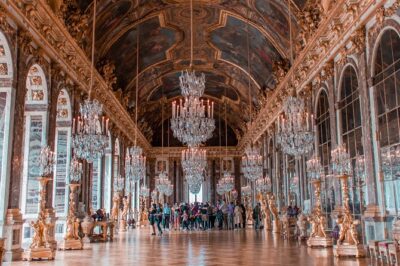
Versailles Palace Guided Tour with Gardens Access
Read our review →
Versailles Royal Palace & Gardens Private Tour by Golf Cart
Read our review →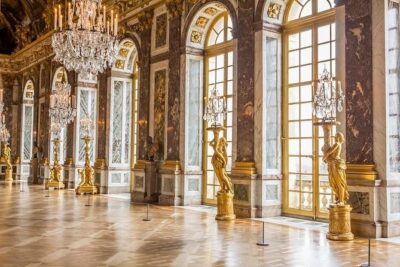
Versailles Full Tour: Palace, Gardens & Marie-Antoinette’s Estate
Read our review →Browse the lists this tour appears in