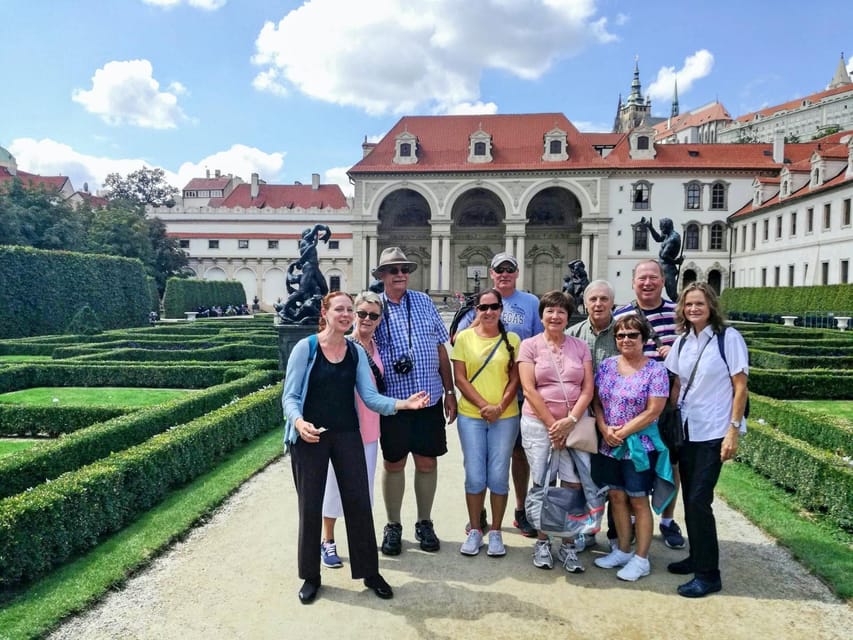
Review · TOURS
Prague Renaissance and Baroque Gardens Walking Tour
Prague’s gardens tell the city’s story in a quieter, more personal way than its grand squares. This three-hour walk links royal gardens, palace terraces, a Mannerist showpiece, and the intimate Vrtba Garden, showing how Prague moved from medieval herb plots to Renaissance order and Baroque drama.
I like the way the tour connects plants and design to power. I also like the unusual details, from albino peacocks in Wallenstein Garden to the Singing Fountain and the first Central European citrus houses. The main drawback is physical: narrow, steep stairs are part of the regular route, and admission to the Prague Castle Gardens and Vrtba Garden costs extra.
Key points to know before you book
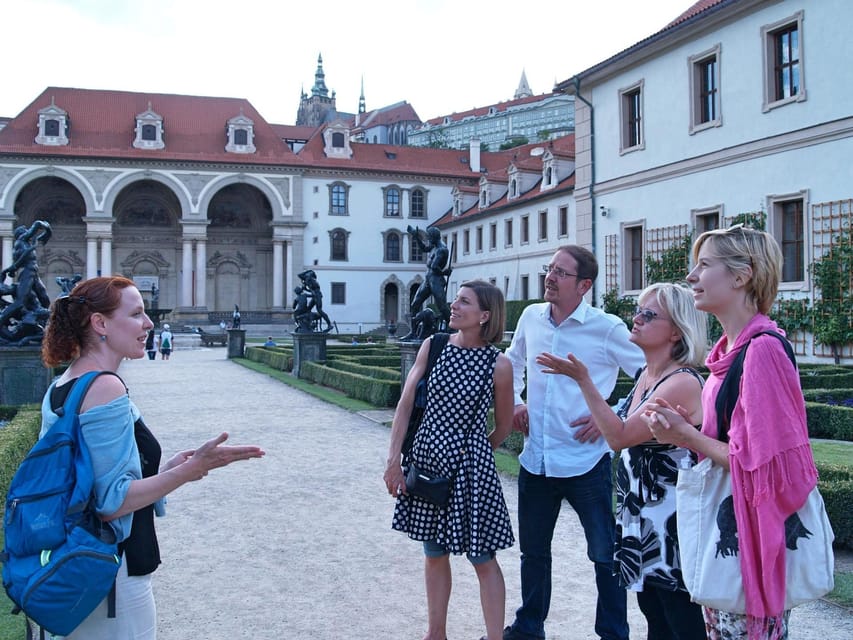
- Belvedere and the Singing Fountain: See one of Europe’s finest Renaissance buildings outside Italy and hear how water makes the 1564 fountain resonate.
- Early citrus growing: Visit the Fig House and Orangery, where figs, almonds, oranges, and lemons were first grown in Central Europe.
- Wallenstein’s theatrical garden: Look for albino peacocks, Mannerist statues, grotto walls, and fountains drawn from myth.
- Vrtba Garden’s hilltop view: Climb through this compact Baroque garden for an excellent look across Prague.
- A history walk, not just a photo stop: Your historian guide explains why each garden reflects the politics and taste of its period.
- Stairs matter: The route includes the Bull Stairs and other steep or narrow sections, so ask for a private version if mobility is a concern.
Why Prague’s gardens are worth your morning
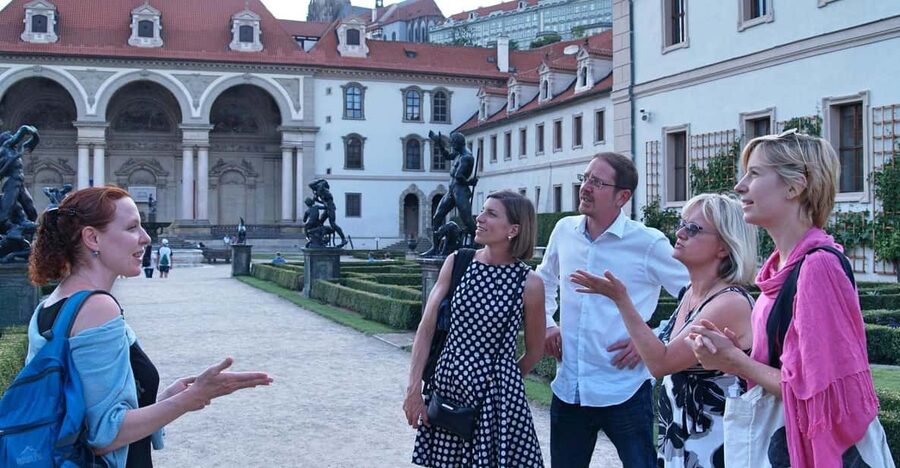
Many first-time visits to Prague focus on churches, bridges, and the castle itself. Gardens give you a different route through the city. They are places where rulers showed wealth, imported foreign ideas, grew prized foods, and shaped nature to fit an ideal.
The earliest gardens discussed on this walk were practical. Medieval plots supplied herbs for cooking and medicine, often beside religious houses. Most have disappeared, though a few Gothic cloisters preserve traces of that older tradition.
The hills around Prague also carried vineyards before the reign of Charles IV. A grand palace garden was a later idea. It took hold in the 1500s, when Emperor Ferdinand I wanted the royal grounds to reflect the ordered beauty of the Italian Renaissance.
That decision changed Prague’s gardening tradition. Ferdinand brought Italian architects and gardeners north of the Alps, introducing formal design, classical decoration, pleasure pavilions, and plants that were unfamiliar in Central Europe.
You are not simply moving from one pretty garden to another. You are watching a city adopt new ideas, first from Italy and later through the more dramatic Baroque style.
More Garden Tours in the world:
- Paris: Versailles Palace and Gardens Full Access Ticket
★ 4.6 · 41,579 reviews - Amsterdam: Keukenhof Entry & Shuttlebus with Flexible Return
★ 4.7 · 11,891 reviews - Versailles: Skip-the-Line Tour of Palace and Gardens Access
★ 4.7 · 10,429 reviews
Belvedere and Ferdinand’s Italian vision
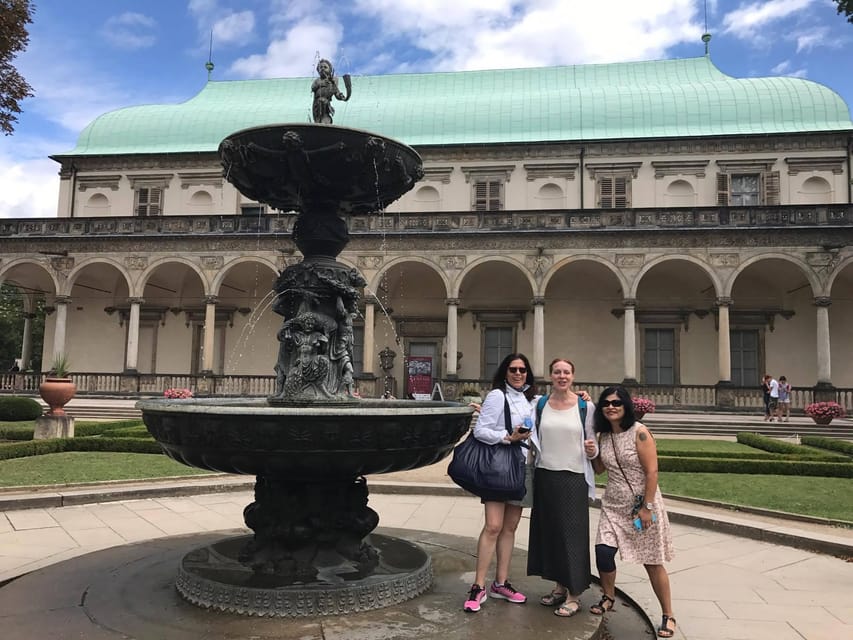
The walk begins around the gardens of Prague Castle, where Ferdinand I commissioned the Belvedere Summer Palace as a gift for his wife, Queen Anne. She died before the building was finished, which gives the elegant project a surprisingly sad edge.
The Belvedere is often described as the finest Renaissance structure outside Italy. Its appeal comes from proportion and decoration rather than sheer size. It was designed by the Italian architect Paola della Stella, and its presence explains why Ferdinand’s garden project was about more than planting flowers.
Look closely at the relief work. One scene shows Ferdinand presenting his wife with a flower from the Royal Gardens. That small gesture links the palace, the garden, and the emperor’s image as a cultivated Renaissance ruler.
In front of the palace is a formal Giardinetto, a small pleasure garden with the Singing Fountain. Cast in bell bronze in 1564, the fountain creates a tone as water drops into its basin. The sound is one of those details easy to miss if you walk through alone.
I appreciate that the guide explains the fountain as both an engineering object and a piece of courtly entertainment. Renaissance gardens were designed for looking, listening, strolling, and displaying taste. The fountain made water perform for its audience.
The grounds can be a strong opening to the tour, but remember that garden admission is not included in the $123 price. Confirm the current entrance arrangement when booking so the additional cost does not surprise you.
Fig House, Orangery, and Prague’s first exotic crops
The route continues to the Fig House and Orangery. These structures matter because they show how royal gardens functioned as experiments in cultivation, not just decorative spaces.
Figs, almonds, oranges, and lemons were grown here for the first time in Central Europe. That fact helps you understand the status of the gardens. Such plants required care, protection, and specialist skill. They were signs that the royal court could bring Mediterranean tastes into a much colder region.
For you, this is one of the most memorable parts of the walk because it turns a familiar subject, gardening, into a story about trade and technology. The plants were not local background. They represented distance, expense, and royal ambition.
The tour also covers the arrival of tulips in the Royal Gardens. At the time, tulips were unknown in Europe and came as an exotic gift from the Sultan of Constantinople. This detail adds a human touch to the larger political story. A single plant could carry prestige across borders.
Do not expect a long horticultural lecture about every species. The supplied details point to a history-focused walk, led in English by a historian. The value comes from seeing how plants fit into court culture, rather than from receiving a specialist gardening lesson.
Crossing the castle grounds and taking the Bull Stairs
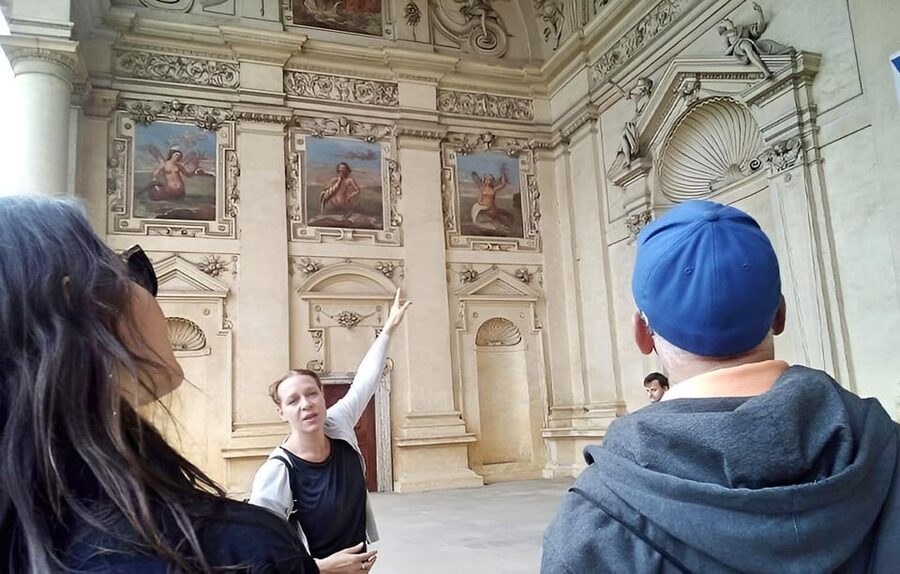
After the upper gardens, the route passes by the stag moat, crosses a castle courtyard, and descends the Bull Stairs toward the South Gardens.
This change in level is important. Prague is built on hills, and the gardens below the castle use those slopes rather than hiding them. You move through the Garden of Paradise and the Garden on the Bulwark, then continue down through several terraced gardens.
The names sound peaceful, but the route is not flat. Some stairs are narrow or steep, and the descent can be tiring if you are not comfortable on uneven or enclosed steps. Wear sensible shoes and keep your pace steady.
The tour is offered privately or in small groups, which helps here. A private booking is the better choice if you need frequent pauses or want the route adjusted. The regular outing includes the full stair section, but a private guide can leave out selected sites and focus on areas that fit your pace.
I like this part because the walk itself becomes part of the lesson. You are not looking at the gardens from a single viewpoint. You are moving through the layers of the hill, from the castle ridge to the Lesser Town below.
Same corner of the map, a different planting:
- Marrakesh: Majorelle Garden Entry Tickets
★ 4.5 · 9,651 reviews - Vienna: Schönbrunn Palace & Gardens Skip-the-Line Tour
★ 4.7 · 7,739 reviews - Granada: Alhambra & Gardens Tour w/Nasrid Palaces Option
★ 4.2 · 7,022 reviews - From Paris: Versailles Palace & Gardens with Transportation
★ 4.6 · 6,222 reviews
Wallenstein Garden and the shift to Baroque drama
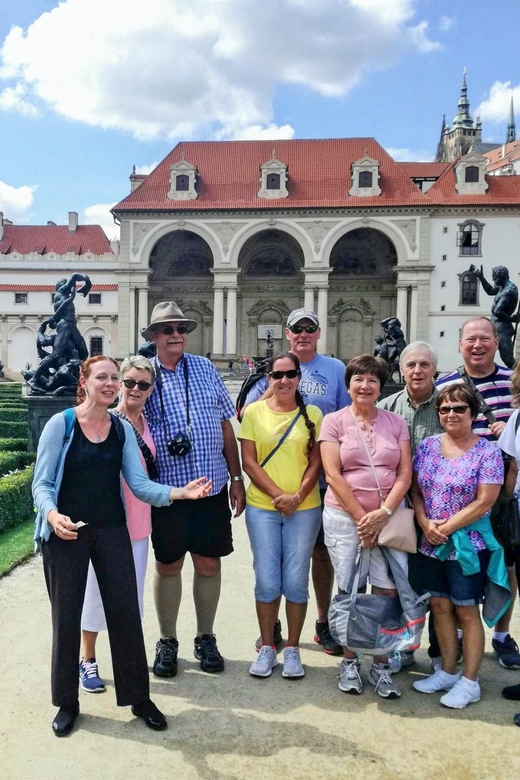
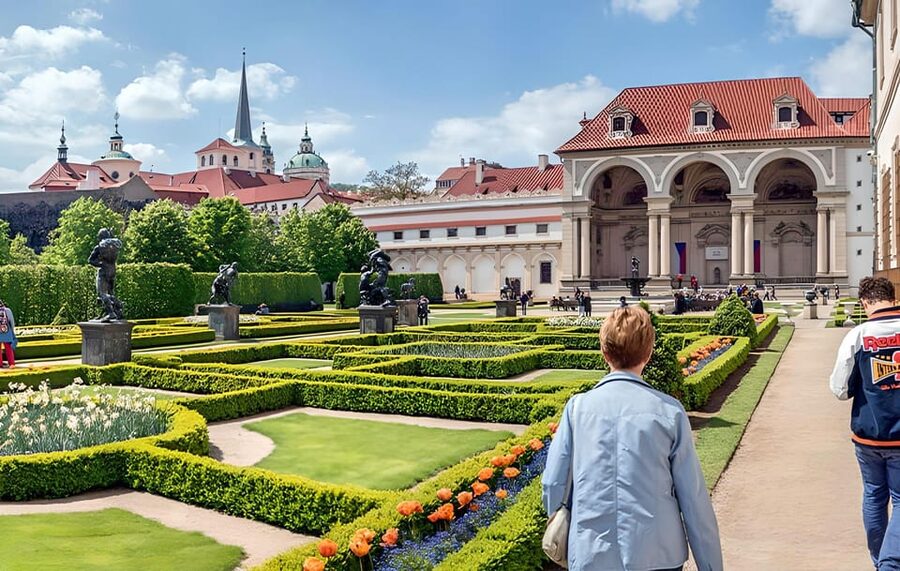
At the bottom of the hill, the tone changes at Wallenstein Garden. This is the tour’s grandest stop, with albino peacocks, Mannerist statues, a grotto wall, and fountains built around mythological themes.
The garden was commissioned by Albrecht von Wallenstein, one of the most powerful and controversial figures of seventeenth-century Bohemia. His life was dramatic, and the garden reflects his ambition. It was not designed to feel modest or private. It presents authority through scale, decoration, and controlled spectacle.
Here you can see the transition from Renaissance classicism to Baroque ideas. Renaissance design favored balance and classical order. Baroque design pushed toward movement, surprise, theatrical effects, and emotional impact.
The grotto wall is a good example. Its rough, artificial rock surface contrasts with the formal geometry elsewhere in the garden. Statues and fountains add another layer, turning the grounds into a stage filled with gods, symbols, and carefully planned views.
The albino peacocks are an especially enjoyable detail. They add movement and a little strangeness to a place otherwise shaped by strict design. You may find that the birds become a favorite photo subject, but do not let them distract you from the larger point: Wallenstein wanted the garden to express power.
This stop also offers a useful contrast with the castle gardens. Ferdinand’s project introduced Italian Renaissance taste to Prague. Wallenstein’s garden shows how later patrons used design with greater drama and display.
Vrtba Garden, a compact Baroque surprise
The final garden is Vrtba Garden in Mala Strana, a walled Baroque garden dating from 1720. It is smaller and more enclosed than the royal grounds, but that is exactly why it feels different.
You enter a space shaped for noble private life. Its terraces, walls, sculptures, and stairways show how an eighteenth-century aristocratic household could create a controlled outdoor world in the middle of the city.
The garden is easy to miss on a normal Prague sightseeing route. It does not have the scale of the castle grounds or the fame of the main monuments. The tour gives it proper attention, and the stop helps complete the story by showing Baroque design on a more intimate scale.
Climbing to the top courtyard is part of the reward. There you find a marine-themed grotto and broad views across Prague. The city appears as a setting for the garden, with the terraces directing your eye outward.
The climb also means Vrtba is not a simple final stroll. You will be using more steps after already walking downhill from the castle. If you have limited mobility, discuss the route before booking rather than hoping to manage it on the day.
Vrtba’s admission fee is separate. That is worth factoring into the total cost, especially since the Prague Castle Gardens also require their own entrance payment.
What the guide adds to the experience

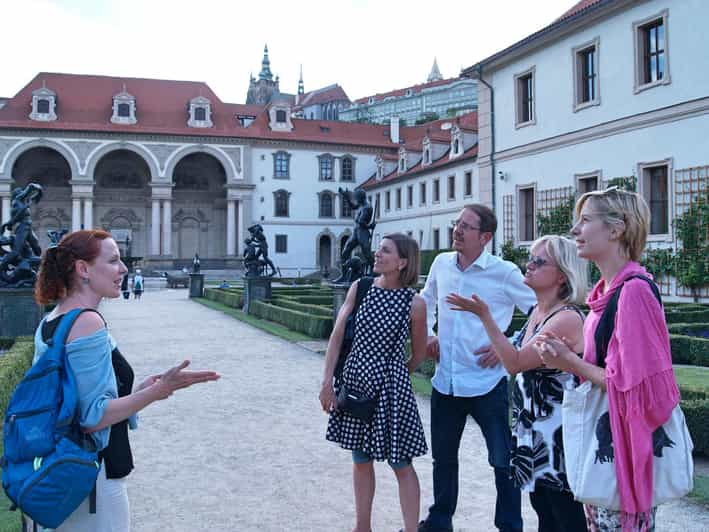
This is a history walk led in English, not an audio tour or a basic garden visit. Your guide supplies the connections between architecture, plants, politics, religion, and court life.
Miriam received especially strong praise for an informative but relaxed approach. That combination suits this route. There are many dates and names, but the gardens are easier to enjoy when the explanation stays conversational rather than turning into a lecture.
Bonita Rhoads has also been identified as an excellent guide for this experience. Guide availability can vary, so do not assume you will receive a particular person unless the booking confirmation says so.
The best questions to ask are practical and specific. Ask how Ferdinand’s Italian team changed Prague, why Wallenstein chose mythological decoration, or how the terraced gardens use the castle hillside. Those questions will help you see the sites as connected chapters rather than isolated stops.
The tour has earned a top rating from a small number of published bookings, including a June 2025 visit praised for its relaxed, informative style. That is encouraging, though the sample is limited. I would put more weight on the clearly described route and the quality of the subject matter than on the rating alone.
Is $123 a fair price?
At $123 per person, this is not a bargain-priced orientation walk. The cost covers three hours with a historian guide, while entrance fees for the Prague Castle Gardens and Vrtba Garden are extra.
The value depends on your priorities. If you want only a quick look at flowers and fountains, the price may feel high. You can visit some gardens independently and spend less, though you would lose the clear story linking Renaissance planting, imported crops, royal ambition, and Baroque theater.
I think the price makes more sense for someone who enjoys architecture and history and wants access to several gardens in one carefully arranged route. You are also paying for interpretation at places where the details are easy to miss, such as the bronze sound of the Singing Fountain or the significance of the citrus houses.
A private booking can offer better value for a family or small party that needs a slower pace. A small group is likely the more economical choice if you are happy to follow a set route.
Who should book this garden walk?
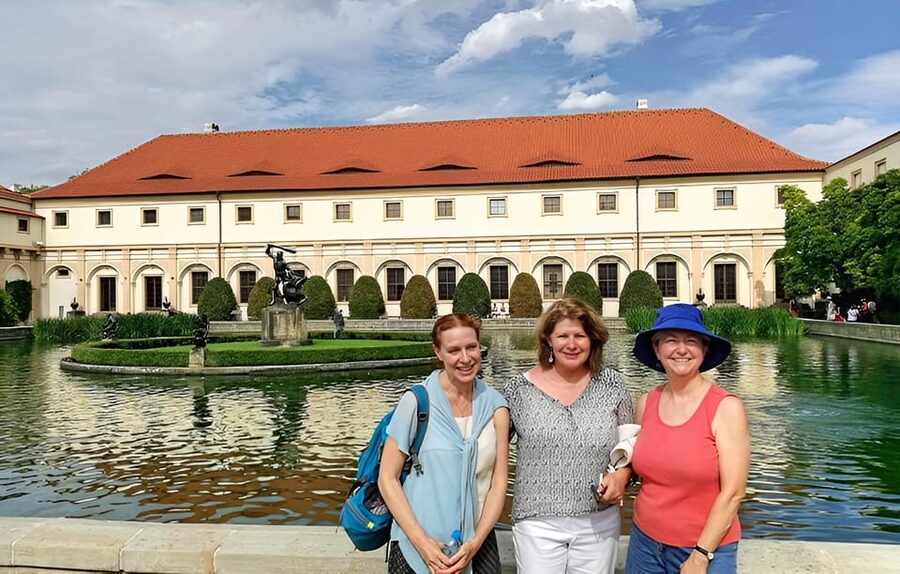
I would recommend it if you have already seen Prague’s main streets and want a more focused way to understand the city. It also suits anyone interested in Renaissance architecture, Baroque design, royal courts, historic plants, or unusual city views.
You should be comfortable walking for three hours and handling stairs. The route includes narrow and steep sections, so it is not the right choice for anyone who cannot manage those safely. If you have mobility concerns, choose the private format and ask the guide to tailor the route.
Meet at the door of Bagel Lounge Malostranska. The tour is offered in English, with private and small-group options. You can cancel up to 24 hours ahead for a full refund, and the reserve-now, pay-later option gives you some flexibility while your Prague plans settle.
Should you book it?
Book this tour if you want Prague’s gardens explained as part of the city’s political and artistic story. The best moments are not only the famous buildings, but the small details: a fountain that sings, citrus grown far from its natural climate, tulips arriving as diplomatic gifts, and a peacock wandering through Wallenstein’s display of power.
Skip it if you want a flat route, a cheap introduction, or a tour focused only on plant names. For the right visitor, though, the combination of castle gardens, Wallenstein Garden, and Vrtba gives you a thoughtful and unusually varied morning in Prague.
FAQ
How long does the Prague Renaissance and Baroque Gardens Walking Tour last?
The tour lasts three hours.
What language is the tour offered in?
The live tour guide speaks English.
Where does the tour meet?
Meet at the door of Bagel Lounge Malostranska.
Are entrance fees included in the tour price?
No. Admission to the gardens under Prague Castle and admission to Vrtba Garden are not included.
Is the tour private or shared?
Private and small-group options are available.
Does the route include stairs?
Yes. The regular route includes narrow and sometimes steep stairs, including the Bull Stairs and the climbs through the terraced gardens.
Can the route be adjusted for mobility needs?
A private tour can be tailored to your limits and pace. The guide may leave out some sites and focus on other areas if needed.
Can I cancel the booking?
You can cancel up to 24 hours in advance for a full refund. You can also reserve now and pay later.
Just added around the world
- Yu Garden Shanghai Entry Tickets Booking And Trip★ 3.6 · 9 reviews
- Zanzibar: Jozani Monkeys, Butterfly Garden & Reptile Park★ 5.0 · 2 reviews
- York: Castle Howard Gardens and Grounds Entry Ticket★ 4.5 · 23 reviews
- York: Castle Howard House and Gardens – Self-Guided★ 4.8 · 120 reviews
- Royal Horticultural Society: Harlow Carr Garden Ticket★ 4.7 · 14 reviews
- Woking: Royal Horticultural Society Wisley Garden Ticket★ 4.7 · 24 reviews
- Woodside: Filoli Historic House and Garden Entry Ticket★ 4.9 · 9 reviews
- Xochimilco floating gardens, Coyoacan and UNAM murals★ 4.0 · 6 reviews
Tours, compared.

Skip-the-Line Tour of Palace and Gardens Access
Read our review →
Schönbrunn Palace & Gardens Skip-the-Line Tour
Read our review →
Alhambra & Gardens Tour w/Nasrid Palaces Option
Read our review →
Skip-the-Line Schönbrunn Palace & Gardens Tour
Read our review →
Cooking Class, Market & Thai Herbs Garden Tour
Read our review →
Versailles Palace Guided Tour & Gardens Access
Read our review →
Versailles Palace and Gardens Tour from Paris
Read our review →