
Review · PARIS GARDEN TOURS
Paris: Musée de Montmartre and Gardens Entry Ticket
Montmartre’s best museum is not the grandest one. It is a quiet house where artists once lived and worked, with rooms that explain how a rural hill became Paris’s center of cabarets, studios, posters, and poetry. Musée de Montmartre gives you the story behind the neighborhood, not just its postcard views.
I especially like the Renoir Gardens, a calm green pause after the galleries, and the way the museum links famous names such as Toulouse-Lautrec and Aristide Bruant to real places and performances. The main consideration is size: some rooms and displays are easy to miss, and parts of the museum are reached through or near the café.
Key points to know before you go
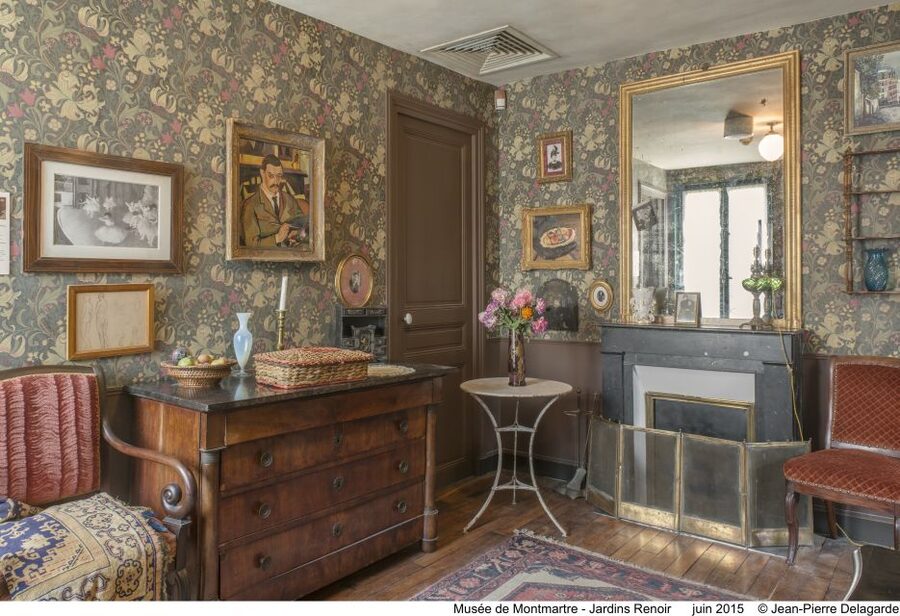
- A seventeenth-century house anchors the visit: Bel Air House is described as the oldest building in Montmartre.
- The 90-minute audioguide gives the neighborhood context: You learn how Montmartre changed after it was annexed to Paris.
- The cabaret story is unusually strong: Chat Noir, shadow theatre, the Moulin Rouge, and Toulouse-Lautrec all have a place here.
- The Renoir Gardens are part of the ticket: You can see the garden, the vineyard, and Café Renoir.
- Temporary exhibitions add variety: The program can change, with past displays including works by Maximilien Luce and Auguste Herbin.
- The $16 price is fair for a flexible visit: You get the museum, temporary exhibitions, gardens, audioguide, and one full day of validity.
Why this small museum explains Montmartre so well
Montmartre is often reduced to Sacré-Coeur, portrait artists, steep streets, and a few famous cafés. Musée de Montmartre fills in the missing story. It shows how the hill began as countryside on the edge of Paris, then changed quickly once the city expanded and absorbed it in the nineteenth century.
The museum itself helps make that story believable. This was not built as a grand palace for tourists. Bel Air House and the nearby buildings were tied to the artists who lived and worked in Montmartre. The setting gives the visit a sense of place that a large national museum cannot easily provide.
The museum’s focus is also broader than a collection of paintings by famous artists. You learn about the mills, the cabarets, the performers, the posters, the photographs, and the everyday artistic life of the district. That makes the visit useful even if you do not know much about French art.
I would allow at least 90 minutes for the main visit. If you like reading labels, examining art, or taking a quiet break in the garden, plan on longer. The ticket remains valid for one day, so you do not have to rush through the rooms.
Entry tickets around Paris:
- Paris: Versailles Palace and Gardens Full Access Ticket
★ 4.6 · 41,579 reviews - From Paris: Versailles Palace Self Guided & Gardens tickets
★ 4.4 · 1,100 reviews - Paris: Louvre Museum Entry Ticket and Garden Walking Tour
★ 4.2 · 326 reviews
Entering Bel Air House and the old Montmartre
You show your voucher at the museum entrance and go inside without waiting in the ticket line. This is helpful, though it does not turn the museum into a guided tour. There is no live guide included, so the audioguide supplies the structure and background.
The first appeal is the building. Bel Air House dates to the seventeenth century and is presented as the oldest building in Montmartre. Its age matters because it connects the modern neighborhood to a time before Montmartre became part of Paris’s urban core.
As you move through the museum, the story shifts from village life to city pressure. In the nineteenth century, Paris began pushing outward. After Montmartre was annexed to the city, streets, businesses, cafés, and new forms of entertainment changed the old countryside.
The displays help you see this as a social story, not only an art story. Montmartre became a place where working life, nightlife, cheap studios, and artistic ambition met. The district’s character grew from those connections.
Some areas are easy to overlook. The museum has rooms and passages that do not always announce themselves clearly, and one visitor specifically found that much of the route runs through the café area. Take your time at doorways and check the signs before moving on.
The audioguide’s 90-minute story
The audioguide is included and lasts about 90 minutes. It covers Montmartre from the nineteenth century onward, with special attention to the district’s annexation to Paris and its rise as an artistic center.
This format suits you if you want context but prefer to move at your own speed. You can pause, look closely at a painting, or skip ahead. Since there is no live guide, you also avoid being tied to a group’s pace.
The guide helps connect separate parts of Montmartre’s identity. You hear how cafés and cabarets multiplied in the 1880s, how artists began arriving around 1870, and why the district developed such a strong reputation for unconventional art and performance.
The audioguide is most useful when paired with the objects in front of you. Do not treat it as background noise. Stop when it points you toward a poster, photograph, room, or artist, then look carefully before continuing.
English translations are available in the museum, and one visit specifically praised the quality of the English information. That makes the museum accessible to people who want more than a quick look at pictures.
Chat Noir, shadow theatre, and the cabaret years
The section on entertainment is one of the museum’s most distinctive features. Montmartre was not only a place for painters. Theatre, music, circus, dance, satire, and poetry all played a role in the district’s public life.
The Chat Noir cabaret is central to this story. It hosted performances of shadow theatre, an art form created in 1866 by Henri Rivière and Henry Somm. This detail shows how Montmartre’s creative life was experimental and collaborative. New forms were tried in small venues before they became part of the neighborhood’s legend.
You also encounter performers such as Aristide Bruant and Yvette Guilbert, who recited their texts for Paris audiences. At the Moulin Rouge, dancers including La Goulue, La Môme Fromage, and Grille d’Egouts became part of the era’s popular entertainment.
Toulouse-Lautrec repeatedly recorded this world in his art. His posters and images are not detached studies of old Paris. They are tied to the performers, venues, and audiences that made Montmartre famous.
I like this part because it gives the cabaret district a human scale. Instead of seeing only glamorous posters, you get a sense of the many forms of performance that filled the cafés and halls. If your picture of Montmartre is based mainly on photographs and souvenir prints, this section adds useful depth.
More Garden Tours in Paris:
- Versailles: Skip-the-Line Tour of Palace and Gardens Access
★ 4.7 · 10,429 reviews - From Paris: Versailles Palace & Gardens with Transportation
★ 4.6 · 6,222 reviews - From Paris: Versailles Palace Guided Tour & Gardens Access
★ 4.7 · 3,574 reviews - From Paris: Giverny, Monet’s Home & Gardens Half-Day Trip
★ 4.5 · 2,887 reviews
Artists’ studios at 12 Cortot
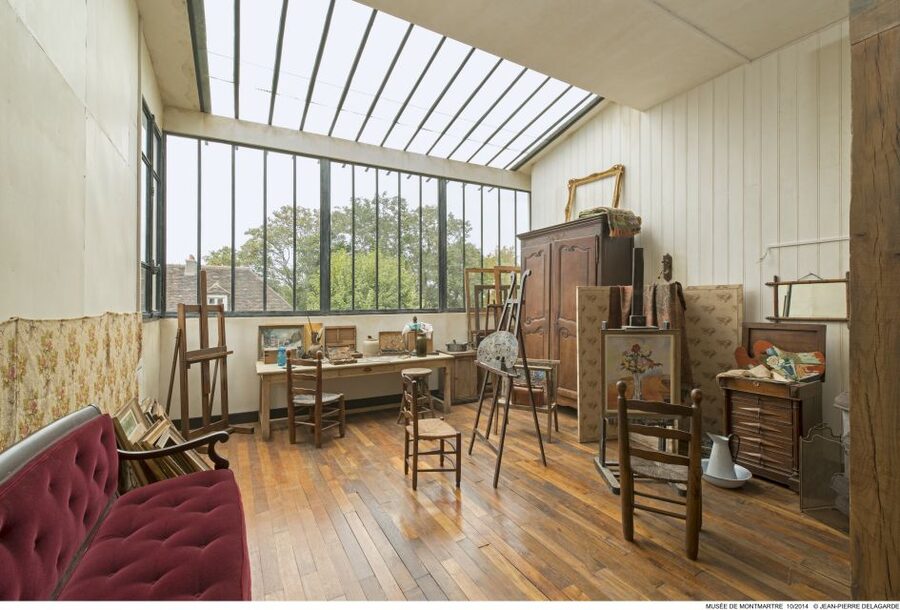
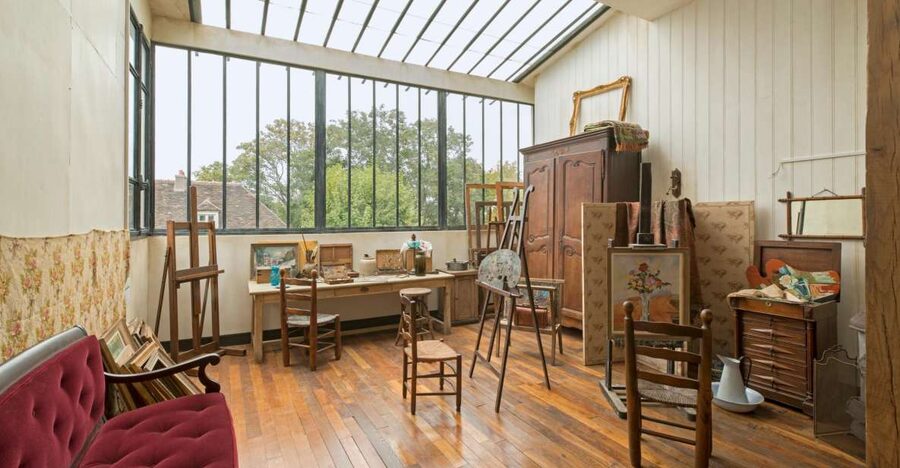
The museum also focuses on the studios at 12 Cortot, where several artists lived and worked. These rooms help explain why Montmartre attracted painters in the first place.
The appeal was not just the view or the nightlife. Artists shared buildings, ideas, contacts, and a sense that the district allowed room for experiments. The studios became part of the artistic story themselves, and several residents painted their own surroundings.
This makes the museum feel more personal than a conventional gallery. You are not simply moving from one famous canvas to another. You are following the places where artists lived, met, and created.
The permanent collection includes art and historical material connected to Montmartre’s development. You might find paintings, photographs, posters, and information about the district’s mills and entertainment venues. The mix is important because no single type of object can explain Montmartre on its own.
If you are especially interested in the Impressionists, the setting will have extra appeal. The museum connects artists to the neighborhood they knew, rather than presenting them only as names in a textbook.
The Renoir Gardens and Montmartre vineyard
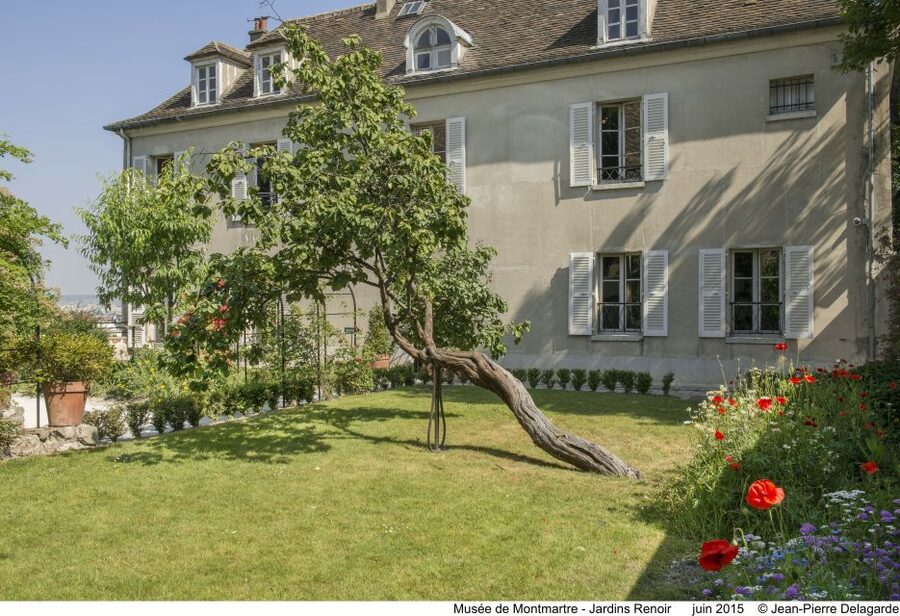
The gardens are not an optional extra in spirit, even though they are included with the museum ticket. They give you a chance to slow down after the indoor exhibits and see Montmartre from a softer angle.
The Renoir Gardens contain abundant plant life and overlook the museum’s historic setting. Their appeal changes with the season. They can be attractive even in colder weather, and they remain a pleasant stop when the day is wet, though you will naturally get more from them in good weather.
The Montmartre vineyard adds another reminder that this hill was once more rural. It is easy to associate Montmartre only with city streets and nightlife, but the vineyard helps preserve the older character of the area.
Café Renoir is open from 11 a.m. to 6 p.m. and provides a place to stop before or after the museum. Several visits found the café and garden useful for a relaxed lunch or a drink. One visitor particularly liked the chocolate.
Do not make the café the main reason for coming. It can close for a private event, and the food choices may not suit children with very specific tastes. Treat it as a pleasant addition, not a guaranteed meal plan.
Temporary exhibitions add a second reason to visit
Your ticket includes both the permanent and temporary exhibitions. This makes the museum more worthwhile for repeat visits, since the temporary display can change the focus of your time there.
Past exhibitions have included Maximilien Luce and Auguste Herbin. One exhibition devoted to Herbin followed the changes in his style across his life, while another display of Luce’s work made a strong impression.
The temporary rooms can also balance the permanent collection. If the main museum is focused on Montmartre’s people and places, the special exhibition may give you a more concentrated look at one artist or movement.
Check which exhibition is showing when you book, but do not assume every room will always be open. One visit found the top floor closed, although the temporary exhibition still provided plenty to see. Museum access can vary by date.
How much time should you allow?
The official audioguide lasts 90 minutes, but the ticket is valid for one day. That gives you useful flexibility.
For a brisk visit, allow around an hour and a half. This should cover the audioguide, the main rooms, and a short look at the gardens. You will need longer if you stop often for labels or want time at the café.
For a comfortable visit, I would plan two to three hours. That gives you time to follow the museum’s story, inspect the temporary exhibition, find the less obvious rooms, and sit in the garden.
The museum is open from 10 a.m. to 7 p.m. The last entry is 45 minutes before closing, so do not arrive at the end of the day expecting a full visit. An early or mid-afternoon arrival gives you more room to adjust your pace.
The walk up to the museum can feel like a trek, especially on Montmartre’s slopes. Give yourself extra time and enjoy the local shops and cafés along the way. The climb is part of the setting, but it may be tiring if you are already spending the day on foot.
Is the $16 ticket good value?
At $16 per person, this is a reasonable museum ticket for Paris. You receive entry to the permanent collection, temporary exhibitions, gardens, and Renoir’s private garden, plus the audioguide and access to the café.
The value is strongest if you care about Montmartre as a place, not only as a viewpoint. The museum gives you background that you will not get from wandering the streets alone, while the garden makes the visit feel less like a standard indoor art stop.
The ticket is less compelling if you want a large collection of major masterpieces or a live expert explaining every room. This is a focused local museum, not a replacement for the Louvre or Musée d’Orsay.
I also like the one-day validity. You can visit the museum, leave for another Montmartre activity, and still have a flexible schedule if the venue’s rules allow re-entry. The supplied information confirms one-day validity, but it does not specify the exact re-entry procedure, so ask at the entrance if that matters to your plan.
Free cancellation up to 24 hours before the visit and reserve-now, pay-later booking make the $16 commitment easier to manage. These terms are useful in Paris, where weather and sightseeing plans can change quickly.
Who should visit Musée de Montmartre?
I would recommend this museum to anyone who wants more context for Montmartre’s famous streets. It is especially good for art lovers, fans of cabaret history, and people who prefer smaller museums with a strong local connection.
Families can enjoy the gardens and the visual material, though younger children may not have much patience for the historical explanations. The café is convenient, but do not depend on it to satisfy picky children.
The museum also suits repeat visitors to Paris. You do not need another broad introduction to the city. Instead, you get a focused look at one neighborhood and the artists, performers, and buildings that shaped it.
It is wheelchair accessible, which makes it a practical choice for many visitors. Since the route includes an old building and garden spaces, you may still want to confirm any specific access needs before arrival.
Should you book it?
Book this experience if you want to understand why Montmartre became associated with artists, cabarets, studios, and unconventional performance. The combination of Bel Air House, the permanent collection, the cabaret story, the audioguide, and the Renoir Gardens makes the visit feel complete without taking an entire day.
Skip it if your Paris schedule is already packed with major art museums and you have little interest in Montmartre’s local story. Also think twice if you want a live guide or a very large collection.
For most people spending time in Montmartre, I would make room for it. Go before the 6 p.m. café closing if you want a break, and leave enough time to find the easily missed rooms. At $16, it is a calm, useful way to see the neighborhood beyond Sacré-Coeur and the souvenir shops.
FAQ
How much does entry to Musée de Montmartre cost?
The listed price is $16 per person.
How long does the visit last?
The included audioguide lasts about 90 minutes, but you may stay and explore at your own pace for the full one-day validity period.
What does the ticket include?
It includes entry to the permanent and temporary exhibitions, the museum gardens, the Renoir private garden, Café Renoir access, and an audioguide.
Is a live guide included?
No. The experience includes an audioguide but not a live guide.
What are the museum’s opening hours?
The museum is open from 10 a.m. to 7 p.m.
When is the last entry?
The last entry is 45 minutes before the museum halls close.
What are Café Renoir’s opening hours?
Café Renoir is open from 11 a.m. to 6 p.m.
Is the museum wheelchair accessible?
Yes, the activity information states that the museum is wheelchair accessible.
Can I cancel for a refund?
Yes. You can cancel up to 24 hours in advance for a full refund.
Can I reserve now and pay later?
Yes. The booking option allows you to reserve your place and pay nothing at the time of booking.
Just added around Paris
- Versailles: Skip-the-Line Versailles Palace and Gardens Tour★ 4.7 · 110 reviews
- Giverny : Monet’s house & Gardens Private tour from Paris★ 5.0 · 5 reviews
- From Paris: Versailles Palace & Garden with Golf Cart★ 4.8 · 5 reviews
- From Paris: Versailles Palace and Gardens Guided Day Trip★ 4.5 · 57 reviews
- From Paris: Versailles Bike Tour with Gardens & Palace Entry★ 4.5 · 16 reviews
- From Paris: Versailles Palace & Gardens with Transportation★ 4.9 · 13 reviews
- From Paris: Giverny Monet’s House & Gardens Half-Day Tour★ 4.4 · 85 reviews
- Giverny Half Day Guided Trip with Monet’s House & Gardens from Paris by minivan★ 4.0 · 150 reviews
Paris Garden Tours, compared.

Versailles Palace and Gardens Full Access Ticket
Read our review →
Skip-the-Line Tour of Palace and Gardens Access
Read our review →
Versailles Palace Guided Tour & Gardens Access
Read our review →
Giverny, Monet’s Home & Gardens Half-Day Trip
Read our review →
Versailles Bike Tour w/ Palace, Gardens, & Picnic
Read our review →
Giverny Monet’s Home and Gardens Half Day Tour from Paris
Read our review →
Versailles Palace and Gardens Half Day Guided Tour from Paris
Read our review →
Browse the lists this tour appears in