
Review · UK GARDEN TOURS
London: Kew Gardens Admission Ticket
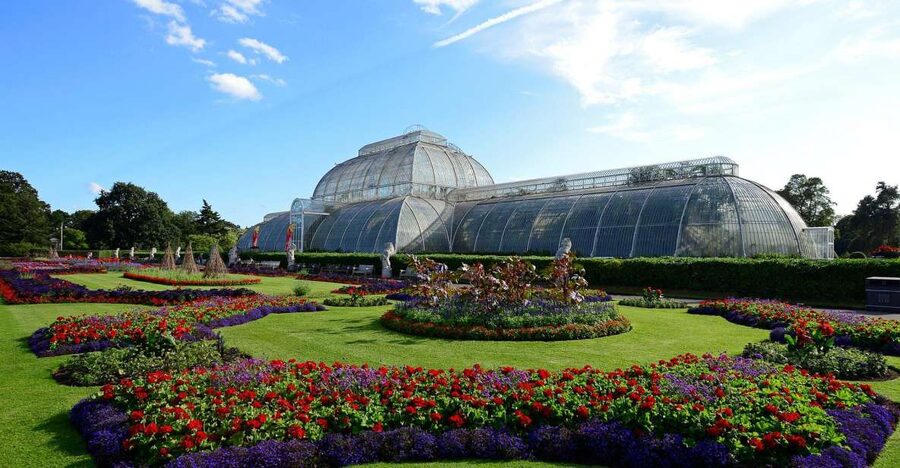
Kew Gardens gives you something rare in London: a full day outdoors without leaving the city. Within its 326 acres, you can move from a steamy rainforest in the Palm House to royal rooms at Kew Palace, then climb 18 metres above the ground on the treetop walkway.
I especially like the mix of serious plant collections and easy-going public spaces. The giant lily pads, old trees, art installations, and glasshouses give the day plenty of variety. I also like that you can set your own pace, with free walking tours available at least twice daily when scheduled.
The main drawback is size. Kew can take four to six hours at a brisk pace, and a full day still may not cover everything. Food inside can also be expensive, while the Explorer train is an extra charge.
Key points to know before you go
- 326 acres to explore: Plan on at least half a day, and preferably a full day, if you want more than a quick walk.
- The Palm House and Waterlily House: These historic glasshouses offer tropical plants, rainforest heat, and giant lily pads.
- The Hive: This 17-metre aluminium and LED structure recreates the sights and sounds of a beehive.
- Kew Palace: See royal bedrooms, a small dining room, and the restored Georgian Royal Kitchens. It closes in winter.
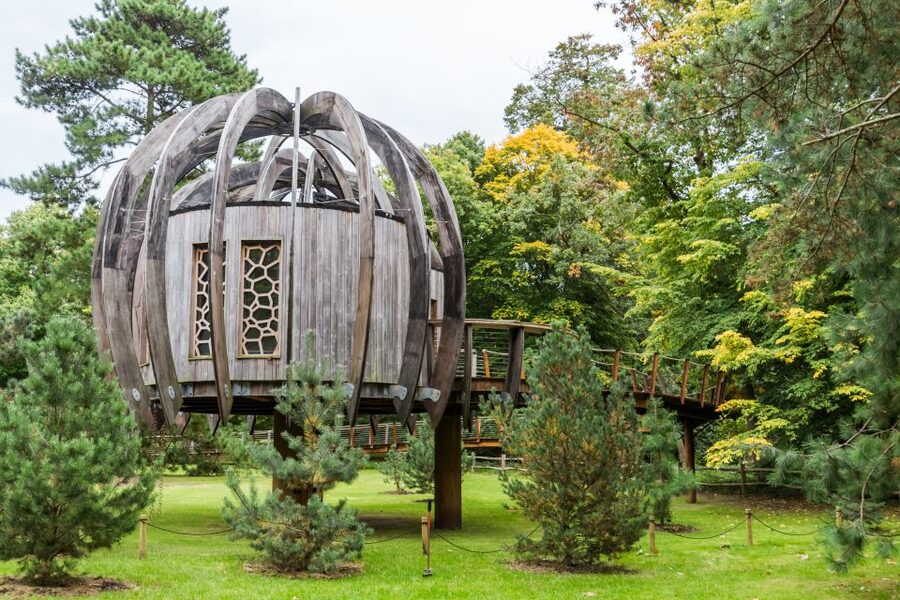
- Treetop views: The walkway rises 18 metres above the ground and gives you a different view of Kew’s trees.
- Bring a food plan: Cafes and restaurants serve hot meals and afternoon tea, but food and drinks are not included.
Why Kew works so well as a London day out
Kew is not simply a large park with flowerbeds. It is a working botanical garden, a historic royal site, an art venue, and a place for quiet walks. That range matters because you are unlikely to tire of one type of sight before finding something different.
You might spend the morning studying rare plants in a glasshouse, then walk beneath old trees in the Arboretum after lunch. Later, you can look at an art gallery, visit Kew Palace, or head up to the treetop walkway. I like this freedom because you do not have to follow a fixed route or keep up with a group.
The setting also gives you a useful break from central London. Kew is around 30 minutes from the city centre by Underground or Overground train, yet the pace feels far removed from busy streets and traffic. Outside the gates, Kew has pubs and places to eat, which gives you a practical backup if the food inside does not suit your budget.
At $32 per person, admission is not a throwaway London ticket. It becomes good value when you stay for several hours and use the whole site. A short visit focused only on a few plants will feel expensive, but a long day that includes the glasshouses, Palace, Arboretum, galleries, and The Hive gives the ticket much more weight.
Entry tickets around the UK:
- Kew Gardens Entrance Ticket
★ 4.0 · 1,055 reviews - The Alnwick Garden: Entry Ticket
★ 4.3 · 241 reviews - Birmingham: Winterbourne House and Garden Admission Ticket
★ 4.7 · 199 reviews
Getting there and entering through Victoria Gate
You can enter at any Kew Gardens gate. Victoria Gate is the most convenient for Kew Gardens station, served by Underground and Overground trains, and sits on Kew Road.
I would arrive close to opening time if you want to cover a lot. Kew opens at 10:30 AM on March 31, and seasonal opening hours can affect your available time. Last admission is one hour before closing, so do not leave the main glasshouses until the final part of the afternoon.
The map and seasonal highlights guide included with admission are worth picking up. Kew is large enough that a map helps you make sensible choices instead of crossing the grounds several times. Free walking tours take place at least twice daily when available, and they can help you understand the garden’s layout and main features.
You can also explore independently. That is one of the strongest parts of this ticket. You decide how long to spend in each glasshouse, how often to stop, and whether to make the day about plants, buildings, art, or simple walking.
Start with the glasshouses
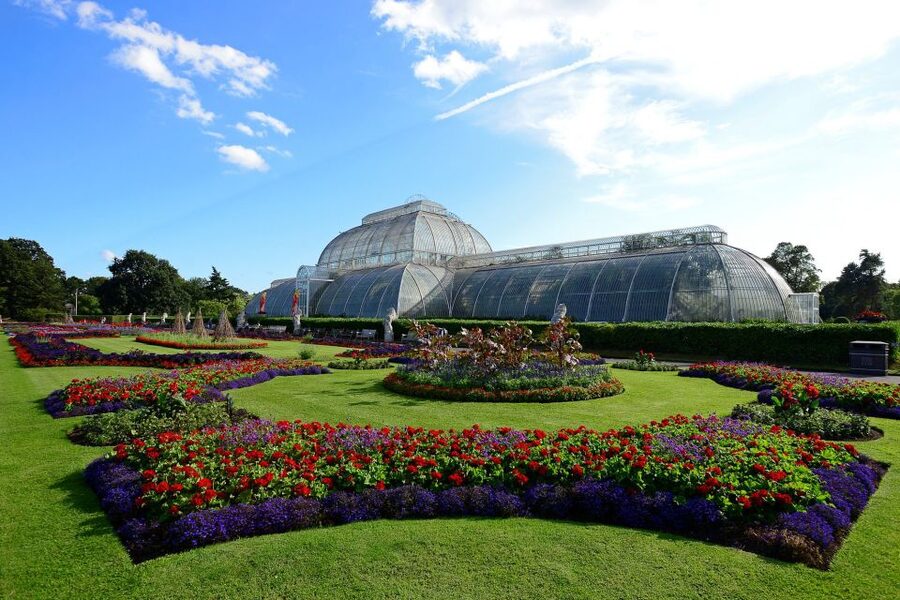
Kew’s glasshouses are the heart of the visit. They let you see plants from climates that would never survive outdoors in Britain, and each building offers a different experience.
The Palm House feels like a rainforest. Expect warm, humid air, tall palms, and exotic plants growing at several levels. It is a good first stop if the weather is cold or wet, but it can feel hot on a summer afternoon. Take your time here, since the upper foliage and smaller plants near the paths are easy to miss when you only look upward.
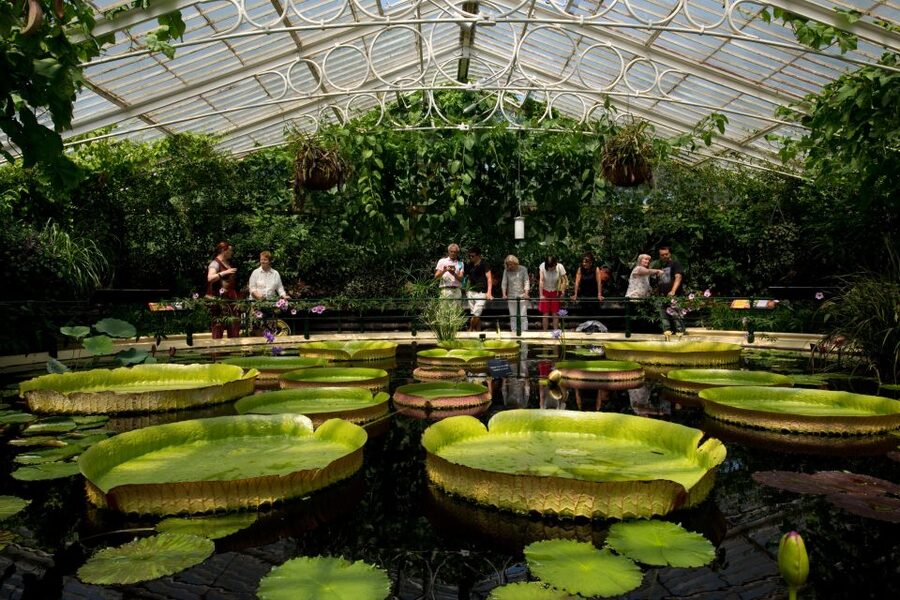
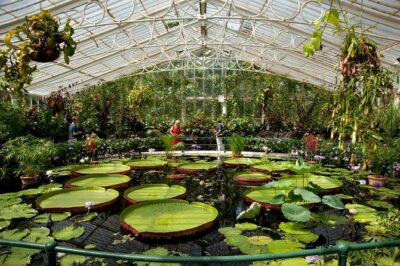
The Waterlily House is smaller, but it has one of Kew’s most memorable sights: giant lily pads. The pond also includes koi, giving you something to watch while you study the plants. The building can be especially rewarding in warm weather, when the water and tropical growth make a sharp contrast with London outside.
The Princess of Wales Conservatory takes you through 10 climate zones. That makes it a good choice if you want variety in one building. You move through different plant environments rather than seeing one broad tropical display, so the experience feels more like a compact journey through the world’s warmer regions.
Seasonal displays can change the feel of Kew from one visit to the next. Orchid events and other plant exhibitions have drawn many people to return at different times of year. Winter has its limits, though. Kew Palace is closed during winter, and some glasshouses or displays may also be closed for maintenance. Check current conditions before you make a special trip for one building.
Kew Palace and the Georgian Royal Kitchens
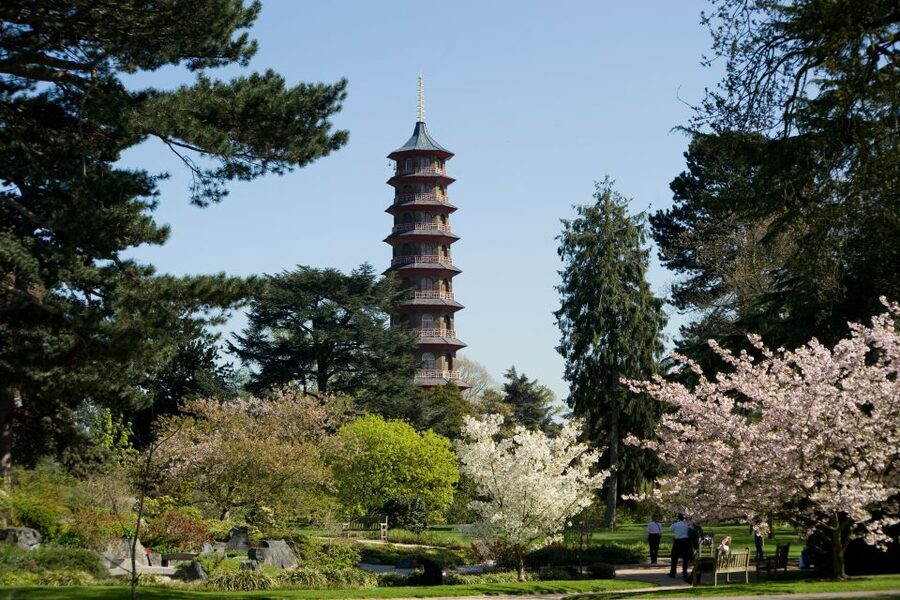
Kew Palace offers a change of scale. After the grand glasshouses and wide paths, you enter a comparatively intimate royal retreat.
Inside, you can see the bedrooms of princesses, a small dining room, and the newly restored Georgian Royal Kitchens. The rooms help you picture royal life in a more personal way than a huge ceremonial palace does. I would make this a priority if you enjoy domestic history and historic interiors.
The Palace is not open during winter, so do not build your entire visit around it during the colder months. If it is open, visit early or in the middle of the day rather than leaving it until the last hour. Kew is spacious, and it is easy to underestimate the time needed to walk from one end to another.
More Garden Tours in the UK:
- The Kensington Palace Gardens Royal High Tea
★ 4.5 · 934 reviews - London: Kensington Palace Gardens Tour with Royal High Tea
★ 4.6 · 325 reviews - London: Sky Garden Early Access with Pastry and Hot Drink
★ 3.9 · 242 reviews - VIP Kensington Palace Gardens Tour & Royal Tea Crown Experience
★ 4.5 · 102 reviews
The Arboretum and Kew’s older trees
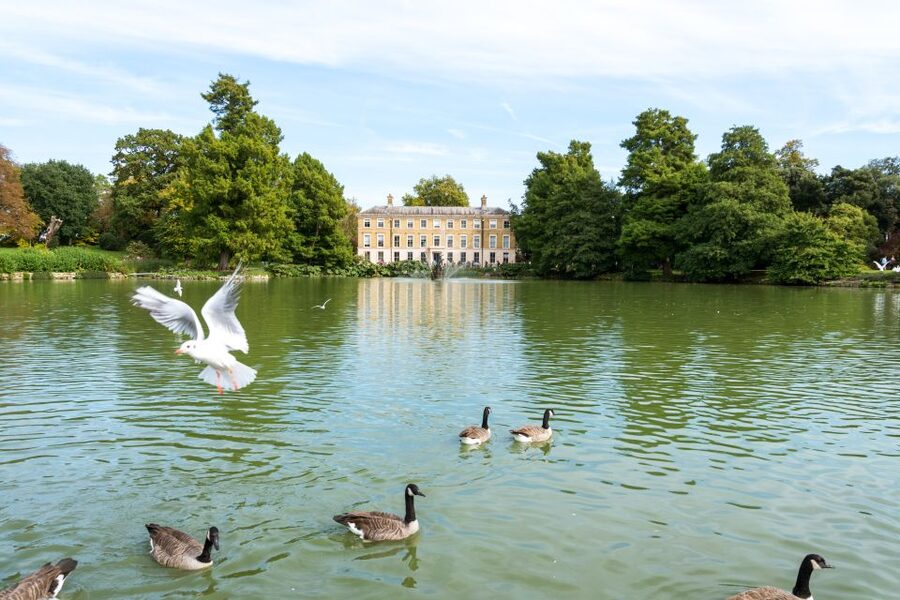
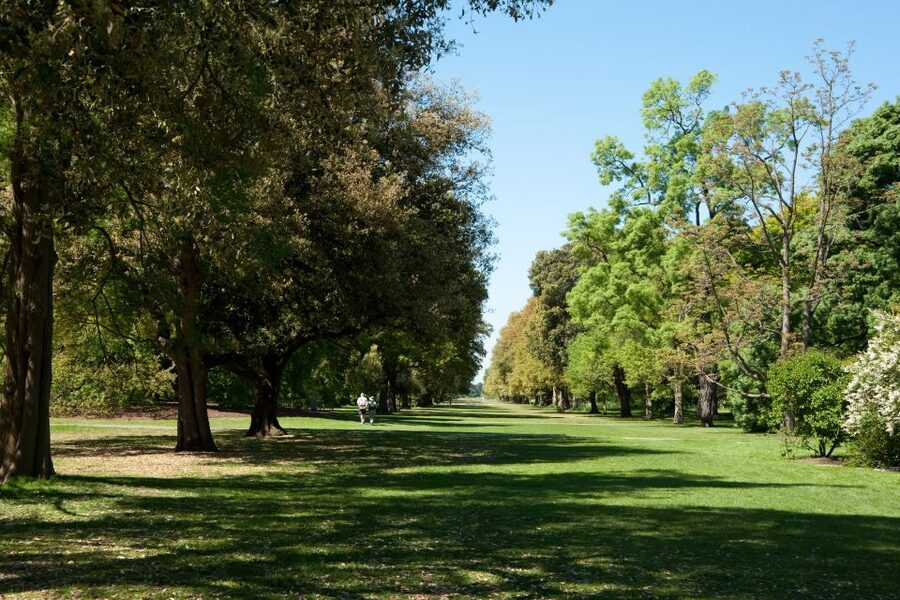
The Arboretum holds more than 14,000 trees, making it one of the best parts of Kew for a slower walk. This is where you feel the scale of the garden most clearly. The glasshouses give you concentrated drama, but the Arboretum gives you space, shade, and a sense of time.
You do not need to identify every tree to enjoy it. Read the labels when a particular species catches your eye, then keep walking. The paths can be long, and some of the more remote areas have fewer benches, so wear comfortable shoes and pace yourself.
On a hot day, the trees can provide welcome shade, although not every open section is protected from the sun. Several people have found the garden more comfortable on a cooler day. I agree: pleasant weather makes it easier to walk the long distances without turning the visit into an endurance test.
Walking 18 metres above the ground
The treetop walkway rises 18 metres above the ground. It gives you a new angle on Kew’s trees, rather than simply another path through them.
The height is enough to make the experience memorable without turning it into a major thrill ride. You get open views through the branches and a sense of how broad the Arboretum is. It is also one of the easiest attractions to pair with the rest of the garden because it takes you briefly away from ground-level paths.
Access may be harder for some people with limited mobility. Kew is fully wheelchair accessible overall, and an elevator reaches the upper floors of Kew Palace, but one account specifically found the treetop walkway less easy for people with reduced movement. If this feature matters to you, ask staff about current access arrangements when you arrive.
The Hive and the story of bees

The Hive is one of Kew’s most unusual structures. It is 17 metres tall and made from 170,000 aluminium parts with 1,000 LED lights. Its shape, sound, and light effects are designed to echo a real beehive.
This is more than a sculpture to walk past. Inside, you learn about the life of bees and their role in the health of the planet. The sensory design makes it a good stop for families, while the message gives adults a reason to spend time with the display rather than treating it as a photo stop.
The Hive also breaks up the plant-focused parts of the day. If you have spent an hour reading labels in glasshouses, the lights and sound provide a welcome change. I would not skip it, even if your main reason for coming is the gardens.
Art galleries and outdoor installations
Admission includes three art galleries, and Kew often adds outdoor sculptures to its paths and lawns. The art is not an afterthought. It changes how you look at the garden and gives you another way to understand plants, nature, and the spaces around them.
A sculpture exhibition can turn an ordinary walk into a series of small discoveries. Exhibitions vary, so you should check what is showing on your date. The grounds have also hosted displays that connect plant life with wider social and cultural ideas, giving repeat visits a different focus.
This mix suits you if your group has different interests. One person can study the plants while another looks for sculpture or heads toward an art gallery. Kew is much easier to enjoy together than a site with one narrow theme.
Food, breaks, and the extra Explorer train
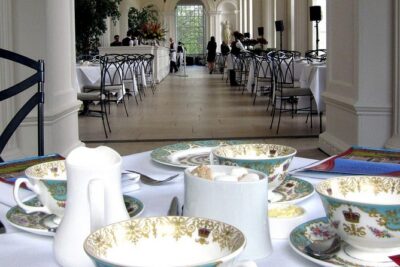
Cafes and restaurants serve hot meals, snacks, and classic afternoon teas. Food and drinks are not included in the admission price, and the cost inside can be high. Some meals are perfectly practical, but I would not assume that every dietary need will be covered. Gluten-free choices may be limited.
Picnic areas make it easier to control spending. You can also leave toward Kew station for pubs, bakeries, and other eateries, then return to the garden if your ticket and re-entry conditions allow it. Confirm the current re-entry rule at the gate before leaving.
The Explorer train is not included either. A recent visitor described it as costing about £6 each, though prices can change. I see it as useful if you have tired feet, children who need a change of pace, or limited time to understand the layout. If you are fit and have a full day, walking gives you more freedom to stop at smaller paths and quieter areas.
How long should you spend at Kew?
A quick visit can cover one or two glasshouses and part of the grounds in about three hours. That will give you a pleasant taste, but it will leave major sections unseen.
I would allow at least four hours for a useful first visit. Six hours is more realistic if you want the main glasshouses, The Hive, the treetop walkway, Kew Palace, the Arboretum, and a meal or rest stop. Even then, you may not see every path.
A second day can make sense if you want a slower pace or if a seasonal exhibition is important to you. Kew changes across the year, too. Orchid displays, summer planting, autumn trees, and winter events give the garden different moods, although Kew Palace is unavailable in winter.
Who will enjoy this ticket most?
Kew suits plant lovers, families, photographers, walkers, and anyone who wants a calmer London day. It also works well for mixed groups because there is history, architecture, art, wildlife education, and plenty of open space.
You should be comfortable walking for long periods. The garden is accessible and wheelchair friendly overall, but its size still means distances matter. If you tire easily, use the map, plan a few sitting stops, and consider the extra train.
The ticket is less suitable if you want a compact attraction that takes one or two hours. It is also a weak choice in poor weather if your main goal is outdoor planting, although the glasshouses give you useful shelter. Rain can limit the full effect of the grounds, while strong heat can make the open areas tiring and leave you searching for shade.
Is Kew Gardens worth $32?
For a full day, I think the price is fair. You are paying for a large collection of gardens, major glasshouses, historic buildings, art spaces, educational installations, and the chance to explore without a guide setting the pace.
The value drops if you arrive late, skip the indoor attractions, or spend only a short time walking around. Add the cost of lunch and possibly the Explorer train, and the day can become expensive for a family. Bringing a picnic and choosing the walking route carefully helps.
I would book this ticket if you want a substantial day outside London’s centre and can give Kew several hours. Go on a cool, reasonably dry day if you can, arrive early, and visit the buildings before your energy fades. If you prefer a short, tightly planned sightseeing stop, choose something smaller.
FAQ
Where is Kew Gardens?
Kew Gardens is in South East England, around 30 minutes from central London by Underground or Overground train.
Which entrance is closest to Kew Gardens station?
Victoria Gate on Kew Road is the closest entrance to Kew Gardens station.
How long is the admission ticket valid?
The ticket is valid for one day.
What does admission include?
Admission includes entry to Kew Gardens, its 326 acres of gardens, three art galleries, the treetop walkway, Kew Palace when open, The Hive, the glasshouses, and the Arboretum. A map and seasonal highlights guide are also included.
Are walking tours included?
Yes. Free walking tours take place at least twice daily when available.
Is the Explorer train included?
No. The Explorer train costs extra.
Is food included with admission?
No. Food and drinks are not included. Cafes and restaurants serve hot meals and classic afternoon teas.
Is Kew Gardens wheelchair accessible?
Yes. Kew Gardens is fully wheelchair accessible, and an elevator provides access to the upper floors of Kew Palace. Access to the treetop walkway may be more difficult for some people with limited mobility.
Is Kew Palace open all year?
No. Kew Palace is closed during winter.
Should you book Kew Gardens?
Book it if you can spare most of a day and want more than a standard park visit. The Palm House, Waterlily House, The Hive, treetop walkway, Arboretum, art galleries, and Palace give you enough variety to justify the journey and admission price. Plan around the weather, budget separately for food and the train, and use the map to avoid rushing across 326 acres.
Just added around the UK
- Hillsborough Castle Gardens Entrance Ticket★ 4.7 · 47 reviews
- Royal Horticultural Society: Hyde Hall Garden Ticket★ 4.7 · 7 reviews
- Edinburgh: Walk Dean Village, New Town & Royal Botanics★ 4.9 · 22 reviews
- Royal Horticultural Society: Rosemoor Garden Ticket★ 3.9 · 4 reviews
- Belvoir Castle: Castle, Gardens and Ground Entry★ 4.0 · 2 reviews
- Barbara Hepworth Museum & Sculpture Garden: entry to site.★ 4.7 · 28 reviews
- Abbotsford: House, Chapel and Garden Ticket★ 5.0 · 4 reviews
- London: VIP Kensington Palace Gardens Tour & Royal High Tea★ 4.7 · 59 reviews
UK Garden Tours, compared.
Kensington Palace Gardens Tour with Royal High Tea
Read our review →
Sky Garden Early Access with Pastry and Hot Drink
Read our review →
Birmingham: Winterbourne House and Garden Admission Ticket
Read our review →
VIP Kensington Palace Gardens Tour & Royal Tea Crown Experience
Read our review →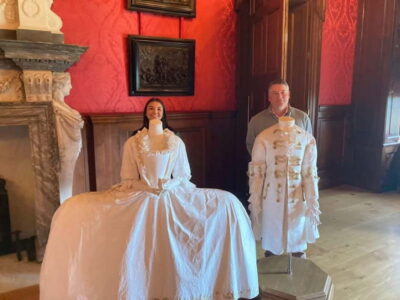
VIP Kensington Palace Gardens Tour & Royal High Tea
Read our review →Browse the lists this tour appears in