
Review · FLORENCE GARDEN TOURS
Florence: Boboli The Medici Gardens & Hidden Messages
Boboli Gardens is not just a pleasant park behind Pitti Palace. It is a grand outdoor theater of Medici power, filled with gods, heroes, fountains, grottos, and symbols that reward a sharp-eyed guide. This 90-minute walking tour gives you a clear route through a very large site.
I like two things here: you get skip-the-line garden admission, and you hear the meaning behind works that can look like scattered statues without context. The climb to the upper part of the gardens also brings a fine view across Florence.
The main consideration is pace. Boboli covers several kilometers, with slopes, terraces, and uneven paths. You will see the gardens and their major sights, but the ticket does not include the Palatine Gallery or other Pitti Palace museums.
Key points to know before you go
- Medici design from 1562: Learn how Cosimo I de’ Medici’s garden became a model for royal parks across Europe.
- Art with a message: Hercules, Demeter, Tyndareus, Neptune, and other figures form a visual language of power, virtue, love, and myth.
- Major fountains and garden features: See the Artichoke Fountain, Neptune’s Fountain, the Secret Garden, grottos, terraces, and the Tunnel of Love.
- A useful 90-minute route: A guide helps you cover the main sights without wandering aimlessly through the broad grounds.
- A high viewpoint over Florence: The upper gardens provide one of the tour’s best rewards, especially if you want a break from Florence’s crowded streets.
- Best with sensible footwear: Comfortable shoes matter more here than stylish ones, since you will walk uphill and over varied surfaces.
Why Boboli Gardens feels different from a normal park
Boboli was created for the Medici family in 1562 under the direction of Cosimo I de’ Medici. It was meant to be far more than a private patch of greenery. The garden expressed wealth, taste, education, and political control.
The Medici court used art to make ideas visible. A statue of Hercules could suggest strength and disciplined rule. A god or ancient hero could connect the family to the authority of classical Greece and Rome. A fountain was not only decoration. Its placement, subject, and setting could carry a message.
That is the point of taking a guide. I like gardens on my own, but Boboli can be hard to read without background. You may see a statue, a grotto, and a formal path, yet miss how they work together. The guide turns the grounds into a story about myth, ambition, beauty, and family power.
The garden also changed over time. Its art comes from several periods, from ancient Roman examples to later and contemporary additions. You are not walking through one perfectly uniform design. You are seeing a long record of changing taste within one grand setting.
More Palace and Castle Gardens in Florence
- Florence: Pitti Palace and Boboli Gardens Ticket & eBook
★ 4.5 · 835 reviews - Florence: Pitti Palace, Boboli Garden, Palatine Gallery Tour
★ 4.9 · 558 reviews - Pitti Palace, Boboli Garden & Palatina Gallery Guided Tour
★ 5.0 · 264 reviews
Meeting at Pitti Palace
The meeting point is the main entrance to Pitti Palace. That makes the tour easy to add to a day in the Oltrarno, the area on the south side of the Arno River.
Look for the guide at the palace entrance and allow enough time to reach the meeting point without rushing. The information provided does not specify a private group size, so you should check the booking details for the date you want if group size matters to you.
The entrance ticket covers Boboli Gardens with skip-the-line access. That is useful because you avoid spending part of your limited Florence time waiting at the garden entrance. The ticket does not cover the Palatine Gallery or any other museum inside Pitti Palace, so do not assume this walking tour gives you access to the palace collections.
That distinction matters. Pitti Palace and Boboli Gardens are connected, but they are separate attractions for ticket purposes. If you want to see both, plan and budget for them separately.
The first paths, terraces, and green architecture
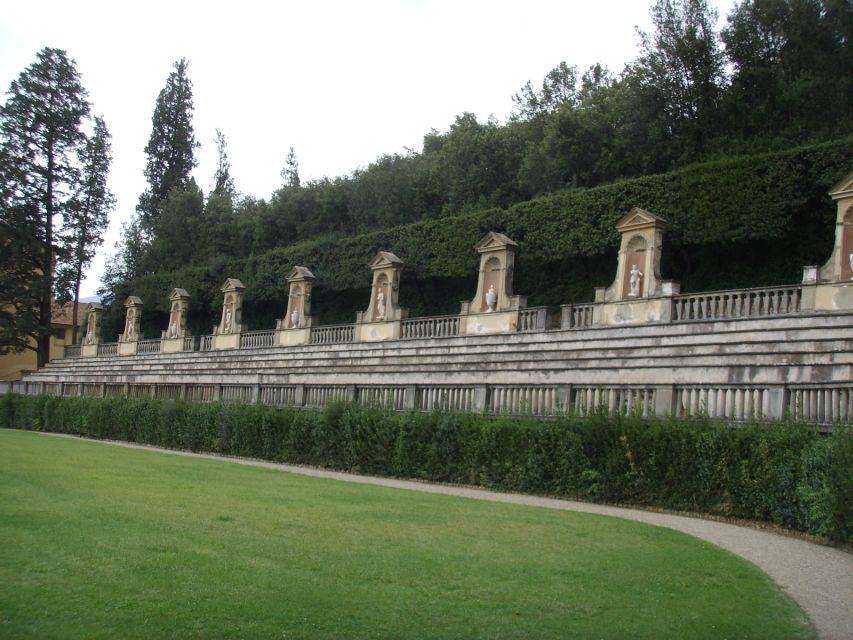
Once inside, expect a garden shaped by order and ceremony rather than a relaxed public park. Boboli uses terraces, long routes, clipped forms, statues, fountains, and architectural features to guide your eye.
The phrase green architecture fits the place well. Plants help create rooms and corridors, while stone and water provide the formal structure. You will move between open terraces and wooded sections, with the mood changing as the route rises.
The tour is designed to show you the most important areas in a limited time. That is a good fit if you have only part of a morning or afternoon available. A guide can also help you decide where to return later if you want more time among the paths.
Do not expect a flat stroll. Boboli’s terraces and slopes are part of its design, but they require more effort than the streets around the Duomo. Comfortable shoes are specifically recommended, and that advice is worth taking seriously.
Hercules, Demeter, and the language of myth
The statues are not random ornaments. The stories of gods and heroes provide the main thread of the tour.
Hercules is one of the key figures you will see. His labors and strength made him a useful symbol for rulers who wanted to present themselves as disciplined and powerful. Demeter brings a different set of ideas, connected with the earth, fertility, and the cycle of life. The Spartan King Tyndareus adds another figure from classical myth and legend.
Your guide explains these characters in place, where the statue, path, fountain, and surrounding plants form one scene. That is more useful than hearing a list of names in a museum. You can look at the work while learning why the Medici and later designers found these stories worth displaying.
The experience is especially well suited to you if you enjoy history but do not want a long lecture indoors. The guide-led walk keeps the information tied to what you are seeing. It also gives children a way into the garden through heroes, monsters, gods, and strange tales rather than dates alone.
Guide quality will shape the experience. The English and Italian guides can vary by departure. Specific guides praised in the supplied information include Alessandra, Guido, and Ivano. Alessandra is noted for her strong command of the subject and warm manner, while Guido is described as doing a good job focusing on the most interesting and beautiful parts. Ivano led a particularly enjoyable visit in poor weather, bringing the Medici story and the garden’s plants and design together.
Those names are useful to know, but you should not assume one will lead your departure. Ask at booking if a particular guide matters to you, and expect the assigned guide to depend on the schedule.
More Palace and Castle Gardens in Italy
- Florence: Pitti Palace and Boboli Gardens Walking Tour
★ 4.6 · 182 reviews - Florence: Museum Pass–David, Uffizi, Pitti Palace & Gardens
★ 4.2 · 134 reviews - Florence: Boboli Gardens Guided Tour
★ 4.5 · 69 reviews - Florence: David, Pitti Palace, & Gardens Combination Tickets
★ 4.5 · 59 reviews
The Artichoke Fountain and Neptune’s Fountain
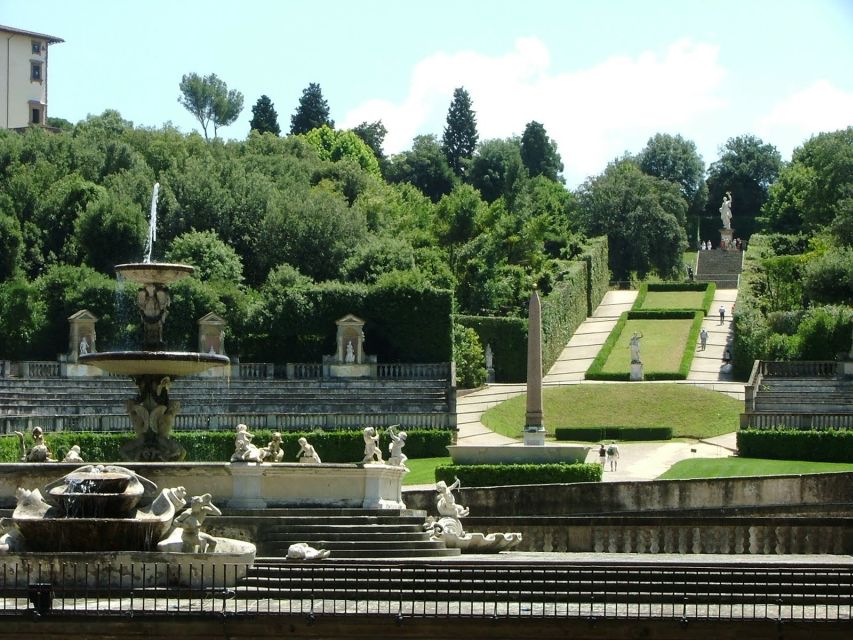
Water is one of Boboli’s main tools. Fountains break up the long routes, provide focal points, and add movement to a setting otherwise built from stone, earth, and plants.
The Artichoke Fountain is among the named highlights. Its title alone hints at Boboli’s habit of turning familiar forms into court decoration. Your guide gives the fountain meaning within the wider garden plan, rather than treating it as a quick photo stop.
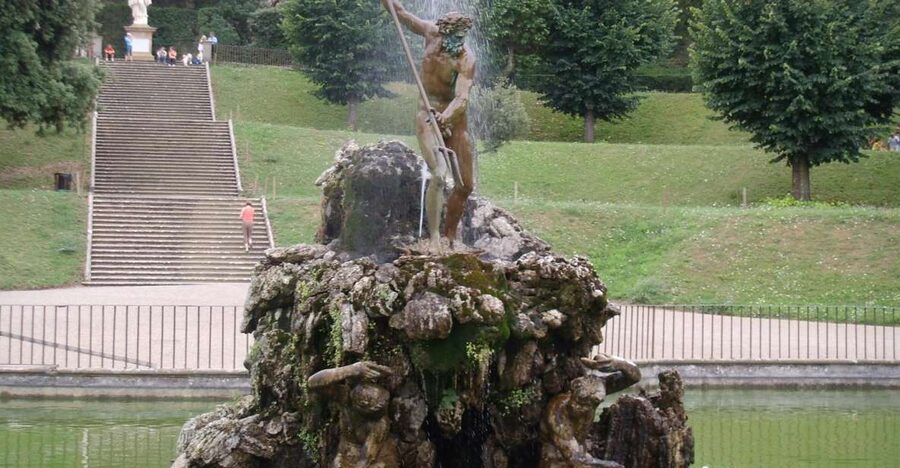
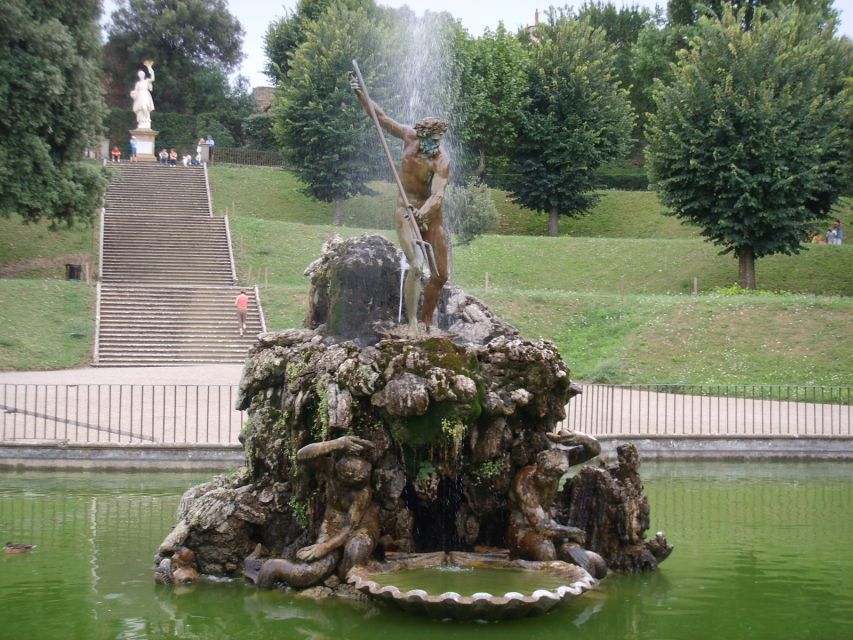
Neptune’s Fountain brings the world of sea gods into the Medici setting. Neptune was a natural symbol for control over water and the forces of nature. Look beyond the central figure and notice how the fountain fits into the terrace and viewpoint around it.
Fountains may look their best in clear weather, but the tour can still work on a gray day. One visit continued in unpleasant weather and remained enjoyable because the guide kept the story moving. Still, rain will make the paths less comfortable, and you should dress for conditions. There is no promise of indoor shelter during the walk.
The Secret Garden and Tunnel of Love
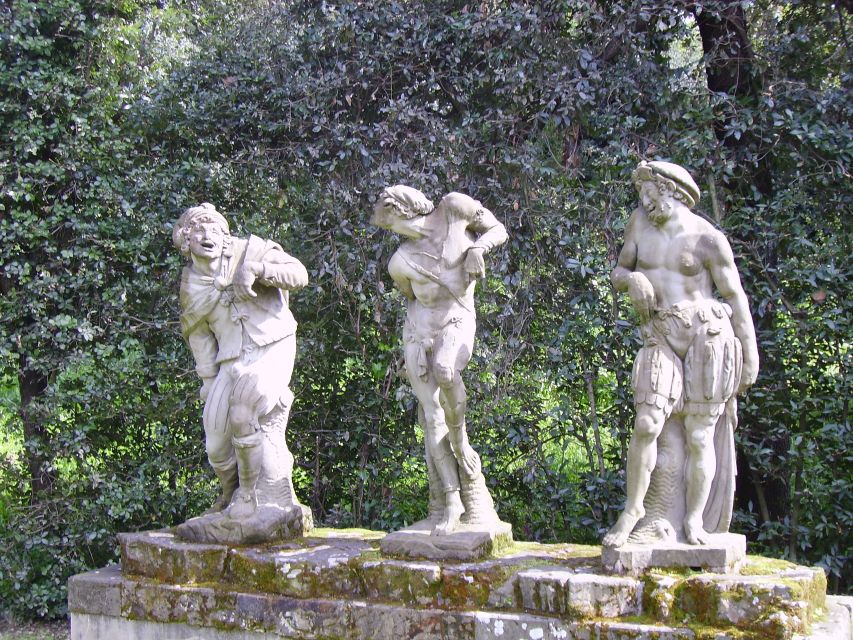
Two of the more unusual stops are the Secret Garden and the Tunnel of Love. These features add intimacy to a place better known for grand terraces and royal scale.
The Secret Garden offers a change from the broad formal spaces. Its name suggests the private, enclosed side of court life, where a garden could be a place for quiet conversation and controlled escape from ceremony.
The Tunnel of Love brings a more romantic note. It is a good reason to choose this tour if you want something beyond standard Florentine art and architecture. Couples will appreciate the mood, but the feature also helps children see Boboli as a place of stories and surprises.
The word secret should not lead you to expect a private area reserved for the tour. It is part of the public garden route, and the guide explains its place in the overall design. The value comes from understanding why such spaces existed and how they differed from the grand public-facing terraces.
The upper gardens and the view over Florence
The route heads toward the top of the gardens, where you can look out over Florence. This is one of the clearest practical reasons to include Boboli in your itinerary.
Florence can feel dense at street level. From above, the city opens into a broader view, and the climb gives you a different sense of its position and scale. The panorama is not a separate lookout attraction. It is the payoff for following the garden uphill.
I would save this tour for a time when you want a break from churches, galleries, and busy squares. You still get history and art, but the setting gives your eyes and feet a change of rhythm.
The view also makes the visit more than a sequence of statues. You see why the Medici wanted height, terraces, and controlled vistas. The garden was designed to frame the city and to place the ruling family above it, both literally and symbolically.
How the 90-minute timing works
Ninety minutes is enough for a focused introduction, not a complete exploration of every corner. The grounds cover several kilometers, and the guide concentrates on the major features listed for the route.
That timing is a strength if you want structure. Boboli is large enough to waste time in, especially if you have another reservation later. With a guide, you can see the major fountains, sculptures, grottos, garden spaces, and upper view without constantly checking a map.
It is a limitation if you prefer to linger. You may want extra time for photographs, quiet sitting, plant viewing, or a closer look at a particular sculpture. If you have room in your Florence schedule, consider treating the guided visit as your introduction, then returning on your own if admission rules and opening arrangements allow.
The tour is described as a walking route, not a stop-and-start vehicle experience. There is no transport included, so plan on walking from the palace entrance through the gardens for the full visit.
Is $93 a fair price?
At $93 per person, this is not a cheap garden entry. The value depends on how much you want interpretation and how tight your Florence schedule is.
You are paying for the entrance fee, skip-the-line access, and a live guide in English or Italian. That can make sense if you want the Medici story explained as you move through the grounds. It is also useful if you are not comfortable planning a route through a large historic garden.
The price is harder to justify if you mainly want a quiet walk among trees and fountains. Independent admission would likely suit someone who enjoys reading signs, wandering, and setting their own pace. The guided option earns its cost through context, route planning, and the chance to understand the symbols rather than just photograph them.
The strong rating of 4.8 from 17 bookings points to a consistently positive experience, though the sample is small. The written feedback especially favors the guides’ explanations, patience, and ability to select the most worthwhile parts of the grounds. One gardener found the maintenance below expectations, so do not expect every plant bed to look perfectly polished. Boboli is an old historic garden, not a modern display garden kept to exhibition standards.
Who should book this Boboli tour?
I would recommend it to several kinds of visitors:
- First-time Florence visitors who want a clear introduction to Boboli without spending hours finding the main sights.
- Families with children who may respond better to myths, heroes, fountains, and tunnels than to a formal museum visit.
- Nature lovers who want greenery and open air alongside art and history.
- Couples looking for the Secret Garden, Tunnel of Love, and a fine city view.
- Medici and Renaissance enthusiasts who want to see how a ruling family used art and garden design to express power.
- Visitors with limited time who prefer a 90-minute route with a guide rather than a long, unplanned visit.
I would be more cautious if you have difficulty with slopes or uneven paths, since the route climbs through terraces and wooded sections. The supplied information does not provide accessibility details, so contact the provider before booking if mobility support is important.
Pets, smoking, luggage, and large bags are not allowed. Bring a passport or ID card and wear comfortable shoes. The tour is available in English and Italian, with free cancellation up to 24 hours before the start and a reserve-now, pay-later option.
My call: book it if you want the garden to make sense
Boboli is worth seeing for its fountains, terraces, wooded routes, and view alone. But its best feature is the meaning tucked into the design. The statues and myths make much more sense when someone explains why the Medici placed them there.
Book this tour if you want a focused introduction, appreciate a strong guide, and can handle a hilly walk. The guide names associated with especially good visits include Alessandra, Guido, and Ivano, though your departure may be assigned differently.
Skip it if you want complete solitude, a slow botanical inspection, or the Pitti Palace museums. For most visitors who want an efficient and thoughtful look at Boboli, the included admission and live interpretation make the $93 price reasonable, especially on a first visit to Florence.
FAQ
Where does the Boboli Gardens tour meet?
The meeting point is at the main entrance to Pitti Palace in Florence.
How long does the tour last?
The guided walking tour lasts 1.5 hours, or 90 minutes.
What does the ticket include?
The price includes entrance fees with skip-the-line tickets, an official local guide, and the guided walking tour.
Does the tour include the Palatine Gallery?
No. Tickets to the Palatine Gallery and other museums inside Pitti Palace are not included.
Which languages are available?
The tour is available with a live guide in English or Italian.
What can I see during the walk?
The route includes important Boboli and Pitti Palace sights, several kilometers of garden paths, major fountains, statues, terraces, grottos, the Secret Garden, the Tunnel of Love, and a panoramic view of Florence.
Are comfortable shoes necessary?
Yes. Comfortable shoes are recommended because the tour is on foot and includes terraces, slopes, and varied garden paths.
Are children welcome?
Yes. The experience is described as suitable for children, as well as nature lovers and couples.
Can I bring a pet or large bag?
No. Pets, smoking, luggage, and large bags are not allowed.
Can I cancel the booking?
You can cancel up to 24 hours in advance for a full refund. A reserve-now, pay-later option is also available.
Just added around Florence
- Florence: Culinary Experience in a Lemon House with Sunset and Enchanted Garden★ 5.0 · 3 reviews
- Florence: Pitti Palace and Boboli Gardens Guided Tour★ 4.9 · 14 reviews
- Florence: Museum Pass–David, Uffizi, Pitti Palace & Gardens★ 4.2 · 134 reviews
- Florence: David, Pitti Palace, & Gardens Combination Tickets★ 4.5 · 59 reviews
- Gardens, markets and hidden gems in Florence, by city bike★ 3.8 · 5 reviews
- Florence: Boboli Gardens Guided Tour★ 4.5 · 69 reviews
- Florence: Boboli Gardens Reserved Entry Ticket & eBook★ 3.3 · 19 reviews
- Boboli Gardens Skip-the-Line Tour★ 4.9 · 7 reviews
Florence Garden Tours, compared.

Pitti Palace, Boboli Garden, Palatine Gallery Tour
Read our review →
Pitti Palace, Boboli Garden & Palatina Gallery Guided Tour
Read our review →

Museum Pass–David, Uffizi, Pitti Palace & Gardens
Read our review →

David, Pitti Palace, & Gardens Combination Tickets
Read our review →

Browse the lists this tour appears in