
Review · PARIS GARDEN TOURS
From Paris: Giverny Monet’s House & Gardens Half-Day Tour
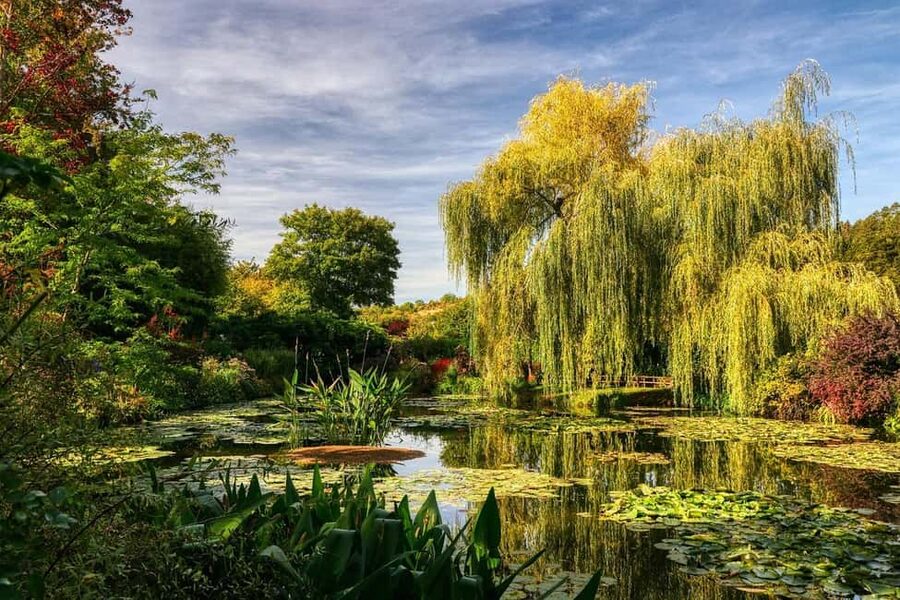
Giverny gives you the rare chance to see Monet’s paintings after stepping into the place that shaped them. His pink-walled home, bright yellow dining room, flower beds, Japanese bridge, and lily pond are all here, arranged much as they were during his 43 years in the village. I especially like the small group of no more than eight and the freedom to explore the estate without being marched from room to room.
I also like the air-conditioned minivan, which keeps the journey simple, and the guides who make the drive useful rather than dead time. Jean-Baptiste, Michel, Philippe, Amine, Simon, and Nico have all been praised for friendly, clear explanations. The main drawback is time: two and a half hours at Giverny is enough for the essentials, but some visitors find they want longer in Monet’s house, and Paris traffic can eat into the day.
Key points to know before booking
- Monet’s house still feels personal: See the blue sitting room, yellow dining room, kitchen, bedroom, and private rooms where he lived with his family.
- The gardens change with the season: More than 100 flower varieties bloom from spring through autumn, so the exact display depends on your date.
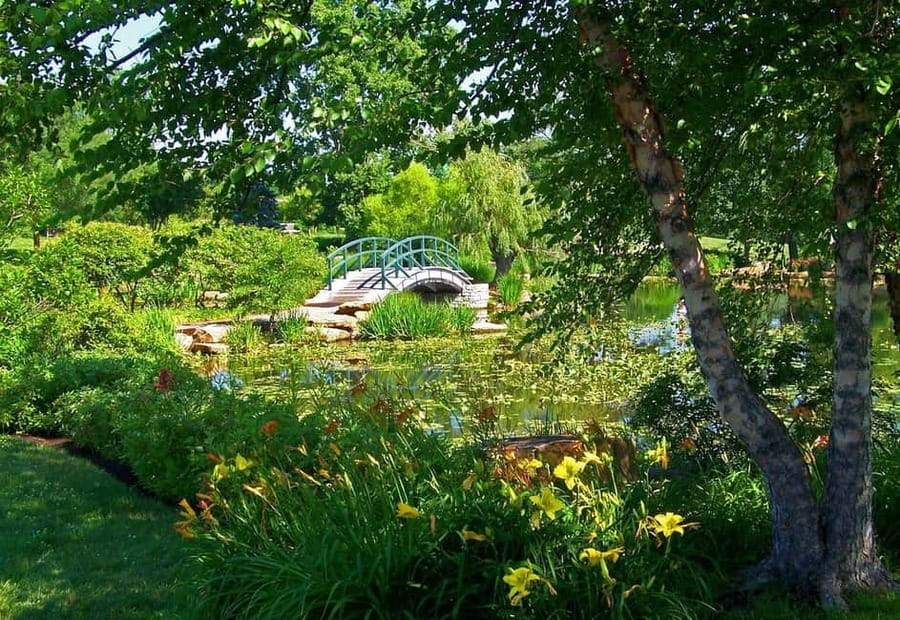
- The Japanese bridge is across the road: A short underpass connects the house and Clos Normand garden with the water garden and lily pond.
- You get about 2.5 hours on site: That covers the major sights, though a slower visit may call for a longer tour.
- The guide handles the context: You hear about Monet, Impressionism, and the journey before exploring independently.
- Central Paris transport is included: Meet at France Tourisme’s agency at 6 Rue de l’Amiral de Coligny, near the Louvre.
Why Giverny is worth the trip from Paris
Monet lived in Giverny from 1883 until his death in 1926. He did not simply rent a country house and paint whatever happened to be outside the window. He reshaped the property over time, planting flowers, creating the water garden, and arranging views that would become central to his work.
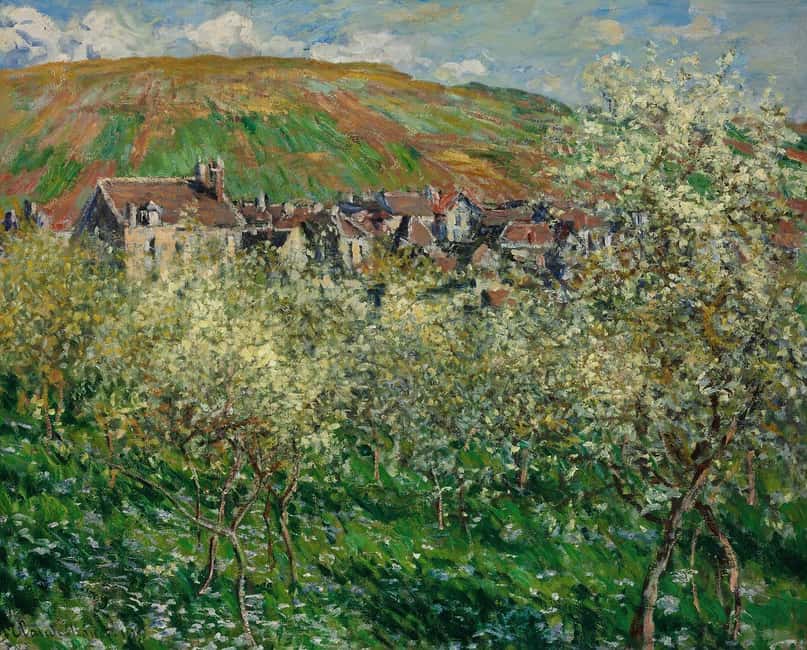
That makes this visit different from a standard museum stop. In Paris, you see the finished canvas. At Giverny, you see the paths, trees, pond, and flowers that helped produce it. The place also shows how much planning went into Monet’s apparently loose, natural-looking paintings.
Your guide introduces this story during the drive from Paris. The route takes about 75 minutes each way, usually through the western suburbs and along the Normandy motorway. That is a fair amount of road time for a five-hour outing, but it is also why the commentary matters. A good guide turns the drive into an introduction rather than a gap between two destinations.
Guides on this experience have included Jean-Baptiste, Michel, Philippe, Amine, Simon, Nico, and Nicolas. The strongest praise has focused on their warmth, clear explanations, and practical help. Simon, for example, was noted for explaining Impressionism in an accessible way, while Philippe sometimes adds a visit to Monet’s grave when timing allows. That extra stop is not listed as a standard part of the tour, so do not book expecting it, but it may be possible on a particular departure.
More Monet's Garden and Giverny in Paris:
- From Paris: Giverny, Monet’s Home & Gardens Half-Day Trip
★ 4.5 · 2,887 reviews - Giverny Monet’s Home and Gardens Half Day Tour from Paris
★ 4.5 · 1,836 reviews - Giverny Small-Group Half Day Trip with Monet’s Gardens from Paris
★ 5.0 · 1,663 reviews
The 75-minute minivan ride from central Paris
You meet at the France Tourisme agency at 6 Rue de l’Amiral de Coligny, close to the Louvre. Hotel pickup and drop-off are not included, so plan your route to the agency before departure. The central meeting point is useful if you are already sightseeing in the Louvre area, but it is less convenient if your hotel is far across Paris.
The vehicle is an air-conditioned minivan, and the group is limited to eight people. That is a meaningful advantage over a large coach. You can hear the guide more easily, the atmosphere is friendlier, and the group can move through the visit without the slow shuffle of a big crowd.
The ride takes roughly 75 minutes in each direction. Traffic leaving or returning to Paris can slow things down, especially when the city is busy. The comfortable vehicle helps, but this is still a half-day excursion with a fixed schedule. If you have a tightly booked afternoon in Paris, leave room for the return journey.
During the drive, expect background on Monet’s life, the beginnings of Impressionism, and the role Giverny played in his work. The strongest guides also point out interesting details along the way. The journey will not replace a full art lecture, but it gives you enough context to recognize why the gardens matter once you arrive.
Inside Monet’s pink-walled home
After arriving in Giverny, you receive your entrance ticket and go into the Fondation Claude Monet. The house has been restored to reflect the period when Monet lived there, making the rooms more revealing than a bare museum interior.
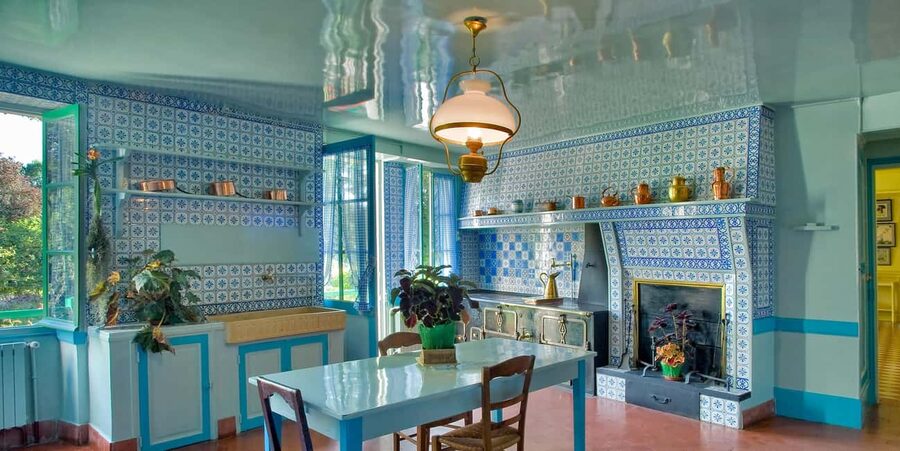
The blue sitting room, pantry, and kitchen show the practical side of household life. The yellow dining room is the visual surprise. Monet decorated it with Japanese prints, a reminder that Japanese art had a strong influence on many Impressionist painters. The color is bold, and it feels far removed from the restrained interiors you may expect in a historic French home.
Upstairs, you can see the painter’s bedroom and private apartments. Monet raised eight children in this house, and the rooms help put the famous artist into a more ordinary setting. He was not only a painter whose name appears on gallery walls. He was also managing a large household and living within the rhythms of a village.
The house is not enormous, so it can feel crowded when many people arrive at once. One visitor found that two and a half hours did not quite allow enough time for the house, gardens, and every photo stop. If the interior matters most to you, go there early in your visit rather than leaving it until the end.
The Clos Normand flower garden
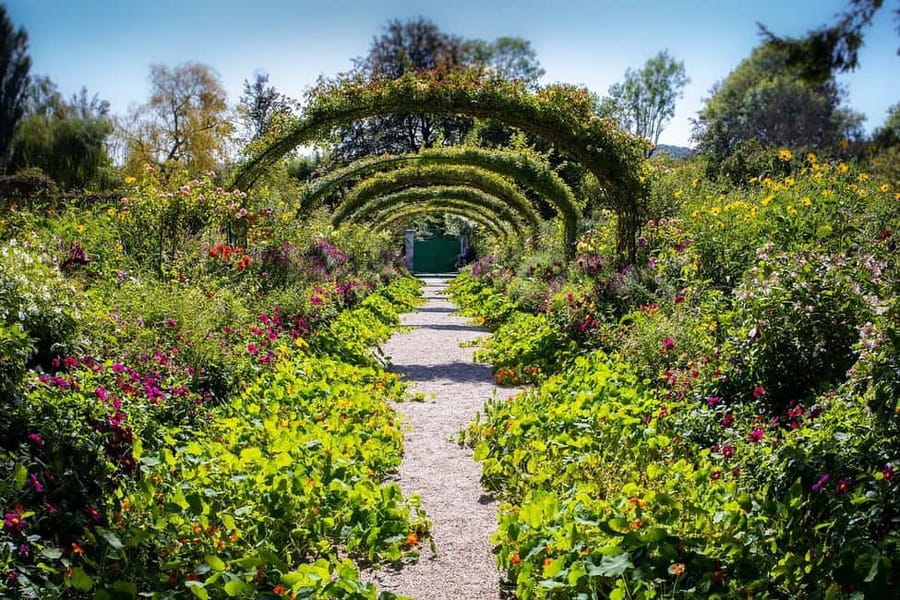
Outside, the Clos Normand is a rectangular flower garden laid out with an artist’s eye. More than 100 varieties bloom from spring through autumn, including roses, nasturtiums, irises, tulips, and plants from East Asia.
The display is not the same all year. Spring brings one mix of bulbs and color, while later months offer a different show. That seasonal change is part of the appeal, but it also means the garden you see may not match the images you have in mind from guidebooks or paintings.
Take the paths slowly. The garden is designed so that the view changes as you move. A row of flowers may frame the house from one angle, then open into a longer view from another. Monet’s interest was not only in individual plants. He cared about color, light, rhythm, and how the whole scene shifted across the day.
I would not rush through this section. The house is easier to understand after you have seen the garden, and the garden deserves more than a quick walk to the famous pond. You are free to explore at your own pace, take photographs, and pause where the colors and perspective work best for you.
Half-day trips around Paris:
- Kyoto Arashiyama Bamboo forest & Garden Half-Day Walking Tour
★ 5.0 · 413 reviews - From Avignon: Half-Day Lavender Tour of Luberon
★ 4.8 · 232 reviews - Lavender in Luberon Small Group Half-Day Trip
★ 4.0 · 161 reviews - Half-Day Barbados Tour Harrisons Cave Hunte’s Garden and Bathsheba
★ 4.5 · 121 reviews
The Japanese bridge and water garden
A small underpass leads from the Clos Normand to the water garden. This separation is practical, since a road runs between the two parts of the estate, but it also creates a change in mood.
The water garden is quieter and more reflective than the flower garden. Willow trees, bamboo, and the famous Japanese bridge surround the lily pond. This is the setting connected most closely with Monet’s Water Lilies series, and it is the place where many visitors spend the most time taking photographs.
The bridge is familiar from paintings, but the real scene is not a perfect copy of any single canvas. Light, weather, plant growth, and your position all change the view. Try looking at the pond from several points rather than taking one photograph and moving on. The value here lies in noticing how Monet simplified and rearranged what he saw.
You may find the bridge and pond crowded, particularly during popular visiting periods. One practical tip is to head there as soon as you enter the gardens if that is your priority. Another is to return near the end of your visit, when you already understand the layout and can choose a better angle.
Free time, the former studio, and the gift shop
The tour gives you information before you enter, then lets you explore independently. That is a good balance for Giverny. You get the story and basic orientation, but you are not tied to a guide’s commentary at every flower bed.
Monet’s former studio now houses a large shop. It offers books, prints, and souvenirs related to his work. You can browse there after the house and gardens, though time is limited and the shop should not replace the main visit.
The free time also lets you set your own priorities. Art lovers may spend longer in the house and water garden. Garden enthusiasts may prefer the Clos Normand. Photographers can look for changing angles around the bridge and pond. The tour works best when you decide in advance what matters most, since two and a half hours can pass quickly.
Food and drinks are not included. The supplied details do not promise a meal stop, so plan on handling refreshments separately and do not count on lunch being part of the schedule.
Is $113 a fair price?

At $113 per person, this is not the cheapest way to reach Giverny. You are paying for round-trip transport from central Paris, an air-conditioned minivan, admission to Monet’s house and gardens, and a multilingual driver-guide. You also avoid arranging the journey yourself.
The value is strongest if you want a simple half-day outing with art context and a small group. Getting to Giverny independently may cost less, but you would need to organize transport, admission, and timing on your own. This tour also removes the worry of finding the estate after leaving Paris.
The price is less attractive if you prefer to spend a full day at the site or want complete control over your schedule. The 75-minute rides and fixed return time leave less room for lingering. A full-day option may suit you better if you want a slower visit, though that is a different product.
The small group helps justify the cost. Eight people is a manageable number, and past guides have been praised for helping with special needs and answering questions throughout the excursion. That personal attention is one of the more useful parts of the package.
Timing, crowds, and the best way to use your visit
The tour lasts five hours, with about 2.5 hours at Giverny. That is enough to see the house, both gardens, the pond, and the shop if you keep moving at a reasonable pace. It is not enough for a leisurely, unplanned afternoon.
An early departure can help. A September visitor was glad to arrive before the crowds, while another visit in May encountered a large number of people. Crowd levels can vary by date, but arriving earlier gives you a better chance of enjoying the bridge and rooms with less interruption.
Wear comfortable shoes for walking through the gardens. The information provided confirms wheelchair accessibility, but the estate includes garden paths and an underpass, so anyone with specific mobility needs should raise questions with the provider before booking.
The best season depends on what you want. Spring through autumn brings the flowering garden, but no single month guarantees every plant will be at its peak. If Monet’s flowers are your main reason for going, check the date carefully and keep your expectations flexible.
Who should book this Giverny half-day tour?
I would choose this outing if you are in Paris for a few days and want to see Monet’s home without spending a full day arranging the details. It suits first-time visitors who want context, photographers who value the pond and bridge, and anyone who prefers a small group to a large coach.
It is also a good fit if you enjoy a guide during the journey but want independence on site. You can listen to the art background, then follow your own route through the rooms and gardens.
You may want another option if you need several hours for painting, extended photography, or a slow garden visit. The limited time is the one recurring concern to keep in mind. Traffic can also make the return to Paris less predictable.
Should you book it?
Book this tour if you want the straightforward version of Giverny: central Paris meeting point, comfortable minivan, admission included, a guide who explains Monet and Impressionism, and free time to see the estate yourself. The small group and consistently warm guide feedback add real value.
Skip it if you strongly prefer independent travel or want to linger all day. For most visitors with limited time in Paris, though, the five-hour format is a sensible compromise. You get Monet’s house, the Clos Normand, the Japanese bridge, and the water garden without turning the trip into a major logistical project.
FAQ
Where does the Giverny tour depart from?
You meet at France Tourisme’s agency at 6 Rue de l’Amiral de Coligny, near the Louvre in central Paris.
How long does the tour last?
The full experience lasts five hours. The minivan journey takes about 75 minutes each way, and you spend approximately 2.5 hours at Giverny.
What can I see at Monet’s estate?
You can visit Monet’s restored house, former studio, kitchen, blue sitting room, yellow dining room, bedroom, private apartments, Clos Normand flower garden, and water garden with its Japanese bridge and lily pond.
Is transportation included?
Yes. Round-trip transport from central Paris is provided in an air-conditioned minivan.
Is the entrance ticket included?
Yes. Admission to Monet’s house and gardens at the Fondation Claude Monet is included.
What languages are available?
The live guide service is available in English, French, and Spanish.
Is the tour suitable for wheelchair users?
The activity is listed as wheelchair accessible. Specific mobility needs should be discussed with the provider before booking because the estate includes garden paths and an underpass.
Just added around Paris
- Versailles: Skip-the-Line Versailles Palace and Gardens Tour★ 4.7 · 110 reviews
- Giverny : Monet’s house & Gardens Private tour from Paris★ 5.0 · 5 reviews
- From Paris: Versailles Palace & Garden with Golf Cart★ 4.8 · 5 reviews
- From Paris: Versailles Palace & Gardens with Transportation★ 4.9 · 13 reviews
- From Paris: Versailles Palace and Gardens Guided Day Trip★ 4.5 · 57 reviews
- From Paris: Versailles Bike Tour with Gardens & Palace Entry★ 4.5 · 16 reviews
- Giverny Half Day Guided Trip with Monet’s House & Gardens from Paris by minivan★ 4.0 · 150 reviews
- Versailles Palace, Garden Entry Ticket – Optional Private Guide★ 3.5 · 147 reviews
Paris Garden Tours, compared.

Versailles Palace and Gardens Full Access Ticket
Read our review →
Skip-the-Line Tour of Palace and Gardens Access
Read our review →
Versailles Palace Guided Tour & Gardens Access
Read our review →
Giverny, Monet’s Home & Gardens Half-Day Trip
Read our review →
Versailles Bike Tour w/ Palace, Gardens, & Picnic
Read our review →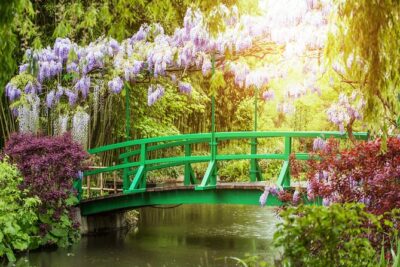
Giverny Monet’s Home and Gardens Half Day Tour from Paris
Read our review →
Versailles Palace and Gardens Half Day Guided Tour from Paris
Read our review →
Browse the lists this tour appears in