
Review · SEOUL GARDEN TOURS
Jinhae Cherry Blossom + Busan Sunrise from Seoul
Jinhae’s cherry blossom season is one of South Korea’s great spring sights, and this long overnight outing lets you see it without arranging a separate trip from Seoul. You’ll also catch sunrise at Haedong Yonggungsa Temple and spend early morning time at Haeundae Beach.
I like the two famous Jinhae viewing areas, Yeojwacheon Stream and Gyeonghwa Station, plus the simple round-trip transport. I also like that breakfast time is built in at Haeundae, even though you pay for the meal yourself. The main drawback is plain: this is a 19 to 20-hour trip without sleep, with a return journey of about five hours.
Key points to know before booking
- Cherry blossoms at two Jinhae sites: You have about four hours for Yeojwacheon Stream and Gyeonghwa Station together, roughly two hours at each.
- Sunrise at a seaside temple: Haedong Yonggungsa gives the morning a memorable setting after the overnight ride south.
- Haeundae breakfast stop: You get free time for breakfast, but food and drinks are not included.
- Transport from central Seoul: Round-trip transfers simplify a journey that would otherwise require considerable planning.
- Bloom timing matters: The tour may be rescheduled or canceled if the cherry blossoms are not fully in bloom.
- A demanding schedule: You leave Seoul at night and return the next day, with no planned sleeping time.
Why this trip works for a short spring visit
Jinhae lies far from Seoul, and the cherry blossom festival is not a quick side trip. This experience solves the distance problem with an overnight departure and a full-day return, allowing you to visit the festival without booking a hotel or arranging intercity transport.
That convenience is the central value. At $108.49 per person, the price covers round-trip transportation, an English-speaking staff member, and admission to the included attractions. You still need to buy breakfast, lunch, dinner, and drinks, but you avoid the cost and effort of organizing the route yourself.
You should think of this as a sightseeing mission, not a restful holiday day. The journey from Seoul to Haeundae takes about five hours and 20 minutes. After the beach and temple visits, you continue to Jinhae, then spend about five hours returning to Seoul. The scenery and timing can be rewarding, but the schedule asks a lot from you.
More Cherry Blossom Tours in Seoul
- Chasing Cherry Blossom & Spring Flowers Day Tour from Seoul
★ 5.0 · 11 reviews - Jinhae Cherry Blossom Festival Gyeonghwa Stn Day Tour from Seoul
★ 4.0 · 8 reviews - Maisan Cherry Blossom and Jeonju Hanok Village
★ 5.0 · 8 reviews
The overnight ride from Seoul to Haeundae
The trip begins in Seoul at night. You’ll need to reach the assigned meeting point at least 10 minutes early. There is no hotel pickup and drop-off, so you must make your own way to the departure location.
The vehicle is described as an air-conditioned minivan, although the vehicle type can change depending on the number of people booked. The maximum group size is 100, so do not assume you’ll always be in a small private-style van. The exact vehicle matters on a long ride, particularly when you are trying to rest.
After roughly five hours and 20 minutes, you reach Haeundae Beach. This first stop is less about a full beach visit and more about giving you time to stretch, eat, and get ready for the day.
Haeundae Beach gives you breakfast time
You have about one hour and 20 minutes at Haeundae Beach. The tour does not include breakfast, but the schedule gives you free time to find and buy something yourself.
This is a useful arrangement. After leaving Seoul during the night, you will probably want food and a short break before continuing. You can use the beach stop to eat at your own pace rather than being handed a fixed meal or rushing through a group breakfast.
Do not treat this as a long beach outing. The stop is brief, and the bigger attractions come later. You’ll have time to see the shore and take a few photos, but the main purpose is to begin the morning comfortably before the temple visit.
Sunrise at Haedong Yonggungsa Temple
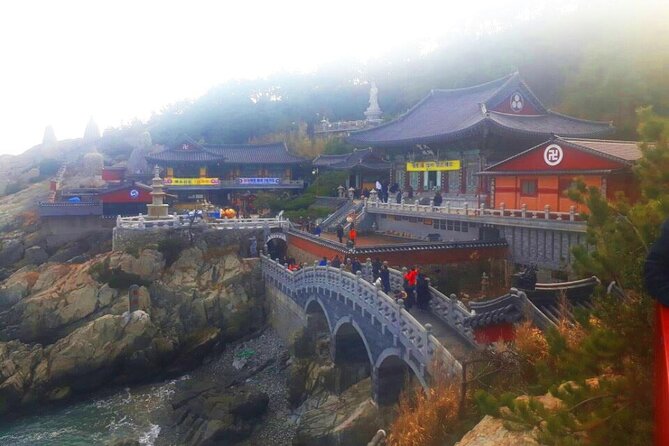
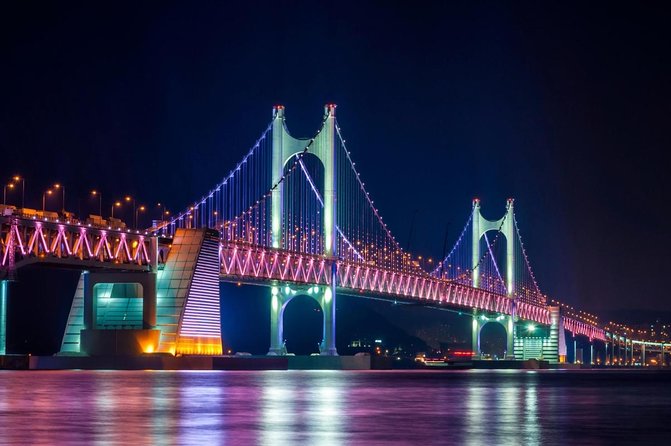
From Haeundae, the ride to Haedong Yonggungsa Temple takes about 30 minutes. You then have roughly one hour and 20 minutes to enjoy the temple and watch the sunrise.
The temple is especially well suited to an early morning stop because of its coastal setting. The combination of dawn light, sea views, and traditional temple buildings gives this part of the experience a different mood from the cherry blossom festival later in the day.
You should keep your expectations practical. The visit is not a long guided temple tour, and the itinerary does not promise a detailed history talk. Instead, you get a set amount of time to take in the site and sunrise before the group continues toward Jinhae.
This is one of the strongest reasons to choose the full route instead of a cherry blossom trip alone. The morning has variety: beach, temple, and then spring flowers. The catch is that sunrise comes after a night on the road, so you may feel tired just when the day begins.
More Cherry Blossom Tours in South Korea
- Jinhae’s Cherry Blossoms Shuttle Bus depart from Seoul/Busan
★ 4.5 · 8 reviews - From Seoul: Korea Spring Cherry Blossom Day Tour
★ 4.8 · 6 reviews - Seoraksan and Cherry Blossom Lake 1 day trip from Seoul
★ 5.0 · 4 reviews - Seoul to Jinhae Cherry Blossom Festival (With Busan Drop-off)
★ 5.0 · 3 reviews
Riding from Busan to Jinhae
After the Busan-area stops, you travel toward Jinhae. The listed transport time is about two hours and 20 minutes.
That transfer is part of the cost and saves you from working out the route yourself during one of the busiest periods of the year. It also means your day remains tightly scheduled. You cannot simply linger at Haeundae or the temple if you want to keep the Jinhae visits on time.
Jinhae Gunhangje Festival is known for its spring flowers, but the itinerary focuses on two particular locations rather than giving you unlimited festival access. That distinction matters. You are paying for transport to the main viewing areas and a planned visit, not a private day to explore every corner of the festival.
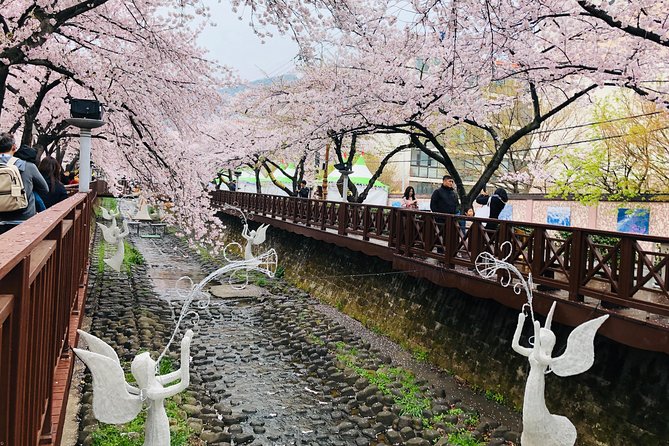
Yeojwacheon Stream and its cherry trees
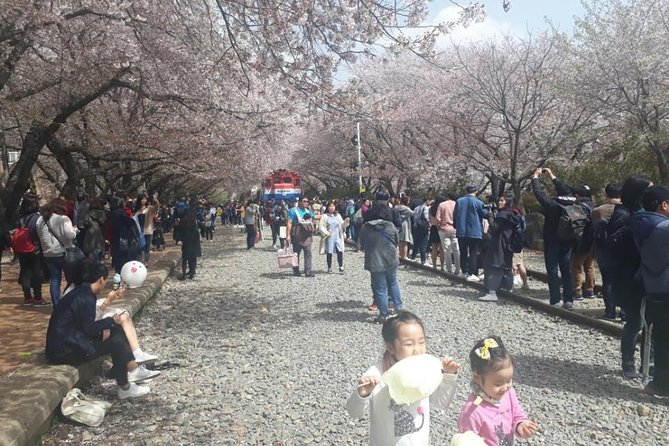
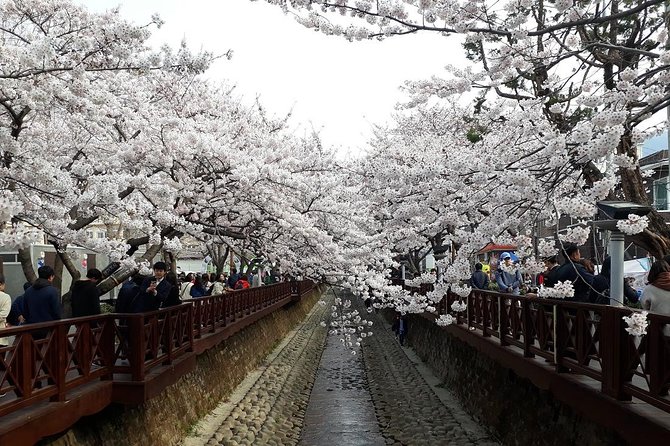
Yeojwacheon Stream is the first cherry blossom stop. You have about two hours here, with time to walk along the water and take photographs among the trees.
A streamside setting gives the blossoms a useful frame. You can look down the path, across the water, and along the rows of trees instead of seeing only isolated branches. The location is also a good place to slow down after the long ride, though the crowds and festival traffic can affect how quickly you move.
The blossom season is the key uncertainty. A visit on April 8 was described as beautiful, but the flowers were almost finished. That detail is important because peak bloom can be short. You may still see attractive trees outside the best few days, but the full pink effect is not guaranteed.
The operator may reschedule or cancel if the blossoms are not fully in bloom, and you should watch for advance contact from the supplier. This policy protects you from making the long trip for a completely mistimed visit, but it also means your plans can change during a narrow spring travel window.
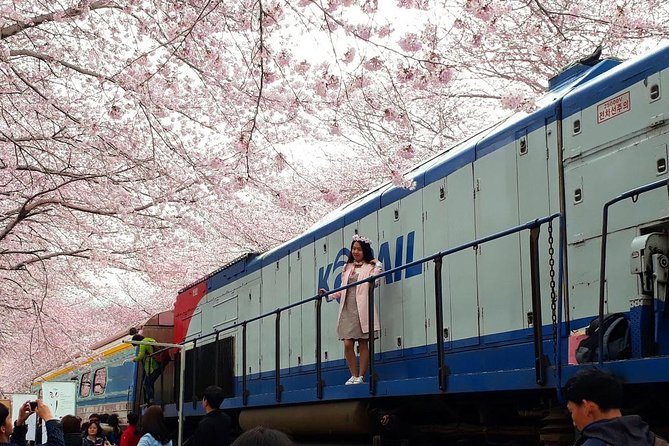
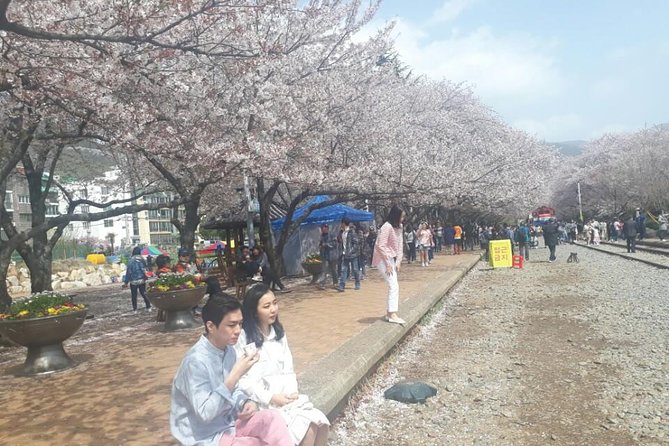
Gyeonghwa Station’s famous blossom road
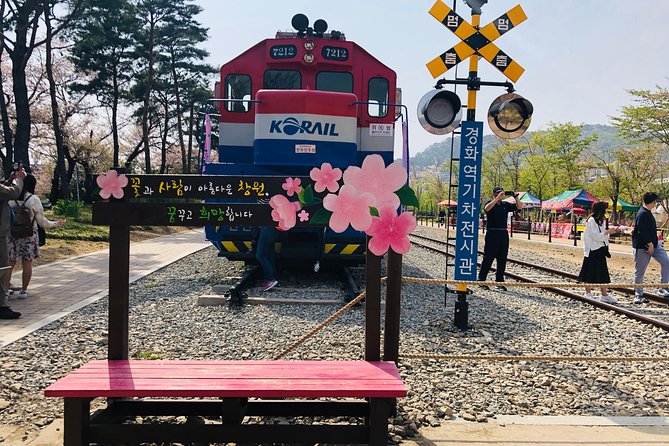
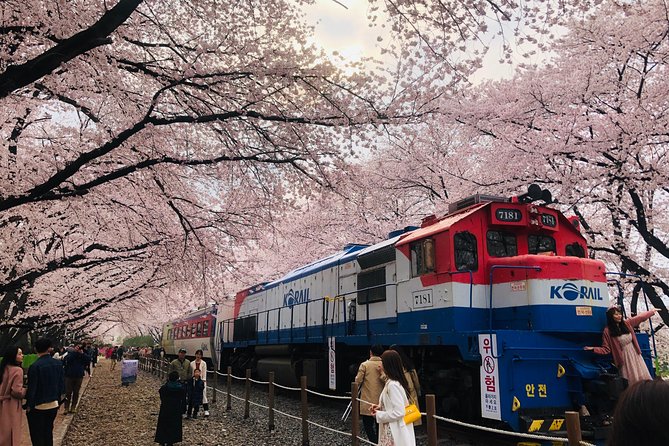
Gyeonghwa Station is the second cherry blossom stop, with about two hours allocated to the site. Together, Yeojwacheon Stream and Gyeonghwa Station receive about four hours, not four hours at each location.
The station area gives you a different view of the blossoms. Instead of a streamside walk, you’ll see the famous cherry tree-lined road associated with the railway setting. It is a strong photo stop and helps make the journey to Jinhae feel worthwhile.
The two locations complement each other well. Yeojwacheon offers water and walking paths, while Gyeonghwa Station provides the classic blossom-road scene. If you want both, this schedule is more useful than stopping at only one popular spot.
Still, four hours passes quickly once you include walking, photography, meeting instructions, and any time spent waiting for the group. You should wear comfortable shoes and keep an eye on the departure time. The experience is designed to show you the highlights, not to let you explore Jinhae at your own speed.
What the $108.49 price really covers
The price is reasonable if you value convenience more than flexibility. You get round-trip transfers from Seoul, an English-speaking staff member, and admission to the included attractions. Since the trip lasts close to 20 hours, you are also covering a full day of organized transport and coordination.
The price does not cover meals or drinks. Plan to pay for breakfast at Haeundae and any other food during the day. The itinerary does not name meal stops or provide meal vouchers, so carrying money and a few snacks is sensible.
You are also not paying for a hotel room. That keeps the price lower, but the tradeoff is the overnight schedule. If you would otherwise book a room in Busan or Jinhae, this experience can save money. If you need proper sleep to enjoy a day of sightseeing, the savings may feel less important.
The tour uses mobile tickets, and confirmation is provided when you book. The meeting point is in central Seoul, but hotel pickup is not included. At the end, you can leave at either Dongdaemun History and Culture Park or Myeongdong Station.
If you need to return to Hongik University Station, the instructions direct you to take Seoul Subway Line 2 from Dongdaemun History and Culture Park. The vehicle does not return there because of heavy traffic. This is a small but useful detail when planning your evening.
The real cost is energy, not money
The hardest part is the schedule. You leave Seoul at night, reach Haeundae after more than five hours, watch the sunrise, visit the temple, continue to Jinhae, walk through the blossom sites, and then ride back to Seoul for about another five hours.
You should not book this expecting quiet rest between stops. The tour information specifically warns that you return the next day without sleep. Some people can handle that for a major seasonal sight; others will find fatigue takes the edge off the temple and cherry blossom visits.
Traffic and weather can also affect the return time. The stated arrival time in Seoul is not fixed, so avoid scheduling an important evening reservation immediately after the tour. The two drop-off choices give you some flexibility, but neither removes the risk of a late arrival.
The group size can reach 100, even though the vehicle may be smaller depending on demand. That means the experience may feel more organized than personal. You gain a set route and staff support, but you should not expect a private guide shaping the day around your interests.
Cancellation and bloom conditions
You can cancel for a full refund if you do so at least 24 hours before the start time. Changes or cancellations made less than 24 hours before departure are not accepted, and late arrivals or no-shows are non-refundable.
The experience also requires a minimum number of participants. If that minimum is not reached, you may be offered another date or experience, or receive a full refund.
The flower condition is just as important as the cancellation deadline. If the blossoms are not fully in bloom, the supplier may reschedule or cancel and contact you in advance. This does not mean that an ordinary rainy day or sudden personal illness automatically qualifies for a refund.
Who should book this experience
I would choose this for a first visit to Korea during cherry blossom season when you want to see Jinhae but do not want to arrange the long journey yourself. It suits you if you can sleep on a vehicle, tolerate a full night and day of movement, and value seeing several major sights in one outing.
It is also a good fit if you want more than flowers. Haeundae Beach and Haedong Yonggungsa Temple add two different settings before Jinhae, making the day feel less repetitive.
I would hesitate if you need a bed each night, prefer slow photography, or want to choose your own restaurants and departure times. The schedule is fixed, the meals are your responsibility, and the return to Seoul can be delayed by traffic or weather.
The strongest feature is the route itself: sunrise at a coastal temple followed by two of Jinhae’s most famous blossom areas. The weakest feature is the punishing overnight timing. Your enjoyment will depend less on the $108.49 price than on how well you handle a long, sleepless day.
Should you book the Jinhae and Busan sunrise trip?
Book it if the cherry blossoms are your priority and you want transport from Seoul handled for you. The combination of Yeojwacheon Stream, Gyeonghwa Station, Haeundae Beach, and Haedong Yonggungsa gives you a lot for one spring day.
Before paying, check the expected bloom timing and make sure you can manage the overnight schedule. If the flowers are nearly finished, the beautiful locations will still be there, but the full pink display may not be. For an easier trip, stay overnight in the south and visit Jinhae at a slower pace. For convenience, variety, and a lower planning burden, this tour makes a strong case.
FAQ
How long does the tour last?
The experience lasts approximately 19 to 20 hours. It begins in Seoul at night and returns to Seoul the following day.
Where does the tour start and end?
The tour departs from a central Seoul meeting location. The return drop-off points are Dongdaemun History and Culture Park and Myeongdong Station.
Is hotel pickup and drop-off included?
No. Hotel pickup and drop-off are not included. You must reach the departure meeting point yourself.
Is breakfast included?
No. You receive free time for breakfast at Haeundae Beach, but breakfast and all other meals and drinks are your own expense.
How much time is spent at the cherry blossom sites?
You have about four hours in total at Yeojwacheon Stream and Gyeonghwa Station, roughly two hours at each location.
What happens if the cherry blossoms are not fully bloomed?
The tour may be rescheduled or canceled if the blossoms are not fully in bloom. The supplier will contact you in advance in that situation.
Is transportation included?
Yes. Round-trip transfers from Seoul are included. The vehicle type can change based on the number of participants.
Can most people participate?
Most people can participate, according to the tour information. The experience includes long vehicle rides, walking at the sightseeing stops, and a full night and day without planned sleep.
What is the cancellation policy?
You can cancel at least 24 hours before the start time for a full refund. Cancellations, changes, late arrivals, and no-shows within 24 hours are not accepted for a refund.
Just added around Seoul
- Taean Tulip Festival and Strawberry Picking Day Tour from Seoul★ 4.5 · 3 reviews
- Strawberry & Eobi Valley & Nami Island & Garden of Morning Calm★ 4.5 · 2 reviews
- Scenic Escape: Nami Island, Garden of Morning Calm, and Rail Bike★ 3.0 · 2 reviews
- Seoraksan and Cherry Blossom Lake 1 day trip from Seoul★ 5.0 · 4 reviews
- Full Day Private Tour Nami Island, Garden & Petite France★ 5.0 · 57 reviews
- Eobi Ice Valley& Nami Island with Garden of Morning Calm Trip★ 4.5 · 9 reviews
- Alpaca, Nami, Petite Fr, Italian Village, Garden of Morning Calm★ 3.5 · 5 reviews
- Seoul Vicinity 5 in 1: Nami Island, Garden of Morning Calm & More★ 4.5 · 124 reviews
Seoul Garden Tours, compared.
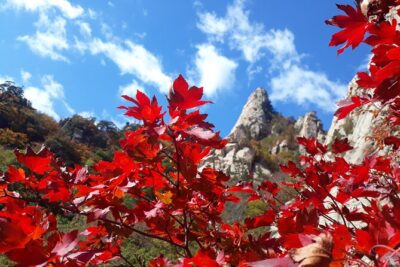
Mt. Seorak+Nami Island+Garden of Morning Calm Day Trip from Seoul
Read our review →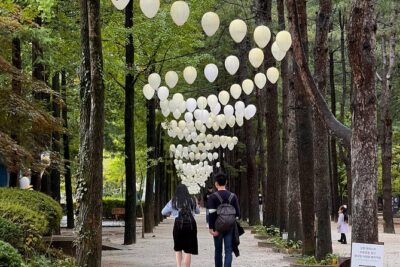
Trip to Nami Island with Petite France & Italian Village, Garden of Morning Calm
Read our review →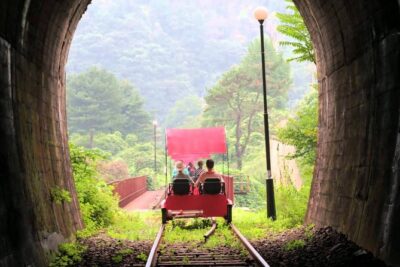
Nami Island & Garden of Morning Calm & Gangchon Railbike Tour
Read our review →
Nami+Alpaca+Garden of Morning Calm (+Rail Bike Option)
Read our review →
Alpaca, Nami, Morning Calm or Eobi (+Rail Bike)
Read our review →
Day Trip to Nami Island with The Garden of Morning Calm
Read our review →
Nami Island, Garden and Petite France (opt. Railbike)
Read our review →
Seoul Vicinity 5 in 1: Nami Island, Garden of Morning Calm & More
Read our review →Browse the lists this tour appears in