
Review · LONDON GARDEN TOURS
Kew Gardens Entrance Ticket
Kew Gardens gives you a full day of plants, glasshouses, historic buildings, and quiet paths without forcing you into a fixed tour schedule. The highlight for me is the chance to move from the tropical Palm House to the Rhizotron and Xstrara Treetop Walkway, then on to old gardens and grand lawns at your own pace.
I like the freedom to choose your route, and I like the sheer variety packed into the 326-acre Royal Botanic Gardens. The main drawback is simple: at $30.37 per person, this is not a cheap garden visit, and you may need most of a day to feel you received good value.
Key Things to Know Before You Go
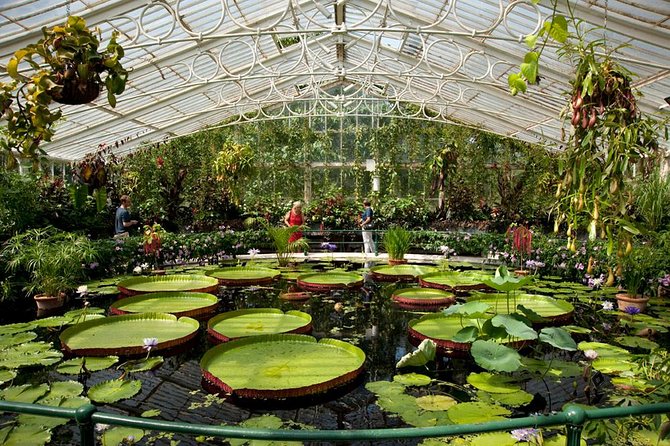
- The glasshouses are the main weather-proof attraction: See tropical plants, giant lily pads, banana plants, and the Chilean Wine Palm.
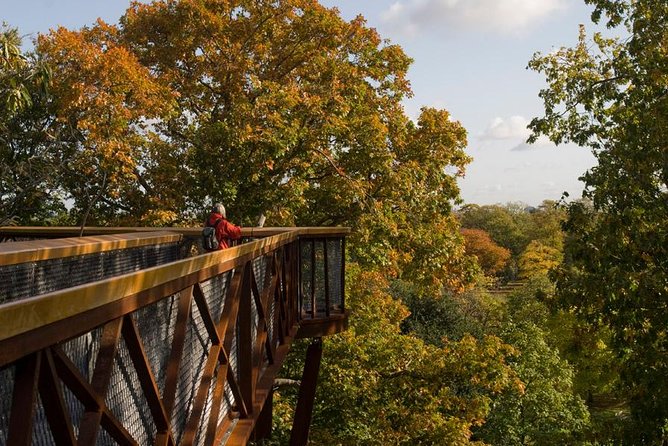
- The treetop walkway changes your view: Walk above the ground and look across Kew’s collection of about 14,000 trees.
- You set the pace: Explore independently, join a free guided walking tour, or use the tram service mentioned in visitor feedback.
- Historic buildings add variety: The grounds include Kew Palace, the Pagoda, Queen’s Garden, and some of Kew’s oldest sculptures.
- Plan for three to four hours at minimum: A full day is possible if you want several glasshouses, gardens, food, and time to sit.
- Check seasonal access: Kew Palace and the Pagoda are open from April through September, while special events cost extra.
Why Kew Gardens Takes More Than One Visit
Kew is not just a flower garden with a few tidy beds around a manor house. It is a large botanic collection, public park, historic estate, and family outing in one place. You can spend one hour among tropical plants, another walking beneath old trees, and another looking at the architecture.
The size matters. A three to four hour visit gives you a useful first look, but it will not cover every path and building. If you want the Palm House, Temperate House, Treetop Walkway, Queen’s Garden, Royal Kew Palace, and several outdoor gardens, plan on staying much longer.
I would treat this as a destination rather than a quick stop between central London sights. The grounds reward a slower pace. You need time to sit, check the map, and change direction when a glasshouse or garden catches your eye.
The entrance ticket is for Kew Gardens itself. Food and drinks cost extra, as do special events such as the Orchid Festival and Christmas at Kew. Kew Palace and the Pagoda are also listed separately from the basic admission and are open from April through September.
Entry tickets around the UK:
- London: Kew Gardens Admission Ticket
★ 4.6 · 3,252 reviews - The Alnwick Garden: Entry Ticket
★ 4.3 · 241 reviews - Birmingham: Winterbourne House and Garden Admission Ticket
★ 4.7 · 199 reviews
Getting Through the Entrance and Finding Your Route
You make your own way to Kew Gardens. The site is near public transportation, though the route from the Underground station to the entrance may not be perfectly clear. I would allow a little extra time for finding the correct gate, particularly if you have a timed plan for the day.
The pre-purchased admission is meant to make entry quick. Keep your voucher ready on your phone, and check that the required QR code is visible before you arrive. A missing code can turn a simple entrance into a slow exchange at the gate.
Once inside, resist the urge to cover the entire site in a hurry. Kew is too large for that approach. Choose two or three main targets, then add nearby gardens and buildings as your energy allows.
The opening hours listed for this experience are 10:00 a.m. to 7:00 p.m., Monday through Sunday, during the stated operating period. Hours and access to individual attractions can change, so confirm the details for your date before setting out. One listed exception had a later 11:00 a.m. opening because of a marathon.
The Glasshouses: Kew’s Best Bad-Weather Plan
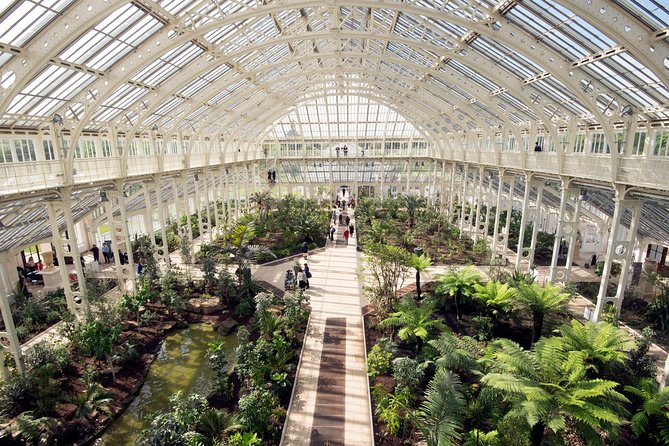
If the day is cold or wet, make the glasshouses your first priority. They give you a warm, enclosed route through plants from different parts of the world, and they are also among the most memorable places at Kew in any season.
The Palm House is one of the great Victorian glasshouses. Its iron-and-glass structure is impressive before you even look at the plants. Inside, the heat, tall palms, and dense planting give you a sharp change from London’s usual streets and parks.
The Temperate House is another major stop. It contains subtropical plants and the large Chilean Wine Palm, one of the memorable specimens in the collection. The scale of the plant helps explain why this is more than a decorative conservatory. Kew is also a place for plant research and preservation, though this ticket gives you a public visit rather than a behind-the-scenes program.
You can also find banana plants with huge leaves, visible fruit, and flowers, along with giant water lilies. These are especially good stops if you are visiting with children or with someone who does not usually spend hours studying outdoor planting beds.
The waterlily house received special praise in the supplied visitor comments, and it is easy to see why. Giant lily pads make an immediate impression, even if you know little about botany. The plants are large, strange, and easy to appreciate at a glance.
The Treetop Walkway and the 14,000 Trees
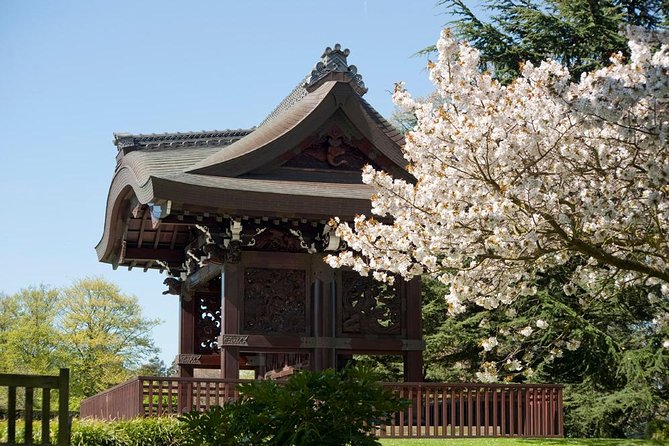
The Rhizotron and Xstrara Treetop Walkway gives you a different way to read the gardens. Instead of seeing trees from below, you walk through their upper branches and look down over parts of Kew.
This is one of the strongest reasons to add Kew to a London plan. The walkway breaks up the indoor visits and formal gardens, and it gives you a sense of the site’s scale. You are not simply looking at isolated plants. You are moving through a large collection of trees.
The walkway is also useful for families and teenagers because it adds movement and height to a visit that could otherwise involve a lot of walking at ground level. Keep in mind that it may not suit everyone who dislikes heights, and a wet day can make outdoor paths less appealing.
For a calmer tree walk, try Holly Walk. Its old trees, including specimens around 130 years old, create a more shaded and traditional route. The contrast is worthwhile: the Treetop Walkway gives you a broad view, while Holly Walk brings you close to the trunks and canopy.
More Garden Tours in the UK:
- The Kensington Palace Gardens Royal High Tea
★ 4.5 · 934 reviews - London: Kensington Palace Gardens Tour with Royal High Tea
★ 4.6 · 325 reviews - London: Sky Garden Early Access with Pastry and Hot Drink
★ 3.9 · 242 reviews - VIP Kensington Palace Gardens Tour & Royal Tea Crown Experience
★ 4.5 · 102 reviews
Queen’s Garden, Minka House, and the Outdoor Gardens
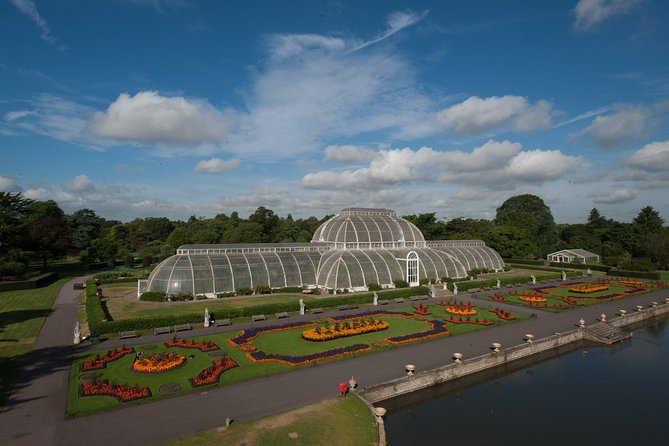
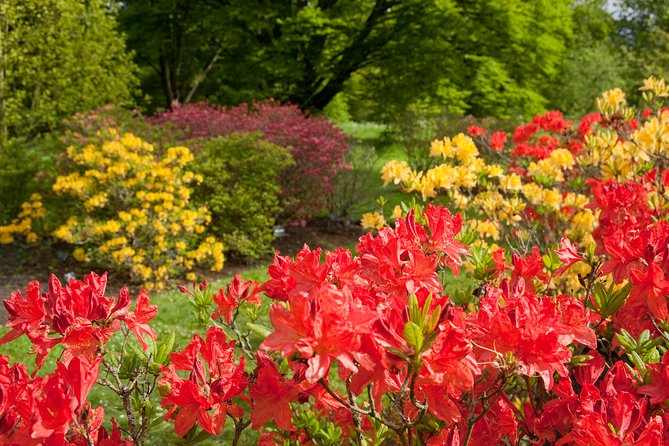
Kew’s outdoor gardens reward you most when plants are in season. The Azalea Garden, Bamboo Garden, and Queen’s Garden each have a different feel, so do not judge the entire visit by one area.
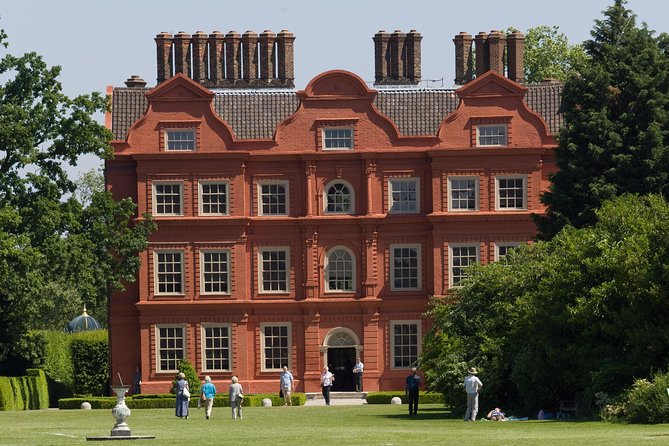
Queen’s Garden sits near Kew Palace, also known as the Dutch House. It follows a 17th-century style and contains several of Kew’s oldest sculptures, donated by the British Royal family. This is a compact historic area where formal planting, sculpture, and royal connections meet.
The Bamboo Garden gives you height and texture without the heat of a glasshouse. Minka House adds an architectural pause to the walking route. These stops are not all equally spectacular on every date, but together they create variety and keep the grounds from feeling like one long lawn.
Season matters. In winter, much of the outdoor garden can look stark, and fewer plants will be in bloom. The glasshouses still provide interest, and the children’s area remains an option, but you should not expect the same color and fullness found later in the year.
If roses and summer planting are important to you, choose a warmer month. One practical suggestion from the supplied feedback was to return in June for better rose displays and fewer people. Spring and summer generally give you more outdoor color, though the gardens can feel busier.
Royal Kew Palace and the Pagoda
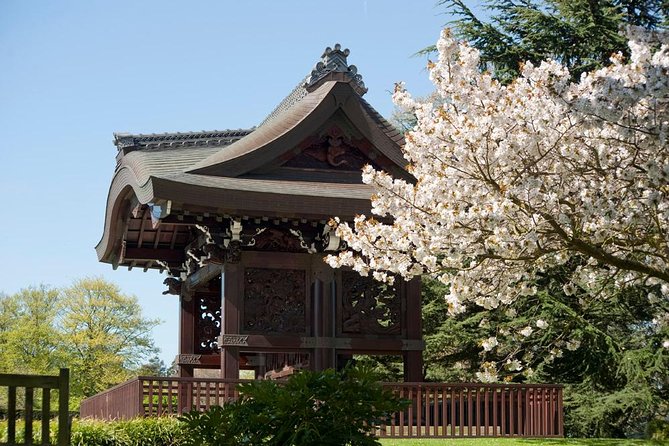
Kew Palace gives the visit a historic center. The building offers a look at royal life on a smaller scale than London’s grandest palaces, and it provides useful context for the gardens around it. Access is not included in the basic ticket information for this experience, so check the current arrangements before you count on going inside.
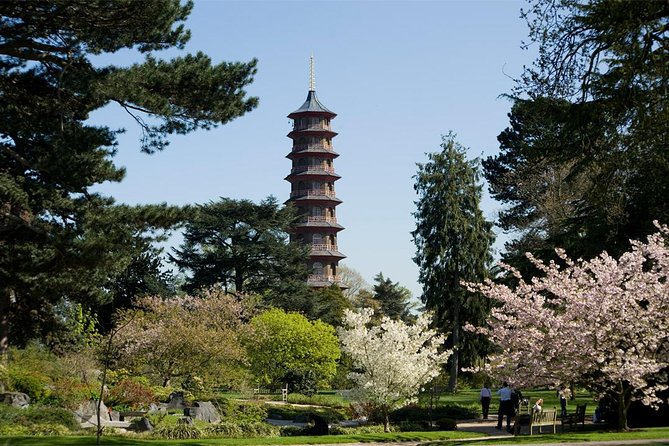
The Pagoda is one of Kew’s most recognizable structures. Its octagonal form rises ten stories in the southwest corner of the grounds. Even if you only view it from outside, it gives the garden a strong visual marker and helps you orient yourself.
Both attractions are listed as open from April through September. If you visit outside those months, plan your day around the gardens and glasshouses instead. This is another reason to check the seasonal calendar before booking.
Free Walks, the Tram, and the Right Pace
You can explore independently, which is the best choice if you already know what you want to see or prefer a quiet visit. Kew also offers free guided walking tours each day. The supplied information does not name the guides or promise a set route, so ask at the entrance for the day’s schedule and meeting point.
A free walk can add context to plants and buildings that might otherwise pass without notice. It is also a sensible choice if you want orientation before setting off on your own. You are not paying for a separate guide, so it can improve the value of the admission without adding to the ticket price.
A tram tour is also mentioned in visitor feedback and was praised as an excellent way to see more of the grounds. The provided ticket details do not say that tram rides are included, so ask about the current fare and schedule once you arrive.
Walking is still the best way to notice small details, including sculpture, planting changes, and tucked-away seating areas. The tram can save energy and help you understand the layout. If you have limited mobility or simply want to reserve your legs for the glasshouses, combining both may make sense.
Eating, Resting, and Managing a Long Day
Kew has four cafés where you can stop for lunch or tea. Food and drinks are not included in the ticket, so add that cost to your day. You can also bring your own food and find a pleasant outdoor place to eat.
I would plan one proper break rather than trying to push through. The grounds are large, and a quiet sitting nook can be as useful as another formal garden when you have already walked several miles.
Tea at the Botanical was described as both relaxing and enjoyable in the supplied comments. The key point is not to expect a quick in-and-out attraction. Kew works best as a flexible day with pauses, especially if you are visiting with children, older adults, or anyone who enjoys plants at a relaxed pace.
Staff are generally described as friendly and helpful, and one visitor found the payment and entry system easy to use once at the gate. That practical support matters at a site this large, but you should still arrive with your ticket code ready.
Is $30.37 Good Value?
At $30.37 per person, Kew is more expensive than a simple public park. The admission makes better sense if you plan to use the glasshouses, treetop walkway, outdoor gardens, and historic areas rather than only taking a short stroll.
The price is easier to justify for a three to four hour visit, and stronger still if you stay most of the day. You are paying for a major plant collection, maintained grounds, indoor displays, historic buildings, and free guided walking options. You are not paying for food, the tram, special events, or every separately listed attraction.
The value drops if you arrive in winter expecting every outdoor bed to be in bloom, or if you have only an hour before another appointment. It also may feel high if your main interest is a general walk in the open air.
For plant lovers, families, photographers, and repeat visitors to London, I think the ticket can be worthwhile. For a first-time visitor with a tight schedule and little interest in gardens, I would put Kew lower on the list.
Who Should Book Kew Gardens?
I would recommend this experience to you if you enjoy plants, architecture, outdoor walks, or places where you can set your own pace. It works well for families because of the treetop walkway, glasshouses, wide grounds, and children’s area.
It also suits a mixed-age group. Teenagers may prefer the height and unusual plants, while older adults may appreciate the palace, cafés, formal gardens, and the option of using the tram. Most people can participate, and service animals are allowed.
You should be comfortable with a lot of walking unless you plan carefully around the tram and rest stops. Under-16s must be accompanied by an adult.
Free cancellation is available if you cancel at least 24 hours before the experience start time. Cancellations or changes inside that window are not refunded, and poor weather may lead to a new date or a full refund.
My Verdict: Book It for Time, Not Just Admission
Book Kew Gardens if you can give it at least three or four hours, and ideally most of a day. Start with a glasshouse, walk the treetops, visit Queen’s Garden, then leave room for a café stop and whichever outdoor area looks best on your date.
I would not book it as a rushed filler between central London attractions. The site is too large, and the best moments come from changing pace: warm glasshouse, open lawn, old trees, historic building, then a quiet bench.
The strongest reasons to go are the plant variety, the Victorian glasshouses, the Treetop Walkway, and the freedom to build your own route. The main cautions are price, seasonal changes, extra charges, and the amount of walking. If those tradeoffs suit your plans, Kew offers one of London’s most rewarding full-day outings.
FAQ
How much does the Kew Gardens entrance ticket cost?
The listed price is $30.37 per person.
How long should I plan for Kew Gardens?
The estimated duration is three to four hours, but you can spend a full day if you want to see more of the grounds, glasshouses, historic buildings, and cafés.
Is Kew Gardens a UNESCO World Heritage Site?
Yes. The Royal Botanic Gardens, Kew, is listed as a UNESCO World Heritage Site.
Are food and drinks included?
No. Food and drinks are at your own expense. Kew has four cafés, and you can also find an outdoor spot to eat.
Is a guided tour included?
You may join a free guided walking tour that takes place daily in the gardens. The entrance ticket itself includes admission, not a private guide.
Are the Palm House and Temperate House included?
The ticket includes admission to Kew Gardens, where you can visit the glasshouses, including the Palm House and Temperate House.
Are Kew Palace and the Pagoda included?
The supplied ticket information lists Kew Palace and the Pagoda separately, with access available from April through September. Check the current arrangements before visiting.
Can children visit Kew Gardens alone?
No. Customers under 16 must be accompanied by an adult.
What is the cancellation policy?
You can cancel at least 24 hours before the experience start time for a full refund. Cancellations or changes made less than 24 hours before the start time are not refunded. If poor weather causes Kew to cancel the experience, you may be offered another date or a full refund.
Just added around the UK
- Hillsborough Castle Gardens Entrance Ticket★ 4.7 · 47 reviews
- Royal Horticultural Society: Hyde Hall Garden Ticket★ 4.7 · 7 reviews
- Edinburgh: Walk Dean Village, New Town & Royal Botanics★ 4.9 · 22 reviews
- Royal Horticultural Society: Rosemoor Garden Ticket★ 3.9 · 4 reviews
- Belvoir Castle: Castle, Gardens and Ground Entry★ 4.0 · 2 reviews
- Barbara Hepworth Museum & Sculpture Garden: entry to site.★ 4.7 · 28 reviews
- Abbotsford: House, Chapel and Garden Ticket★ 5.0 · 4 reviews
- London: VIP Kensington Palace Gardens Tour & Royal High Tea★ 4.7 · 59 reviews
London Garden Tours, compared.
Kensington Palace Gardens Tour with Royal High Tea
Read our review →
Sky Garden Early Access with Pastry and Hot Drink
Read our review →
VIP Kensington Palace Gardens Tour & Royal Tea Crown Experience
Read our review →
VIP Kensington Palace Gardens Tour & Royal High Tea
Read our review →Browse the lists this tour appears in