
Review · FLORENCE GARDEN TOURS
Royal Paths of Florence: Explore the Boboli Gardens
Boboli Gardens is Florence’s grand outdoor stage, a place where Medici power, garden design, fountains, and sculpture meet on the hillside behind Pitti Palace. This one-hour walk takes you from the palace courtyard up to the Artichoke Fountain, across the amphitheater, and down through the garden’s main sights.
I like the compact route. You see the garden’s major landmarks without giving up half a day, and the ticket is included. I also like the guide-led approach, especially when the guide explains why the garden was laid out as a series of theatrical views rather than simply a place for flowers.
The main caution is the terrain and the tour’s strict timing. You will climb slopes and steps, and the guide may wait only about five minutes for late arrivals. The radio system should help you hear, but equipment problems have affected some tours.
Key points to know before you book
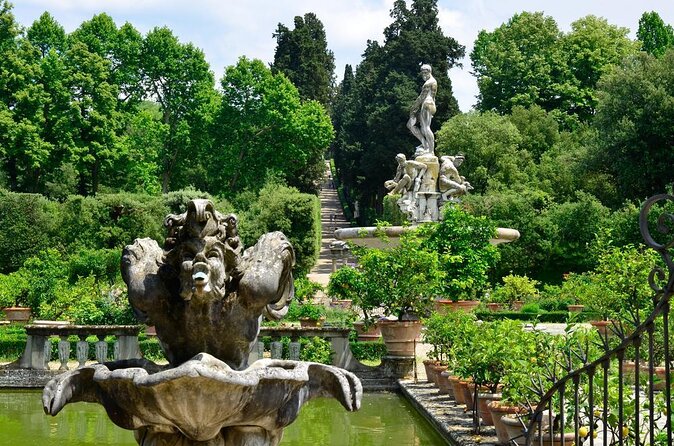
- The Artichoke Fountain begins the story: Your guide starts in the Pitti Palace courtyard and explains the garden’s first grand focal point.
- The route climbs before it descends: Neptune’s Fountain and Giambologna’s Abundance sit higher up, while the Viottolone leads you back toward the pond.
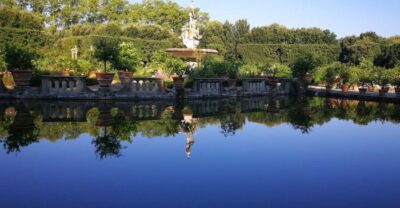
- The Ocean Fountain is a major payoff: Giambologna’s sculpture anchors the Isolotto, one of the most memorable settings in the garden.
- The final section packs in three different sights: You finish near the Giardino del Cavaliere, Kaffeehaus, and Buontalenti Grotto.
- The group is capped at 15 people: That is small enough for a guide-led walk to feel manageable, though not private.
- The guide quality matters: Strong experiences have featured guides such as Matteo, Iliria, and Francesca, but communication and headset problems have also been reported.
Why Boboli Gardens is worth an hour
Many people come to Florence focused on paintings, churches, and polished marble interiors. Boboli gives you a different view of the city. It is a large formal garden built for court life, full of long axes, statues, fountains, terraces, and carefully framed views.
The garden is not simply a green park. Its design turns movement into a performance. You climb toward a fountain, reach a higher terrace, look back toward the palace, then descend along a long cypress-lined avenue. A guide can help you see that plan instead of treating the garden as a pleasant walk with scattered monuments.
At $54.19 per person, this is not the cheapest way to enter Boboli Gardens. You are paying for the reserved admission ticket, an official certified guide, and a radio system, not just access to the grounds. The value depends on how much explanation you want. If you enjoy learning why a statue or fountain is placed where it is, the fee can make sense. If you prefer to wander alone and read at your own pace, a basic entry ticket may suit you better.
The one-hour length is also part of the value. Florence days fill quickly, and this tour gives you a structured look at the main sights without taking over your schedule. Afterward, you can return to a spot you want to see again, provided you are still permitted to remain in the garden under the admission arrangements.
More Palace and Castle Gardens in Florence
- Florence: Pitti Palace and Boboli Gardens Ticket & eBook
★ 4.5 · 835 reviews - Florence: Pitti Palace, Boboli Garden, Palatine Gallery Tour
★ 4.9 · 558 reviews - Pitti Palace, Boboli Garden & Palatina Gallery Guided Tour
★ 5.0 · 264 reviews
Starting at Pitti Palace and the Artichoke Fountain
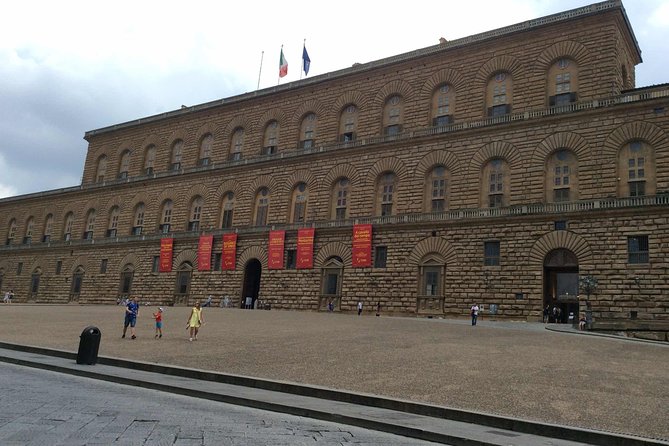
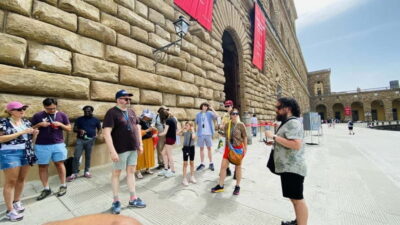
The meeting point is Piazza de’ Pitti, at the main entrance to Pitti Palace. You should arrive at least 15 minutes before the scheduled start. This matters because the tour is organized around a group departure, and late arrivals may not be admitted or refunded.
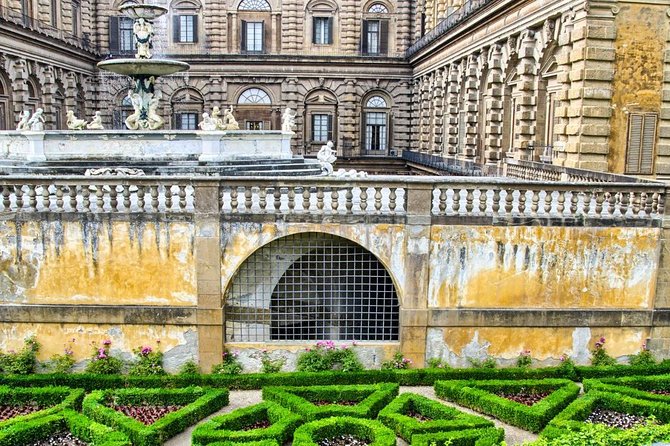
The walk begins by crossing the palace courtyard. That opening is useful because it places Boboli in its proper setting. The garden was created behind a major palace, not as an isolated public park, and the first views make that connection clear.
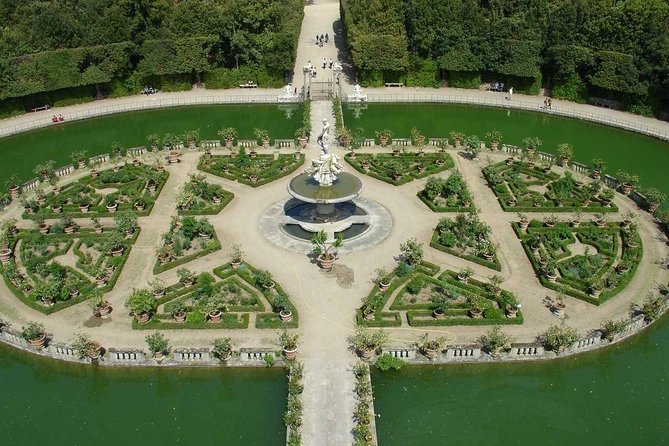
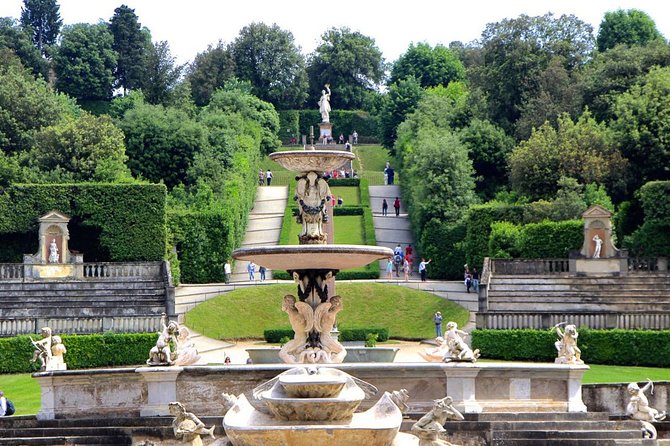
The guide leads you to the Artichoke Fountain, a large octagonal basin decorated with statues and topped by a bronze lily. It is an imposing introduction to the garden’s taste for grand display. Here, the guide explains how the garden was first designed and how its main spaces were organized.
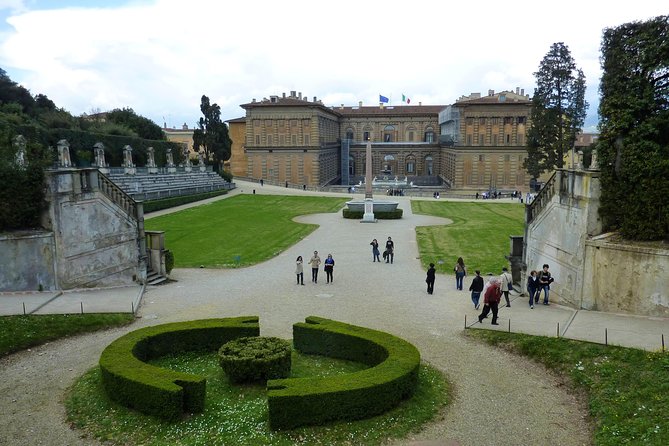
I would pay attention to the view back toward the palace. Boboli works best when you notice the relationship between building, slope, water, and sculpture. The fountain is not merely an object to photograph. It helps explain the garden’s role as a place where architecture and outdoor design were meant to impress.
Climbing toward the amphitheater and Neptune’s Fountain
From the Artichoke Fountain, the route continues toward the amphitheater. The amphitheater sits against the hill behind the palace and represents an early phase of the garden’s creation.
This is where the tour begins to feel like a real walk rather than a flat sightseeing loop. You will climb a sloping route, with steps and uneven sections possible along the way. The pace is described as leisurely, and guides have sometimes stopped to rest when the weather was hot or humid, but you still need to be comfortable walking uphill.
The garden’s higher ground gives the route its shape. At Neptune’s Fountain, your guide explains another major water feature and its place within the wider design. Water, stone, and height keep appearing together in Boboli, creating a sequence of set pieces as you move through the grounds.
At the top of the hill, you reach the large statue of Abundance by Giambologna. This is an important landmark and a useful point for understanding the garden’s scale. From here, you can appreciate that Boboli is built around long sight lines and changes in elevation, not compact clusters of attractions.
On a hot day, this uphill section can be the hardest part of the tour. Bring water, wear practical shoes, and do not assume that the word garden means an easy, level stroll.
Descending along the Viottolone to the Isolotto
After reaching the upper part of the garden, the route turns downhill along a steep sloping avenue toward the Viottolone. This long avenue is lined with cypress trees and small statues, creating one of Boboli’s strongest visual sequences.
The descent changes the rhythm of the walk. Instead of climbing toward individual monuments, you move along a broad axis with repeated views ahead. The cypresses give the route structure, while the statues provide detail at the edges.
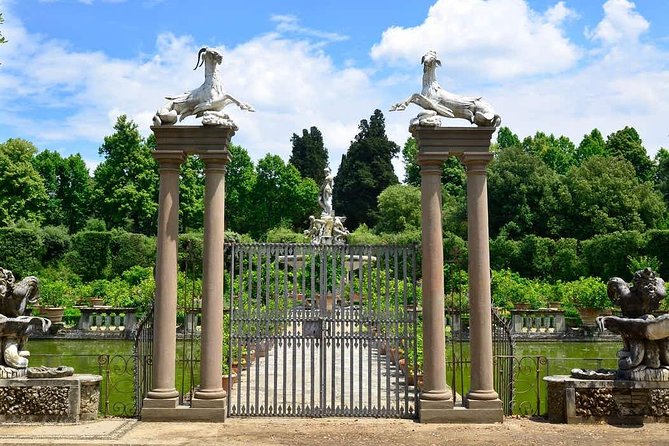
The Viottolone leads toward the Isolotto, a large pond with the Ocean Fountain by Giambologna. The fountain is one of the tour’s key sights. It is also a good example of why a guide helps. The name, sculpture, water, and island setting all contribute to the meaning of the place, and your guide can explain how those pieces fit together.
This portion may be the most satisfying for anyone who likes garden design. You are not just stopping at one monument after another. You are following a planned route in which the avenue directs your attention and the pond creates a change in scale.
The downhill route is not automatically easy. A steep slope can be demanding on knees and balance, especially after the earlier climb. Most people can take part, but you should consider the physical demands before booking.
More Palace and Castle Gardens in Italy
- Florence: Pitti Palace and Boboli Gardens Walking Tour
★ 4.6 · 182 reviews - Florence: Museum Pass–David, Uffizi, Pitti Palace & Gardens
★ 4.2 · 134 reviews - Timed Entry Ticket to Pitti Palace and Boboli Gardens in Florence
★ 3.5 · 118 reviews - Florence: Boboli Gardens Guided Tour
★ 4.5 · 69 reviews
The Giardino del Cavaliere and the Kaffeehaus
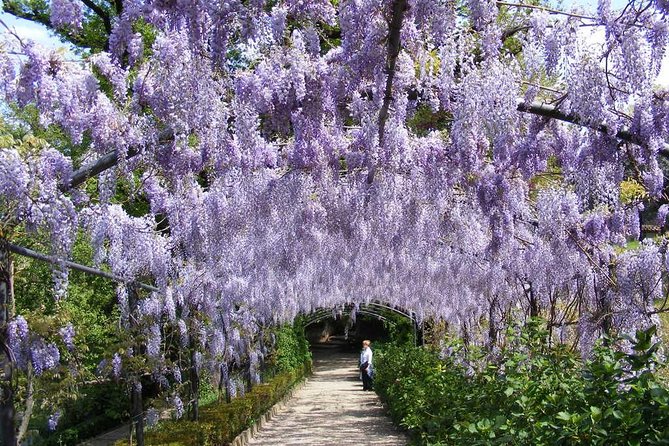
The later part of the tour moves through the Giardino del Cavaliere, a garden area associated with Michelangelo, and then to the Kaffeehaus. These stops add variety after the large central avenues and fountains.
The Giardino del Cavaliere offers a different kind of garden experience, with a more enclosed and elevated feel than the main axes. Your guide uses the area to explain more of the garden’s design and its links to Florence’s artistic past.
The Kaffeehaus is another change of mood. It reflects the garden’s later use as a place for courtly leisure, not only ceremony and display. I like this part of the route because it reminds you that Boboli was built for people who lived within the palace world. It was a place for walking, looking, meeting, and being seen.
These stops can be easy to rush if the group has fallen behind. Since the entire tour lasts about an hour, you should expect brief explanations rather than a long lecture at each site. The advantage is that you keep moving and cover a broad section of Boboli. The tradeoff is that you will not get an exhaustive account of every sculpture or corner.
The Buontalenti Grotto finishes the route
The Buontalenti Grotto is the tour’s final major stop. It was created from limestone concrete stalactites, shells, and terracotta reliefs, with water running down the walls.
This is one of Boboli’s strangest and most theatrical spaces. It was designed to look natural and artificial at the same time, turning rough materials, water, and ornament into a stage-like setting. The guide explains the design details and the ideas behind the grotto.
The grotto is a fitting ending because it gathers together many of Boboli’s themes: artifice, nature, water, sculpture, and surprise. After the broad views and formal avenues, you finish in a more enclosed place filled with texture.
The route ends back at the meeting point. The tour lasts about an hour, but the included admission gives you the chance to revisit parts of the garden afterward. That is useful because an hour is enough for a guided overview, not enough for a slow personal exploration of every path.
The guide makes or breaks the experience
The strongest part of this experience is the human element. Guides such as Matteo, Iliria, and Francesca have been praised for clear explanations, friendliness, and enthusiasm for Florence and Boboli. A good guide can turn a fountain into a piece of court politics, a slope into a design choice, and a grotto into something more than an unusual photo stop.
The tour also supplies a radio system so you can hear while walking. In theory, this is especially helpful in a garden, where the guide may need to stand several paces ahead while leading the group.
In practice, the system needs to work properly. There have been cases in which several people could not hear well, and attempts to adjust the equipment did not solve the problem. A guide who walks too far ahead or rarely turns around can make the issue worse. If your headset cuts out, tell the guide right away rather than waiting until the group has climbed farther.
The maximum group size is 15 people. That is not a private tour, but it is more workable than a very large crowd. Still, the quality can vary with the individual guide, the group’s pace, and the equipment on the day.
Timing, weather, and meeting-point discipline
This tour depends on conditions outside your control. Boboli Gardens does not operate on days with heavy rain, and the activity may be canceled if the weather is unsuitable. In that case, you are offered another date or a full refund.
The tour also requires at least two people to operate. It can be canceled after confirmation if that minimum is not reached. You would then be offered an alternative or a full refund.
The strictest rule concerns lateness. You should be at the main Pitti Palace entrance in Piazza de’ Pitti 15 minutes before departure. The guide may wait a maximum of five minutes, and arriving after the start time can mean losing both the tour and the payment.
Communication is worth taking seriously. If the operator needs to change or cancel a booking, messages may be sent through the booking platform, by phone, or by voice message. Check your messages before the tour, especially if the date falls near a public holiday or a day when museums may have altered hours.
Free cancellation is available up to 24 hours before the start time. Changes or cancellations within 24 hours are not refunded.
Who should book this Boboli walk?
I would choose this tour if you want a short, guided introduction to Boboli and prefer having the major sights arranged for you. It suits a first visit to the gardens, especially if you want context for the fountains, sculpture, and formal design rather than a solitary stroll.
It can also work well for families who benefit from a guide’s story and a clear route. Francesca, for example, has been praised for making the garden’s history engaging for children. The relaxed pace can help, but the hills still require reasonable walking ability.
I would think twice if you have limited mobility, dislike slopes, or want to linger at each monument. The route includes uphill and downhill walking, and the one-hour schedule keeps the group moving.
I would also avoid booking it if you are likely to arrive at the last minute. The meeting instructions are simple, but the late-arrival policy is not forgiving.
Should you book Royal Paths of Florence?
Book it if you want the main Boboli sights in a tidy hour, with admission, a guide, and a radio headset included. The Artichoke Fountain, Neptune’s Fountain, Abundance, Viottolone, Ocean Fountain, Giardino del Cavaliere, Kaffeehaus, and Buontalenti Grotto give you a solid overview of the garden’s character.
At $54.19, the price is fair only if the guiding matters to you. The tour adds value through explanation and structure, but the experience is less attractive if you mainly want entrance access. Arrive early, prepare for hills, check the weather, and confirm that you can hear the guide.
The safest choice is to book this for a day when you have room to explore the garden on your own afterward. That way, the one-hour tour gives you the plan and context, while the remaining time lets you return to the view or fountain that caught your attention.
FAQ
How long does the Boboli Gardens tour last?
The guided tour takes about one hour. After it ends, you can return to sights you want to see again, subject to the garden’s admission arrangements.
What is included in the price?
The price includes admission to Boboli Gardens, an official certified guide, and a radio system for hearing the guide.
Where does the tour begin?
The meeting point is Piazza de’ Pitti, 50125 Florence, at the main Pitti Palace entrance gate.
How much walking is involved?
The route includes uphill and downhill walking, slopes, and steps. It is taken at a leisurely pace, but you should be comfortable walking on uneven and inclined paths.
What happens if it rains heavily?
The gardens do not operate on days with heavy rain. If poor weather cancels the tour, you are offered another date or a full refund.
Can I cancel for a full refund?
Yes. You can cancel at least 24 hours before the start time for a full refund. Cancellations or changes made less than 24 hours before the start are not refunded.
Just added around Florence
- Timed Entry Ticket to the Boboli Gardens★ 3.5 · 50 reviews
- Pitti Palace and Boboli Gardens Private Tour★ 4.5 · 38 reviews
- Timed Entry Ticket to Pitti Palace and Boboli Gardens in Florence★ 3.5 · 118 reviews
- Florence Cooking Class with Wine Pairing in Mirella’s Garden Home★ 5.0 · 29 reviews
- Market Tour & Traditional Tuscan cooking class in a garden★ 5.0 · 4 reviews
- Inferno by Dan Brown Novel 4 hours with Boboli Gardens★ 5.0 · 5 reviews
- Private Tour of Pitti Palace with Boboli Garden★ 5.0 · 28 reviews
- Palazzo Vecchio, Palazzo Pitti and Boboli gardens private tour★ 5.0 · 18 reviews
Florence Garden Tours, compared.
Pitti Palace, Boboli Garden, Palatine Gallery Tour
Read our review →
Pitti Palace, Boboli Garden & Palatina Gallery Guided Tour
Read our review →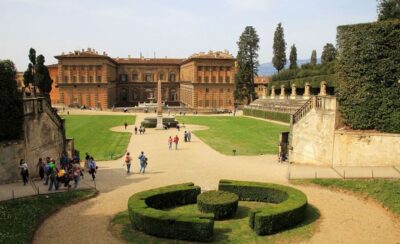
Museum Pass–David, Uffizi, Pitti Palace & Gardens
Read our review →
Timed Entry Ticket to Pitti Palace and Boboli Gardens in Florence
Read our review →

David, Pitti Palace, & Gardens Combination Tickets
Read our review →Browse the lists this tour appears in